
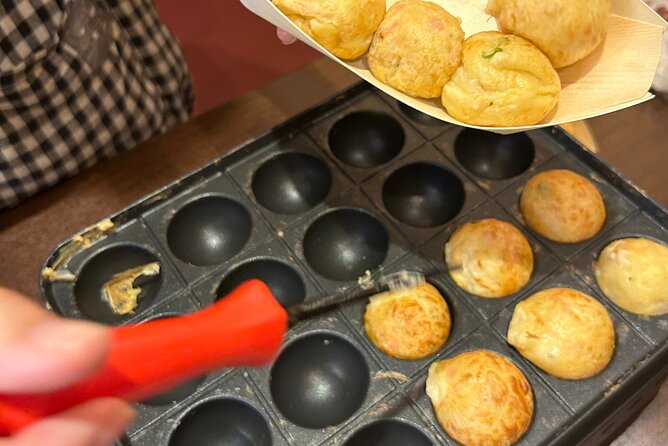
Reviewed · COOKING CLASSES
Experience Cooking Takoyaki in its Birthplace, Osaka
Takoyaki is more fun when you flip it yourself. This Osaka class is a hands-on way to learn a local comfort food that people actually cook at home, not just pick up on the street. I especially like the rotating takoyaki machine technique and the fact that you can go beyond octopus with cheese and crab sticks. One thing to keep in mind is that it runs about 2 hours with real cooking time, and it’s also listed as weather dependent, so have a plan for timing.
The vibe in the studio feels friendly and focused. The instructors named in recent classes, including Zen and Lisa and also Masa and Risa, come across as patient and practiced, walking you through the process and sharing small tips that improve your results fast. Even better, you get to chat while you cook, so it feels like a shared food moment rather than a rushed demo.
If you want pure sightseeing or a quick snack with no commitment, this might feel like more work than you planned. But if you like learning a technique you can repeat later, this is a great use of time in Osaka, and the small group size (max 12) helps you get attention while the batter is still warm.
In This Review
- Key Takeaways Before You Cook
- Osaka’s Takoyaki Kitchen: why this class feels different
- Finding 369 Kitchen Studio in Osaka’s Kita Ward
- From mobile ticket to hot batter: what happens first
- The rotating takoyaki machine: your 20-minute skill test
- Customize fillings: cheese, crab sticks, and octopus optional
- Eating hot, fresh takoyaki (with toothpick logic)
- Ramune pairing: the glass-ball bottle moment
- Instructors who teach, chat, and correct your technique
- Timing, duration, and pacing for a smooth 2-hour block
- Price and value: is $42.35 worth it?
- Who this Osaka takoyaki class fits best
- Should you book this takoyaki cooking class in Osaka?
- FAQ
- How long is the takoyaki cooking experience?
- How much does it cost?
- Is the class limited in size?
- What is the meeting point?
- Do I have to use octopus to make takoyaki?
- What ingredients are available besides octopus?
- Is Ramune included?
- What if weather is bad?
Key Takeaways Before You Cook
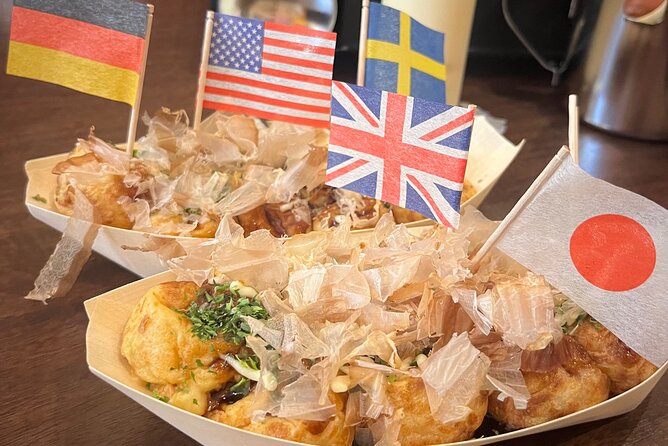
- A rotating takoyaki machine teaches you the exact motion behind crisp edges and tender centers
- Fillings are flexible, including cheese and crab sticks, and octopus is not required
- Ramune adds a real Osaka pause, served in the bottle with the glass ball inside
- Small-group instruction (up to 12) means you can actually ask questions while cooking
- The technique sticks, because instructors share practical flip and timing tips you can reuse later
- Family-friendly in a hands-on way, with notes that even small children can enjoy it safely
Osaka’s Takoyaki Kitchen: why this class feels different
Osaka is proud of its takoyaki, and rightfully so. These little dumplings are built for toothpicks, quick bites, and big gatherings, and they’re one of those foods where the method matters as much as the ingredients.
What I like about cooking them in a dedicated studio is that you learn the “how.” Street takoyaki is great, but taking control of the batter, filling, and flipping is where the skill comes alive, and you start noticing things you would never catch from a storefront window.
This class also leans into the local truth: takoyaki isn’t only a tourist purchase. In Osaka, it’s the kind of food families and friends make together, with everyone customizing their own version, then eating right away while it’s hot.
Other ways to spend a day in Osaka
- Osaka: Ramen and Gyoza Cooking Class in Dotonbori★ 5.0 · 378 reviews
- Osaka Cooking Class: Okonomiyaki &Japanese cuisines experience★ 5.0 · 261 reviews
- Ramen and Gyoza Cooking Class in Osaka★ 5.0 · 202 reviews
- Osaka Sake Tasting with Takoyaki Cooking★ 5.0 · 156 reviews
- Osaka Sake Tasting & Takoyaki Cooking Experience★ 5.0 · 149 reviews
Finding 369 Kitchen Studio in Osaka’s Kita Ward
You meet at the address listed in Osaka, Kita Ward, Sonezakishinchi area, at the building labeled 巽住宅 梅田ビル. The location is described as near public transportation, which matters because the class is only about 2 hours and you do not want to burn time in transit.
A practical bonus from real class experiences: clear directions make a difference in this kind of studio setup. One past participant noted they received detailed directions with photos to help find the classroom easily, so do not hesitate to use the directions you get with your booking.
Because the group max is 12, expect a small-room feel. That’s usually a plus, but it also means you should show up on time, since there is not a lot of buffer before cooking starts.
From mobile ticket to hot batter: what happens first
You start with a mobile ticket, so plan to keep it easy to access on your phone. Then it’s straight into the practical part: you’re there to cook, not watch for long stretches.
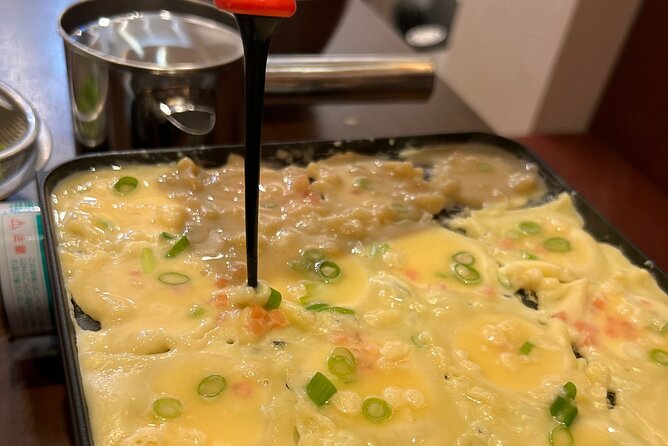
In classes like this, the earliest minutes are about setup and rhythm. You get introduced to the special takoyaki machine, the ingredient approach (including non-octopus options), and the core timing you need so your takoyaki gets that crisp exterior and soft interior balance.
The guides in recent classes have been praised for being patient and clearly walking people through each step. That matters because takoyaki has a short window where it goes from batter to dumplings, and small timing mistakes show quickly.
The rotating takoyaki machine: your 20-minute skill test
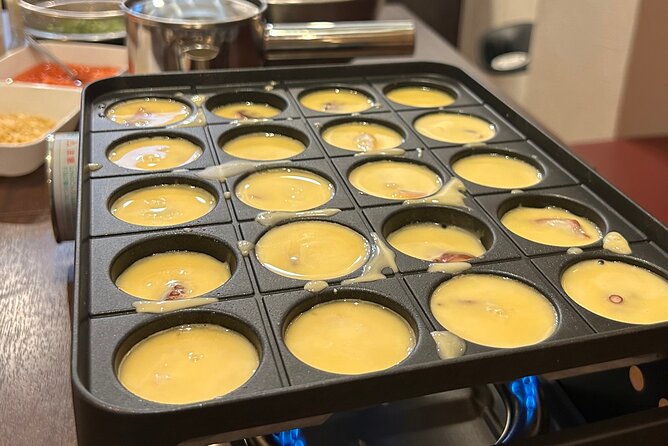
The big action happens with a special takoyaki machine that rotates. The class description specifically notes the pan is used to cook takoyaki while rotating, and the results in about 20 minutes include crispy outside, soft inside dumplings.
Here is what that means in real-life terms for your hands and attention. You’ll need to work in sync with the machine, paying attention to how the batter sets and how the dumpling forms. The “rotating while cooking” detail isn’t just tech for show, it is part of why the exterior can crisp while the inside stays tender.
Past participants also praised the instructors for sharing tips and tricks to refine technique. So as you cook, watch for the cues you’re given, then copy the motion. The quickest way to improve is to make one change at a time, not to overhaul everything mid-batch.
Customize fillings: cheese, crab sticks, and octopus optional
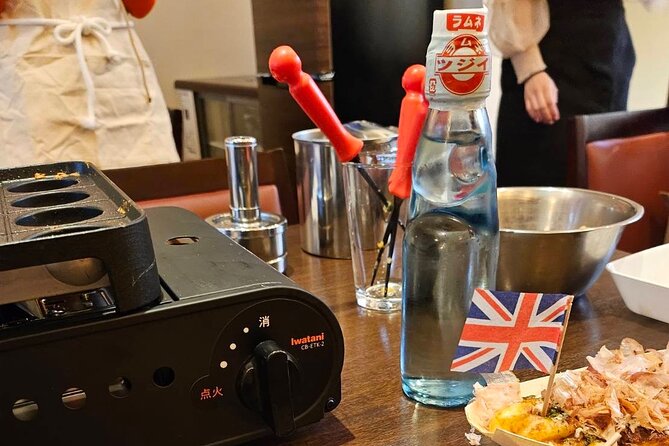
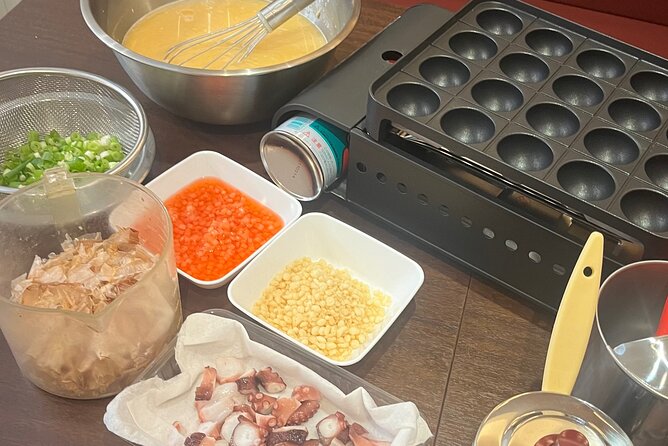
One of the clearest advantages here is that octopus is not required. The class notes you can make takoyaki without it, and it also provides cheese and crab sticks to build your own style.
This is where the experience becomes personal. If you are adventurous, you can mix your fillings. If you are cautious, you can stick to one option and focus on mastering the flip and timing first. Either way, you still learn the base method, which is the part you can repeat after the class.
A vegetarian-friendly note shows up in the feedback as well, where an instructor was described as accommodating for a vegetarian participant. The key takeaway for you is simple: if you have dietary preferences, ask questions early and be clear about what you want in your takoyaki.
Not ready to leave Osaka yet? A few more ways to fill the day.
- Osaka Go Karting Tour with Funny Costume
★ 5.0 · 2,658 reviews - Osaka Castle: Museum and Tower Entry Ticket
★ 4.5 · 2,380 reviews - Osaka: Shinsekai Food Tour with 13-15 Dishes at 5 Eateries
★ 4.8 · 2,204 reviews
Eating hot, fresh takoyaki (with toothpick logic)
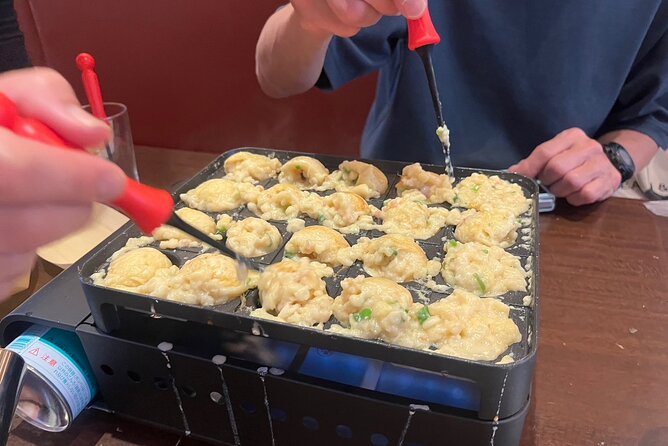
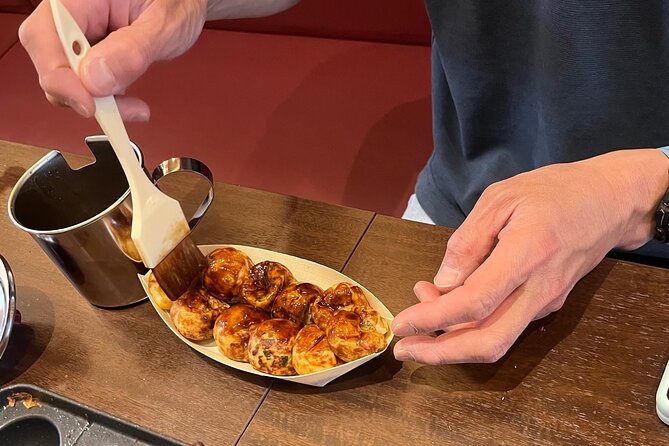
The class is built around eating what you make, hot and freshly cooked. That’s important because takoyaki is at its best right after it comes off the machine, when the outside is crisp and the inside still feels soft.
Also, you’ll be using a toothpick for eating, which sounds basic but affects how you portion each bite. Tiny food changes can feel silly until you’re holding one in your hand. Then you understand why takoyaki is the way it is, and why Osaka style food culture is built for casual, social eating.
It’s also a good moment to compare batches. If one set looks better than another, you can usually pinpoint why, timing-wise or filling-wise, and that makes the lesson feel earned rather than random.
Ramune pairing: the glass-ball bottle moment
Takoyaki pairs naturally with something refreshing, and that’s where Ramune comes in. The class includes Ramune, described as a traditional Japanese carbonated drink with a glass ball inside the bottle.
That glass ball detail is more than novelty. It changes the opening ritual, and the drink becomes part of the experience, not just a beverage you grab at the end. The bubbles also help reset your palate between bites of hot, savory dumplings.
If you’ve never had Ramune, this class is a friendly way to try it without needing to hunt down a bottle on your own. You’ll be able to focus on the food while still getting a real Osaka-style drink moment.
Instructors who teach, chat, and correct your technique
The strongest praise in recent feedback centers on the instructors’ teaching style. Names that came up include Zen and Lisa, and separately Masa and Risa, with multiple mentions of being practiced, patient, and generous with guidance.
What you should take from that is not just personality, it’s instruction quality. When a teacher is calm and methodical, you’re more likely to pick up the small practical points that make your takoyaki better, like when the batter should set, how to manage the filling so it cooks through, and what motions help with flipping.
One participant also said the memories and knowledge from the class let them make delicious takoyaki later. That is the goal here: you’re not just eating tonight, you’re leaving with a method you can repeat at home.
Timing, duration, and pacing for a smooth 2-hour block
This is listed as about 2 hours. That’s enough time to learn the process, cook more than one batch, and eat without feeling rushed, but it’s still a real time commitment.
The class description notes takoyaki is ready in about 20 minutes, which suggests you spend the rest of the time on setup, learning, cooking rounds, and eating together. Practically, it means you should eat a light snack before you arrive, so you’re not overly full when the hot food hits.
The experience ends back at the meeting point, so you can plan the rest of your Osaka day without needing complicated transfers.
One more scheduling detail: the experience requires good weather. The exact reason isn’t explained in the details you have, but the safest approach is to book with awareness and have backup plans for your day if the weather turns.
Price and value: is $42.35 worth it?
The price is listed as $42.35 per person, with mobile ticket delivery, about 2 hours of instruction, and a cap of 12 participants. On the surface, that might sound like a lot compared with buying takoyaki for a few dollars at a stand.
Here’s the value argument that makes sense for this type of class. You’re paying for a full cooking setup, ingredient support (including cheese and crab sticks), guided technique practice with a specialized machine, and included Ramune. You also get a small-group experience where instructors can correct your technique, which improves your results more than a generic food stop would.
Booking pace also hints at demand. The average booking time is about 15 days in advance, so if you’re traveling during peak weeks, it’s smart to lock in earlier rather than hoping.
If your goal is simply to taste Osaka takoyaki, you could do that cheaper. But if your goal is to learn and leave with a repeatable method, this price starts to feel fair.
Who this Osaka takoyaki class fits best
This experience fits people who want a hands-on food skill, not just a tasting. If you like cooking, you’ll enjoy the short learning curve and the satisfaction of eating what you made.
It also fits families. The class description notes that small children can enjoy it safely, which suggests the environment is set up for more than just adult foodies.
If you have dietary preferences, it can still work, since octopus is optional and there are provided non-octopus options like cheese and crab sticks. Based on feedback about vegetarian accommodation, you should feel comfortable asking what’s possible for your version.
Where you might choose to skip it is if you dislike cooking stations, do not want to spend 2 hours in one spot, or you are trying to pack in a tight schedule with no flexibility, especially given the good-weather note.
Should you book this takoyaki cooking class in Osaka?
Yes, I’d book it if you want a real Osaka food moment you can recreate later. The rotating takoyaki machine and the guided process are exactly the kind of souvenir that isn’t only photos, it is skills.
I would hesitate only if you’re the type who wants a low-effort stop, because this is cooking first and sightseeing second. Also, because it’s listed as weather dependent, book with a little buffer in your day.
If you do book, come hungry, ask about your fillings early, and pay attention to the small motion and timing tips. That’s where the class turns into delicious takoyaki, not just a fun activity.
FAQ
How long is the takoyaki cooking experience?
It runs for about 2 hours.
How much does it cost?
The price is $42.35 per person.
Is the class limited in size?
Yes. The maximum group size is 12 travelers.
What is the meeting point?
You start at Japan, 〒530-0002 Osaka, Kita Ward, Sonezakishinchi, 2-chōme−1−13 巽住宅 梅田ビル, and the activity ends back at the meeting point.
Do I have to use octopus to make takoyaki?
No. The class notes that the filling does not have to be octopus.
What ingredients are available besides octopus?
The experience description says cheese and crab sticks are available, so you can make your own combinations.
Is Ramune included?
Yes. You can enjoy Ramune with your takoyaki. The drink is described as having a glass ball inside the bottle.
What if weather is bad?
The experience requires good weather. If it’s canceled due to poor weather, you’ll be offered a different date or a full refund.
Just added around Osaka


Cooking Classes, compared.
Osaka Cooking Class: Okonomiyaki &Japanese cuisines experience
Read our review →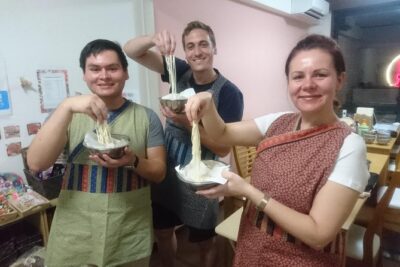

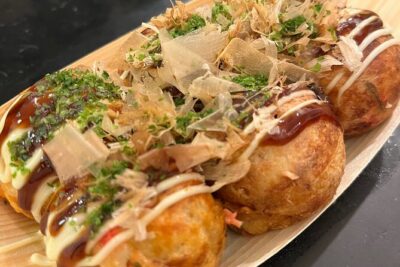
Osaka Sake Tasting & Takoyaki Cooking Experience
Read our review →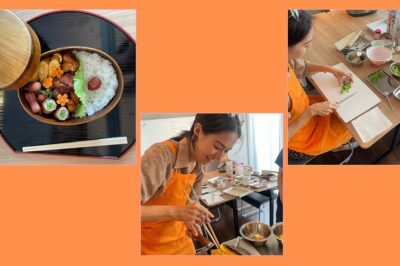
Cooking Ramen&Gyoza/KatsuCurry/Bento/Okonomiyaki+Store Tour@Osaka
Read our review →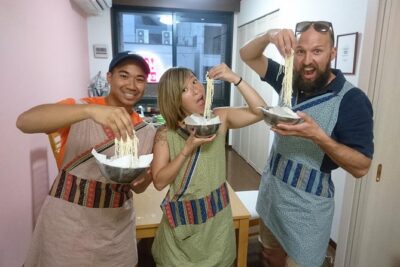
Eat Osaka: Street Food Cooking in an Authentic Kitchen!
Read our review →This tour also fits