
Reviewed · NINJA & SAMURAI EXPERIENCES
Experience Samurai and traditional Culture to the fullest
Armor, tea, calligraphy, then sword practice. This 3-hour Osaka experience is one of the few places near Osaka Castle where you can role-play as a samurai and learn the related arts in a structured way. I especially like the hands-on instruction for calligraphy and katana technique, and I love that the day ends with a photo on the castle grounds.
A possible drawback: it is not a casual stroll. You’ll change into traditional clothing, follow etiquette lessons, and do a sword trial, so it may feel intense if you want something purely scenic. Also, it is not suitable for kids under 10, so plan accordingly if you’re traveling as a family.
In This Review
- Key Takeaways Before You Go
- Why This Samurai Experience Feels “Closest to the Castle”
- Kimono Time and the Basics of Japanese Courtesy
- Calligraphy Practice: Strokes First, Then a Kanji of Your Own
- Samurai Calligraphy: Writing the Words of Resignation
- Tea Ceremony with Bushido-Style Etiquette and Honor
- Sword Trial Cutting: Learning the Responsibility Behind the Blade
- Osaka Castle Battle Armor: A 1615 Role-Play Photo
- About the Optional Seppuku Segment and How It’s Framed
- Price and Value: What $168 Buys in 3 Hours
- Logistics That Affect Your Comfort: Meeting Point, Time, and What to Bring
- Group Style and How the Session Runs
- Who Should Book This Samurai Honor Experience
- Should You Book It?
- FAQ
- How long is the Samurai Honor experience?
- Where in Japan does this take place?
- What does the price include?
- Do I get picked up from my hotel or the train station?
- What language is offered by default, and what other languages are available?
- Where do I meet the group?
- What time should I arrive?
- What should I bring?
- Is this a private group or a shared group?
- Is cancellation allowed if my plans change?
Key Takeaways Before You Go
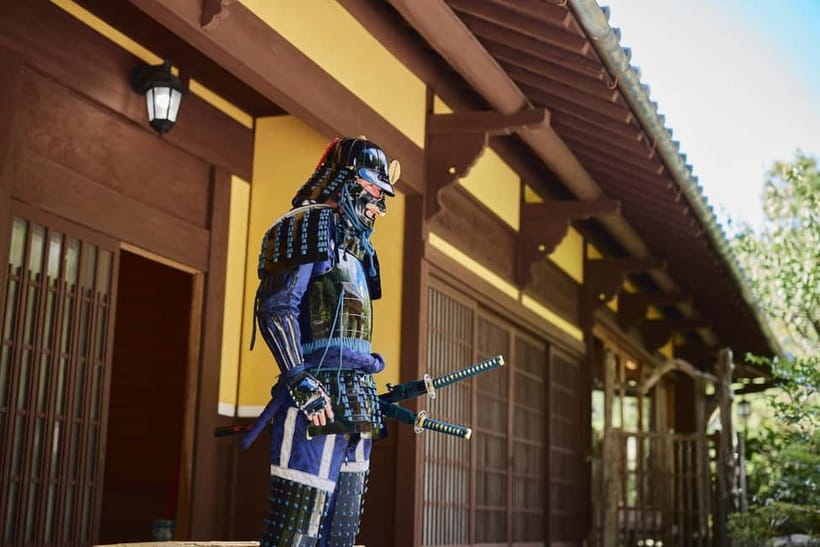
- Osaka Castle photo moment: You get photographed on the grounds in armor, with Osaka Castle as your backdrop.
- You learn three traditions, not just one: kimono culture through calligraphy and tea, then the sword trial.
- Bushido values are part of the lesson: honor, etiquette, and responsibility come up in multiple activities.
- Technique-focused practice: you practice calligraphy brush strokes (tome, hane, harai) and follow stroke order for a kanji character.
- English-speaking staff, plus other languages on request: the default is English, and other languages depend on staff schedules.
Why This Samurai Experience Feels “Closest to the Castle”
Osaka has plenty of culture, but most experiences stop at a museum, a show, or a quick photo op. Here, you build a full mini-ritual around samurai-era discipline and presentation, starting with traditional clothing and ending with a staged battle role.
What makes it compelling is the rhythm. You begin in the calm world of manners and brushwork, then the tone shifts to weapon responsibility, then you cap it off in armor with a battle scene photo. It’s not pretending to be a history textbook. It’s giving you lived-in practice, with your body and posture involved the whole time.
And yes, the Osaka Castle connection matters. You’re not just seeing the castle from outside, you’re getting a photo taken on the grounds while wearing armor, dressed as a Toyotomi-side soldier in 1615. That alone turns the day from “activity” into a memory you’ll actually show people.
Swing a sword like it's 1600
- Samurai Training Experience KENDO in Osaka★ 5.0 · 515 reviews
- OSAKA NIGHT FUSION Japanese Taiko Kabuki Samurai Dance Show★ 4.8 · 155 reviews
- Osaka: Samurai Training Experience KENDO in Osaka★ 5.0 · 111 reviews
- Osaka: A Modern Samurai, Kabuki, Taiko, & Dance Show★ 4.5 · 66 reviews
- Osaka 2-Hour Genuine Kendo / Samurai Experience In Japan★ 5.0 · 65 reviews
Kimono Time and the Basics of Japanese Courtesy
The experience starts with a kimono change, which is more than costume. You’re learning that traditional Japanese culture often shows up in the small things, like posture, how you hold yourself, and how you move with intention.
Once you’re dressed, the instruction frames traditional arts as a way to practice courtesy and hospitality. In practical terms, you’ll be guided into a more formal way of behaving, then you’ll carry that mindset into the calligraphy and tea steps.
Timing is also clear. This “get ready” cultural entry is part of the full 3-hour flow, so you’re not left waiting around wondering what comes next. It’s structured enough that even if you’re doing this solo, you won’t feel lost.
Calligraphy Practice: Strokes First, Then a Kanji of Your Own
Then comes calligraphy, and it’s taught like a skill, not a craft fair demo. You learn how to prepare for calligraphy, including how to hold the brush and how to work with the tools.
You’ll practice basic brush strokes including tome, hane, and harai. That matters because it’s the difference between copying a symbol and understanding how calligraphy is built from movement.
After that, you choose a kanji character and follow the stroke order. You’re not just picking a random character. You’re practicing the discipline behind it, where the sequence and shape come from controlled movement.
If you like activities where progress happens during the session, this part delivers. You’ll feel your own improvement as you repeat strokes and correct your technique.
Samurai Calligraphy: Writing the Words of Resignation
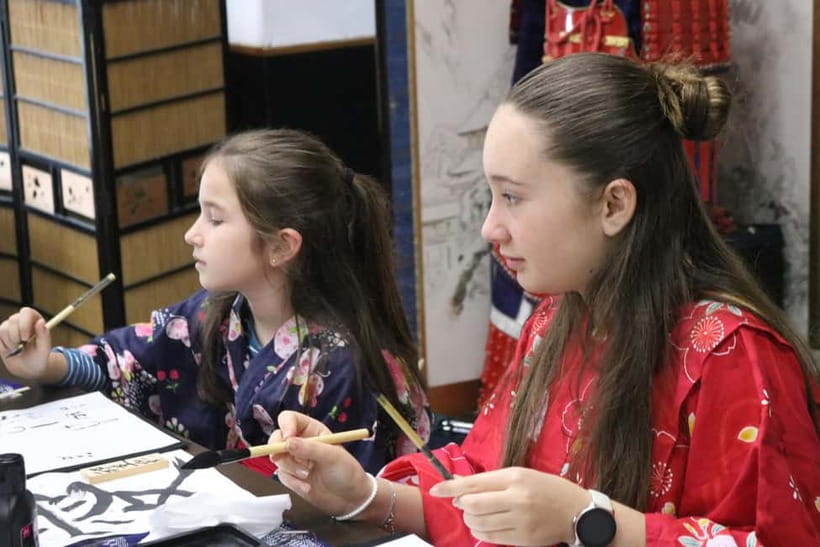
One of the more thought-provoking segments is Samurai Calligraphy, centered on words of resignation. The lesson frames resignation in samurai terms as a last message to the world, something written as someone prepares to die.
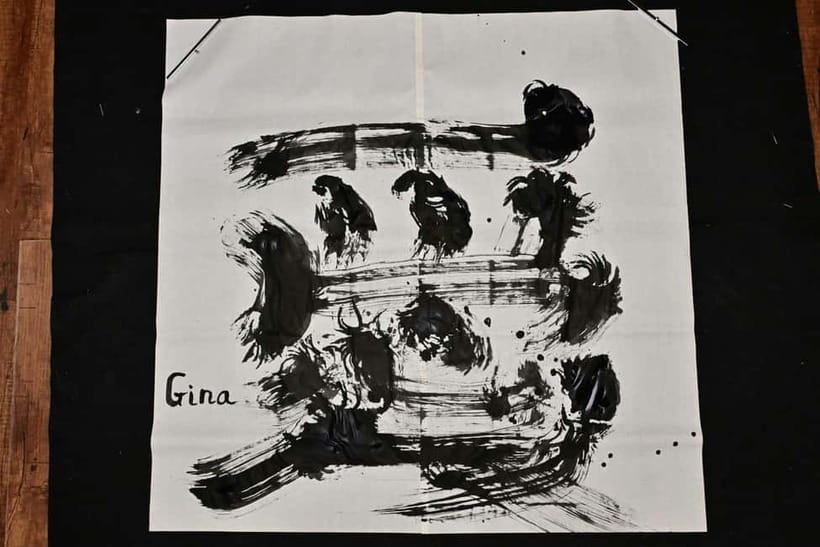
In the activity itself, you write the kanji you just selected, focusing on technique while you produce the final character. The tone is serious, and it changes the feel of calligraphy from decorative to intentional.
This is also a good place to bring your attention. Calligraphy rewards patience, and you’ll get the most from it if you slow down and focus on brush control rather than trying to finish quickly.
Tea Ceremony with Bushido-Style Etiquette and Honor
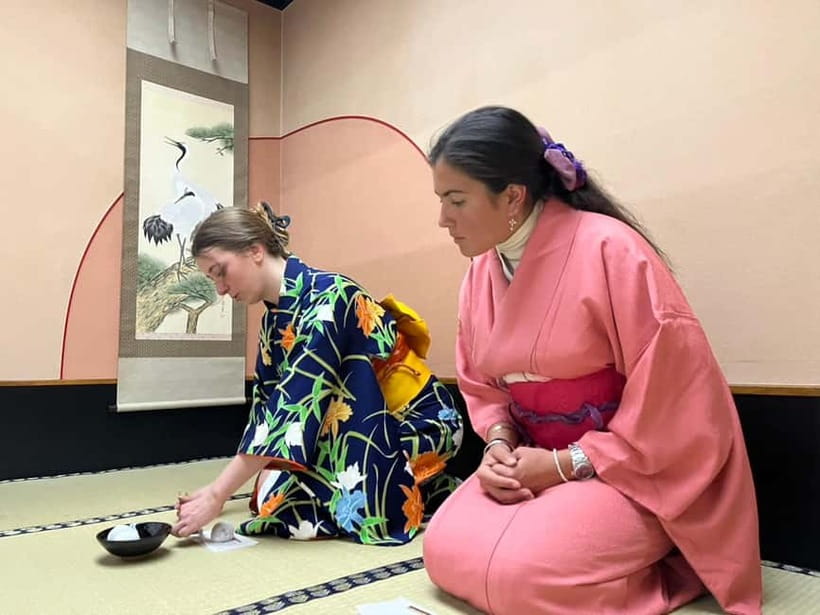
Next up is a Samurai Tea Ceremony. A master of the tea ceremony prepares and serves powdered green tea to guests, and you learn through observation and guided etiquette.
Tea here isn’t just sipping. It’s a lesson in manners, beautiful gestures, and the spirit of hospitality. The teaching also ties into Bushido values, with emphasis on honor.
You’ll likely appreciate this segment most if you enjoy cultural rituals that have a “why,” not just a “how.” The tea step gives you a calmer contrast to the later sword part, and it helps make the whole day feel like one theme instead of disconnected activities.
Not ready to leave Osaka yet? A few more ways to fill the day.
- Osaka Go Karting Tour with Funny Costume
★ 5.0 · 2,658 reviews - Osaka Castle: Museum and Tower Entry Ticket
★ 4.5 · 2,380 reviews - Osaka: Shinsekai Food Tour with 13-15 Dishes at 5 Eateries
★ 4.8 · 2,204 reviews
Sword Trial Cutting: Learning the Responsibility Behind the Blade
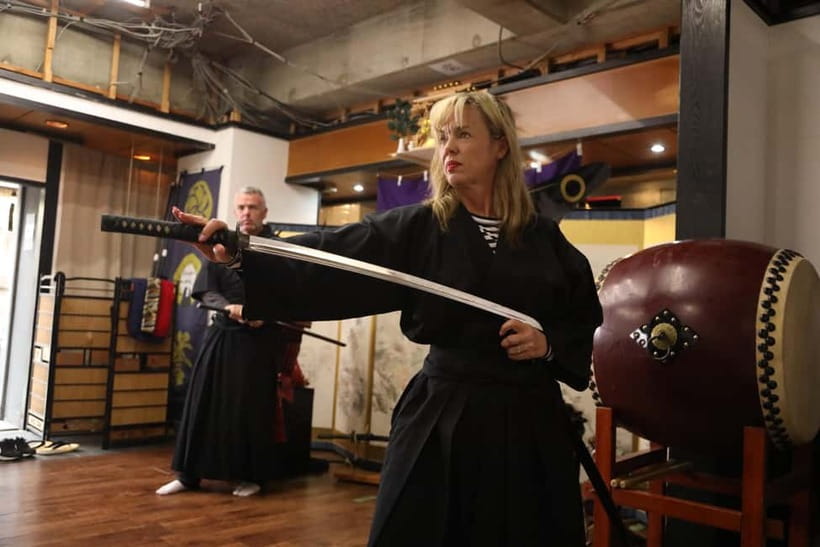
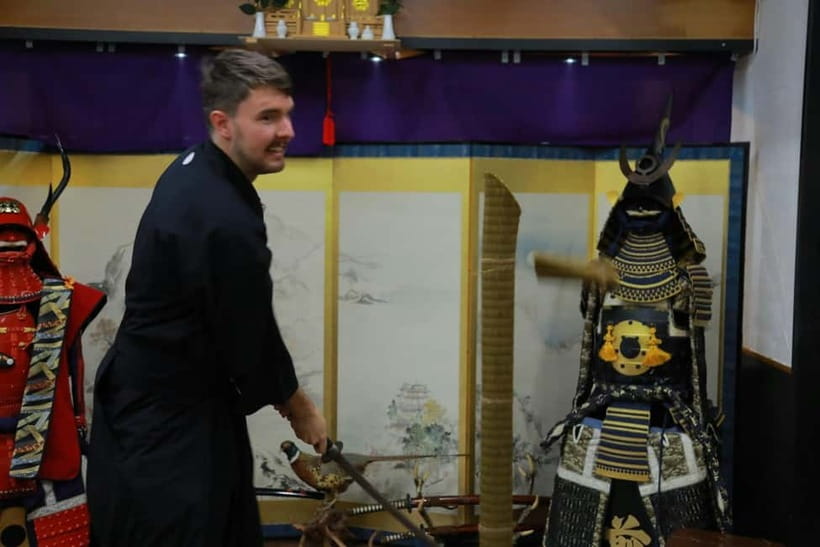
Then the tone shifts again, to Samurai Sword Trial Cutting. You learn how to use a sword and become aware of self-respect and the responsibility that comes with carrying a deadly weapon.
The experience includes wearing a serious sword, which makes the lesson feel real rather than purely theatrical. After instruction, participants try their hand at sword cutting with a samurai sword.
A key point for your expectations: the activity describes learning and technique plus the mindset of responsibility, not just action. So if you go in thinking you’ll be a martial arts expert by the end, you might find it more structured and instructive than flashy. If you go in curious about discipline and how respect is tied to skill, this part can be the highlight.
This segment is also where your comfort level matters. If swords and weapon-handling feel stressful for you, treat this as the most intense part of the day.
Osaka Castle Battle Armor: A 1615 Role-Play Photo
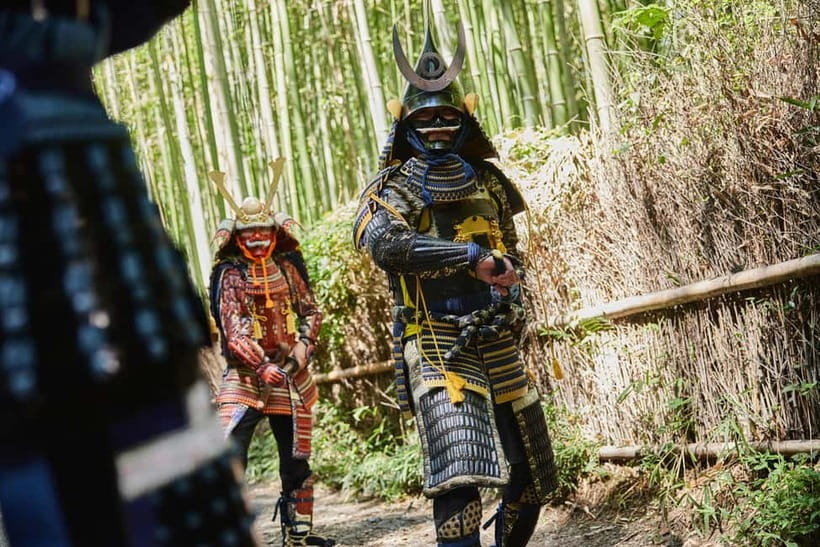
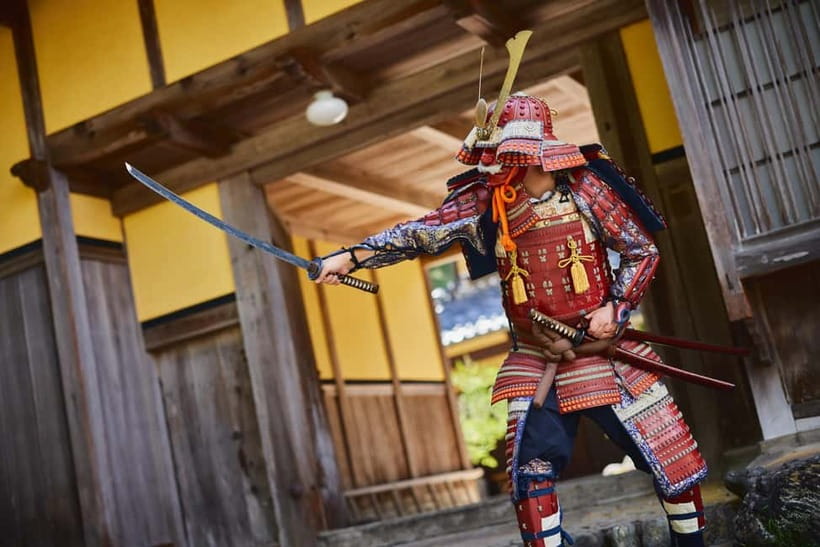
The next act is armor. You wear a suit of armor and join a battle role-play, then get photographed on the grounds of Osaka Castle. The day’s story places you in April 1615, during the Osaka Summer Battle, on the Toyotomi side.
This is where the earlier etiquette and focus pay off. Wearing armor changes how you move, and that physical reality helps you understand that samurai “performance” was built on training and control.
Your photo is a big deal here. The idea is not a quick snapshot. You’re staged like the best soldier, and a photographer covers the events across the experience, ending with the castle-grounds armor shot.
If you care about having something visually memorable, this is worth it. The castle background plus armor is the kind of image you won’t get from a typical cultural workshop.
About the Optional Seppuku Segment and How It’s Framed
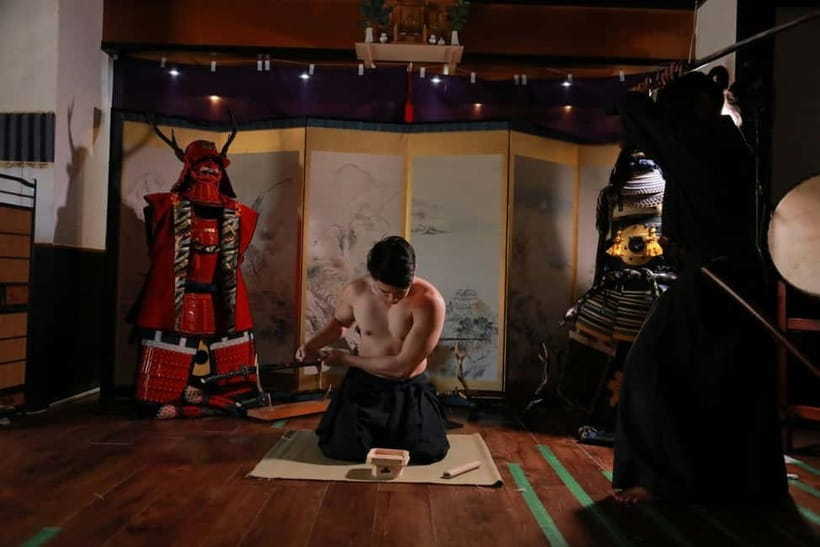
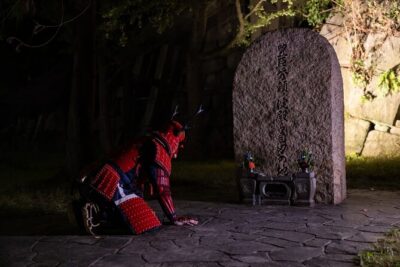
There is an option related to Seppuku and Harakiri, described as something a samurai might prepare for as part of righteousness and devotion to their lord. The lesson frames this in paradox terms, talking about a beautiful death as part of living beautifully.
Important note for planning: it’s listed as an option. If you’d rather avoid heavy content, consider skipping it and focusing on the calligraphy, tea, sword trial, and armor photo.
Also, because this theme is intense, it can land differently depending on your mindset. Go in knowing the experience is not trying to sanitize everything. It’s aiming to connect art and action to samurai values, including the darker end of the tradition.
Price and Value: What $168 Buys in 3 Hours
At $168 per person for 3 hours, you’re paying for a lot of different inputs in one session: kimono change, calligraphy practice, tea ceremony, sword trial cutting, armor wear, plus photography coverage and delivery to email.
The value is strongest if you want multiple experiences packaged together rather than paying for separate classes. Many travelers pay for one element, like calligraphy, and then do something else later. Here, you’re compressing the whole arc into a single half-day style block.
It’s also value-positive because of the photo component. A professionally guided photo session on the Osaka Castle grounds, in armor, is not trivial. If you want a real souvenir image, not just a phone pic in front of a wall, this is the part that can make the day feel “worth the price” quickly.
On the other hand, if you are only interested in one topic, like calligraphy or tea, you may feel like you’re paying for content you didn’t come for. This is best for people who like variety and want the full samurai culture angle.
Logistics That Affect Your Comfort: Meeting Point, Time, and What to Bring
Plan to arrive early. You should show up 30 minutes before your reserved experience time so you have time for instructions and changing clothes.
Your meeting point landmark is a wooden sign that reads Honor of the Samurai. It’s described as a rack with Samurai Honor activity pamphlets in front of the store, and you may also notice kimonos and hakama hanging to dry nearby. Arriving on time here matters, because you’re starting with changing and instruction.
What to bring is refreshingly simple: a t-shirt. Transportation and hotel or train station pick-up are not included, so build your schedule around getting yourself to the address in Osaka.
If you’re traveling with language needs, know this: the default interpreter language is English. Other languages are available by inquiry based on staff schedules, so you’ll want to check before booking if you need Spanish, Italian, French, Chinese, Thai, or Indonesian.
Group Style and How the Session Runs
This is a private group experience. That typically means you’re not competing with strangers for attention, and you can ask questions during technique-focused parts like calligraphy and sword handling instruction.
The session is paced by activity segments with set time blocks, including 20 minutes for calligraphy learning prep, 10 minutes for Samurai Calligraphy, 30 minutes for tea ceremony, and 30 minutes for sword trial cutting. Then armor and photo segments each take about 30 minutes.
That structure is helpful if you like clarity. You know roughly how the time will move, and you won’t feel like the day is one long waiting room.
Who Should Book This Samurai Honor Experience
This is a strong pick for you if:
- you want a hands-on introduction to Japanese traditional arts plus samurai-themed role-play
- you like structured instruction where technique matters
- you want a professional-looking Osaka Castle armor photo, not just a casual snapshot
It may not fit if:
- you want only sightseeing with no structured activities
- you do not want any weapon-handling component, even in a trial setting
- you’re traveling with children under 10, because it is not suitable for kids in that age range
The experience also lists no pets, no baby strollers, no alcohol or drugs, and no baby carriages. If you’re traveling with any of those, plan alternatives.
Should You Book It?
Yes, if you want one package that takes you from kimono manners into calligraphy discipline, then tea etiquette, then sword trial cutting, and finally a real Osaka Castle photo in armor. The combination is what makes this a standout value, especially if you like doing more than one cultural thing in a single half-day.
Skip it if you only care about one segment, or if the idea of swords feels like too much. Also skip if your group includes kids under 10, since suitability is limited by age.
FAQ
How long is the Samurai Honor experience?
It lasts 3 hours.
Where in Japan does this take place?
The location is in Honshu, Japan, in Osaka, with activities and a photo taken on the grounds of Osaka Castle.
What does the price include?
Included are Samurai clothing, armor wear (indoors), English-speaking staff, certified professional instructor, practice calligraphy, Samurai calligraphy, tea ceremony, Samurai sword trial cutting, wearing armor, tax, tips, and photo shooting with the data sent to a designated email address.
Do I get picked up from my hotel or the train station?
No. Pick up and drop off are not included.
What language is offered by default, and what other languages are available?
The default language for interpreters is English. Other languages (Italian, Spanish, French, Chinese, Thai, Indonesian) are available if you inquire about the staff schedule, and they may not be able to accommodate every request.
Where do I meet the group?
Meet at a wooden sign that reads Honor of the Samurai, described as a rack with Samurai Honor activity pamphlets in front of the store.
What time should I arrive?
Please arrive 30 minutes before your reserved experience time for instructions and changing clothes.
What should I bring?
You should bring a t-shirt.
Is this a private group or a shared group?
It is a private group.
Is cancellation allowed if my plans change?
Cancellation is free up to 24 hours in advance for a full refund.
Just added around Osaka

Ninja & Samurai Experiences, compared.
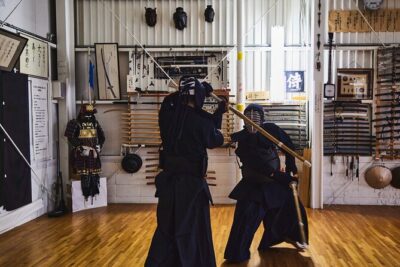

OSAKA NIGHT FUSION Japanese Taiko Kabuki Samurai Dance Show
Read our review →

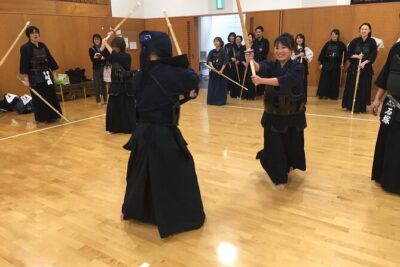
Osaka 2-Hour Genuine Kendo / Samurai Experience In Japan
Read our review →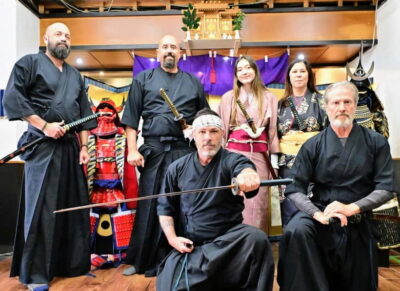
Learn Bushido – Trial Slashing with Samurai Sword
Read our review →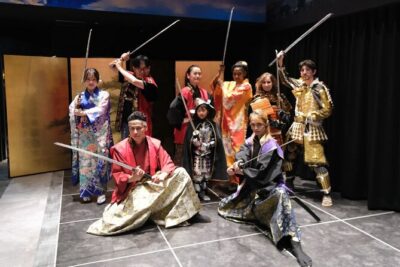
Samurai Show, Tea Ceremony, Japanese Traditional Activities
Read our review →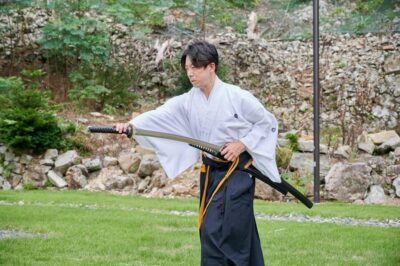
Private Samurai Experience – Train with Sword Master
Read our review →This tour also fits