Reviewed · WORKSHOPS
Immerse in Judo Martial Arts Class from Japan
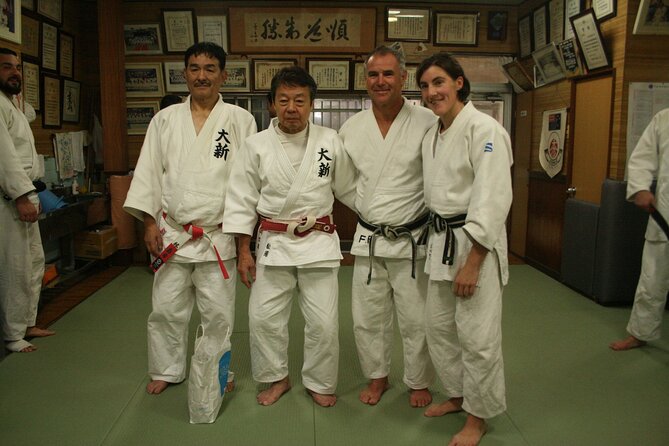
Tatami mats, real judo etiquette, and hands-on practice. This Osaka class happens at Daishin Judo Club, a traditional dojo founded in 1976, with instruction led by 8th dan sensei Akihiro Matsuura. I like that it feels properly Japanese, not like a watered-down demo, and it keeps you on the mat learning how judo is actually practiced.
What I really like is the way the session matches your level. Beginners start with posture and movement basics, plus ukemi (breakfall) and practical grappling. More experienced students can work on nage-waza (throws) and ne-waza (ground techniques), and you can ask questions about judo history too.
One consideration: this is physical contact training. If you want something light and hands-off, you might find the grappling and throwing practice too intense for your comfort.
In This Review
- Key Things I’d Put on Your Radar
- Judo in Osaka at Daishin Judo Club: The Real Deal on the Tatami
- Meet Sensei Akihiro Matsuura, 8th Dan, in a Dojo Founded in 1976
- The 90 Minutes: How Judo Training Actually Unfolds Here
- Beginners: Posture, Ukemi, Grappling, and First Throws
- If You’re Experienced: Nage-waza and Ne-waza Practice Time
- Culture Is Not a Side Note: Etiquette on the Mat
- Small Group Advantage: Maximum 6 Travelers, Real Attention
- Location Near Public Transit: Tennoji Ward and the Dojo Meet-Up
- Price and Value: What $97.55 Buys You in a Small, Instructor-Led Class
- What to Bring, What to Expect, and How to Get the Most Out
- Should You Book This Judo Class in Osaka?
- FAQ
- How long is the judo class?
- Where is the meeting point in Osaka?
- Can beginners participate?
- What if I already know judo?
- Does the instructor speak English?
- How many people are in the class?
Key Things I’d Put on Your Radar
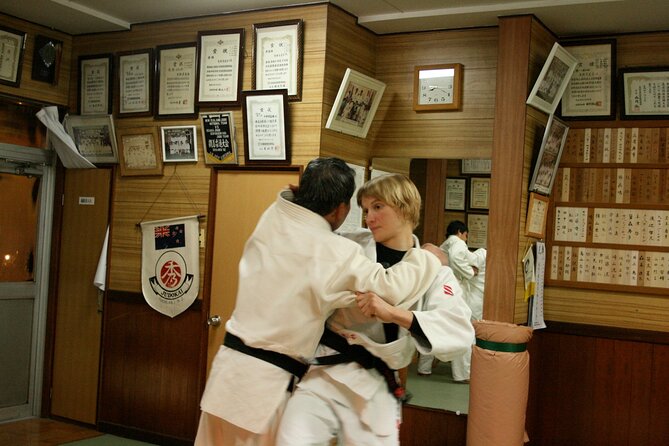
- Traditional dojo, long-running club: Daishin Judo Club has been operating since 1976.
- Top-level instruction: Sensei Akihiro Matsuura is an 8th dan black belt with nearly 50 years teaching.
- Ukemi gets real focus: You learn breakfall technique early, so you can train with better safety and confidence.
- Level-based practice: Beginners focus on fundamentals; experienced students can focus on nage-waza and ne-waza.
- Small class size: Maximum group size is 6, which helps you get attention.
- Language support: The instructor can speak Japanese, English, and Korean.
Judo in Osaka at Daishin Judo Club: The Real Deal on the Tatami
If you’ve ever watched judo and thought it looks controlled and disciplined, this is where that idea turns into something you can feel. In this 90-minute session in Osaka, you practice on a tatami mat at Daishin Judo Club, using the dojo space as it was meant to be used: focused training and respect in motion.
What makes it especially appealing for travelers is that it is not built like a performance. You’re there to learn. That matters, because judo is technique plus etiquette. The bowing, the pacing, and the way partners work together all change the experience from sports lesson to cultural encounter.
I also like that the class is small. With a maximum of 6 travelers, you are less likely to get lost in the group. You can actually correct your posture, ask a question, and get clearer guidance while you try the movements.
Other ways to spend a day in Osaka
- Sushi Making Osaka Roll and Authentic Japanese Sushi Class★ 5.0 · 1,220 reviews
- Matcha Making Class in Osaka with Authentic Japanese Sweets Set★ 5.0 · 509 reviews
- Osaka: Ramen and Gyoza Cooking Class in Dotonbori★ 5.0 · 378 reviews
- Osaka Cooking Class: Okonomiyaki &Japanese cuisines experience★ 5.0 · 261 reviews
- Osaka: Roll and Authentic Sushi Making Class in Dotonbori★ 4.9 · 239 reviews
Meet Sensei Akihiro Matsuura, 8th Dan, in a Dojo Founded in 1976
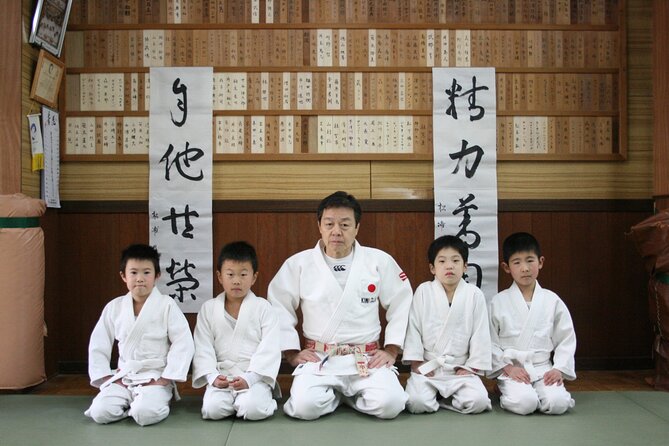
This class runs through Daishin Judo Club, with instruction by sensei Akihiro Matsuura. He is an 8th dan black belt, and the club notes that he has been teaching for almost 50 years. That kind of tenure matters, because judo teaching is built on repetition, calm correction, and safety habits.
The dojo itself was founded in 1976, which gives the training setting a sense of continuity. You are not just visiting a room with mats. You are stepping into a training culture that has been operating for decades.
Another practical win: sensei can speak Japanese, English, and Korean. That reduces the usual stress of doing a sport class in Japan where you feel stuck in translation. Even if you know only a few words, you can still follow the instructions and ask questions.
The 90 Minutes: How Judo Training Actually Unfolds Here
This experience is about 1 hour 30 minutes, and it typically follows a training rhythm you’ll recognize right away if you’ve done any martial arts. Expect a structured flow that goes from basics to partner work, and then into more active practice.
While the exact order can shift by instructor and group, here’s what you can plan on based on the class design.
First, you work on basic posture and movement. This is where you learn how judo starts: stable stance, good balance, and controlled movement. It’s also a good way to calm your body down, because you’re not jumping straight into throwing someone.
Next comes grappling and breakfall technique (ukemi). Ukemi is the skill that lets you train throws without turning every fall into a painful guessing game. Even if you’re careful, breakfalls teach you how to roll and protect yourself.
Then you practice basic throwing forms. For newcomers, the emphasis is on correct movement patterns and learning how throws are initiated. For experienced students, the class can shift toward more technical work.
Finally, you do active partner training. One review described randori as intense and enjoyable. Even if you’re brand new, the energy of judo training is real: you try, you adjust, you partner responsibly, and you feel your skills improve within the session.
Beginners: Posture, Ukemi, Grappling, and First Throws
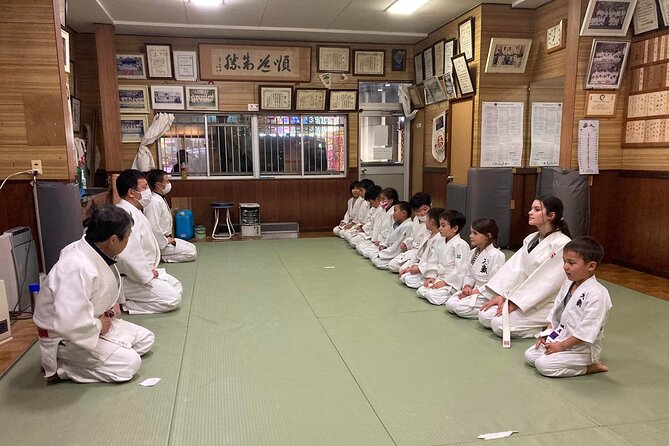
If this is your first time doing judo, you’re in the right kind of class. Beginners are set up with the skills you need to participate safely and meaningfully.
You start with posture and basic movements. It might sound simple, but your whole experience depends on your balance and body alignment. Judo is not about brute strength. If your stance is off, even the best instruction will feel confusing.
Then you learn ukemi, the breakfall technique. This is a big deal in your first class because it directly affects your confidence. When you understand how to fall, your partner training becomes less scary. You can focus on technique instead of survival.
After that, you practice grappling and basic throwing forms. Grappling teaches you how to use grip and body positioning. Throwing forms help you understand the idea of kuzushi (off-balancing) even if the class does not name it like that.
What you’ll appreciate as a beginner is that the training stays practical. You are not just learning theory. You learn movement, you apply it with partners, and you get feedback.
A smart traveler tip: show up ready to move. This class is on the tatami for a full 90 minutes, and your body will be working the whole time, not just watching. Wear comfortable clothing for training, and come with the mindset that technique gets taught in small steps.
If You’re Experienced: Nage-waza and Ne-waza Practice Time
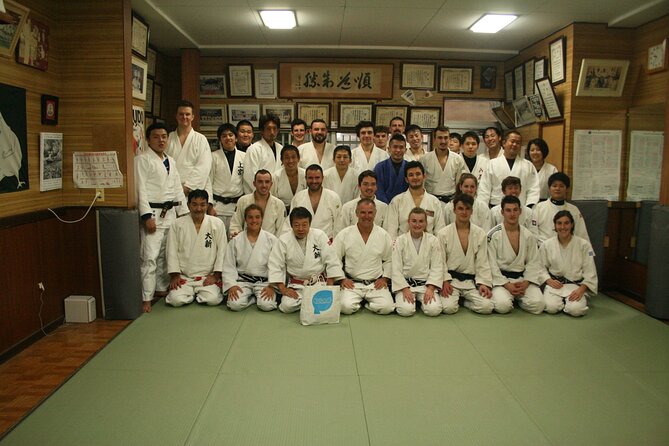
If you already have judo experience, this class still has value. Instead of giving you the same beginner motions, you can focus on the techniques that matter to your level.
The class design explicitly supports experienced students with:
- nage-waza (throwing techniques)
- ne-waza (ground techniques)
That matters because most “try judo once” experiences only cover the first layer. Here, the intention is to let you work on throws and ground control based on what you already know.
You can also ask questions about the history of judo. That’s not fluff. Judo’s modern form is tightly connected to its training culture, and understanding the why behind etiquette can make your practice feel more purposeful.
Also, with an instructor who speaks multiple languages, you can actually ask the technical questions you care about. When you’re working throws and transitions, clear communication helps you avoid frustrating misunderstandings.
Not ready to leave Osaka yet? A few more ways to fill the day.
- Osaka Go Karting Tour with Funny Costume
★ 5.0 · 2,658 reviews - Osaka Castle: Museum and Tower Entry Ticket
★ 4.5 · 2,380 reviews - Osaka: Shinsekai Food Tour with 13-15 Dishes at 5 Eateries
★ 4.8 · 2,204 reviews
Culture Is Not a Side Note: Etiquette on the Mat
This is one of the reasons I think this experience works well in Osaka. Judo training is built around respect, discipline, and self-control. Those aren’t just slogans. They show up in how people move, how partners train, and how the session stays structured.
Even if you only know the basics, you’ll pick up the social rules quickly. You bow, you wait your turn, you train with your partner, and you treat the mat like a classroom. That is part of what makes it a cultural experience rather than just a fitness class.
The instructor also guides students on the principles behind technique: balance, control, and mutual respect. Those ideas are practical. They help you understand why judo feels different from other combat sports that rely more on speed or power.
Small Group Advantage: Maximum 6 Travelers, Real Attention
The group limit is a strong selling point. With a maximum of 6 travelers, you are more likely to get feedback that actually changes your technique.
In a bigger group, you can end up doing the motions while someone else gets the correction. Here, the structure supports more direct coaching, especially important for things like ukemi and throws where form and safety matter.
It also helps you connect with the dojo community. Reviews noted how friendly and respectful the instructors and students were. That tone is exactly what you want when you’re trying something physical in a foreign country. You learn faster when people feel welcoming.
Location Near Public Transit: Tennoji Ward and the Dojo Meet-Up
Your start point is at Daishinjudo Orthopedic Clinic in Tennoji Ward, Osaka: 10-22 Funahashichō, Tennoji Ward, Osaka, 543-0024. The activity ends back at the meeting point.
Because it’s near public transportation, you can fit this into an ordinary Osaka day without needing a taxi plan. Tennoji is a busy area, so expect easy transit access, then a short route to the dojo space for training.
Practical planning idea: schedule this for a time when you are not rushing to transfer hotels or sprinting through multiple neighborhoods. You will want to eat, rest, and stretch afterward. Even if you’re in good shape, grappling and breakfalls take it out of your legs and core.
Price and Value: What $97.55 Buys You in a Small, Instructor-Led Class
At $97.55 per person for about 1 hour 30 minutes, this is not a budget activity. But in martial arts terms, it’s priced in the lane of guided instruction, not a casual street demo.
The value comes from a few things:
- Long-time, high-level teaching: an 8th dan instructor with decades of experience.
- Small class size: maximum 6 travelers, which supports real coaching.
- Clear skill structure: posture, ukemi, grappling, and level-based throwing or ground practice.
- Multilingual help: Japanese, English, and Korean support reduces friction.
You are also paying for cultural authenticity. Training at a real dojo, founded in 1976, changes how you experience judo. That’s hard to replicate with a generic activity, and it’s exactly why this kind of experience tends to get booked about a month in advance.
What to Bring, What to Expect, and How to Get the Most Out
The essentials you can prepare for are simple: you will train on tatami and do physical practice with partners. Bring comfortable clothing for training, and keep your expectations realistic for day one.
Here’s how to get more out of the session:
- Arrive with a beginner mindset even if you have some martial arts background. Judo has its own rules of grip, balance, and falling.
- Listen carefully during ukemi instruction. Breakfalls are not optional in spirit, they are the foundation that makes training safer.
- Ask questions when you don’t understand. The instructor can speak multiple languages, so don’t guess if you’re unsure.
- Focus on control over speed. Judo rewards balance and correct movement more than rushing.
If you’re worried about intensity, remember that you can choose how you train within the session. You can try hard while still respecting your comfort level. The point is learning, not proving toughness.
Also, one more practical note: the activity allows service animals, and most people can participate. If you have injuries or limitations, you’ll want to mention them in advance so the instructor can guide you toward safer practice.
Should You Book This Judo Class in Osaka?
I think you should book it if you want a genuine, hands-on judo experience with real instructor guidance in a traditional setting. It’s especially strong for first-timers who want ukemi and fundamentals, and for experienced students who want to work on nage-waza and ne-waza in a structured way.
Skip it if you hate physical contact sports, or if the idea of grappling and breaking falls makes you uneasy. This is training on the mat, not a sit-and-watch class.
If you fit the audience, this is one of those Osaka activities that gives you a story you can feel in your body, not just a photo. And with small group size and multilingual coaching, you have a good chance of leaving with better technique and clearer confidence.
FAQ
How long is the judo class?
The class lasts about 1 hour 30 minutes.
Where is the meeting point in Osaka?
You meet at Daishinjudo Orthopedic Clinic, 10-22 Funahashichō, Tennoji Ward, Osaka, 543-0024, Japan. The activity ends back at the meeting point.
Can beginners participate?
Yes. Beginners practice basic posture and movements, learn ukemi (break falling), do grappling, and practice some basic throwing forms.
What if I already know judo?
If you have experience, you can focus on throwing techniques (nage-waza) and ground techniques (ne-waza). You can also ask about the history of judo.
Does the instructor speak English?
Yes. The instructor can speak Japanese, English, and Korean.
How many people are in the class?
There is a maximum of 6 travelers per session.
Just added around Osaka


Workshops, compared.

Sushi Making Osaka Roll and Authentic Japanese Sushi Class
Read our review →
Matcha Making Class in Osaka with Authentic Japanese Sweets Set
Read our review →
Osaka Cooking Class: Okonomiyaki &Japanese cuisines experience
Read our review →
Roll and Authentic Sushi Making Class in Dotonbori
Read our review →