
Reviewed · TEA CEREMONY & MATCHA EXPERIENCES
Learn The Tea Ceremony And Make Your Matcha Tea Bowl In Osaka
Matcha, pottery, and a real Osaka neighborhood. I like the photo-friendly tea ceremony and the hands-on kurinuki bowl making, but you do not get the finished bowl immediately and shipping costs extra. This double workshop is in a century-old studio in Ikuno Ward, so it feels local from minute one.
You can ask questions freely during the tea portion and take as many photos as you want, which makes the whole class feel relaxed, not stiff. The guides, including tea master Jamie and ceramist Anna, are part of why it works so well, especially when Anna helps you find the location right after you arrive.
The main trade-off is timing: your bowl is sent to your address after a few months, and shipping is not included in the price. If you want a takeaway souvenir you can hold right away, plan on the small dish gift as your on-the-spot item.
In This Review
- Key highlights
- A Two-Part Workshop in Ikuno Ward You Can Actually Enjoy
- Tea Ceremony Basics, Matcha, and Japanese Sweets
- Making a Matcha Tea Bowl with Anna and the Kurinuki Method
- The Century-Old Studio Setting in a Local Ikuno Ward
- What You Take Home: Small Dish Gift and a Bowl Shipped Later
- Price and Value: What You Pay for at $109.81
- Photos, Questions, and Comfort: The Experience That Feels Welcoming
- How to Plan Your Osaka Day Around a 2-Hour Class
- Who Should Book This Tea Ceremony and Bowl Workshop
- Should You Book This Osaka Workshop?
- FAQ
- How long is the Osaka tea ceremony and bowl-making experience?
- Where is the meeting point?
- Is this a private experience?
- What is included in the tea portion?
- Can I take photos and ask questions during the ceremony?
- What will I make during the pottery workshop?
- When will the finished bowl be shipped to me, and what about shipping costs?
- Is the experience dependent on weather?
- What is the cancellation policy?
- Is this experience recommended for limited mobility?
Key highlights
- Tea ceremony with lots of questions and photo time, so you can actually learn as you go
- Kurinuки bowl workshop with ceramist Anna in a century-old two-storey studio
- Matcha plus Japanese sweets included, with a small dish gift for later
- Private group setup, so you are not squeezed into a large crowd rhythm
- Finished bowl shipment (not included shipping fee), so budget for later delivery
A Two-Part Workshop in Ikuno Ward You Can Actually Enjoy
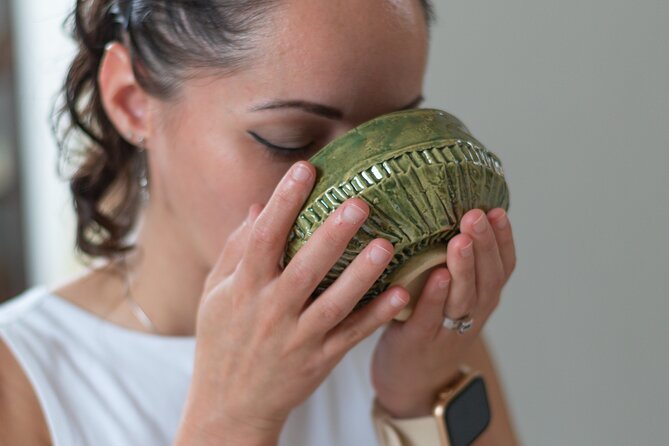
This is not a rushed, one-time performance. It is a double workshop that mixes basics of the tea ceremony with a hands-on pottery project, all in one place. You start near Teradachō Station, and you finish back there too, which keeps your day tidy.
What I like most is the balance between structure and freedom. The tea master teaches you how to prepare tea, then you get to do it yourself. You can ask questions during the ceremony portion and take photos whenever you want, so you leave with both a new skill and real memories.
It is also a private setup, meaning it is only your group. That matters in a workshop like this, because you can slow down, ask follow-ups, and actually pay attention without the class feeling like a conveyor belt.
Slow down for a bowl of matcha
- Osaka: Tea Ceremony Experience★ 4.9 · 1,426 reviews
- Tea Ceremony Experience in Osaka Doutonbori★ 5.0 · 754 reviews
- Matcha Making Class in Osaka with Authentic Japanese Sweets Set★ 5.0 · 509 reviews
- Osaka: Matcha Making Experience with Japanese Sweets★ 5.0 · 146 reviews
- Osaka: Japanese Traditional Sweets Making and Tea Ceremony★ 4.7 · 118 reviews
Tea Ceremony Basics, Matcha, and Japanese Sweets
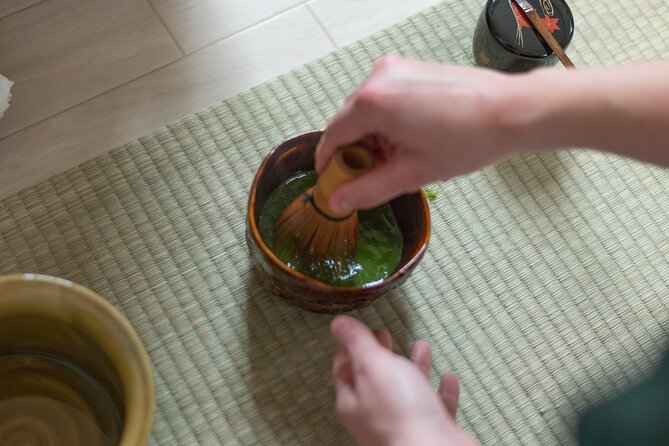
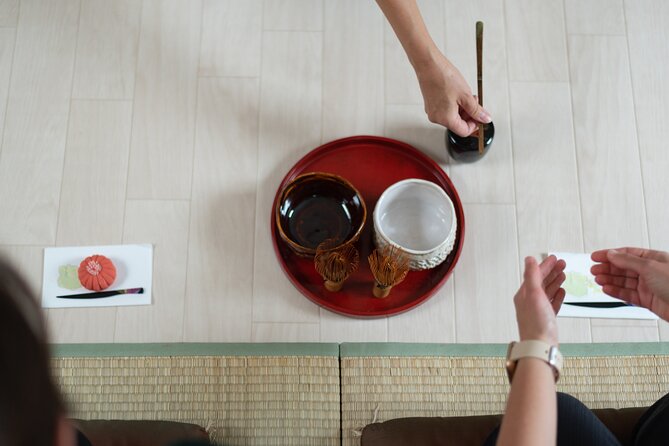
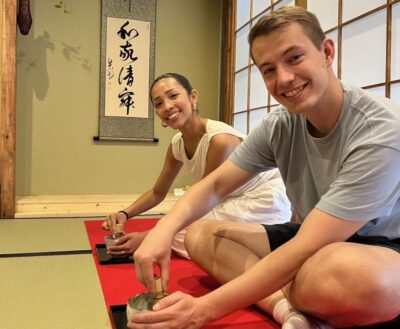
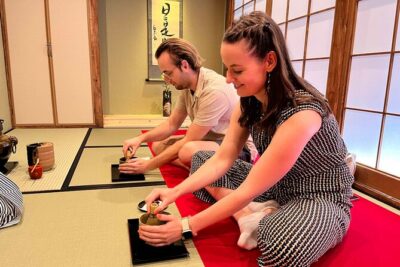
The tea half of the experience introduces you to traditional Japanese tea ceremony in a way that is meant for beginners. You learn the basics from a tea master, Jamie, then you get to prepare tea yourself. This is the part where you can ask questions freely, which is great because tea etiquette and tools can be unfamiliar the first time you see them.
You also get matcha tea and Japanese sweets as part of the experience. That is not just a snack break. The sweets are meant to pair with the tea ceremony, so you experience the full rhythm, not just a drink demo.
One practical bonus: you can take as many photos as you like. Some tea activities feel strict about filming, but here the tone is more welcoming, which helps if you want to remember details like how the tools look and how the serving moments flow.
Making a Matcha Tea Bowl with Anna and the Kurinuki Method
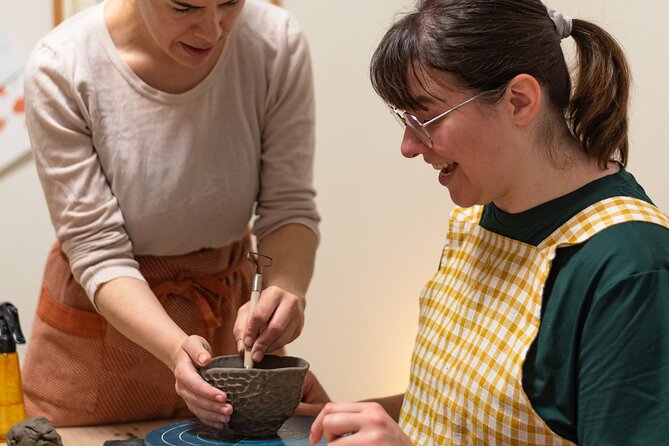
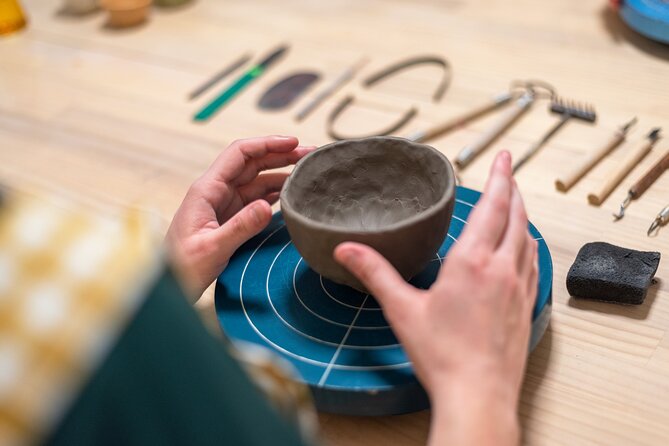
After the tea portion, you switch gears to pottery. You work with ceramist Anna, who studied pottery in Osaka. You shape and decorate your own matcha tea bowl using a traditional Japanese pottery technique called kurinuki.
This is where the experience becomes hands-on in a different way. Instead of watching how it is done, you are making something with your own hands. Even if your pottery skills are zero, the whole point is learning through doing, not testing your talent.
Decoration is included, and you leave knowing you created a real object, not a paper craft or a souvenir you barely touched. It is also a good contrast to the tea ceremony. Tea is quiet, slow, and precise. Pottery is physical and forgiving, because you are learning a process rather than chasing perfection.
The Century-Old Studio Setting in a Local Ikuno Ward
The workshops happen in their studio, a century-old two-storey building in Ikuno Ward. That kind of setting changes the feel of a class. You are not in a bright, generic workshop room built for tourists. You are in a real neighborhood place, which makes the whole experience feel more grounded.
Anna meets guests to help you find the location, and that is a big deal in Osaka. Station exits can be confusing, and a local guide helps you start the experience without stress. In the same spirit, the studio being in a very local area means you can add extra time afterward. Once class ends, you can explore around Ikuno Ward at your own pace instead of jumping immediately back into the most tourist-heavy areas.
Keep in mind the location is near public transportation, so you do not need a complicated commute plan. You just need to show up and find the meeting point, then the rest is handled.
What You Take Home: Small Dish Gift and a Bowl Shipped Later
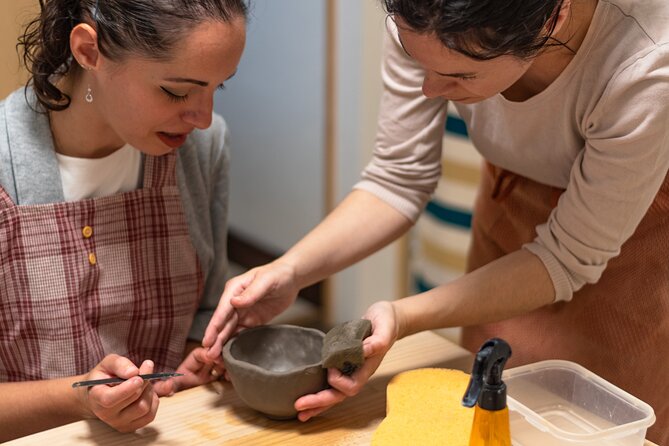
There are two takeaways, and they arrive on two different schedules.
First, you receive a small dish as a gift. The idea is you can use it later to enjoy sweets for tea ceremony at home. That is a clever touch because it extends the experience beyond the two hours in Osaka.
Second, your matcha tea bowl is shipped to the address you provide. The timing is given as after about 2 months in the main description, and after 3 months in the additional notes. In practice, you should treat it as an approximate window and plan for a wait.
Shipping costs are not included. So think of the bowl as a long-term keepsake. If you are traveling with lots of luggage, shipping can be a relief. If you want a souvenir immediately, this is not the setup.
Not ready to leave Osaka yet? A few more ways to fill the day.
- Osaka Go Karting Tour with Funny Costume
★ 5.0 · 2,658 reviews - Osaka Castle: Museum and Tower Entry Ticket
★ 4.5 · 2,380 reviews - Osaka: Shinsekai Food Tour with 13-15 Dishes at 5 Eateries
★ 4.8 · 2,204 reviews
Price and Value: What You Pay for at $109.81
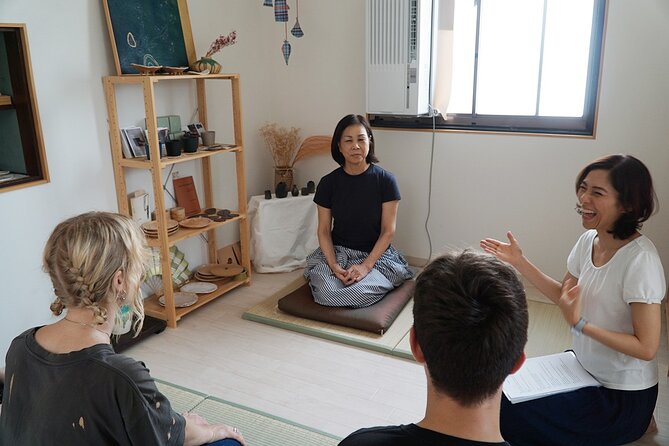
At $109.81 per person for about 2 hours, this workshop is paying for two things at once: a tea ceremony lesson and a pottery creation session. That makes it feel more like a compact cultural day than a single activity.
You also get included refreshments and materials as part of the experience: matcha tea and Japanese sweets, plus coffee and/or tea are listed. There is a guide who is licensed or certified, which is the kind of detail you want for something traditional, because it signals you are being taught by someone with real credentials.
The private group format also adds value. Even when the duration is short, you are not sharing the attention of the tea master and ceramist with a large crowd. That matters for learning, especially when you can ask questions and try the preparation yourself.
The main value question is timing and shipping. If you are okay waiting a couple months for your bowl and handling shipping costs separately, the price feels easier to justify. If you need a take-home object today, you will likely feel the trade-off.
Photos, Questions, and Comfort: The Experience That Feels Welcoming
One of the most practical, underrated parts of this workshop is how it handles participation. You can ask questions freely and take as many photos as you like during the tea ceremony. That removes a lot of pressure for people who worry they will be judged for being new.
In a class like this, your questions are not only allowed, they are useful. Tea tools and steps can look simple, but small details matter, and those details are exactly what photos help you remember later.
Also, the guides are described as friendly and supportive, with Anna even meeting people at the station to help you get oriented. When you start a traditional class without stress, you tend to learn more and enjoy it more.
How to Plan Your Osaka Day Around a 2-Hour Class
Plan for a short but full session. The tour runs about 2 hours, and it ends back at the meeting point. That means you can schedule it between other Osaka stops without losing half a day.
Because the bowl is shipped later, do not build your schedule around taking it with you. Treat this like a skill day and a memory day, not a walk-out-with-a-souvenir day.
It helps to know the studio is in Ikuno Ward, which is described as very local. If you want to add time afterward, do it. This is the kind of neighborhood where side streets can be more interesting than you expect, and it is a nice contrast to Osaka’s big, famous zones.
One more planning note: the experience requires good weather. If it is canceled due to poor weather, you are offered a different date or a full refund.
Who Should Book This Tea Ceremony and Bowl Workshop
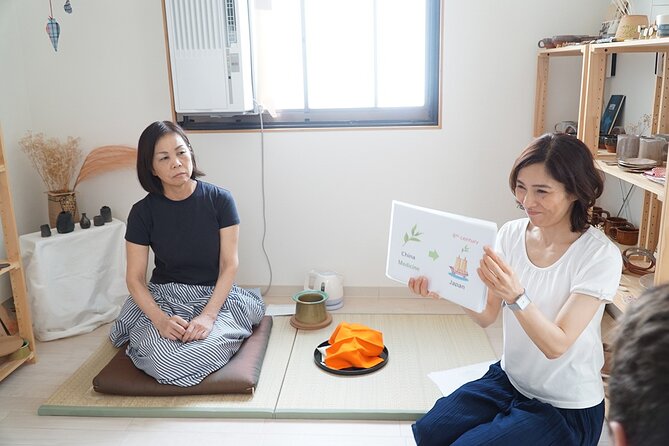
Book this if you want a hands-on cultural experience with real teaching and room to participate. It is especially a good fit if you like practical learning, photos, and questions. You will not just watch the tea ceremony. You prepare it yourself.
It is also a strong choice if you are interested in pottery and want to make an item you can later use at home. The small dish gift plus the shipped bowl makes this feel like a two-stage keepsake.
It is private and focused, but it is not recommended for people with limited mobility. If that applies to you, it is worth checking carefully how the studio space works before booking.
Should You Book This Osaka Workshop?
If you like the idea of learning tea ceremony basics, then following it with making your own matcha tea bowl, this is a smart book. The photo-friendly format, the chance to prepare tea yourself, and the friendly support from Anna and tea master Jamie are all strong reasons to pick it over a more rigid, performance-only option.
I would pass only if you need an immediate, carry-home souvenir, or if waiting for the bowl shipment and handling extra shipping costs would annoy you. Otherwise, this is a well-paced, local-feeling Osaka experience with real skills and a keepsake that lasts.
FAQ
How long is the Osaka tea ceremony and bowl-making experience?
It lasts about 2 hours.
Where is the meeting point?
You start at Teradachō Station, 2 Chome-3 Tennojichokita, Abeno Ward, Osaka 545-0001, Japan.
Is this a private experience?
Yes. It is private, so only your group participates.
What is included in the tea portion?
Matcha tea and Japanese sweets are included.
Can I take photos and ask questions during the ceremony?
Yes. You can ask questions freely and take as many photos as you like during the tea ceremony.
What will I make during the pottery workshop?
You will make a matcha tea bowl using the kurinuki method, with help from the ceramist Anna.
When will the finished bowl be shipped to me, and what about shipping costs?
The bowl is shipped after about 2 to 3 months. Shipping costs are not included in the tour price.
Is the experience dependent on weather?
Yes. It requires good weather. If it is canceled due to poor weather, you will be offered a different date or a full refund.
What is the cancellation policy?
You can cancel up to 24 hours in advance for a full refund.
Is this experience recommended for limited mobility?
No, it is not recommended for individuals with limited mobility.
Just added around Osaka


Tea Ceremony & Matcha Experiences, compared.
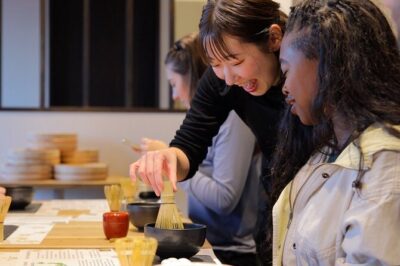
Matcha Making Class in Osaka with Authentic Japanese Sweets Set
Read our review →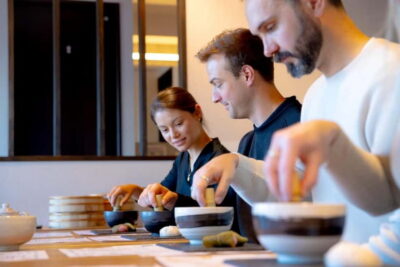
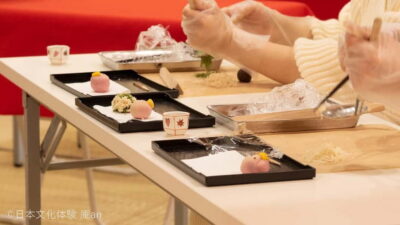
Japanese Traditional Sweets Making and Tea Ceremony
Read our review →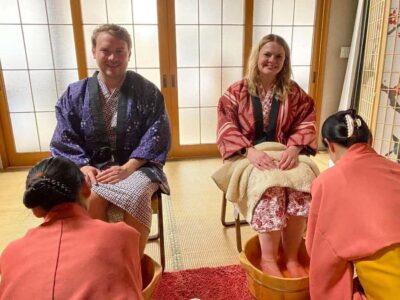
Osaka Temple Cool Foot Bath & Matcha Experience〈45min〉
Read our review →
Samurai Show, Tea Ceremony, Japanese Traditional Activities
Read our review →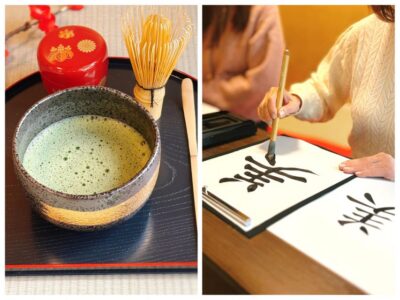
This tour also fits