Reviewed · WORKSHOPS
Osaka: Noh Performance with English Subtitles and Workshop
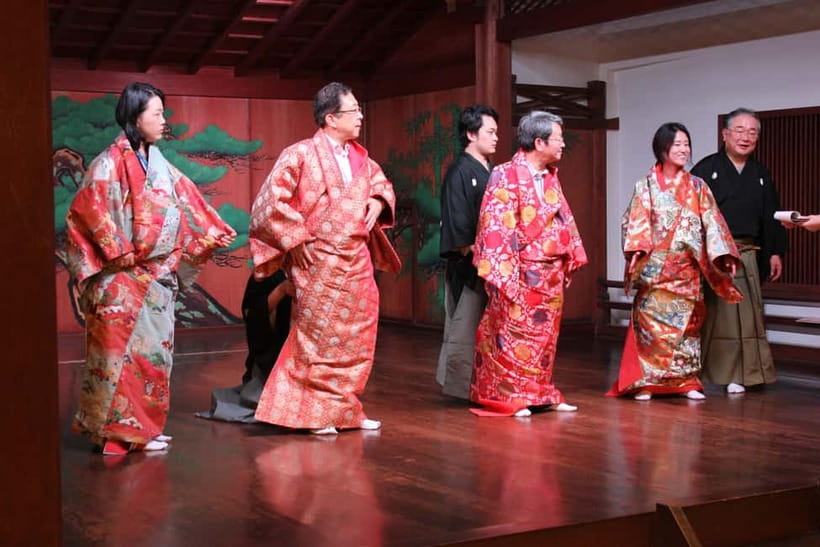
Noh feels like a time machine. I love the English subtitles and the clear pre-show explanation that helps you actually follow what you are seeing. I also like the hands-on part after the performance, where you try on Noh masks and costumes and even handle instruments, though you will have to enjoy it without photos or video inside.
What makes this one especially handy is the setting. The Yamamoto Noh Theater sits in the former samurai residence area near Osaka Castle, and it has been operating since 1927, with Japanese Tangible Heritage status added in 2006.
In This Review
- Key things to know before you go
- Yamamoto Noh Theater near Osaka Castle: a smart, cultural stop
- Pre-show briefing and English subtitles that actually help
- The Noh performance experience: guided viewing, not guesswork
- After the show workshop: masks, costumes, and instruments you can try
- Exploring the former samurai area near the theater
- Value and timing: what you get for $32 in 2 hours
- Rules, age limits, and who this fits best
- Should you book this Osaka Noh performance with workshop?
- FAQ
- Where is the Noh performance held?
- How long is the experience?
- How much does it cost?
- What languages are available during the experience?
- Are English subtitles provided?
- Is the venue wheelchair accessible?
- Is photography or video recording allowed inside?
- Is this suitable for children?
- What can I do after the performance?
Key things to know before you go
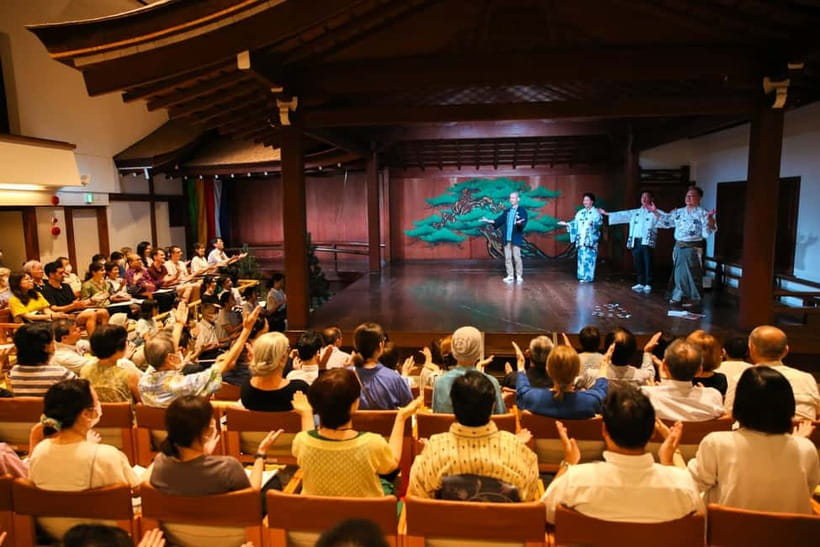
- A beginner-focused pre-show talk that covers Noh and the Yamamoto Noh Theater
- English subtitles built into the performance, so you are not stuck without context
- Hands-on try-on time for Noh masks, costumes, and the instruments used in the show
- A historic venue close to Osaka Castle, about a 10-minute walk away
- English support from the host and translator help, plus time for audience questions in at least some sessions
Yamamoto Noh Theater near Osaka Castle: a smart, cultural stop
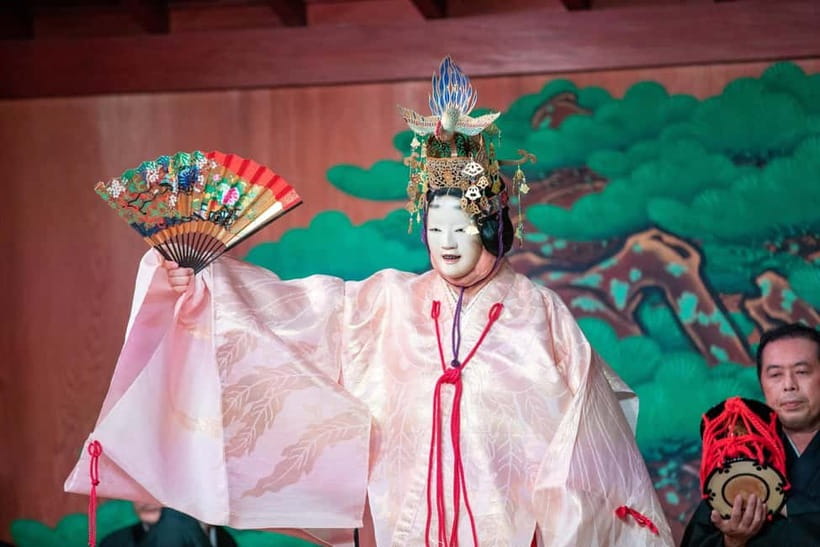
This Noh experience takes place at Yamamoto Noh Theater in Osaka, in the former samurai residence area near Osaka Castle. If you are already planning to see the castle area, this is one of the easier cultural add-ons, since it is about a 10-minute walk.
The theater itself is part of the appeal. It was established in 1927, and it is considered the oldest Noh theater in Osaka. It also received Japanese Tangible Heritage registration in 2006, which matters because it helps explain why the theater experience feels careful and tradition-forward rather than generic.
In practical terms, that old-school setting pairs well with a beginner show. You get a proper venue for Noh, plus an explanation ahead of time to get your bearings.
Other ways to spend a day in Osaka
- Sushi Making Osaka Roll and Authentic Japanese Sushi Class★ 5.0 · 1,220 reviews
- Matcha Making Class in Osaka with Authentic Japanese Sweets Set★ 5.0 · 509 reviews
- Osaka: Ramen and Gyoza Cooking Class in Dotonbori★ 5.0 · 378 reviews
- Osaka Cooking Class: Okonomiyaki &Japanese cuisines experience★ 5.0 · 261 reviews
- Osaka: Roll and Authentic Sushi Making Class in Dotonbori★ 4.9 · 239 reviews
Pre-show briefing and English subtitles that actually help
Your 2-hour visit is designed with first-time viewers in mind. Before the performance, you get an explanation that supports what you are about to see, including context about the history of Noh and the Yamamoto Noh Theater. That pre-show talk is a big deal, because Noh is not a casual, plot-driven theater style where everything is obvious from the stage alone.
Then comes the performance, with English subtitles provided. If you do not read Japanese, this is the difference between feeling confused and feeling engaged. You can follow along in real time and connect what the subtitles mean to what you are watching on stage.
One more thing: the host or greeter is listed as English and Japanese. That matters because if you have questions, you are not limited to guessing. I also like that the experience is explicitly described as supported with English subtitles for non-Japanese speakers.
Note on conduct inside the hall: video recording and photography are not allowed. So plan on enjoying it with your eyes and memory, not your camera.
The Noh performance experience: guided viewing, not guesswork
The performance itself is the heart of the experience, and it is set up to be accessible. You are not just dropped into a full theater event. The format includes a pre-performance explanation, and the show comes with English subtitles so you can follow the meaning.
You also get a nice bonus after the performance, where the theater owner and staff interact with the audience. In at least some sessions, the owner answers more than 10 questions from the audience, with a translator helping non-Japanese speakers. That is a great moment for you if you have been wondering things during the show, like what certain elements are for or how to think about the performance as a whole.
If you are the type who likes to learn by asking questions, this part can make the whole evening feel more personal. If you prefer a quiet, no-interaction experience, you may still appreciate it, but you should know there is room for audience communication after the show.
After the show workshop: masks, costumes, and instruments you can try
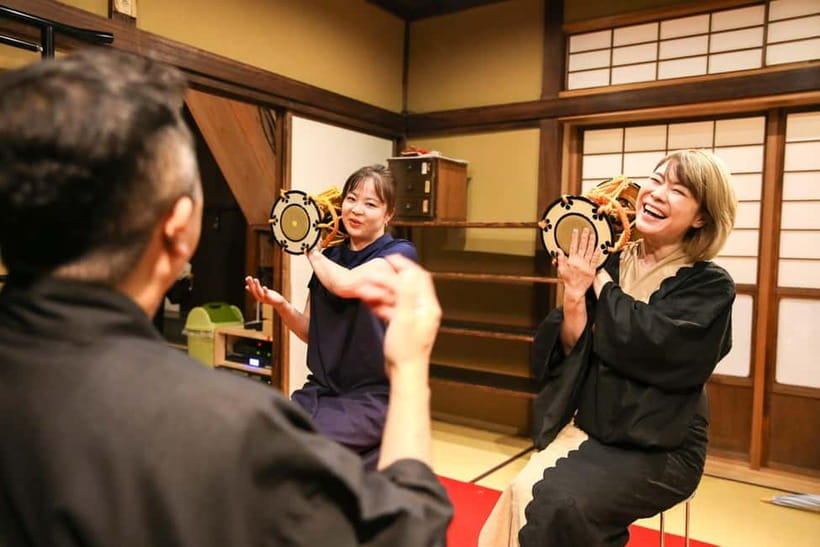
This is the section I would highlight if you are choosing based on hands-on value. After the performance, you get time to try on Noh masks, costumes, and musical instruments used in the performance.
That try-on element does something practical. It turns abstract theater details into physical understanding. When you hold an instrument used in Noh, or put on a mask or costume, you start to see how props and presentation shape the performance.
It also helps you remember the show afterward. Noh can feel very formal and symbolic, and trying on the items gives your brain an anchor. You leave with images in your mind and a stronger sense of what you just watched.
A small tip for making the try-on part more comfortable: dress in a way that lets you move easily and handle items without fuss. You will be wearing or handling things, so avoid anything that feels fragile or hard to adjust.
Also, the workshop includes musical instruments beyond just a single item. One comment said it would be helpful to see more instruments and have a music booklet available, so if you are the kind of person who likes a paper guide for what you are touching, you might want to come ready to ask staff questions during the hands-on time.
Exploring the former samurai area near the theater
Your itinerary includes exploring the former samurai residence area near Osaka Castle as part of the overall experience. Since the theater is around a 10-minute walk from Osaka Castle, this is a natural pairing for your day.
I like this because it keeps your time from feeling locked inside the theater. You get a cultural contrast, too. Noh is steeped in tradition, and then walking around the historic samurai neighborhood helps you place that tradition in the geography of Osaka.
If you want to make this stop feel extra rewarding, plan it when you have enough energy to walk around afterward. It is not the kind of activity you want to rush through.
Not ready to leave Osaka yet? A few more ways to fill the day.
- Osaka Go Karting Tour with Funny Costume
★ 5.0 · 2,658 reviews - Osaka Castle: Museum and Tower Entry Ticket
★ 4.5 · 2,380 reviews - Osaka: Shinsekai Food Tour with 13-15 Dishes at 5 Eateries
★ 4.8 · 2,204 reviews
Value and timing: what you get for $32 in 2 hours
At $32 per person for a 2-hour experience, the value comes from the mix of learning plus doing. You are not only watching a Noh performance. You also receive:
- a pre-show explanation
- English subtitles
- hands-on time with masks, costumes, and instruments
For many visitors, the workshop is the difference between a standard ticket purchase and a full cultural encounter. You are paying for context, guided viewing, and participation, all in one sitting.
Timing-wise, the experience is 2 hours, and you can check starting times based on availability. If you like building a day around one key cultural activity, this length is workable. It also helps you fit in Osaka Castle nearby without turning the day into a marathon.
For flexibility, the booking options are designed for travelers who might adjust plans, including reserve now and pay later, plus free cancellation up to 24 hours in advance for a full refund. That is useful if you are still juggling train times or other Osaka reservations.
Rules, age limits, and who this fits best
This activity is wheelchair accessible, which is great. It also has a clear age guideline: it is not suitable for children under 7.
You will want to keep the hall rules in mind. Video recording is not allowed, and photography inside is also not allowed. If your goal is to film performances for later review, you should know upfront that you will not be able to.
Language support is another practical factor. You have English subtitles, and the host or greeter works in English and Japanese. That makes this a strong choice if you want a cultural show in Osaka but you do not want to lose the meaning.
Where this experience shines:
- first-time Noh viewers who want a beginner-friendly explanation
- people who value English subtitles and support
- travelers who want to touch and try the cultural items after the show
Where it may feel less ideal:
- families with children under 7
- anyone who needs to record video or take photos inside the theater
- people who prefer a fully self-guided experience with no Q&A or discussion component
Should you book this Osaka Noh performance with workshop?
Book it if you want a structured introduction to Noh without needing to study first. The combo of a pre-show explanation, English subtitles, and the hands-on mask, costume, and instrument workshop is exactly the kind of format that turns a foreign-language theater event into something you can actually enjoy and understand.
Skip it if you are bringing younger kids under 7, or if you would feel frustrated by the no-photo and no-video rules. Also, if you are the kind of viewer who wants to rely only on your own device for explanations, know that the support here is built into the show through subtitles and staff help, not through phone-based extras.
If you are already in the Osaka Castle area, this is a smart cultural pairing. You get a historic theater experience, then you step back into a nearby historic neighborhood. That is the kind of night in Osaka that feels different from just checking another building off a list.
FAQ
Where is the Noh performance held?
It takes place at Yamamoto Noh Theater in Osaka, in the former samurai residence area near Osaka Castle.
How long is the experience?
The experience lasts 2 hours.
How much does it cost?
It is listed at $32 per person.
What languages are available during the experience?
The host or greeter provides English and Japanese, and English subtitles are included for the performance.
Are English subtitles provided?
Yes, the performance includes English subtitles.
Is the venue wheelchair accessible?
Yes, the experience is wheelchair accessible.
Is photography or video recording allowed inside?
No. Video recording and photography inside are not allowed.
Is this suitable for children?
No, it is not suitable for children under 7 years old.
What can I do after the performance?
After the performance, you can try on Noh masks, costumes, and musical instruments.
Just added around Osaka

Workshops, compared.

Sushi Making Osaka Roll and Authentic Japanese Sushi Class
Read our review →
Matcha Making Class in Osaka with Authentic Japanese Sweets Set
Read our review →
Osaka Cooking Class: Okonomiyaki &Japanese cuisines experience
Read our review →
Roll and Authentic Sushi Making Class in Dotonbori
Read our review →