
Reviewed · COOKING CLASSES
Osaka Okonomiyaki Cooking Class “Learn here and make it at home”
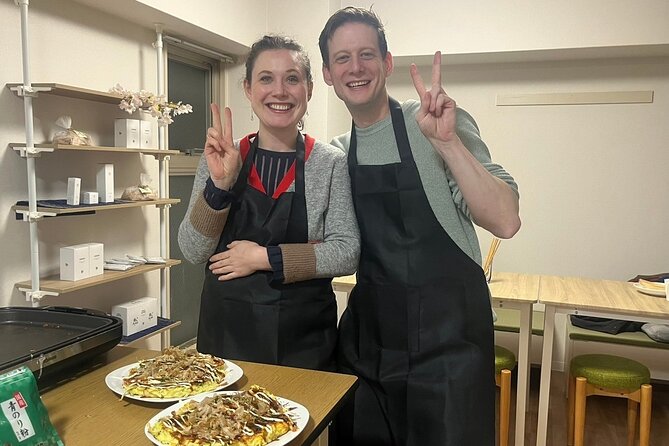
Your hands learn Osaka fast. In this hands-on cooking class, you’ll make Okonomiyaki and Takoyaki step by step, and I especially like the practical instruction that keeps you moving, not just watching. I also like the sit-down tasting right after, with your creations paired with drinks. The main trade-off is simple: transportation is not included, so you’ll want to plan how you’ll get yourself to the kitchen near Shinsaibashi and Honmachi.
What makes it feel extra doable is the teaching setup. You get an English-speaking instructor, and you can request Japanese- or Spanish-speaking support. The class caps at 8 travelers, which helps keep the pace friendly, and many people value that intimate, interactive vibe.
In This Review
- Key Points to Know Before You Go
- Why Okonomiyaki and Takoyaki Fit a Hands-On Osaka Evening
- Getting There Near Shinsaibashi and Honmachi, Without the Stress
- Inside WashokuYanen’s Kitchen: Small Group, Lots of Guidance
- Your 30-Minute Orientation: The Part That Makes Home Cooking Possible
- Cooking Time (About 1.5 Hours): Making Both Dishes Instead of Watching
- The 1-Hour Tasting: Eat, Compare, and Talk Food
- What You Learn So You Can Make It at Home Again
- Price and Value: What $70 Really Covers
- Who This Class Is Best For (And Who Might Want Something Else)
- A Practical Osaka Evening Plan
- Should You Book This Osaka Okonomiyaki and Takoyaki Class?
- FAQ
- What dishes will I learn to make?
- How long is the cooking class?
- What is the class schedule like?
- Is there an English-speaking instructor?
- Are alcoholic drinks included?
- Do I need to bring any ingredients or tools?
- Where is the meeting point?
- Is the kitchen near public transportation?
- Can I request vegetarian or allergy accommodations?
- What is the group size limit?
- Can I cancel for a refund?
Key Points to Know Before You Go
- You cook both Osaka staples: Okonomiyaki (savory pancake) and Takoyaki (octopus-filled dough balls), not just one dish
- Small group size: up to 8 travelers keeps it conversational and hands-on
- Ingredients, tools, and gloves are provided: you just show up ready to cook
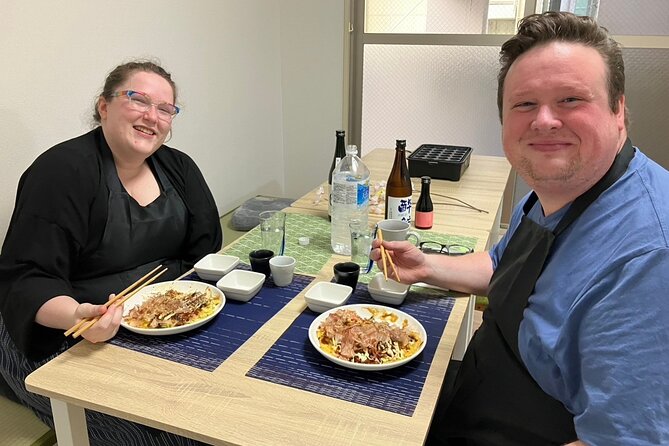
- A real tasting moment: you relax and eat what you made, with sake/beer for adults 20+
- Recipe support helps you repeat it later: written recipes and ingredient packaging guidance make home cooking easier
Why Okonomiyaki and Takoyaki Fit a Hands-On Osaka Evening
Osaka has a reputation for food you can eat with your hands, food that’s fast, fun, and seriously local. Okonomiyaki and Takoyaki hit that sweet spot. Okonomiyaki is a savory pancake built from batter, shredded cabbage, and fillings like pork or seafood, then finished with sauce, bonito flakes, and usually seaweed ingredients. Takoyaki is a round, fried snack, filled with octopus, topped with sauce, bonito flakes, and seaweed powder.
A cooking class is a smart way to understand these dishes because both rely on texture. The batter thickness matters. Heat control matters. Even how you assemble fillings matters. This class gives you a chance to feel that, not just read about it.
And it’s not just a meal. You’re learning how these flavors get built, one step at a time, so you’ll know what to look for when you try again at home.
Other ways to spend a day in Osaka
- Osaka: Ramen and Gyoza Cooking Class in Dotonbori★ 5.0 · 378 reviews
- Osaka Cooking Class: Okonomiyaki &Japanese cuisines experience★ 5.0 · 261 reviews
- Ramen and Gyoza Cooking Class in Osaka★ 5.0 · 202 reviews
- Osaka Sake Tasting with Takoyaki Cooking★ 5.0 · 156 reviews
- Osaka Sake Tasting & Takoyaki Cooking Experience★ 5.0 · 149 reviews
Getting There Near Shinsaibashi and Honmachi, Without the Stress
This kitchen is in central Osaka, in a quiet neighborhood, but still close to major stations. You’re looking at a walk of about 5 minutes from both Shinsaibashi and Honmachi on the Osaka Metro.
The meeting point is listed at 南船場コレット9044-chōme-3-1 Bakurōmachi, Chuo Ward, Osaka, 541-0059, Japan. Since private transportation is not included, you’ll want to treat this like a normal meetup point. Plan to arrive a little early so you can get settled, especially if you’re juggling subway navigation right before cooking.
One nice practical detail: the setting feels calm for being in the middle of everything. That matters when you’re trying to focus on technique, not traffic noise.
Inside WashokuYanen’s Kitchen: Small Group, Lots of Guidance
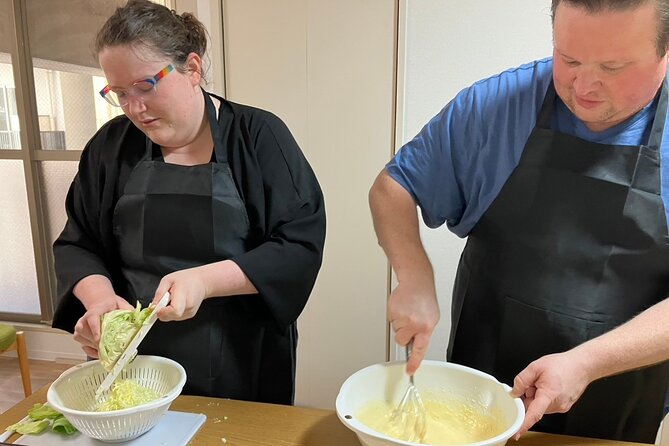
This class is run by WashokuYanen, and it’s designed for real participation. With a maximum of 8 travelers, you’re less likely to feel like you’re stuck behind a line of people watching from the sidelines.
You’ll also get gear and a clean setup. Aprons and disposable plastic gloves are provided, which helps you stay comfortable when you’re handling hot tools and ingredients. Kitchen tools for the cooking class are also included, so you do not need to bring a single utensil or specialty gadget.
Language support is another reason this works well. Your instructor is English-speaking. If you want more help, you can request Japanese-speaking or Spanish-speaking instructors as well. In practice, that kind of flexibility makes it easier to ask follow-up questions during cooking, especially when you want to understand why a step is done a certain way.
Finally, you’ll get a mobile ticket. That’s usually a fast check-in style, which helps you start cooking without a long waiting loop.
Your 30-Minute Orientation: The Part That Makes Home Cooking Possible
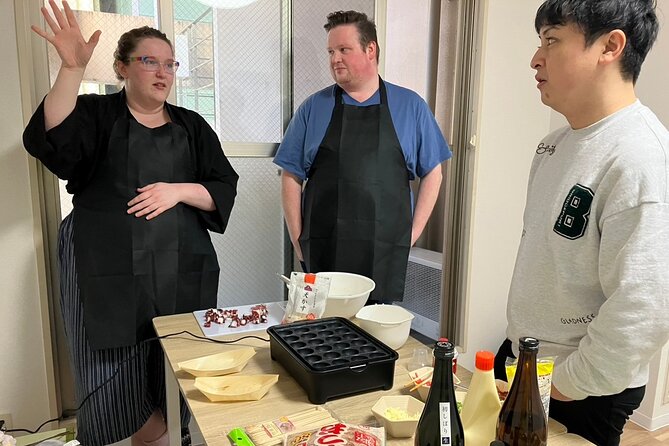
The class starts with an orientation and preparation session that lasts about 30 minutes. This is where the lesson earns its keep.
You’ll get a step-by-step walkthrough of what goes into each dish and how the process works. For Okonomiyaki, that typically includes batter, shredded cabbage, and options for fillings like pork or seafood, plus the finishing toppings such as sauce and bonito flakes. For Takoyaki, you’ll focus on the basics of making the batter-based snack, using octopus as the filling, then topping with sauce, bonito flakes, and seaweed powder.
Here’s what I’d watch for during orientation, even if your instructor covers it for you. Ask yourself which parts are ingredient swaps versus true technique. Many people can buy the right ingredients later. Fewer people know the texture targets and cooking timing that make it taste right. Orientation is when those details should be explained clearly.
One standout from recent experiences is the value of written recipe materials and the chance to see ingredient packaging. That’s huge if you want to recreate the dishes at home. Seeing what something is called in a store, and what it looks like, saves time and stops guesswork.
Cooking Time (About 1.5 Hours): Making Both Dishes Instead of Watching
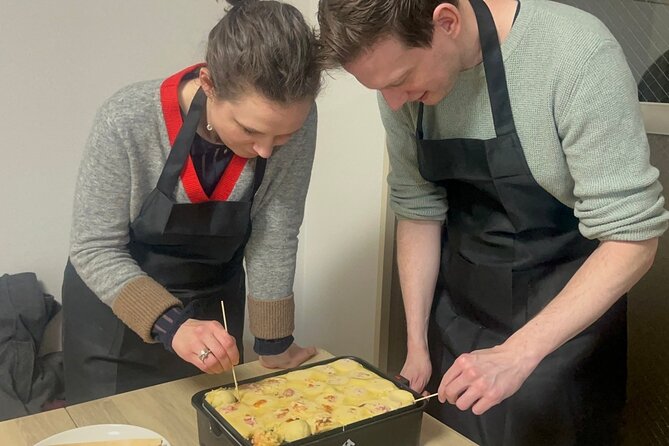
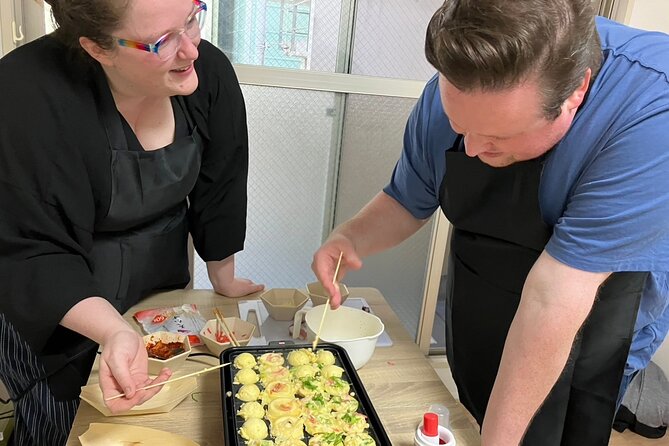
After orientation, you move into the cooking block, about 1 hour 30 minutes. This is the heart of the class because you’ll actively cook both Okonomiyaki and Takoyaki.
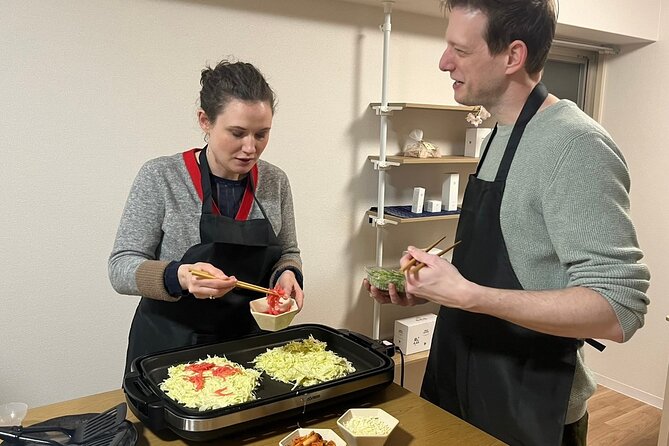
For Okonomiyaki, you’re working toward a savory pancake that holds together, cooks through, and gets topped the way Osaka does it. Expect that you’ll be handling batter and cabbage, layering in fillings, and learning how heat and timing affect doneness. The topping moment is also part of the lesson, since sauce and bonito flakes are not just decoration, they’re part of the flavor balance.
For Takoyaki, you’ll focus on filling, shaping, and frying technique. Takoyaki is all about getting those little rounds right, with cooked outside and a filled inside. Octopus is the classic filling, and the toppings bring the final Osaka flavor punch with sauce, bonito flakes, and seaweed powder.
Even if you’re not a confident cook, this format tends to work because you’re not trying to do everything alone. The instructor(s) guide you step by step while you perform the actions. That makes the learning feel doable, not intimidating.
And because the group is small, you should have enough room to ask quick questions. When you want a fix, it’s easier to get one in a room with up to 8 people.
Not ready to leave Osaka yet? A few more ways to fill the day.
- Osaka Go Karting Tour with Funny Costume
★ 5.0 · 2,658 reviews - Osaka Castle: Museum and Tower Entry Ticket
★ 4.5 · 2,380 reviews - Osaka: Shinsekai Food Tour with 13-15 Dishes at 5 Eateries
★ 4.8 · 2,204 reviews
The 1-Hour Tasting: Eat, Compare, and Talk Food
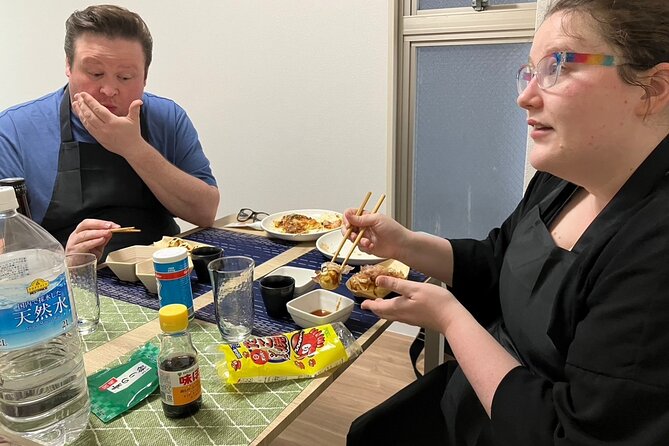
Once the cooking is done, there’s about 1 hour for tasting your Okonomiyaki and Takoyaki. This part is often where you realize the class worked, because you’re not just making food, you’re comparing what you made to what you expected.
Your meal includes drinks: sake, beer, and soft drinks. Alcohol is served only if you’re 20 years old and above. If you’re younger than 20, you’ll be served non-alcoholic drinks instead.
This tasting window is also a relaxed social moment. You can ask questions while you eat, and it’s a chance to pick up language, food terms, and small technique tips you might not catch during hands-on cooking.
One practical tip: pace yourself. You’ll likely be hungry and also doing a lot with your hands. Take a few bites, slow down, and notice texture and topping balance. That memory helps when you cook again later.
What You Learn So You Can Make It at Home Again
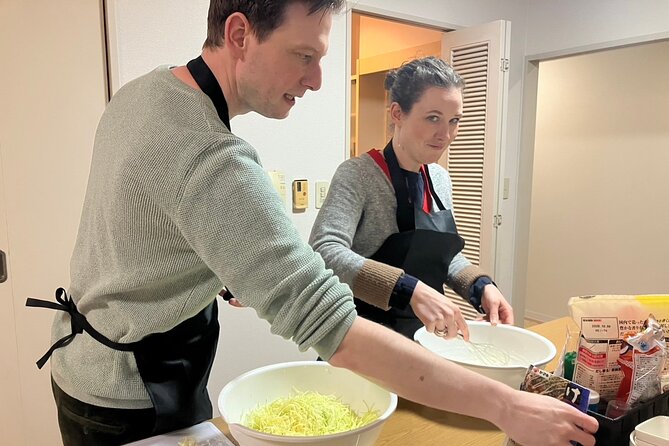
The best cooking classes give you a plan for repetition. This one is built for that.
First, you get written recipes. That means you can bring the steps home and follow them without guessing what you did during the class. Second, you’ll have the chance to see ingredient packaging. That helps you identify products in a Japanese supermarket. Many people find that the hardest part of recreating Japanese cooking is not the cooking, it’s finding the right sauces, toppings, and packaged ingredients.
So when you go shopping later, you’re not just hunting. You’re matching. You know what to look for.
Finally, the class teaches the concept that these are flexible dishes. Okonomiyaki can include different fillings. Takoyaki has classic toppings. But the structure stays the same, and the technique teaches you what matters most.
If you’re the type who likes to bring back skills, this class is a solid choice. You’ll leave with more than dinner.
Price and Value: What $70 Really Covers
At $70 per person, this is not the cheapest activity in Osaka. But it’s also not overpriced when you look at what’s included.
You’re getting:
- All ingredients for both dishes
- Kitchen tools
- Aprons and disposable gloves
- An English-speaking instructor
- Alcoholic beverages for adults 20+ plus soft drinks
- A tasting period after you cook
A big chunk of cooking-class value is simply that you’re not buying ingredients just to use them once. Here, you’re paying for an instruction-guided cooking session plus everything required to complete it. You’re also getting drinks during tasting, which adds real comfort to the end of the lesson.
The one cost to remember is transportation to the kitchen, since private transportation is not included. Beyond that, most of the key pieces are already handled.
If you compare this to doing a similar meal plus hunting down the right ingredients on your own, the class can be a good deal because it removes frustration. You get a working recipe and a clearer shopping list.
Who This Class Is Best For (And Who Might Want Something Else)
This class fits best if you want a hands-on Osaka food experience in a small group, with real instruction and a meal included at the end.
It’s also a good option for families, since the cooking setup has worked with younger kids in at least some cases. That said, you’ll still want to consider your child’s patience for a 3-hour session and a hands-on format.
If you have dietary needs, there’s a clear path: for vegetarian options or food allergies, you should contact the provider after booking by sending a message. Options are not listed as guaranteed in advance, so plan to confirm what will be possible.
If you’re traveling solo, a group size up to 8 keeps it social without turning chaotic. If you’re traveling with a partner, it can feel extra intimate, especially if fewer people book on the day you go.
A Practical Osaka Evening Plan
This is a 3-hour experience, roughly. That makes it a nice anchor for an evening. You can still enjoy the city before or after, but you won’t be stuck planning a full night around a kitchen table.
Because the class ends back at the meeting point, it’s also easy to plug into nearby plans. After you eat, you can head out for a short walk to digest, grab a drink, or return to your neighborhood base.
One reason I like this structure is the timing: a 30-minute start with orientation, about 1.5 hours of cooking, then a full hour to taste. You get a natural rhythm instead of a rushed single-dish sprint.
Should You Book This Osaka Okonomiyaki and Takoyaki Class?
You should book it if you want a genuine Osaka food skill, not just a hands-off meal. The combination of step-by-step cooking, written recipe support, and a tasting with drinks makes it more than a show. It’s the kind of experience that can turn into a repeatable home dinner.
Book it especially if you care about technique and ingredient accuracy. The ingredient packaging guidance and the recipe materials are exactly what help you shop smarter and cook with confidence later.
Skip it, or at least think twice, if you need transportation included, or if you strongly prefer flexible, self-paced travel. This class is structured, timed, and centered on the cooking sequence.
If your goal is to leave Osaka knowing how to make two of its most-loved street-food style dishes, this one is a strong, practical choice.
FAQ
What dishes will I learn to make?
You’ll learn to make Okonomiyaki and Takoyaki. Okonomiyaki is a Japanese savory pancake, and Takoyaki are savory dough balls filled with octopus.
How long is the cooking class?
The class is about 3 hours in total.
What is the class schedule like?
It includes about 30 minutes for orientation and preparation, about 1.5 hours of cooking, and about 1 hour for tasting your Okonomiyaki and Takoyaki with drinks.
Is there an English-speaking instructor?
Yes. The class includes an English-speaking instructor.
Are alcoholic drinks included?
Yes, sake and beer are included for travelers aged 20 and above. If you are under 20, non-alcoholic drinks will be served instead.
Do I need to bring any ingredients or tools?
No. The class provides all ingredients and tools, plus aprons and disposable plastic gloves.
Where is the meeting point?
The meeting point is at 南船場コレット9044-chōme-3-1 Bakurōmachi, Chuo Ward, Osaka, 541-0059, Japan.
Is the kitchen near public transportation?
Yes. It is about a 5-minute walk from Shinsaibashi and Honmachi stations on the Osaka Metro.
Can I request vegetarian or allergy accommodations?
You can contact the provider after booking by messaging them. Vegetarian or food allergy options are referenced as available on request.
What is the group size limit?
The maximum group size is 8 travelers.
Can I cancel for a refund?
Yes. Free cancellation is available up to 24 hours in advance of the experience start time for a full refund.
Just added around Osaka


Cooking Classes, compared.
Osaka Cooking Class: Okonomiyaki &Japanese cuisines experience
Read our review →
Osaka Sake Tasting & Takoyaki Cooking Experience
Read our review →
Cooking Ramen&Gyoza/KatsuCurry/Bento/Okonomiyaki+Store Tour@Osaka
Read our review →
Eat Osaka: Street Food Cooking in an Authentic Kitchen!
Read our review →This tour also fits