
Reviewed · TEA CEREMONY & MATCHA EXPERIENCES
Osaka: Traditional Tea Ceremony Experience
Matcha slows Osaka down. This 30 minute Osaka tea ceremony gives you a real break in the middle of sightseeing, with hands-on grinding and a casual way to enjoy matcha. You also get Japanese sweets called Ohigashi, so you are tasting more than just tea.
Two things I like a lot: you make your own matcha, and the experience uses single-origin special matcha instead of the usual generic stuff. One consideration: the building has no elevator, so you will use stairs to reach the space.
In This Review
- Key things to know before you go
- Osaka tea ceremony in 30 minutes: a smart break from the streets
- The 30 minute flow: grinding matcha, drinking tea, and leaving on time
- What you learn during OTE-MAE, without needing a tea background
- Single-origin matcha: the hands-on part that makes it memorable
- Ohigashi sweets: why the snack is part of the tea ritual
- English support and instructor energy: what to expect if you do not speak Japanese
- Where to find it: Higobashi to Yodoyabashi by foot
- Price and value: $7 for a matcha-and-sweets workshop
- Who should book this Osaka matcha ceremony?
- Should you book the Osaka traditional tea ceremony?
- FAQ
- How long is the Osaka tea ceremony experience?
- What is included in the tea ceremony?
- Is there English support during the session?
- Where do I meet if I arrive by train?
- Is there an elevator at the venue?
- Can I cancel, and is there an extra fee for a completion certificate?
Key things to know before you go
- OTE-MAE style: a structured tea ceremony experience with a hands-on matcha moment
- Single-origin special matcha: you are not just tasting, you are grinding and preparing
- Ohigashi included: you get Japanese sweets alongside your tea
- English support as much as possible: instruction is in Japanese, with help in English when needed
- Small, quick sessions: plan for a focused 30 minutes from start to departure
Osaka tea ceremony in 30 minutes: a smart break from the streets
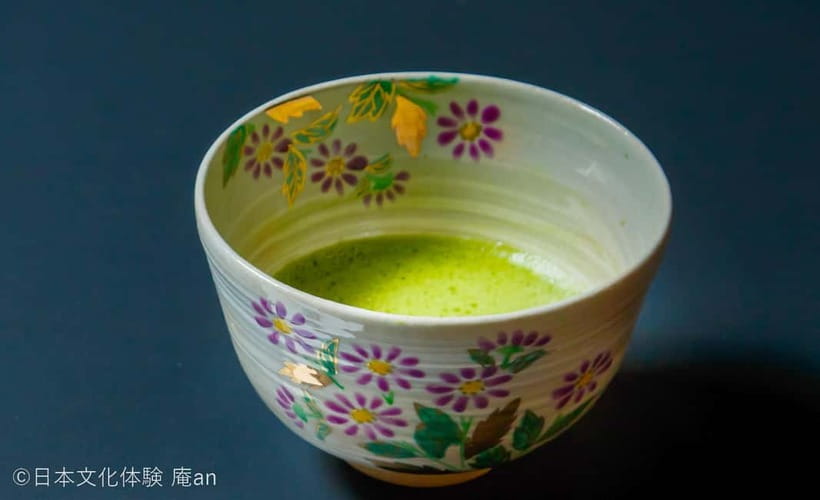
Osaka is fast. Neons, stations, food lines, trains, and sidewalks all seem to move at once. That is exactly why a short tea ceremony works so well. You step into a quieter rhythm, learn what matcha is about, and then drink it right away.
This is not a “sit and watch” show. You grind the tea (the part most people remember), then you enjoy it casually as part of the experience. Even if you only have a small window between neighborhoods, 30 minutes is a good reset for your senses.
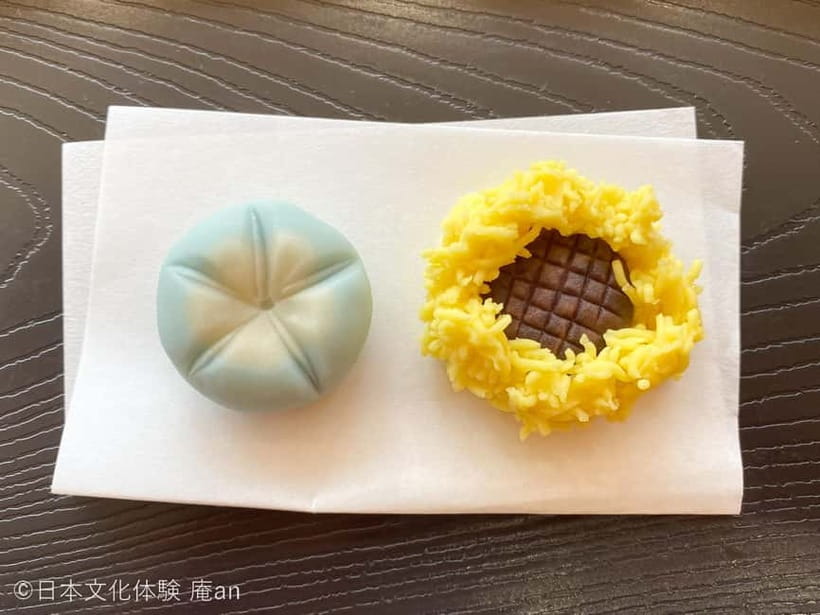
You also get the sweetness that usually comes with tea time. The included Ohigashi makes the matcha feel more complete, like you are experiencing a small ritual rather than just ordering a drink.
Slow down for a bowl of matcha
- Osaka: Tea Ceremony Experience★ 4.9 · 1,426 reviews
- Tea Ceremony Experience in Osaka Doutonbori★ 5.0 · 754 reviews
- Matcha Making Class in Osaka with Authentic Japanese Sweets Set★ 5.0 · 509 reviews
- Osaka: Matcha Making Experience with Japanese Sweets★ 5.0 · 146 reviews
- Osaka: Japanese Traditional Sweets Making and Tea Ceremony★ 4.7 · 118 reviews
The 30 minute flow: grinding matcha, drinking tea, and leaving on time
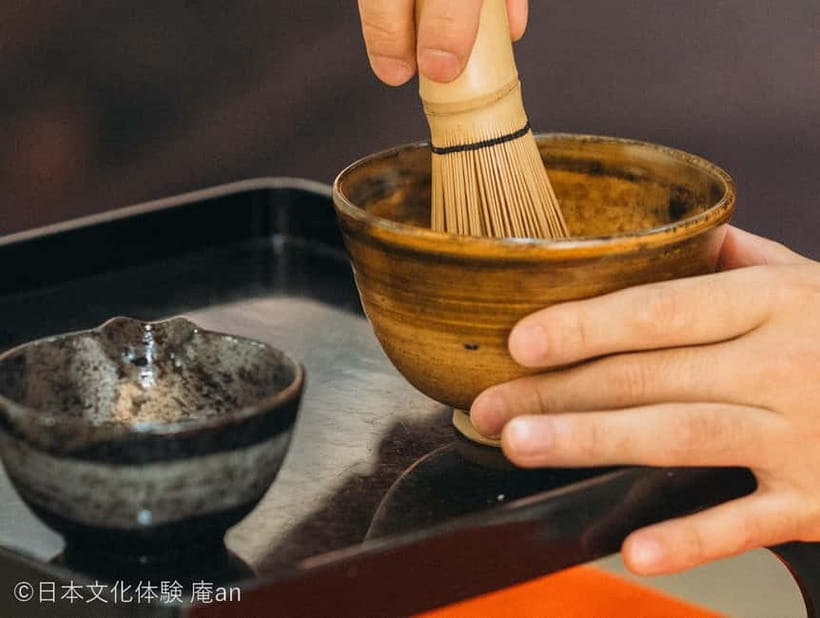
The session runs on a simple timeline. First you arrive and get started, then the instructor walks you through tea and how to handle the tools. After that comes the main hands-on part, where you grind the matcha and participate in the tea preparation.
A typical flow feels like this:
- Start of the experience, then an explanation of tea basics
- Matcha grinding demonstration, then your turn to do it
- Tea ceremony experience, where you follow along with the steps
- Picture time around the midpoint
- Eating and drinking time before you leave
That last section matters more than you might think. A lot of short activities rush to the finish line. Here, you still get real time to enjoy what you made, plus the included sweets.
It is also worth noting that this is a scheduled start. They will not hold the event if you are late, so aim to arrive a few minutes early and take your time finding the entrance.
What you learn during OTE-MAE, without needing a tea background
You do not need prior experience. The whole point is that everyone can do it, from one person to small groups. The instructor is Japanese, and you should expect English translation as much as possible. If you want additional English help, you have to contact them in advance.
What you learn is practical. You get the idea behind tea, then you connect it to action. The matcha grinding part is the best example. Matcha powder changes the texture and smell right in front of you, and it gives you a physical understanding of why the ceremony treats preparation as part of the drink.
Also, the tea used here is single-origin special matcha. That is a big deal for value. Generic matcha is often bitter or flat. Single-origin matcha tends to taste cleaner and more defined, so you are more likely to actually enjoy what you make, not just get through the steps.
If you like food and drink learning, this is a low-risk way to build a little expertise. You walk out able to name what you did and how it affects taste, even if you never become a tea expert.
Single-origin matcha: the hands-on part that makes it memorable
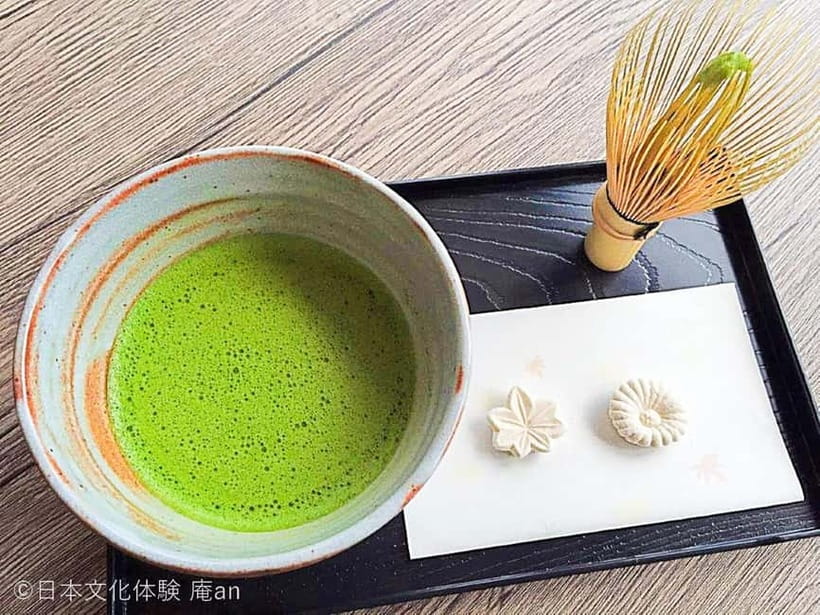
The matcha is not treated like a prop. You are actively involved, starting with the grinding demonstration. Then you do it yourself during the tea ceremony segment.
Grinding is where the experience turns from cultural to personal. You can smell it more directly, and you can see the powder turn into the start of your drink. That hands-on piece is the difference between remembering a photo and remembering a taste.
And since the matcha is single-origin and described as special, you are not relying on sugar or flavor tricks to make it enjoyable. The goal is to learn how to prepare it and then drink it casually with the right expectations.
One practical tip for your mindset: treat matcha like you are learning a new way to taste, not like you are ordering a caffeinated green drink. Yes, it is matcha and you will taste it. But the preparation and the pacing are part of the experience.
Ohigashi sweets: why the snack is part of the tea ritual
You do get the sweets: Ohigashi is included, and it is served during the eating and drinking time. This is important because tea ceremonies often balance flavors and textures. In a short session like this, the sweets fill the gaps and make the tea feel like a full stop in your day.
Ohigashi is Japanese sweets, so expect something designed to pair well with green tea rather than just to be dessert. The pacing also helps. You grind matcha, then you taste it, then you move into the sweets segment. That sequence keeps it from feeling like two unrelated items.
If you are the kind of person who usually skips the small dessert at meals, this is the perfect moment to try one. It is included, it is part of the ritual, and it gives you a more complete view of Japanese tea culture in a short time.
Not ready to leave Osaka yet? A few more ways to fill the day.
- Osaka Go Karting Tour with Funny Costume
★ 5.0 · 2,658 reviews - Osaka Castle: Museum and Tower Entry Ticket
★ 4.5 · 2,380 reviews - Osaka: Shinsekai Food Tour with 13-15 Dishes at 5 Eateries
★ 4.8 · 2,204 reviews
English support and instructor energy: what to expect if you do not speak Japanese
The instruction language is Japanese, but English translation is provided as much as possible. In practice, that means you can follow along even if you cannot read tea terminology.
In this kind of setting, the instructor’s tone matters. You are learning hand movements and timing, not just facts. A patient, calm teaching style keeps you from feeling rushed or awkward, especially during the grinding and ceremony steps.
You should also expect humor and encouragement. If you are comfortable asking simple questions, you can get more out of the experience, even with limited vocabulary. Think of it like a friendly workshop: participate, watch what the instructor does, then try your turn.
One more practical note: those who do not participate will not be allowed to enter. So come ready to join in the steps, even if you just want the basics.
Where to find it: Higobashi to Yodoyabashi by foot
The meeting location is close to major transit lines. It is easiest if you pick the nearest station for your day’s route:
- 1 minute walk from Exit 10 of Osaka Metro Yotsubashi Line Higobashi Station
- 5 minutes walk from Exit 7 of Keihan Nakanoshima Line Watanabebashi Station
- 7 minutes walk from Exit 10 of Osaka Metro/Keihan Line Yodoyabashi Station
- 10 minutes walk from Exit 11-5 of JR Tozai Line Kitashinchi Station
- 15 minutes walk from South Central Gate of Osaka Station
If you are walking after dinner plans, this location is convenient. If you are using a car, there is coin parking nearby.
Also, plan for stairs. There is no elevator in the building, and you will need to take stairs to reach each venue. If you have heavy bags or mobility concerns, give yourself a little buffer time.
For navigation, you can use the provided Google map link or coordinates: 34.6911523, 135.4958628.
Price and value: $7 for a matcha-and-sweets workshop
At $7 per person, this is one of the more affordable ways to do something hands-on in central Osaka. You get a set experience of OTE-MAE plus the ingredients and the time with the instructor.
And because you are doing the grinding and preparation yourself, you are not just paying for a drink. You are paying for the guided steps, the ceremony format, and the chance to taste what you made.
There is also an optional add-on: an experience completion certificate costs 300 JPY if you want it. If you are the type who likes to collect small proof of activities, it is a nice extra. If not, you can skip it and still get the full experience.
One way to judge value quickly: if you like matcha, hate wasting time on lectures that do not lead anywhere, and want a calm break in between meals, the price fits the payoff. If you are purely looking for a quick beverage without instruction, you might be better off buying matcha elsewhere.
Who should book this Osaka matcha ceremony?
This is a great fit for:
- Food and drink lovers who enjoy learning by doing
- People who want an easy cultural activity without committing to a long tour
- Travelers who have 30 minutes to spare and want a reset from Osaka’s crowds
- First-timers who want to try matcha in a structured, respectful way
It is also a strong choice if you enjoy small-group energy. The format tends to feel personal, and the pacing stays manageable. You have time to follow along and then actually drink what you prepared.
If you dislike participation and prefer to watch only, this one may not suit you since non-participants are not allowed into the experience space.
Should you book the Osaka traditional tea ceremony?
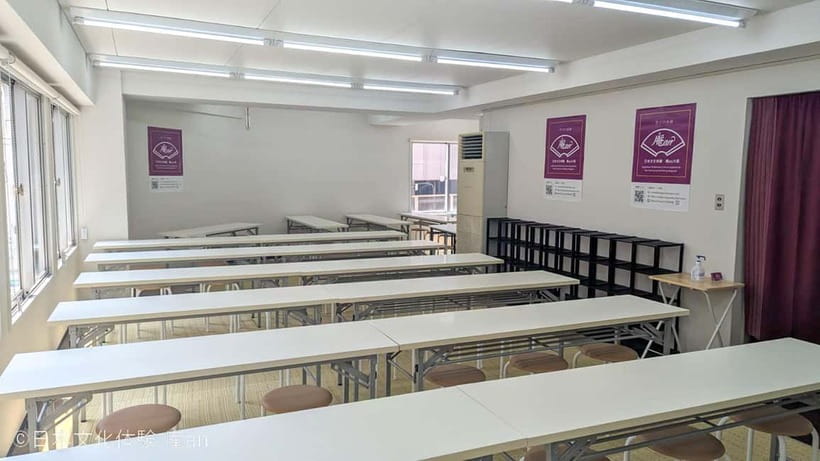
If you are visiting Osaka and you want one activity that feels genuinely different from shopping and food hopping, I think this is worth booking. You get hands-on matcha grinding, single-origin special matcha, and included Ohigashi, all in a tight 30 minutes. For the price, it is a smart use of time.
Book it if you:
- Like matcha and want to understand why it tastes the way it does
- Want a calm break that still feels interactive
- Are okay with stairs and a short, scheduled session
Skip it if you only want a drink and you are not interested in learning how to prepare it.
FAQ
How long is the Osaka tea ceremony experience?
The experience lasts about 30 minutes.
What is included in the tea ceremony?
You get the experience set for OTE-MAE, including making and enjoying matcha, plus Japanese sweets called Ohigashi.
Is there English support during the session?
English translation is provided as much as possible. If you want to add English support, you should contact them.
Where do I meet if I arrive by train?
You can walk from multiple nearby stations, including 1 minute from Osaka Metro Yotsubashi Line Higobashi Station (Exit 10) and 5 minutes from Keihan Nakanoshima Line Watanabebashi Station (Exit 7). Other nearby options include Yodoyabashi Station, Kitashinchi Station, and Osaka Station.
Is there an elevator at the venue?
No. There is no elevator, and you will need to take stairs to reach each venue.
Can I cancel, and is there an extra fee for a completion certificate?
You can cancel up to 24 hours in advance for a full refund. There is also an optional experience completion certificate fee of 300 JPY. You can also reserve now and pay later.
Just added around Osaka
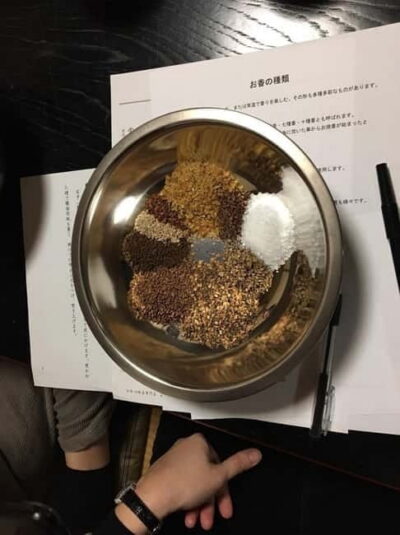
Tea Ceremony & Matcha Experiences, compared.
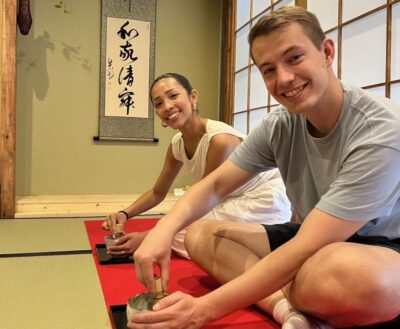
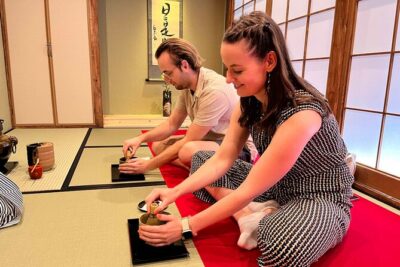
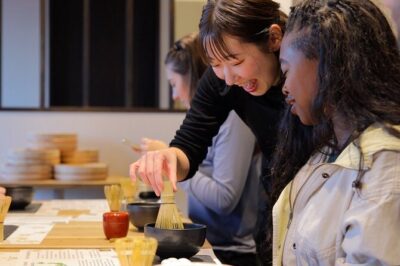
Matcha Making Class in Osaka with Authentic Japanese Sweets Set
Read our review →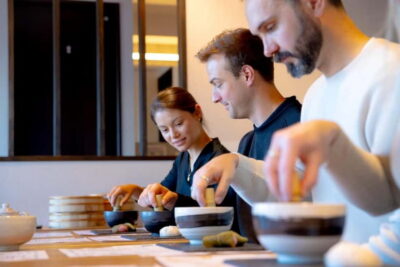
Japanese Traditional Sweets Making and Tea Ceremony
Read our review →
Osaka Temple Cool Foot Bath & Matcha Experience〈45min〉
Read our review →
Samurai Show, Tea Ceremony, Japanese Traditional Activities
Read our review →
This tour also fits