
Reviewed · NINJA & SAMURAI EXPERIENCES
Osaka:Step into the Samurai World: Learn Iaido from a Master
Sword lessons in a cultural landmark.
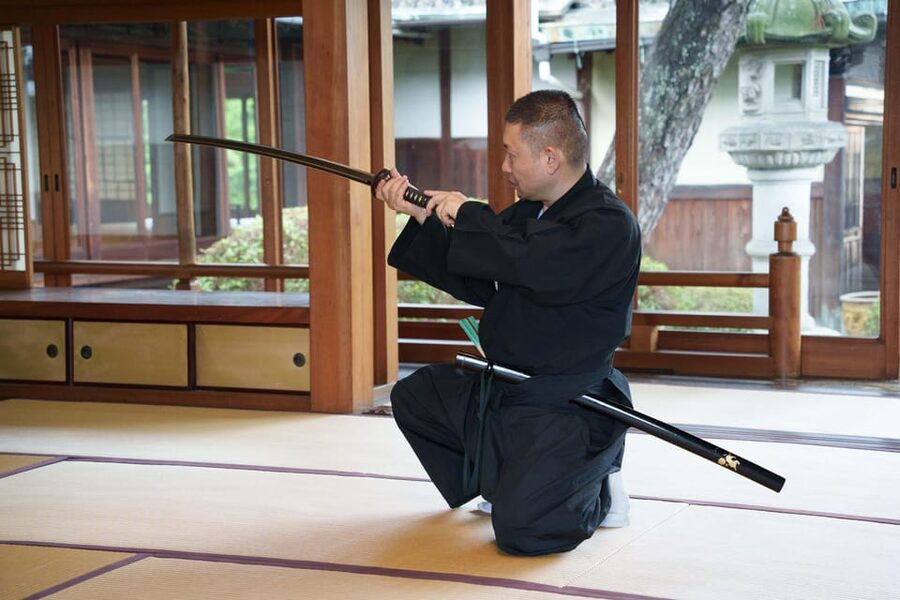
That’s what makes this iaido experience special: you train with proper technique using a practice sword, then learn the timing and distance control that sit at the heart of drawing and cutting safely. The setting helps too. You’re not boxed into a generic studio, you’re practicing in Arai Jutaku, a registered tangible cultural property built in 1932, surrounded by a traditional garden and classic wooden rooms.
Two things I really like are the hands-on coaching from a top-level instructor and the way the lesson connects martial technique to everyday discipline, like posture and spacing, instead of treating it as a stunt. One thing to consider: this is physical training, and it is not a good fit if you have back problems or feel uncomfortable with a more intense, close-up learning environment.
In This Review
- Quick hits before you go
- Samurai training at Arai Jutaku, built in 1932
- Your instructor: champion-level battodo and iaido coaching
- Small group of 8, so you get real corrections
- How the 3-hour lesson flows, from attire to first cuts
- Practice sword fundamentals: posture, timing, and safe distance
- Real sword handling and the discipline it demands
- Dojo etiquette, what to wear, and camera rules
- Value check: what $225 buys in a real dojo setting
- Who this fits, and who should skip it
- English guidance in a two-language experience
- Before you go: simple prep that saves stress
- Should you book this iaido lesson in Izumisano?
- FAQ
- How long is the iaido experience?
- How much does it cost?
- What’s included in the session?
- Where do I meet the guide?
- What should I bring, and can I take photos?
- Is it suitable for children?
Quick hits before you go
- Train at Arai Jutaku in Izumisano, a 1932 wooden cultural property with a garden-facing layout
- Small group size (up to 8) so you can get direct corrections while you practice
- Practice sword plus real sword time, so you understand weight and focus, not just moves
- Iaido distance control is specifically taught, not left to guesswork
- English guidance with live interpretation, so you can learn in two languages without getting lost
Samurai training at Arai Jutaku, built in 1932
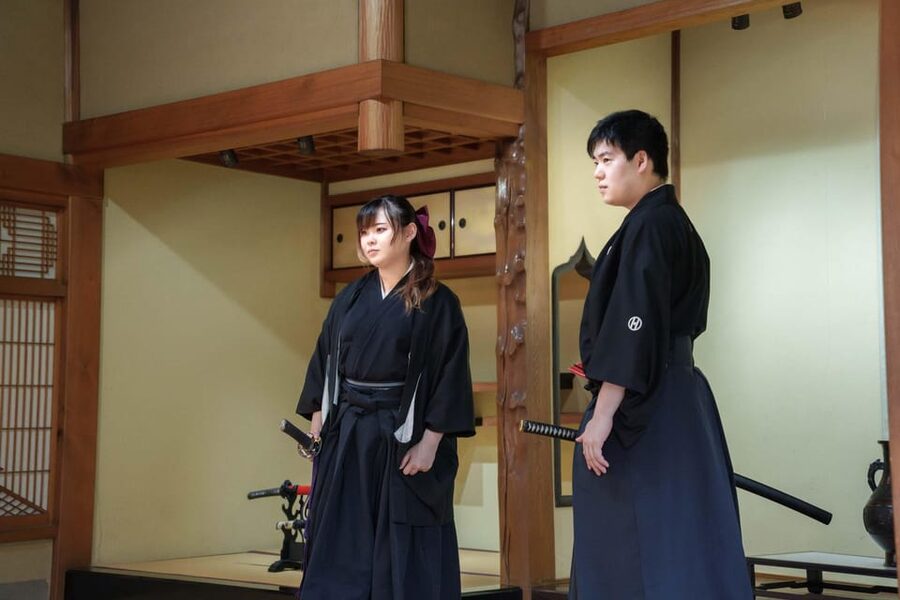
Arai Jutaku is the kind of place that instantly changes your mindset. It is a purely Japanese-style wooden structure, built in 1932 by Suekichi Arai, a businessman from Semba, Osaka, as both a reception hall and a private residence. Instead of modern walls, you get tatami-floored corridors and engawa verandas that look out over a large traditional garden.
The compound is arranged with three main wings: the Oku-zashiki (inner drawing room), the Zashiki (guest room), and the Main Residence. Each space gives you that calm, slightly formal feeling that fits martial traditions. Even if you only notice it in the background, it helps you slow down and pay attention, which is basically what good iaido requires.
If you’re hoping for a samurai experience that feels like a movie set, this is better. You’re learning in an authentic domestic environment, not a themed building with fake props. That matters because iaido is detail work, not just dramatic motion.
Swing a sword like it's 1600
- Samurai Training Experience KENDO in Osaka★ 5.0 · 515 reviews
- OSAKA NIGHT FUSION Japanese Taiko Kabuki Samurai Dance Show★ 4.8 · 155 reviews
- Osaka: Samurai Training Experience KENDO in Osaka★ 5.0 · 111 reviews
- Osaka: A Modern Samurai, Kabuki, Taiko, & Dance Show★ 4.5 · 66 reviews
- Osaka 2-Hour Genuine Kendo / Samurai Experience In Japan★ 5.0 · 65 reviews
Your instructor: champion-level battodo and iaido coaching
The session is taught by a renowned martial artist with competition wins that signal serious credibility. The instructor has been a champion of the All Japan Battodo Federation National Tournament, and also a champion of the Toyama-ryu Iaido Battodo Federation National Tournament.
Why you should care about that? Because technique in iaido is unforgiving. Small errors in posture, draw angle, and footwork can turn a clean cut into a sloppy one that is harder to correct. When the teacher has that kind of track record, you usually get clearer explanations and more precise adjustments.
You also get a kind of confidence from the coaching. This isn’t just instruction from a textbook. It’s training from someone who has lived the discipline long enough to teach it with calm authority.
Small group of 8, so you get real corrections
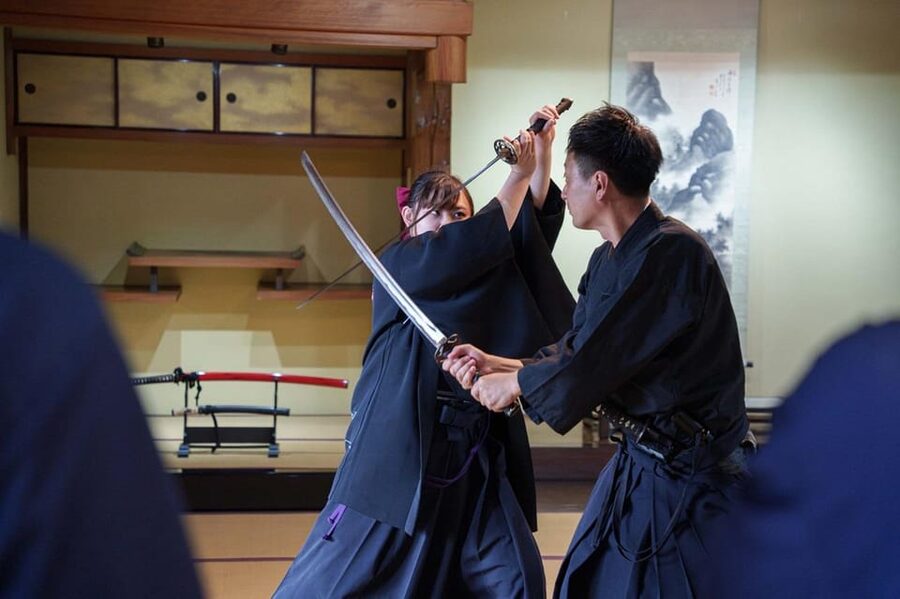
This is a small group experience, limited to 8 participants. That size is a practical advantage. It means the instructor can watch what each person is doing while you practice, rather than letting you go through the motions alone.
You also benefit from the pacing. With fewer people in the room, you’re less likely to feel rushed between tries. In iaido, that matters because you’re learning timing, and timing gets worse when you’re constantly waiting your turn.
There is also live support in English. The experience runs in English and Japanese, with a live guide in English, so you can ask questions and understand corrections as they happen, not after the session.
How the 3-hour lesson flows, from attire to first cuts
The experience runs for 3 hours, which gives enough time to do more than one quick demonstration and call it a day. Expect a structured sequence: orientation, getting dressed, technique practice, and then a progression that gradually sharpens your control.
Here’s the typical flow you can plan for:
- You start with an intro to the training space and how the lesson will work.
- You put on traditional training attire and the samurai uniform provided for the class.
- You learn basic movements and safety rules, including how to manage spacing.
- You practice techniques using a practice sword.
- You move toward handling an authentic sword (included), under instruction.
- You end with a chance to consolidate what you learned so you leave with more than a few random moves.
What I find useful in this kind of lesson is the order. You learn the correct mechanics first, then you apply them with increasing seriousness. Instead of jumping straight to the coolest-looking part, you build control so the dramatic parts make sense.
Practice sword fundamentals: posture, timing, and safe distance
Your highlights include learning proper techniques using a practice sword. That is not just about waving a blade shape through the air. Iaido is built on control, and your instructor focuses on the mechanics that make control possible.
One key thing you’re taught is maintaining the proper distance from your opponent. That sounds simple until you try it. Distance changes everything: where your feet land, how your body angles, and how your draw and cut look and feel. When you get the spacing right, the whole movement becomes cleaner, safer, and easier to repeat.
Expect to work on:
- posture that stays stable before the draw
- timing between movement stages
- controlled positioning so you’re not rushing into the wrong range
- awareness of where your sword is at every moment
This is also the part where a small group shines. You can get personal corrections on your stance and timing. And because you’re practicing with a dedicated training sword first, you can focus on getting the motion right without the extra intimidation of a more realistic blade handling right away.
Not ready to leave Osaka yet? A few more ways to fill the day.
- Osaka Go Karting Tour with Funny Costume
★ 5.0 · 2,658 reviews - Osaka Castle: Museum and Tower Entry Ticket
★ 4.5 · 2,380 reviews - Osaka: Shinsekai Food Tour with 13-15 Dishes at 5 Eateries
★ 4.8 · 2,204 reviews
Real sword handling and the discipline it demands
Included in the experience are both a practice sword and an authentic sword / real sword. That usually raises the stakes in a good way. Even if you’ve practiced in other sports, real sword handling adds a layer of awareness because it forces you to be deliberate.
This is where the discipline becomes visible. You’re not just learning how to move. You’re learning how to behave while moving. The spacing rule you practiced earlier becomes non-negotiable when you handle something more authentic.
You should treat this segment like a training ritual, not a photo opportunity. Listen carefully, follow instructions exactly, and keep your focus on the instructor’s corrections. If you go in expecting a thrill, you might miss what’s actually valuable, which is learning why iaido emphasizes safety and precision.
Dojo etiquette, what to wear, and camera rules
You’ll train in traditional training attire and a samurai uniform provided for the lesson. The goal is comfort and correct movement, so wear clothing that lets you move freely underneath and does not restrict your motion.
Two practical etiquette notes to keep in mind:
- You should wear comfortable clothing suitable for physical activity.
- Photography is allowed, but flash photography is prohibited.
Bring a camera if you want one. That’s listed as what to bring, and it helps you capture the setting and your outfit without needing to buy anything extra on the spot. Just remember, the lesson itself is a hands-on class. If you try to film too much, you’ll slow down your learning.
If you’re sensitive about being in a more traditional, formal training space, this experience is surprisingly thoughtful. The environment encourages calm, and the instructor’s role is to keep you learning, not performing.
Value check: what $225 buys in a real dojo setting
At $225 per person for a 3-hour session, you’re paying for more than a beginner class. You’re paying for:
- expert coaching from an instructor with national-level competition achievements
- instruction in English with a live guide
- training attire and uniform included
- practice sword training plus time with an authentic sword
- a setting that is not a generic dojo, but Arai Jutaku, a registered tangible cultural property built in 1932
In Japan, cheaper samurai or sword experiences sometimes mean you get a short demo and limited coaching. Here, the value comes from training format: small group size, sustained practice time, and a real attempt to teach distance control and proper technique rather than only the look of the motion.
Is it expensive compared to a casual class? Yes. But if you want something that feels grounded, structured, and actually teaches you technique, the price starts to make sense.
Who this fits, and who should skip it
This is not a universal activity. It is not suitable for children under 15 years, and it’s not designed for everyone physically or mentally.
Skip it or reconsider if any of these apply:
- back problems
- claustrophobia
- wheelchair users
- altitude sickness
- people over 95 years
- babies under 1 year
Also note the clothing and sword work means you’ll be using your body for a sustained period. If you’re nursing injuries, talk to your provider before booking. The data you have is clear about who it may not work for, so it’s better to plan early than to force it.
Who it fits best:
- adults who want a serious introduction to iaido, not just a photo stop
- travelers who enjoy structured instruction and learning real technique
- people who appreciate traditional settings and want training tied to Japanese culture
English guidance in a two-language experience
The experience is conducted in English and Japanese, with a live tour guide who speaks English. That helps a lot if you’re comfortable with some Japanese phrases but still want clarity during corrections.
In sword training, understanding matters. A small misunderstanding can lead to you moving incorrectly, and that is exactly what you do not want. Having English support means you can follow the steps, ask questions, and make sense of safety instructions in real time.
You’ll also meet an interpreter at the start. The interpreter is holding a welcome board outside a 7-Eleven near Izumisano Station, which makes it easier to locate your group quickly.
Before you go: simple prep that saves stress
To make the most of your 3 hours, do the boring stuff well:
- Arrive at least 15 minutes early. Sword lessons do not run well when people show up late.
- Wear comfortable clothing for physical activity.
- Bring a camera if you want photos. No flash.
Alcohol and drugs are not allowed. That is a safety rule and also a respect rule for the training environment.
If you’re coming from Osaka, give yourself enough time to get to Izumisano. The trip is short enough to do in a day, but it still deserves real travel time so you arrive composed, not sweaty and flustered.
Should you book this iaido lesson in Izumisano?
Book it if you want an experience that feels real, not staged. You get hands-on instruction, small-group attention, and training in a traditional 1932 wooden cultural property. If you’re curious about samurai culture and want the practical side of martial tradition, this is one of the better ways to learn it in a single afternoon.
Skip it if you want something mostly passive, mostly scenic, or low-movement. It’s also not a match for several accessibility and health situations listed for the experience. And if you’re going to treat it like a casual souvenir class, you’ll probably miss the point.
If you choose to go, come ready to listen, practice carefully, and focus on control. The best takeaway is not just a look at the sword. It’s learning the discipline of spacing and timing that makes the art work.
FAQ
How long is the iaido experience?
The experience lasts 3 hours.
How much does it cost?
The price is $225 per person.
What’s included in the session?
Included items are the instructor, the samurai experience, training attire, a practice sword, an authentic sword / real sword, and a samurai uniform.
Where do I meet the guide?
Meet an interpreter holding a welcome board in front of the 7-Eleven near Izumisano Station.
What should I bring, and can I take photos?
Bring a camera. Photography is allowed, but flash photography is prohibited.
Is it suitable for children?
No, it is not suitable for children under 15 years. It is also listed as not suitable for people with back problems, claustrophobia, wheelchair users, and people with altitude sickness.
Just added around Osaka

Ninja & Samurai Experiences, compared.

OSAKA NIGHT FUSION Japanese Taiko Kabuki Samurai Dance Show
Read our review →

Osaka 2-Hour Genuine Kendo / Samurai Experience In Japan
Read our review →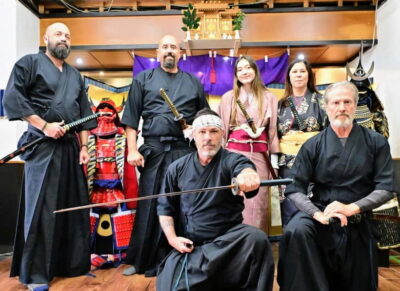
Learn Bushido – Trial Slashing with Samurai Sword
Read our review →
Samurai Show, Tea Ceremony, Japanese Traditional Activities
Read our review →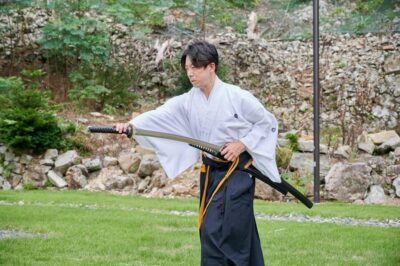
Private Samurai Experience – Train with Sword Master
Read our review →This tour also fits