
Reviewed · COOKING CLASSES
Private Japanese Cooking Class in Osaka with Culinary Expert Yoko
Osaka tastes better at home. This private Japanese cooking class with culinary expert Yoko mixes a short neighborhood welcome with hands-on cooking, so you come away with real technique, not just a full belly. I especially like the home setting near Osaka Castle and the way the class focuses on practical Japanese staples like seaweed and dried fish. One consideration: you meet at Minami-Morimachi Station, so it is not a sit-back-and-get-picked-up-from-your-hotel kind of outing.
You get a mix of live demonstrations and cooking time, then sit down together to eat what you make, often including items like sushi, pancake, or Japanese fried chicken. The day ends with green tea ice cream. It runs about 3 hours total, with roughly half that time dedicated to you cooking from scratch, so it is active but still relaxed.
In This Review
- Key Highlights You Should Know Up Front
- Meeting Yoko in Minami-Morimachi, Then Touring Her Osaka Neighborhood
- Shoes Off, Aprons On: How Yoko Teaches Japanese Cooking
- Five Specialties, Three Dishes You Make: What Your Meal Teaches You
- Sake Tasting and the Sit-Down Meal in Yoko’s Home
- Price and Value: Why $182 Can Make Sense for a Private Osaka Class
- Who This Cooking Class Is Best For (and Who Should Skip It)
- Should You Book Yoko’s Private Osaka Cooking Class?
- FAQ
- How long is the private Japanese cooking class in Osaka?
- Where do I meet Yoko?
- Is there hotel pickup included?
- Is this class private or shared with other groups?
- What will I cook during the class?
- What kinds of dishes might be included?
- Is sake tasting included?
- Can I request a vegetarian or vegan option?
- Will I get help if I have dietary requirements?
Key Highlights You Should Know Up Front
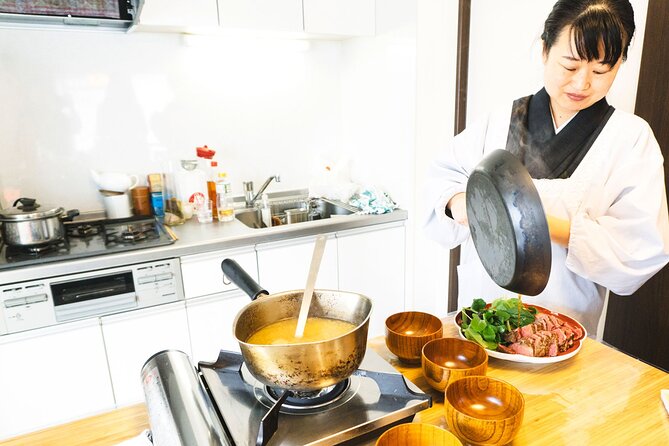
- A private class in Yoko’s apartment, with slippers and a genuine local-feeling kitchen routine
- Hands-on instruction plus live demos, including key ingredient explanations before you start cooking
- Five Japanese specialties served, while you personally cook from scratch on about three of them
- Sake tasting included, served as part of the meal experience
- Menu can change by season, with vegetarian and vegan options available when arranged
- You get practical tips for cooking again at home, including how to adapt with different ingredients
Meeting Yoko in Minami-Morimachi, Then Touring Her Osaka Neighborhood
This experience starts at Minami-Morimachi Station. No hotel pickup here, so you’ll want to plan your route and arrive a bit early with an open mind. That said, the start point is close to public transportation, and once you meet Yoko, the pace feels friendly and unhurried.
One of my favorite parts is what happens before the cutting boards come out. Yoko gives you a small look around her neighborhood. Her home base is in an apartment complex, clean and simple, in the city near Osaka Castle. Even if you already know the big tourist sights, this brief walk helps you picture where everyday Osaka life happens.
Then you hit the first real cultural moment: slippers. You’ll put them on when you enter the home because Japanese homes typically keep outdoor footwear off the interior floors. It is a small ritual, but it signals something important for the whole evening. You’re not just visiting a “class room,” you’re stepping into someone’s real routine.
Practical tip: wear socks you’re comfortable in, and keep your footwear easy to manage. The whole experience is smoother when you treat the first 5 minutes like part of the cultural lesson, not a minor inconvenience.
Other ways to spend a day in Osaka
- Osaka: Ramen and Gyoza Cooking Class in Dotonbori★ 5.0 · 378 reviews
- Osaka Cooking Class: Okonomiyaki &Japanese cuisines experience★ 5.0 · 261 reviews
- Ramen and Gyoza Cooking Class in Osaka★ 5.0 · 202 reviews
- Osaka Sake Tasting with Takoyaki Cooking★ 5.0 · 156 reviews
- Osaka Sake Tasting & Takoyaki Cooking Experience★ 5.0 · 149 reviews
Shoes Off, Aprons On: How Yoko Teaches Japanese Cooking
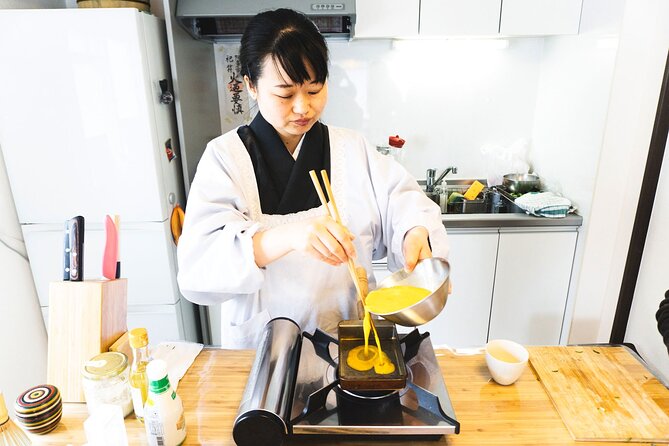
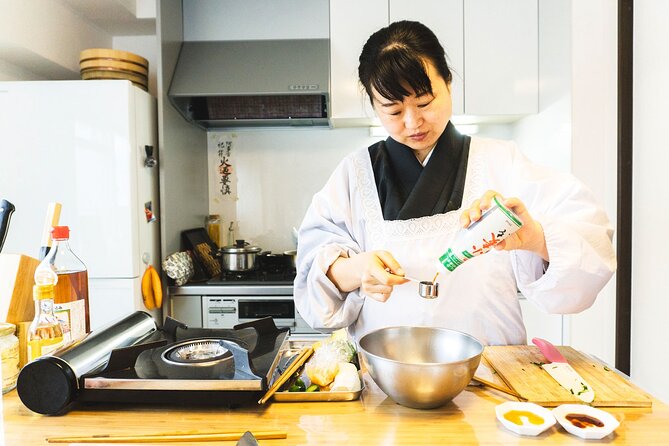
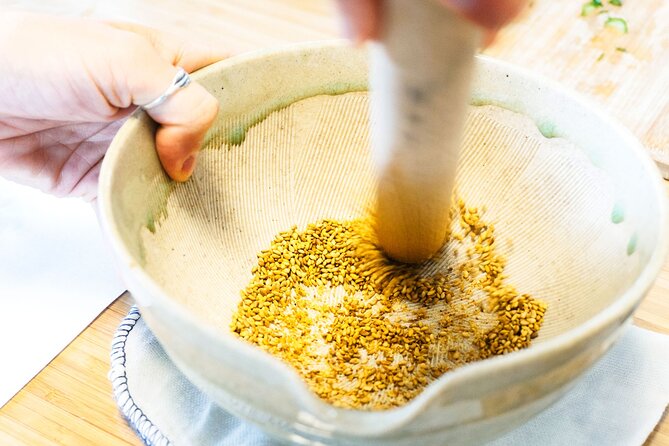
After you settle in, Yoko shifts from host mode into teacher mode. She introduces the cooking techniques you’ll use and explains the different tastes you’ll be working with. The class also includes a quick look at key ingredients you’ll see throughout the recipes, including seaweed and dried fish.
This part matters more than you might think. Japanese cooking often depends on ingredient behavior, not just flavor ideas. Seaweed and dried fish are not “extra” add-ons. They’re structural. They bring depth, umami, and a kind of backbone that helps finished dishes taste balanced, even when the meal is made with simple components.
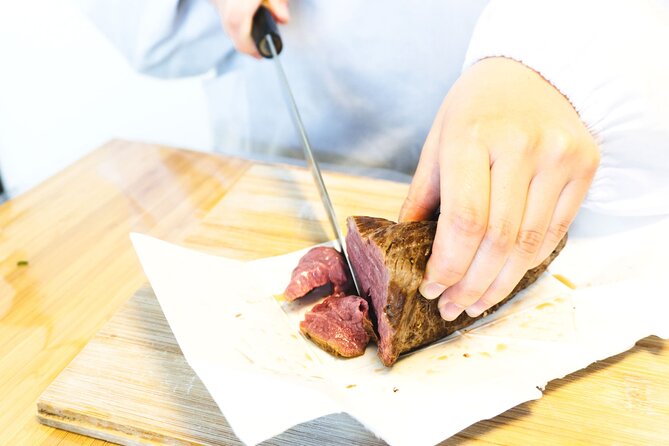
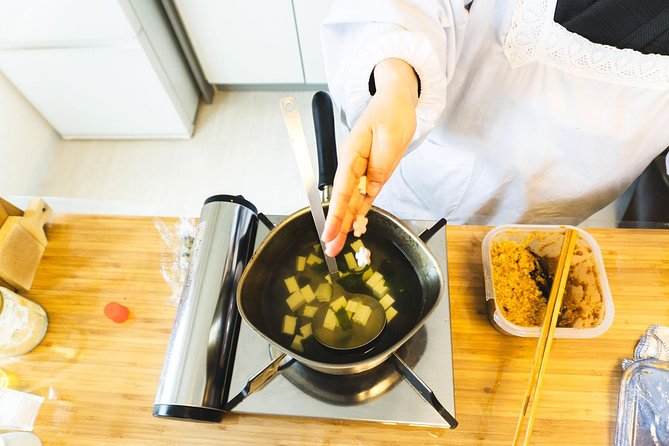
Then comes the rhythm you’ll follow for the evening. The format is part demonstration, part hands-on. Yoko prepares some components in advance, then you get to take over for the parts where your hands make the difference: cutting, cooking, assembling, and adjusting. In total, you’ll cook hands-on for about 1.5 hours, making roughly three dishes from scratch during that time.
Still, you end up learning and tasting five different specialties. The menu can also vary by season, so you might see different combinations depending on when you book. The important thing is the teaching strategy stays consistent: observe closely during the demo, then practice key steps yourself so you can repeat them later.
If you’re the type who asks questions when something doesn’t make sense, this is a great match. Yoko explains things thoroughly and welcomes discussion about Japanese cooking styles. One of the best compliments people give about her is that she goes beyond the recipe and shares tips you can actually use after the class, including how to substitute ingredients when you cannot find Japanese products in your own kitchen.
Five Specialties, Three Dishes You Make: What Your Meal Teaches You
The experience promises five tasty specialties, and the way the evening is structured helps you understand the logic behind them. You’re not just learning to follow instructions. You’re learning how Japanese flavors get built.
You may see dishes from categories like sushi, pancake, or Japanese fried chicken. But instead of focusing on the exact name of each dish, I think you’ll get more value by paying attention to the building blocks those dishes share.
For example, seaweed and dried fish show up in many Japanese kitchens as flavor drivers. Seaweed can add a gentle mineral note and body. Dried fish can bring a savory layer that makes sauces and broths feel round rather than harsh. Learning how those ingredients behave helps you later when you’re shopping at home, where you might use different brands, different forms, or substitutions.
Also, cooking at home in Japan usually looks simpler than restaurant food, but the technique is where the magic lives. In Yoko’s class, you’re taught what to watch for during cooking, like texture cues and how to tell when something is ready. That’s why the class is both demo and hands-on. The demo shows the target. Your hands practice the path.
Another big practical point: the menu may vary depending on the season. That is good news if you like variety, because you’ll likely get a version of Japanese home cooking that matches what’s comfortable and available at that time of year. It also means you should not assume the exact same dishes will be served year-round.
Dietary needs: the experience offers vegetarian and vegan options if you arrange it at booking. That is important because Japanese dishes often use fish-based ingredients by default. If you need a plant-forward meal, you’ll want to communicate your requirements early so Yoko can plan the substitutions without turning the class into a bland compromise.
Sake Tasting and the Sit-Down Meal in Yoko’s Home
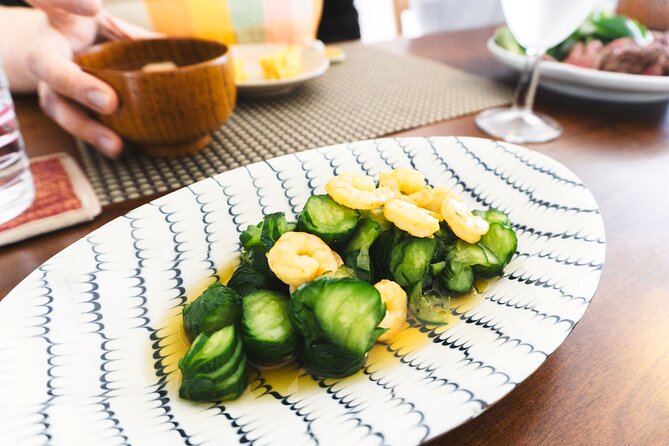
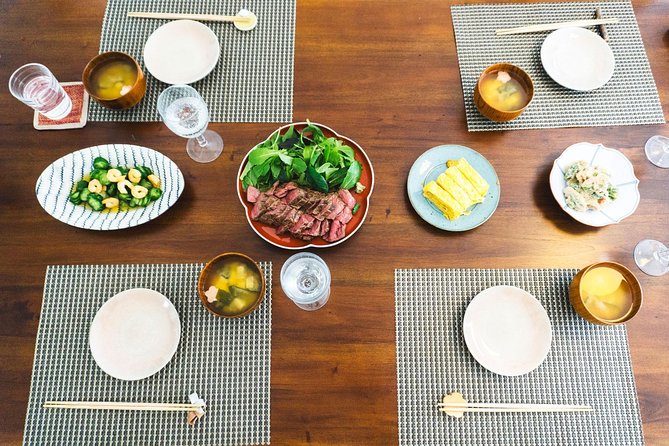
Cooking is one thing. Eating together is where the class clicks into full experience. You’ll sit down to enjoy your freshly prepared meal, which is typically more than a snack. It’s a real course-style meal built from the dishes you worked on, with extra care put into the finish.
A key inclusion is sake tasting. This isn’t framed as a complicated wine-lecture. It is simply part of the meal experience, giving you a taste of how Japanese adults pair drinks with food and how the evening flows socially.
Then you get the sweet ending: green tea ice cream. Even if green tea desserts aren’t always your favorite, the payoff is usually how the flavors balance. Green tea can be earthy and slightly bitter, and that contrast often makes the whole meal feel complete, like a thoughtful final note rather than a heavy finish.
One detail I’m grateful for in experiences like this is how much “restaurant energy” gets replaced by home energy. In Yoko’s apartment, it feels welcoming and chat-friendly. People come out of the class talking about how fun it felt, not only how good the food was. Yoko also shares conversation about travel and cooking, which makes the night feel less like a transaction and more like a shared evening.
There is also mention of a recipe aspect, meaning you leave with enough information to recreate what you learned. That is a huge value point because cooking classes are either forgettable or useful. With Yoko’s approach, it sounds like you get both the food and the know-how to make it again, even if your pantry at home is not stocked with the exact same Japanese products.
If you like practical souvenirs, you’ll appreciate that this is not just a memory you eat once. It becomes a skill you can reuse.
Price and Value: Why $182 Can Make Sense for a Private Osaka Class
At $182 per person, this is not cheap, especially if you compare it to walking into a casual Osaka restaurant. But that comparison misses what you are actually buying.
You’re paying for:
- A private experience with your chef host, Yoko, in her home
- A guided cooking lesson with demonstration time and hands-on practice
- Five specialties served as a meal, plus sake tasting
- Ingredient explanations that help you understand how to repeat dishes later
- A personal neighborhood welcome that turns the outing into a cultural visit, not just a cooking stop
In other words, you are not just paying for ingredients and labor. You are paying for translation, technique coaching, and a context for why flavors work the way they do.
Timing also matters. The total duration is about 3 hours. You get cooking time plus eating time, all within that window. That keeps the experience compact, not a half-day project. For a busy Osaka trip, that’s a real advantage.
Group discounts are also listed, which can reduce the per-person cost if you travel with others. This is one of those tours where the value becomes better the more people you can share it with, as long as you’re comfortable cooking together.
A possible drawback, from a value perspective, is that if your main goal is to eat the most food for the lowest price, you could do better at restaurants. But if your goal is to learn a Japanese cooking style you can actually reproduce, the price starts to look more fair.
Not ready to leave Osaka yet? A few more ways to fill the day.
- Osaka Go Karting Tour with Funny Costume
★ 5.0 · 2,658 reviews - Osaka Castle: Museum and Tower Entry Ticket
★ 4.5 · 2,380 reviews - Osaka: Shinsekai Food Tour with 13-15 Dishes at 5 Eateries
★ 4.8 · 2,204 reviews
Who This Cooking Class Is Best For (and Who Should Skip It)
This private Japanese cooking class in Osaka fits best if you like learning by doing. You’ll enjoy it even more if you enjoy asking questions and want more than a list of recipes.
It is a strong pick for:
- Food lovers who want home-cooked Japanese dishes rather than restaurant-only meals
- Couples or small groups who want a private setting in a local apartment
- Travelers who care about technique and ingredients, especially seaweed and dried fish
- Anyone who wants to bring home practical tips for cooking again, even with different products
You might not love it if:
- You hate meeting at a train station and walking into an apartment home environment
- You want only a passive experience where someone else does all the cooking
- You’re purely chasing quantity for the price, since you are paying for coaching and a private format
One more factor: the menu varies by season. If you want a very specific dish, you might need to accept that the class menu can shift.
Should You Book Yoko’s Private Osaka Cooking Class?
I think you should book this if you want an Osaka meal that teaches you something. The best reason is the format: demo plus hands-on, in Yoko’s home, with ingredient explanations that make Japanese cooking feel logical, not mysterious. The fact that you get sake tasting and a proper sit-down meal, then finish with green tea ice cream, also helps it feel like a full evening, not just a workshop.
Book it especially if you’re the type who wants to recreate flavors back home. The way Yoko teaches appears designed for real-world kitchens, including how to adapt when Japanese products are harder to find.
Don’t book it if you need hotel pickup or you want an all-day schedule with big sightseeing blocks. This is a concentrated experience, anchored by one neighborhood and one kitchen.
If that matches how you like to travel, you’ll likely leave with both new cooking skills and a very personal Osaka memory.
FAQ
How long is the private Japanese cooking class in Osaka?
The experience lasts about 3 hours.
Where do I meet Yoko?
You meet at Minami-Morimachi Station (2 Chome-1 Minamimorimachi, Kita Ward, Osaka 530-0054, Japan).
Is there hotel pickup included?
No. Pickup is from Minami-Morimachi station, and the activity ends back at the meeting point.
Is this class private or shared with other groups?
It is private. Only your group participates.
What will I cook during the class?
You prepare five different Japanese specialties. During the hands-on cooking portion (about 1.5 hours), you make around three dishes from scratch, with some other steps prepared in advance by Yoko.
What kinds of dishes might be included?
The menu may include dishes such as sushi, pancake, or Japanese fried chicken, but it can vary depending on the season.
Is sake tasting included?
Yes. Sake tasting is included as part of the experience.
Can I request a vegetarian or vegan option?
Yes. Vegetarian and vegan options are available if you advise at the time of booking.
Will I get help if I have dietary requirements?
You can advise dietary requirements at booking, and the menu may be adjusted.
Just added around Osaka


Cooking Classes, compared.
Osaka Cooking Class: Okonomiyaki &Japanese cuisines experience
Read our review →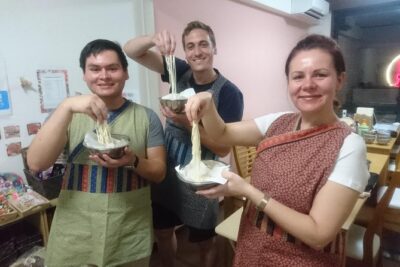


Osaka Sake Tasting & Takoyaki Cooking Experience
Read our review →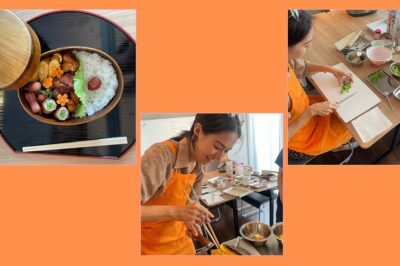
Cooking Ramen&Gyoza/KatsuCurry/Bento/Okonomiyaki+Store Tour@Osaka
Read our review →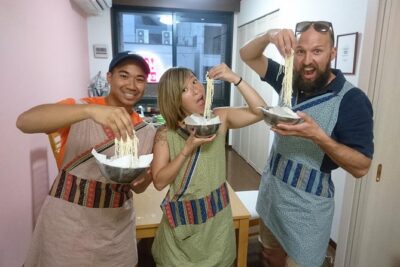
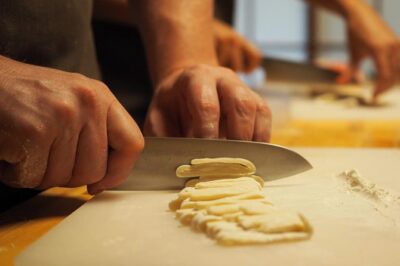
Eat Osaka: Street Food Cooking in an Authentic Kitchen!
Read our review →This tour also fits