
Reviewed · NINJA & SAMURAI EXPERIENCES
To war, let’s go to battle!Samurai Sword cutting & Armor shooting
Turning sword practice into a real moment.
In Osaka, this hands-on session at Samurai Honor puts you in a samurai costume, teaches Bushido manners, and then lets you cut a rolled straw with a real Japanese sword, not just point at swords from behind glass. I also like that the lesson is structured and physical, starting with bowing and basics and moving through the key iai actions that many people only hear about in books.
You should know one drawback up front: there has been at least one case of a no-show due to cancellation by the operator, so I recommend you confirm close to your start time and keep a flexible plan for the rest of the day.
In This Review
- Key things to know before you go
- From Osaka Castle Station to Samurai Honor in 1 minute
- Costume first, then you act the part
- How the training sequence works: stance, iai basics, and discipline
- The real highlight: cutting rolled straw with a Japanese sword
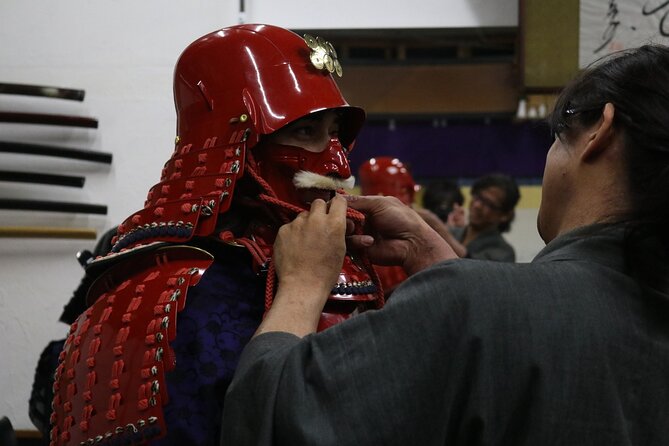
- Samurai armor and the helmet photo you will actually want
- Samurai language and the souvenir with meaning
- Price and time: what you’re paying for
- What to expect on the day, and how to get the most out of it
- Who this Osaka samurai sword lesson is best for
- Should you book Samurai Honor in Osaka?
- FAQ
- How long is the Samurai Sword cutting and Armor shooting experience?
- Where do I meet for the experience?
- How much does it cost?
- Will I need a printed ticket?
- What is included in the lesson?
- Do I cut anything during the experience?
- How large are the groups?
- Is the experience suitable for most people?
- Does the tour end where it starts?
- What is the cancellation and refund window?
Key things to know before you go
- One-on-one feeling in a small group: max 6 travelers for a more hands-on pace.
- Real sword trial: you cut a rolled straw using a real Japanese sword.
- Iai basics with named actions: you practice stances and movements like Battou, Chiburui, and Nottou.
- Armor time plus photos: you try on armor and helmet and get a commemorative photo.
- You learn meaning, not just motions: the lesson touches Bushido spirit and samurai language, with souvenirs tied to it.
From Osaka Castle Station to Samurai Honor in 1 minute
This experience is anchored near Osaka Castle, which is a big reason it feels more like a living performance than a one-off workshop. The meeting point is at Samurai Honor, a one-minute walk from Osaka-jo Koen Station on the JR Osaka Loop Line, and that matters because you can build it into an Osaka Castle day without losing half your day commuting.
You’ll be joining a short lesson in a studio-like setting. The location is practical, and the route is simple: get off at Osaka-jo Koen Station, walk in the direction of the castle park area, then look for the Samurai Honor meeting spot.
One more practical detail: the tour uses a mobile ticket, so you’ll want your phone charged and ready when you arrive. Since you change clothes on-site, I’d also plan to bring something easy to wear before you get into your costume.
Swing a sword like it's 1600
- Samurai Training Experience KENDO in Osaka★ 5.0 · 515 reviews
- OSAKA NIGHT FUSION Japanese Taiko Kabuki Samurai Dance Show★ 4.8 · 155 reviews
- Osaka: Samurai Training Experience KENDO in Osaka★ 5.0 · 111 reviews
- Osaka: A Modern Samurai, Kabuki, Taiko, & Dance Show★ 4.5 · 66 reviews
- Osaka 2-Hour Genuine Kendo / Samurai Experience In Japan★ 5.0 · 65 reviews
Costume first, then you act the part
The session begins with a transformation. You change into a samurai costume and are guided into the mindset of a warrior, in the same way you’d expect from a formal training culture. It sounds theatrical, but it also serves a real purpose. When you’re dressed the part, you’re more likely to pay attention to the manners and posture that the instructor will emphasize.
From there, the lesson shifts into Bushido-related swordsmanship. You’re not just learning how to swing a sword. You’re learning how samurai framed training as discipline, loyalty, and order, which shows up in the way the instructor structures the sequence.
The routine starts with a bow. That might feel small, but in a training setting it is the social cue that the lesson is about respect first. If you’re expecting a casual photo-op only, you’ll be pleasantly surprised by how much the session is geared toward technique and etiquette.
Possible downside: if you’re in a hurry or hate changing clothes, factor that time in. The total duration is about 1 hour 30 minutes, so the session is designed to move efficiently.
How the training sequence works: stance, iai basics, and discipline
After the welcome and bow, you get explanations of swords and samurai manners. Then you practice with an iai practice sword, which is a smart way to learn safely and build muscle memory before the real cutting moment.
The basics include:
- Swinging the sword from the stance
- Battou: pulling the sword out of the scabbard as the start of the cutting action
- Chiburui: the symbolic motion of removing blood from the blade after a cut
- Nottou: returning the sword to its sheath
Even if you do not keep these Japanese terms perfectly, you’ll feel what they represent: each step is its own job. That pacing helps you understand why iai is practiced as a sequence rather than a single sword swing.
This is also where the small group size matters. With up to 6 travelers, you’re more likely to get corrections on stance and timing, not just hear general advice for a crowd.
The real highlight: cutting rolled straw with a Japanese sword
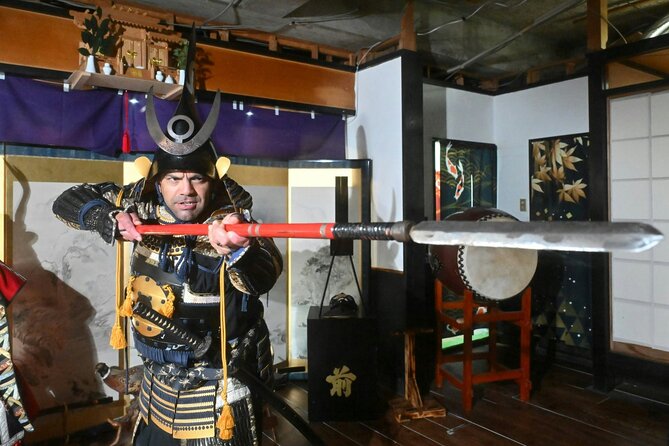
Here’s the moment most people book for: trial slashing with a real Japanese sword. The cutting target is a rolled straw, which is a practical choice for teaching because it lets you focus on timing, alignment, and follow-through.
You’re taught directly by a master, including basics, kata elements, and sword swings. Kata sounds like “formal routine,” but what you’ll get in this setting is structure: the instructor shows a movement pattern, then guides you through doing it.
Why this is valuable for you:
- You’re not guessing. The lesson breaks down what happens before and during the cut.
- You get feedback during your attempt, which is what turns a “try once” activity into actual learning.
- You leave with a physical memory, because the cutting is the kind of moment you remember for years.
Safety note, based on what’s provided: the cutting happens after you practice with an iai practice sword. That step is part of why the progression feels controlled.
One caution to keep your expectations realistic: straw cutting still takes technique. If you go in thinking it will be effortless, you might get frustrated. The class style here is built around learning and correction, so go in ready to try, reset, and try again.
Samurai armor and the helmet photo you will actually want
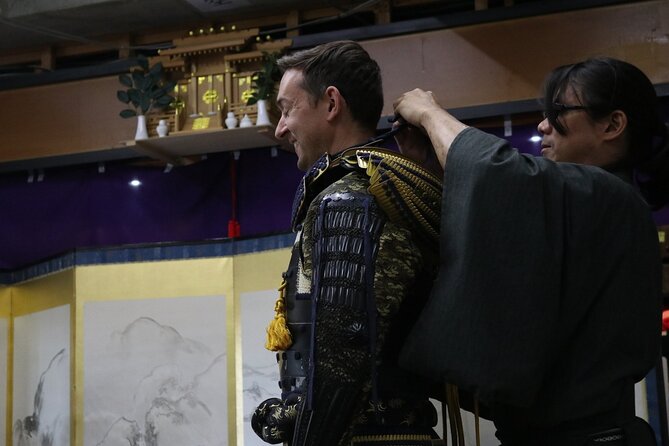
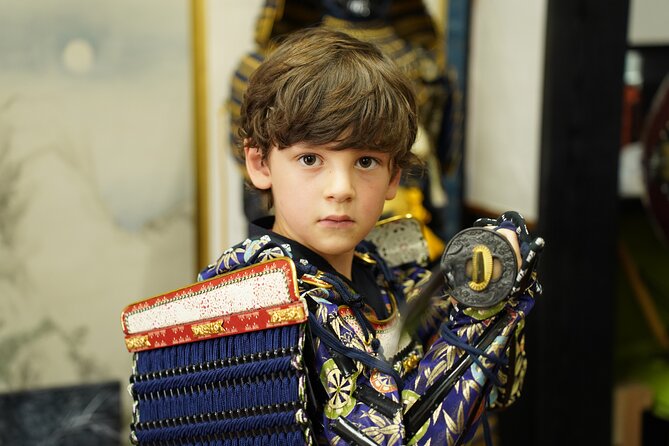
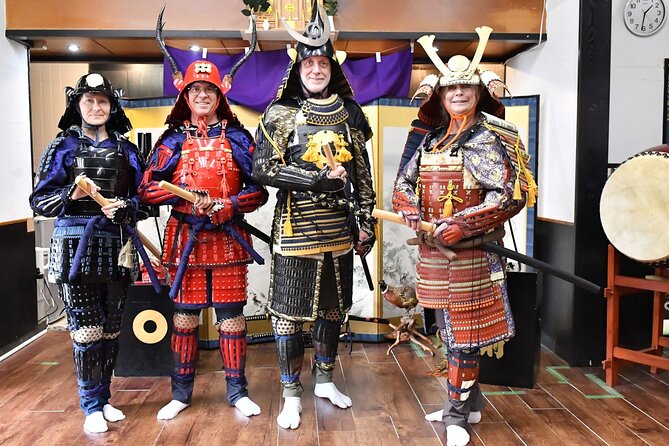
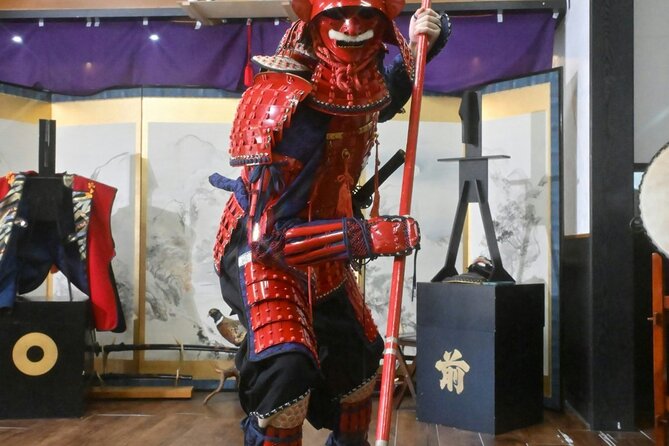
Next comes the visual payoff. You try on samurai armor and a helmet. This is more than dressing up. The lesson frames it the way samurai would wear armor before battle, to show dignity and presence.
Then you get a commemorative photo with the armor. It’s the kind of souvenir that feels more meaningful than a generic postcard, because the armor is heavy-looking and dramatic, and your photo captures you wearing the real thing.
If you’re the type who enjoys cosplay but wants it to feel rooted in craft and discipline, this part is a win. You’re not just putting on a costume. You’re also learning why the gear represented authority and preparedness.
Not ready to leave Osaka yet? A few more ways to fill the day.
- Osaka Go Karting Tour with Funny Costume
★ 5.0 · 2,658 reviews - Osaka Castle: Museum and Tower Entry Ticket
★ 4.5 · 2,380 reviews - Osaka: Shinsekai Food Tour with 13-15 Dishes at 5 Eateries
★ 4.8 · 2,204 reviews
Samurai language and the souvenir with meaning
The experience doesn’t stop at movements and props. You also learn about samurai language, which refers to language used mainly by the samurai class during the Warring States period.
The lesson links it to values: loyalty to a lord, discipline, and the spirit of Bushido. That is the kind of “why it matters” context that turns sword practice into something more human, not just mechanical.
You also receive souvenirs from the teacher connected to this theme. While the exact items are not detailed here, the intention is clear: you take home a small reminder of the cultural idea behind the training.
This is one of the reasons I think this experience has staying power. It gives you a vocabulary hook you can use later when you see samurai artifacts in Japan.
Price and time: what you’re paying for
The price is $107.81 per person for about 1 hour 30 minutes, and it runs with a max group size of 6. That pricing is not “cheap,” but it isn’t out of line either when you consider what’s included in the session:
- Changing into a samurai costume
- Sword explanations and manners
- Iai practice with a practice sword
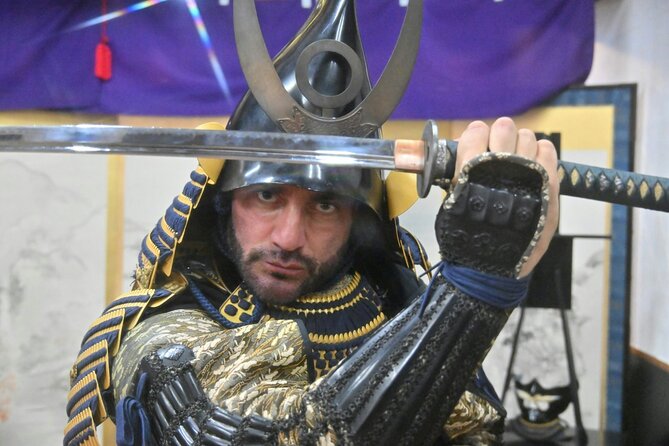
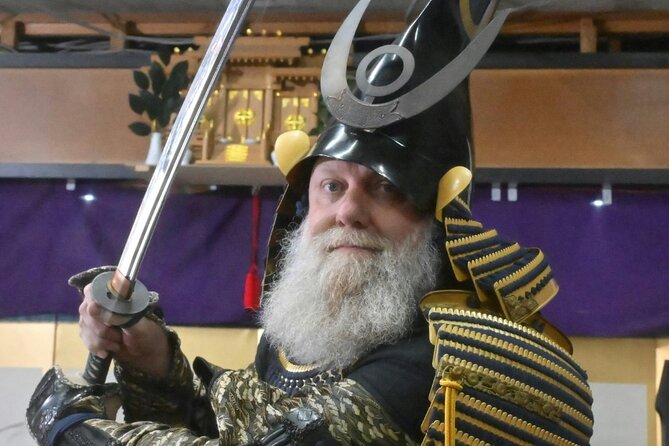
- Trial slashing with a real Japanese sword
- Samurai armor and helmet time
- A commemorative photo
- Samurai language context and related souvenirs
Where the value really comes in for you is the combo of hands-on technique plus real-world props. If you only wanted a costume photo, you could find other options. If you only wanted a sword lesson with no gear, you’d also find other classes. This one tries to blend both in a single, tight time slot.
The “small group” detail is important too. In a group larger than a handful, sword lessons often turn into spectatorship. Here, the structure is set up for more direct instruction.
What to expect on the day, and how to get the most out of it
The lesson ends back at the meeting point, so you’re not dealing with a long travel shuffle after you’re finished.
Because it is about technique, your best strategy is to treat the class like training, not entertainment. That means:
- Pay attention when the instructor is correcting stance and timing
- Don’t worry about being perfect on the first attempt
- Keep your posture steady during explanations, so you learn the sequence
A real plus from the positive review you provided: the instructor named Samurai lae San is described as very patient during preparation, answering questions kindly, and making the experience a lifetime memory. I’d take that as a strong sign this is a lesson style built for beginners, not only for people who already know Japanese sword terms.
At the same time, the negative review shows what can go wrong operationally: a no-show due to unilateral cancellation beyond the operator’s control. That doesn’t mean it happens every time, but it does mean you should protect your day. If you’re planning a packed Osaka itinerary, try not to schedule this as your single only plan. Build in a backup activity nearby, especially since you are close to Osaka Castle anyway.
Who this Osaka samurai sword lesson is best for
This tour is a good match if you want:
- A hands-on activity with a real cutting moment
- A structured class that teaches technique steps like iai actions
- A cultural layer beyond sword swinging, including Bushido spirit and samurai language
- A small group experience where you can ask questions
It’s also likely a fun pick for families and first-timers because the basic pacing is taught, and the lesson is built for beginners.
If you hate dressing up, or you’re expecting an outdoor spectacle, this might feel more like a workshop than a show. And if you are very sensitive about cancellations, you’ll want to keep your schedule flexible and confirm close to your booked time.
Should you book Samurai Honor in Osaka?
I’d book this if you want the best part of samurai culture in one compact session: learn the sequence, practice the fundamentals, then cut a rolled straw with a real sword, finish by wearing armor for a photo, and take home something that connects to samurai language.
I would think twice if you are traveling with a tightly locked itinerary and you cannot tolerate last-minute disruption. There is a documented case of cancellation/no-show, so you need a backup plan.
If you do book, go in with the right mindset: treat it like training, ask questions, and accept that technique takes attempts. That approach is what helps this turn into a memory you’ll be happy you paid for.
FAQ
How long is the Samurai Sword cutting and Armor shooting experience?
It lasts about 1 hour 30 minutes.
Where do I meet for the experience?
The activity is held at Samurai Honor, about a one-minute walk from Osaka-jo Koen Station on the JR Osaka Loop Line.
How much does it cost?
The price is $107.81 per person.
Will I need a printed ticket?
No. It uses a mobile ticket.
What is included in the lesson?
You change into a samurai costume, learn Bushido-related swordsmanship and manners, practice with an iai practice sword, attempt trial slashing with a real Japanese sword on a rolled straw, and try on samurai armor and helmet for a commemorative photo. You also receive samurai language-related souvenirs.
Do I cut anything during the experience?
Yes. You try cutting a rolled straw with a real Japanese sword.
How large are the groups?
The maximum group size is 6 travelers.
Is the experience suitable for most people?
The info says most travelers can participate.
Does the tour end where it starts?
Yes, the activity ends back at the meeting point.
What is the cancellation and refund window?
Free cancellation is available up to 24 hours in advance for a full refund. If you cancel less than 24 hours before the start time, the amount paid is not refunded.
Just added around Osaka

Ninja & Samurai Experiences, compared.

OSAKA NIGHT FUSION Japanese Taiko Kabuki Samurai Dance Show
Read our review →

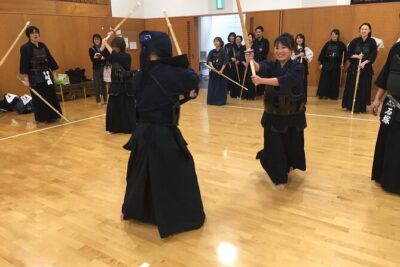
Osaka 2-Hour Genuine Kendo / Samurai Experience In Japan
Read our review →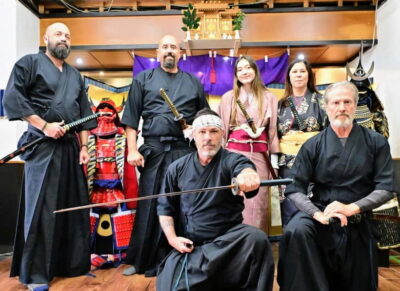
Learn Bushido – Trial Slashing with Samurai Sword
Read our review →
Samurai Show, Tea Ceremony, Japanese Traditional Activities
Read our review →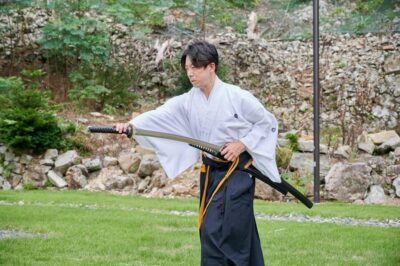
Private Samurai Experience – Train with Sword Master
Read our review →This tour also fits