
Reviewed · COOKING CLASSES
Traditional Home cooking Experience in Osaka, Japan
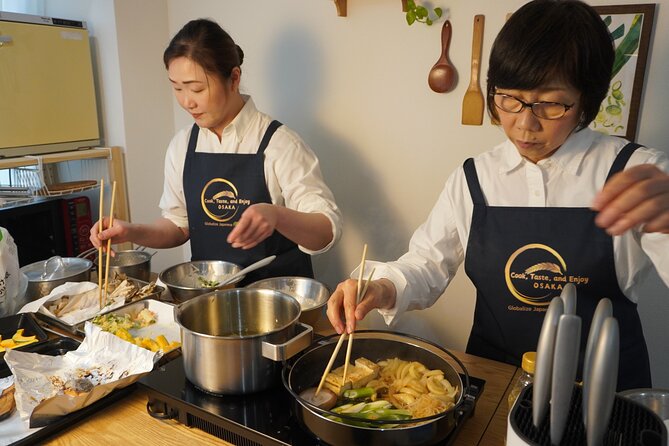
A kitchen lesson in Osaka beats another food tour. This one is built around hands-on home cooking with a guide who keeps the mood light. I love the mix of serious technique and fun, plus the fact that your meal is made with carefully sourced Koshihikari rice.
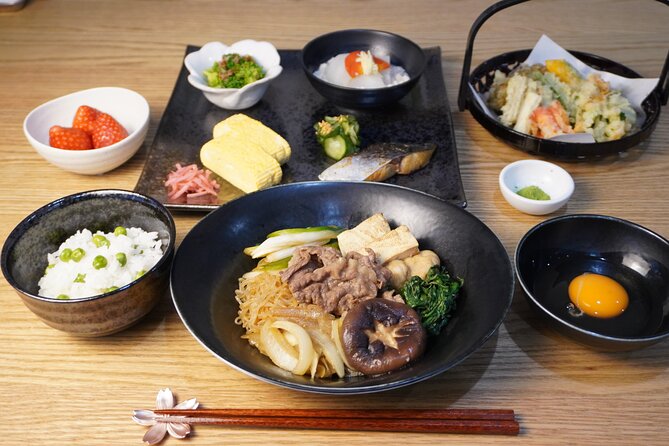
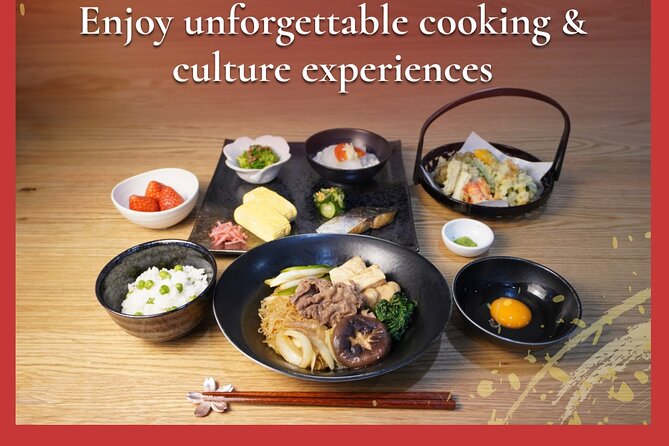
You get to choose between Course A and Course B, and you cook two dishes together, then eat what you make. Course A focuses on sukiyaki, tempura, and a rolled omelet, while Course B goes for a wagyu roast beef bowl, chicken nanban, and sashimi.
One thing to consider: you are paying for a more intimate, instructor-led class, so it is not the cheapest way to eat in Osaka. Also, plan on going for about two hours, with the flow centered on cooking, not wandering.
In This Review
- Key highlights before you book
- Cook, Taste and Enjoy Osaka, and what that means in practice
- Picking Course A or Course B: sukiyaki and tempura or wagyu and chicken nanban
- The rice matters more than you think: Koshihikari from Minami-Uonuma
- What happens during your cooking time, from prep to the first bite
- Eating what you made: how Osaka home flavors land on the plate
- Small group energy and teaching you can actually follow
- Where to meet in Osaka: Nishishinsaibashi makes it easy to plan
- Price and value: what $104.51 buys you here
- Who should book this Osaka cooking class, and who should skip it
- Should you book Cook, Taste and Enjoy Osaka?
- FAQ
- How long is the Cook, Taste and Enjoy Osaka cooking class?
- How much does it cost per person?
- Can I choose between Course A and Course B?
- What dishes are in Course A?
- What dishes are in Course B?
- Is water included?
- Are alcoholic drinks included?
- How many people are in the group?
- Where is the meeting point?
- What is the cancellation policy?
- When will I receive confirmation?
Key highlights before you book
- Two-course choice (A or B): Pick the set that matches your mood, then cook two dishes together.
- Koshihikari rice, traced to Niigata: Contract-farmer sourcing from Minami-Uonuma City is a core part of the experience.
- Max 8 people: Small group size means you get closer guidance while you cook.
- English-friendly instruction: Your chef and staff guide you step by step, with clear communication.
- Fun factor built in: The vibe is not stiff, and you may even see music or performance included in some sessions.
- Water is free, alcohol is not: Simple and practical, with drinks charged separately.
Cook, Taste and Enjoy Osaka, and what that means in practice
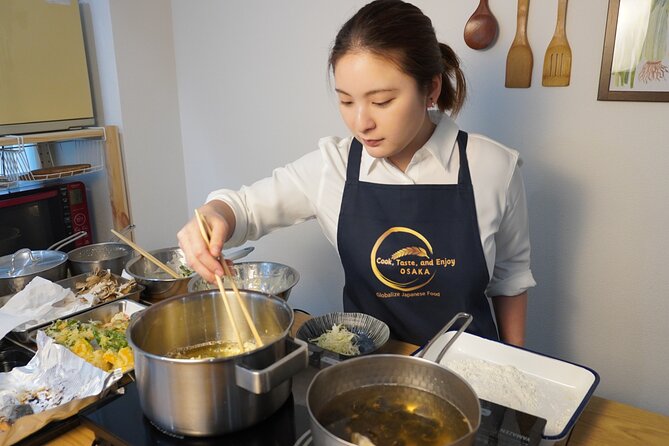
This class is not just a recipe demo. It is structured so you cook alongside an experienced instructor, then sit down to enjoy the food you helped make.
What I find smart here is the way it balances technique with fun. Osaka home cooking is approachable, but doing it well takes timing, heat control, and knowing when to stop. You are there for the learning, yet the tone stays friendly so you are not afraid of messing up.
Another strong point for you is the seasonal framing. You use ingredients that shift with Japan’s four seasons, so the dishes feel less like a static “tourist set menu” and more like the kind of cooking you would expect to see in an actual home kitchen.
Other ways to spend a day in Osaka
- Osaka: Ramen and Gyoza Cooking Class in Dotonbori★ 5.0 · 378 reviews
- Osaka Cooking Class: Okonomiyaki &Japanese cuisines experience★ 5.0 · 261 reviews
- Ramen and Gyoza Cooking Class in Osaka★ 5.0 · 202 reviews
- Osaka Sake Tasting with Takoyaki Cooking★ 5.0 · 156 reviews
- Osaka Sake Tasting & Takoyaki Cooking Experience★ 5.0 · 149 reviews
Picking Course A or Course B: sukiyaki and tempura or wagyu and chicken nanban
You choose your course when you book, and both courses land on two big dishes made together during the class.
Course A is the comfort-and-crisps route:
- Sukiyaki
- Tempura
- Plus a rolled omelet as part of the course flow
Course B leans into Osaka classics and the joy of mixed textures:
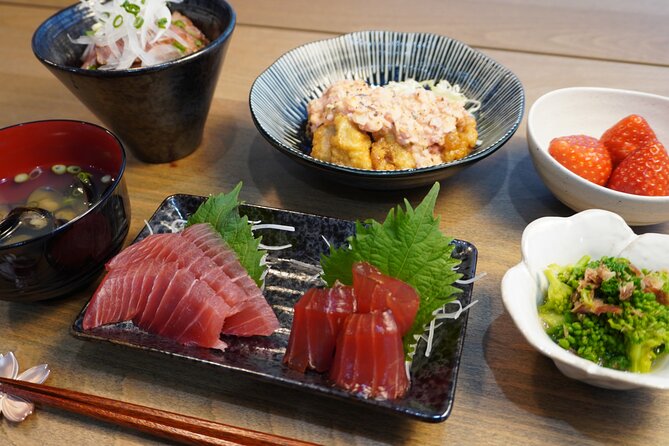
- Wagyu roast beef bowl
- Chicken nanban
- Sashimi included in the set
So which should you choose?
If you want a lesson that covers variety in cooking styles, Course A is excellent. You will get experience thinking about sweet-savory balance in sukiyaki and learning how tempura stays crisp, not greasy. The rolled omelet adds a different kind of patience, where batter and pan control matter.
If you want your meal to feel like a proper Osaka feast with bold, straightforward flavors, Course B is hard to beat. Wagyu on rice is instantly satisfying, chicken nanban brings that crunchy, tangy punch, and sashimi gives you a fresh contrast so the meal does not get heavy.
Either way, the class length stays roughly the same, about two hours, so you are not committing to a whole day to get a memorable cooking and eating session.
The rice matters more than you think: Koshihikari from Minami-Uonuma
In Japan, rice is not just a side. It is the base that shapes how the whole meal tastes, especially for bowls and anything that uses a rice-forward sauce.
This class is unusually specific about rice sourcing. They directly purchase Koshihikari rice from contract farmers in Minami-Uonuma City, Niigata Prefecture, a major rice-producing area. Practically, that means you are not just eating because it is included, you are eating because the ingredient quality is part of the lesson.
For you, this is a value point you can actually taste. Better rice changes the texture and the way sauces cling, and it can make dishes like wagyu bowls feel richer without needing extra toppings.
Also, it signals how the instructor plans the class: the rice is treated as a key ingredient, not filler. That is a small detail, but it often separates an authentic-feeling cooking experience from something that is mostly about assembling dishes.
What happens during your cooking time, from prep to the first bite
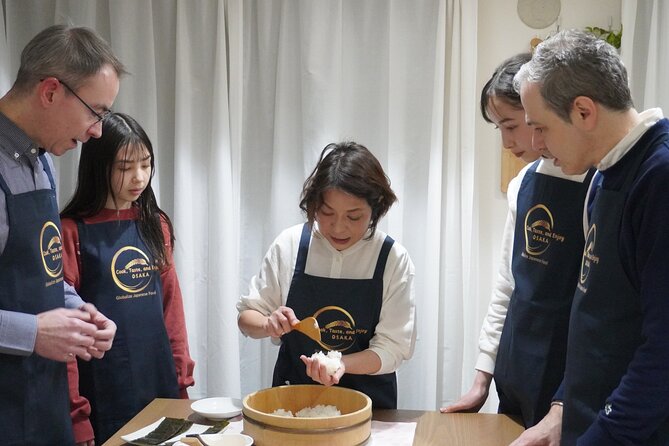
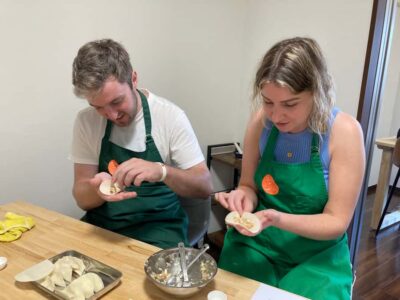
The class runs about two hours, and it is built around cooking two dishes together. Because the format is hands-on and small-group, you can expect the staff to explain what you are doing as you do it, rather than handing you a checklist and leaving you to figure it out.
Here is the kind of flow you should anticipate:
- Welcome and quick setup: You meet near Nishishinsaibashi and get oriented.
- Ingredient and technique briefing: You get focused guidance on how the dishes work.
- Cooking together: You and the instructor handle your part while the heat and timing stay under control.
- Finishing and plating: You put the final touches on.
- Eating your meal: You enjoy what you cooked, with the ingredients and flavors presented as a complete experience.
One practical tip for you: come with a curious mindset, not a checklist of questions. The best classes are the ones where you watch the instructor’s pacing, then copy the rhythm. Even if you only pick up a couple of technique cues, you will take them home.
Timing can vary a bit. One reported session ran closer to 2.5 hours, so it is smart to avoid booking something tight right after. Give yourself breathing room near the end.
Eating what you made: how Osaka home flavors land on the plate
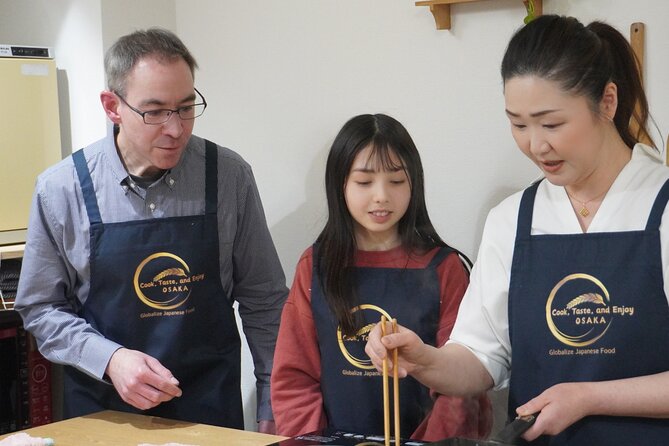
What I like about this format is that the meal is not separate from the cooking. The eating is part of the learning, so you taste with context.
With sukiyaki, you get a sweet-savory harmony that is easy to like and easy to understand. Tempura brings a lesson in texture, because crispness is everything. A rolled omelet rewards attention to heat and consistency, and it is the kind of dish that feels special even when it is not flashy.
With wagyu roast beef bowls and chicken nanban, you get bold comfort food quickly. Wagyu on rice is rich, while chicken nanban’s crunch and sauce give you contrast. Adding sashimi keeps the meal from feeling all one note.
If you want your experience to feel more complete, pay attention to how the dishes are balanced. Osaka food often plays with contrast: hot versus cool, crunchy versus tender, and rich versus bright. When you taste, try to notice what each bite is doing, not just how good it tastes.
Not ready to leave Osaka yet? A few more ways to fill the day.
- Osaka Go Karting Tour with Funny Costume
★ 5.0 · 2,658 reviews - Osaka Castle: Museum and Tower Entry Ticket
★ 4.5 · 2,380 reviews - Osaka: Shinsekai Food Tour with 13-15 Dishes at 5 Eateries
★ 4.8 · 2,204 reviews
Small group energy and teaching you can actually follow
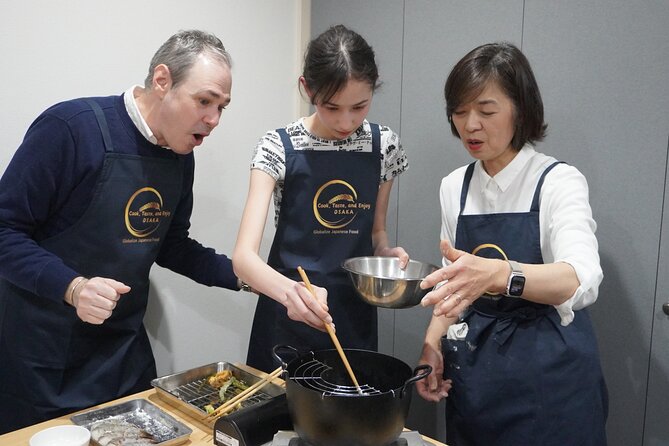
A maximum group size of 8 travelers is a big deal here. In a class like this, you will likely have questions, and you want a pace that lets your instructor see what you are doing.
Your guide is also described as friendly and easy to talk to, with good English. That matters because cooking classes can get frustrating when instruction is vague. Clear communication helps you learn the “why,” not just copy the steps.
Also, one key detail that pops up in reported sessions: there can be a music and instrument element with a performer named Keiko. You should not count on a specific performance every time, but it is a strong sign the class is designed to feel like culture, not just cooking. If it happens during your date, treat it as part of the overall Osaka atmosphere, not a distraction.
Bottom line: small group plus patient instruction is what makes this kind of class worth it. If you have ever felt ignored in a group activity, this one’s size is built to avoid that problem.
Where to meet in Osaka: Nishishinsaibashi makes it easy to plan
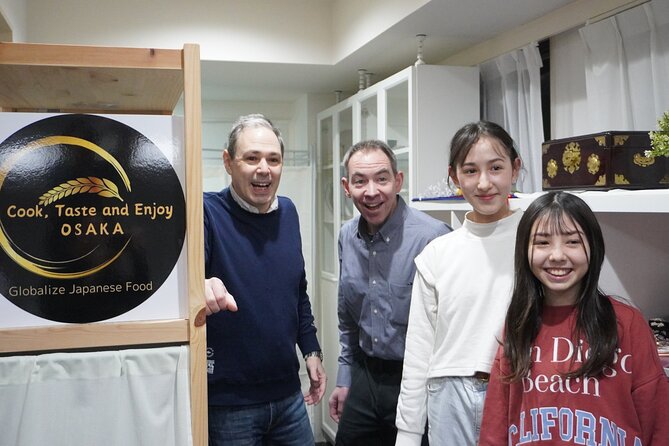
You start at 2 Chome-13 Nishishinsaibashi, Chuo Ward, Osaka, 542-0086, Japan, and the activity ends back near the meeting point.
That matters because it reduces friction. You do not need to fight complicated routes at the start and then wonder where your class deposits you later. It also means you can pair it with an evening out in the same area, since Nishishinsaibashi is central enough for easy walking and connections by public transport.
One practical move: plan to arrive a few minutes early. Cooking starts on time, and in a small group, lateness affects everyone’s rhythm.
Price and value: what $104.51 buys you here
At about $104.51 per person for roughly two hours, this class is not a budget activity. But the value is not just the food. You are paying for guided cooking time, small group attention, and ingredient quality that is handled seriously.
Here is what you are getting for your money:
- You choose between Course A or Course B, each with two dishes you help make
- Expert instruction while you cook
- A heavy focus on rice quality using Koshihikari from Niigata
- Water is free, while other drinks are charged separately
- Alcohol is not included
Is it worth it for you? If you like learning techniques you can reuse later, yes. If your goal is mostly to eat without thinking, you might find better value in a regular meal somewhere nearby. But if you want to go home with a story and a skill, this class makes sense.
Also, because the group is capped at 8, you are not buying into a “sit and watch” experience. You are buying into participation. That is where the price feels more justified.
Who should book this Osaka cooking class, and who should skip it
This is a great fit if you:
- Want hands-on cooking instead of passive sightseeing
- Like Osaka food and want to understand how it is made
- Care about ingredient quality, especially rice
- Prefer small groups and friendly guidance in English
You might skip it if:
- You only want to eat, not cook
- You are short on time and cannot spare about two hours
- You do not want to pay for an instructor-led experience in a central area
Also, choosing a course based on your palate is smart. If you are tempted by rich, hearty flavors and crisp textures, pick Course A. If you want bowl comfort plus crispy nanban and fresh sashimi, Course B is the more direct route.
If you travel as a pair, this kind of class is also naturally social. You can talk while you cook and then share the same table experience without coordinating multiple restaurants.
Should you book Cook, Taste and Enjoy Osaka?
If you want an Osaka experience that feels lived-in, practical, and actually hands-on, I think you should book it. The small group size, the clear course choices, and the emphasis on Koshihikari rice make it more than a generic cooking class.
Just go in with realistic expectations. Plan for about two hours centered on cooking, and remember drinks besides free water cost extra. If you do that, you will leave with a meal you understand, not just one you ate.
And if you are the type who enjoys learning what makes Japanese home cooking work, this is the sort of activity that turns a trip memory into a skill you can repeat at home.
FAQ
How long is the Cook, Taste and Enjoy Osaka cooking class?
It lasts about 2 hours (approx.).
How much does it cost per person?
It is $104.51 per person.
Can I choose between Course A and Course B?
Yes. You choose Course A or Course B when you make your reservation.
What dishes are in Course A?
Course A includes sukiaki, tempura, and a rolled omelet, with two dishes made together during the class.
What dishes are in Course B?
Course B includes a wagyu roast beef bowl, chicken nanban, and sashimi, with two dishes made together during the class.
Is water included?
Water is free, but other drinks are charged separately.
Are alcoholic drinks included?
No. Alcoholic beverages are not included.
How many people are in the group?
The class has a maximum of 8 travelers.
Where is the meeting point?
You meet at 2 Chome-13 Nishishinsaibashi, Chuo Ward, Osaka, 542-0086, Japan, and it ends back at the meeting point.
What is the cancellation policy?
Free cancellation is available, and you can cancel up to 24 hours in advance for a full refund.
When will I receive confirmation?
Confirmation is received within 48 hours of booking, subject to availability.
Just added around Osaka


Cooking Classes, compared.
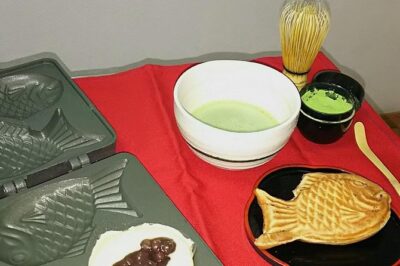
Osaka Cooking Class: Okonomiyaki &Japanese cuisines experience
Read our review →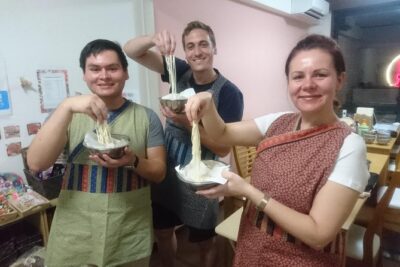
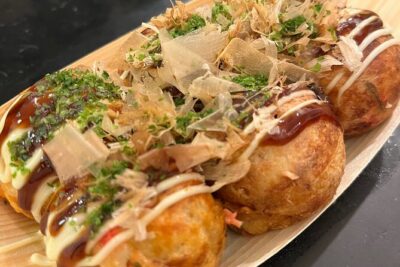
Osaka Sake Tasting & Takoyaki Cooking Experience
Read our review →
Cooking Ramen&Gyoza/KatsuCurry/Bento/Okonomiyaki+Store Tour@Osaka
Read our review →
Eat Osaka: Street Food Cooking in an Authentic Kitchen!
Read our review →This tour also fits