
Reviewed · NINJA & SAMURAI EXPERIENCES
Trial slashing in Bushido with Samurai Sword real sharpnes
Sword training in Osaka Castle grounds? Yes, and it is practical. You switch into samurai gear, learn basic movements and manners, then get hands-on trial slashing with a real Japanese sword on a rolled straw. Two things I like a lot are the calm, patient instruction style and the way the class moves fast but stays structured, from bowing to bowing again. One thing to weigh: you are doing sword work, so you should follow directions closely and be comfortable with a moderate activity pace.
The location is also smart. It is a one-minute walk from Osaka-jo Koen Station on the JR Osaka Loop Line, right by the Osaka Castle entrance, so you can pair this with sightseeing without wasting time. For the drawback, the session is short and intense, so if you want lots of free practice time or deep historical lectures, this may feel like a concentrated intro rather than a long training camp.
In This Review
- Key Things I Think You’ll Care About
- Entering Samurai Honor Near Osaka Castle Park
- Suiting Up: Dogi, Hakama, and Samurai Manners
- The Iai Practice Sword: Basics You Actually Need
- From Kata and Stances to Real Sword Swings
- Trial Slashing on Rolled Straw: What the Cut Means
- Photography Service and Your Souvenir Moment
- Price and Value: Is $78.83 Reasonable?
- Who This Fits Best, and Who Might Want to Rethink It
- Timing, How to Plan Your Day, and Logistics That Matter
- Quick FAQ on the Samurai Sword Trial Lesson
- FAQ
- Where does the class start?
- How long is the experience?
- What exactly will I try cutting?
- Do I need to bring a sword or wear special clothes?
- Is there an instructor and what is the group size?
- Will there be photos, and when do I get them?
- What language is offered during the class?
- Is bottled water or transportation included?
- Should You Book This Samurai Sword Trial in Osaka?
Key Things I Think You’ll Care About
- One-hour format that stays structured: prep, iai basics, then trial slashing.
- Real katana cutting, not pretend training: you cut a rolled straw with a sharp Japanese sword.
- Mini etiquette lesson with Bushido language: you learn why discipline and respect mattered.
- Small group size: capped at 5 travelers, which helps you get real coaching.
- Photos after the class: serious action shots delivered to your email within both days.
- Outfit included: dogi and hakama, so you look the part without renting extra gear.
Entering Samurai Honor Near Osaka Castle Park
This lesson is based at Samurai Honor, tucked close to Osaka-jo Koen Station on the JR Osaka Loop Line. The meeting setup is simple, and the address is at 2-chome 3-19 Excellence Takayama in Joto Ward, Osaka. If you are already planning to visit Osaka Castle Park, this is the kind of activity that fits neatly into the same day.
In practice, the location matters. You avoid long transfers, and you can show up without rushing across town. It is also a good mental reset before sword practice, because you start in a calm, dedicated space rather than trying to learn katas on a busy street.
The class is also very time-bound, about 1 hour. That is long enough to feel progress, but short enough that you can keep your Osaka itinerary on track.
Swing a sword like it's 1600
- Samurai Training Experience KENDO in Osaka★ 5.0 · 515 reviews
- OSAKA NIGHT FUSION Japanese Taiko Kabuki Samurai Dance Show★ 4.8 · 155 reviews
- Osaka: Samurai Training Experience KENDO in Osaka★ 5.0 · 111 reviews
- Osaka: A Modern Samurai, Kabuki, Taiko, & Dance Show★ 4.5 · 66 reviews
- Osaka 2-Hour Genuine Kendo / Samurai Experience In Japan★ 5.0 · 65 reviews
Suiting Up: Dogi, Hakama, and Samurai Manners
The first step is gear and mindset. You change into a samurai costume, dogi and hakama, and you start acting the part right away. The lesson frames the sword as something treated with respect, not a toy.
Then comes the manners portion. You begin with a bow, and you get explanations on swords and samurai etiquette before moving into practice. This is not just cultural fluff. It sets the tone for how you handle the sword safely, how you stand, and how you move with intention.
A nice detail here is the idea of Bushido language. You learn how samurai communication in the Warring States period reflected loyalty, discipline, and the spirit of Bushido. One of the class moments people remember most is learning a phrase like Arigataki shiawase, a traditional expression meaning extremely fortunate, a rare coincidence. Even if you do not speak Japanese beyond basics, it feels good to leave with something usable and meaningful.
What I like: the class respects the seriousness of training. You are not just doing stunts. You are learning an approach.
Possible consideration: if you dislike any cultural or etiquette framing and want only action, this portion may feel like setup time. Still, it tends to pay off when you move into the stances and cutting.
The Iai Practice Sword: Basics You Actually Need
Before you touch the real blade, you practice fundamentals with an iai practice sword. This is where the lesson earns its structure.
You work on swinging from the stance, then you practice a sequence that the class lays out clearly:
- Battou: pulling the sword out of the scabbard in the correct way to cut
- Chiburui: the symbolic action after a cut, removing blood from the blade in the traditional routine
- Nottou: returning the sword to the sheath in the controlled way that completes the sequence
Even in a short class, these steps help you avoid the common beginner mistake of treating cutting as only arm strength. The movement is a coordinated routine, not a random lunge.
From a value standpoint, this part matters because it reduces risk and increases accuracy. When you understand the sequence, your body learns timing. That is how you get a cleaner result on the target, especially with a real sword.
The instruction style also seems to be a real strength. Reviews highlight that the teachers are calm and patient, and that you learn a lot quickly. In a 1-hour lesson, that coaching quality is the difference between feeling lost and feeling capable.
From Kata and Stances to Real Sword Swings
After iai basics, you practice directly with the master: kata and stances, then sword swings. This is the transition moment. You go from training movements to the real thing, with the sharp Japanese sword.
What to expect in your body during this stage:
- Your stance and foot position start to feel more important
- Your timing matters, because the class expects coordinated movement
- Your confidence builds in small jumps, not one sudden leap
Because the group is capped at 5 travelers, the instructor can correct your form. That also helps if you have never handled a sword before. The class format gives you chances to adjust while you are still in the learning window.
One more practical point: the activity notes warn that drawing swords is dangerous, so you should not do so without permission. In this kind of training, that is not a formality. Follow the instructor’s cue every time, and do not try to speed-run the movements.
Trial Slashing on Rolled Straw: What the Cut Means
Now for the highlight: trial slashing. You cut a rolled straw using a real Japanese sword. This is the hands-on part most people come for, and it is also where the lesson feels most alive.
In many sword experiences, the cutting moment feels like a single dramatic try. Here, it is framed as the result of the earlier practice: bow, basics, iai sequence, then kata and swings, then the cutting attempt.
The rolled straw target is practical. It gives you something you can focus on without turning the class into a chaotic free-for-all. And it helps beginners understand impact and angle in a safer training environment.
If you want to set expectations correctly, treat this as an introduction to technique, not a certification. You will likely feel proud even after one cut, but the real win is that you understand how the routine connects: stance, pull, cut, follow-through, and return.
What I like: the cutting feels respectful and controlled, not reckless. The photos also tend to capture that serious focus, which makes the memory more than just a moment.
Not ready to leave Osaka yet? A few more ways to fill the day.
- Osaka Go Karting Tour with Funny Costume
★ 5.0 · 2,658 reviews - Osaka Castle: Museum and Tower Entry Ticket
★ 4.5 · 2,380 reviews - Osaka: Shinsekai Food Tour with 13-15 Dishes at 5 Eateries
★ 4.8 · 2,204 reviews
Photography Service and Your Souvenir Moment
A big practical inclusion is photography. The class includes a service to capture serious figures during the activity, and the photo data is sent to your designated email address within both days. That timing helps you share quickly without waiting weeks.
You also receive souvenirs related to the teacher, including material tied to samurai language. It is a small thing, but it turns the class into something more than a one-time activity. You leave with a reminder of the etiquette and language piece, not only the cutting clip.
One-hour classes can feel like you blink and it is over. The combination of outfit, structure, and photos helps you feel like you did something complete.
If you hate being photographed, just know the class builds moments where you pose or hold form. Still, it is tied to the training, not a random photo shoot.
Price and Value: Is $78.83 Reasonable?
At $78.83 per person, this sits in the “short specialty lesson” range. What makes it feel like good value is that the price includes several things that add up separately: the samurai outfit, instruction by a certified professional instructor, photography data, and gratuities.
You also get a controlled group experience. With a maximum of 5 travelers, you are less likely to be left behind while the instructor works with other people. In a hands-on skill like this, small-group time is a real cost driver, so the pricing makes sense for the format.
Not included are transportation, bottled water, and personal expenses. Movie shooting is offered as a paid option at ¥33,000 per person. If you only want the core experience, you can keep your spend under control. If you want cinematic extras, budget for the add-on.
Also note the lesson is about 1 hour. That makes it easier to justify the cost if you are building a full day plan around Osaka Castle, because you are not sacrificing half your itinerary for one activity.
Who This Fits Best, and Who Might Want to Rethink It
This class is best for you if you want an authentic, structured way to try samurai sword basics in Osaka without needing previous experience. It is also a good pick for a parent-child outing. One of the memorable review scenarios involved a person attending with their son, and both enjoyed learning kata and samurai history through the movements.
It also fits people who like clear steps. The lesson breaks things into an order: bow, explanations, iai basics, practice stances and swings, then cutting.
What about people who might rethink it:
- If you expect a long deep-dive into history only, this is a hands-on training lesson in a short time window.
- If you dislike physical activity even at a moderate level, the stances and controlled swings might feel like too much.
- If you have strong anxiety about handling sharp objects, you should consider whether following safety instructions would calm you or stress you further.
The notes say you should have moderate physical fitness. That likely means you should be okay standing, moving your arms, and practicing form for about an hour.
Timing, How to Plan Your Day, and Logistics That Matter
Your session ends back at the meeting point, so you can plan your next stop without backtracking. Since it is near Osaka Castle Park and the Osaka-jo Koen Station area, you can often pair it with a castle visit, museum time, or a meal nearby.
The lesson uses a mobile ticket, and you receive confirmation at the time of booking. You do need to show up ready to change into the outfit and follow instructions.
Language is English by default, and you can inquire for other languages like Italian, Spanish, French, Chinese, Thai, and Indonesian. If English is not your strongest language, it is worth checking in ahead of time so you get the explanation clearly.
Quick FAQ on the Samurai Sword Trial Lesson
FAQ
Where does the class start?
The activity meeting point is at Samurai Honor, near Osaka-jo Koen Station on the JR Osaka Loop Line, and the address provided is 536-0014 Osaka, Joto Ward, Shiginonishi, 2-chome 3-19 エクセレンス高山.
How long is the experience?
It is approximately 1 hour.
What exactly will I try cutting?
You will try cutting a rolled straw with a real Japanese sword during the trial slashing portion.
Do I need to bring a sword or wear special clothes?
No. Samurai outfit (dogi and hakama) is included, and the class provides instruction and the training setup.
Is there an instructor and what is the group size?
Yes, the experience includes a certified professional instructor. The group size is limited to a maximum of 5 travelers.
Will there be photos, and when do I get them?
Yes. There is a photography service, and the photo data is sent to your designated email address within both days.
What language is offered during the class?
The default language is English. Other languages may be available if you inquire, including Italian, Spanish, French, Chinese, Thai, and Indonesian.
Is bottled water or transportation included?
No. Public transportation station or hotel transfers, bottled water, and other personal expenses are not included.
Should You Book This Samurai Sword Trial in Osaka?
I think you should book if you want a short, focused lesson that blends manners, basics, and the real cutting moment. The combo of structured kata practice, trial slashing with a sharp Japanese sword, and included photos makes it feel complete for the time.
Skip it if you are looking for a long-history lecture, or if you are uncomfortable following strict safety and training cues around a real blade. But for most people who want a fun, respectful, learn-by-doing Osaka experience, this is a strong choice.
If you can line it up with a day at Osaka Castle Park, even better. You get culture first, technique next, and a memorable photo set to carry home.
Just added around Osaka

Ninja & Samurai Experiences, compared.

OSAKA NIGHT FUSION Japanese Taiko Kabuki Samurai Dance Show
Read our review →

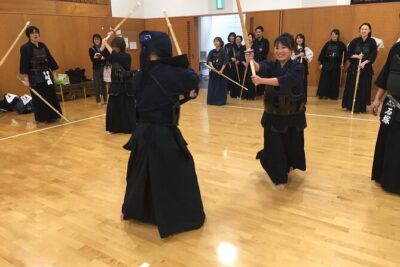
Osaka 2-Hour Genuine Kendo / Samurai Experience In Japan
Read our review →
Learn Bushido – Trial Slashing with Samurai Sword
Read our review →
Samurai Show, Tea Ceremony, Japanese Traditional Activities
Read our review →
Private Samurai Experience – Train with Sword Master
Read our review →This tour also fits