
Reviewed · LOCAL FOOD TOURS
Umami Town Street Food Tour
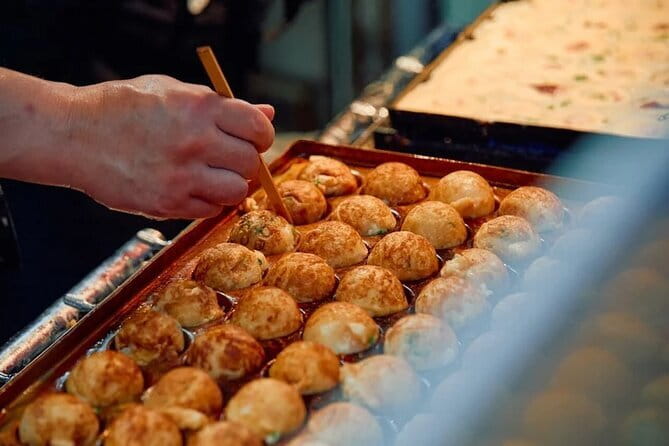
Osaka tastes better with a guide. This small-group Umami Town Street Food Tour gets you moving through key neighborhoods while you learn why dishes like takoyaki and okonomiyaki taste the way they do. It is also a practical way to “order smarter” across markets, street stalls, and simple restaurants without getting lost in the noise.
I love the small group size (max 7). That means your guide can slow down when you want details and can help you navigate what to try next, especially when menus get fast and confusing. I also like that the tour is built around the idea of umami, not just random eating.
One possible drawback: at $175 for about 5 hours, you are paying for guidance and multiple tastings, so go in hungry, and plan to walk. If you prefer light snacks or totally DIY wandering, this may feel like a lot.
In This Review
- Quick Takeaways Before You Go
- Why This Osaka Street Food Tour Works for First-Timers
- Price and Value: What $175 Buys You in Real Terms
- 10:00 Start at Minami-Morimachi, Then an Easy Route Through Food Zones
- Stop 1: Osaka Tenmangu Shrine, a Calm Start Before the Food Flood
- Stop 2: Kuromon Market, Where You Learn to Order Like You Mean It
- Stop 3: Dotonbori Tsuribori, Neon Osaka and Heavier Street-Food Energy
- What You Actually Eat: Umami as the Through-Line
- Alcohol Included: Good Value, Smart Pacing
- Small-Group Energy: The Real Magic is the Guide
- Practical Tips So You Get the Most From 5 Hours
- Who Should Book This Tour (and Who Might Skip It)
- Should You Book the Umami Town Street Food Tour?
- FAQ
- How long is the Umami Town Street Food Tour in Osaka?
- Where does the tour start and what time does it begin?
- How many people are in the group?
- Is this tour ticketed digitally?
- What stops are included during the tour?
- What is included in the price?
- What is not included?
- What is the cancellation policy?
Quick Takeaways Before You Go
- Max 7 people keeps the pace human, not rushed.
- Umami-focused explanations help you taste with understanding.
- Tenmangu Shrine, Kuromon Market, Dotonbori covers three very different sides of Osaka.
- Dinner, snacks, bottled water, and alcoholic beverages are included, which changes the value math.
- Guides like Miyo and Yuka are praised for warmth, flexibility, and extra effort.
Why This Osaka Street Food Tour Works for First-Timers
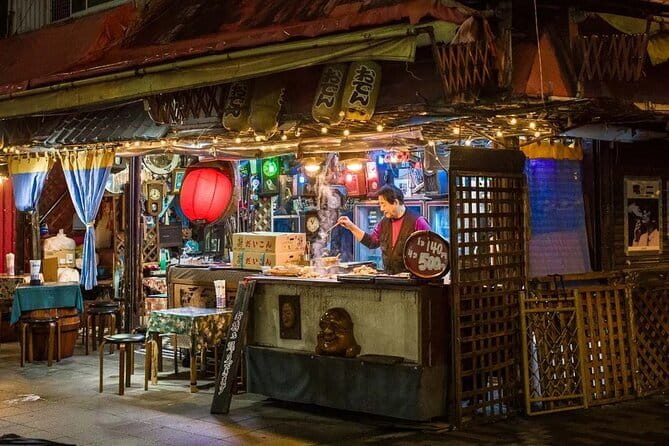
Osaka street food can feel like a choose-your-own-adventure where every door looks delicious. This tour gives you a route and a guide, so you are not stuck guessing what is worth your time and money.
What I like is the mix of places. You start at Osaka Tenmangu Shrine, which grounds the day with a classic Osaka stop before you hit the food hubs. Then you move to Kuromon Market, where ordering and sampling make more sense when someone explains what you are seeing. Finally, you end up in Dotonbori Tsuribori, where the energy of the entertainment district matches the richer street-food mood.
The umami angle matters because it turns eating into a lesson you can reuse later. You start tasting not only for salt, sweet, and heat, but for that deeper savory pull that Japanese cooking is famous for.
Takoyaki, okonomiyaki, and whatever smells best
- Hungry Osaka Street Food Tour:15 Tastings & 3 Drinks with a Local★ 5.0 · 1,727 reviews
- Hungry Osaka Street Food Tour: 15 Dishes & 3 Drinks★ 4.9 · 694 reviews
- [1 Group Only] Osaka Street Food Tour for Family★ 5.0 · 208 reviews
- Osaka: 2-Hour Local Street Food Tour – Dotonbori & Namba★ 4.6 · 95 reviews
- Eat Osaka: Street Food Cooking in an Authentic Kitchen!★ 5.0 · 87 reviews
Price and Value: What $175 Buys You in Real Terms
At $175 per person for roughly 5 hours, you should expect this to be more than a simple walk. The price includes dinner, snacks, bottled water, and alcoholic beverages, plus the guide and the food stops along the route.
The free admissions listed for the stops also help the value side. You are not paying extra entry fees at the shrine or the market area during the time blocks provided. And because the group is capped at 7, the guide effort is more likely to translate into better ordering decisions and smoother navigation, rather than a one-size-fits-all script.
What you should watch: the tour is not bundled with private transportation. The meeting point is near public transit, so you will likely handle getting there on your own. If you are hoping everything is door-to-door with a vehicle, this is not that format.
10:00 Start at Minami-Morimachi, Then an Easy Route Through Food Zones
The tour starts at Minami-Morimachi Station (2 Chome-1 Minamimorimachi, Kita Ward, Osaka). The start time is 10:00 am, and it ends back at the meeting point.
This timing is smart for Osaka. By starting mid-morning, you get to sample food early while stalls and shops are fully active, not just winding down. And because you finish back where you began, you can build the rest of your day without scrambling for a new pickup location.
One practical upside of the format: you will use a mobile ticket, which is easier than juggling paper. Also, the “small-group” cap to 7 means the guide can keep you together without turning it into a sprint.
If you do not like walking, this might be an issue. The route covers multiple food areas and neighborhoods, so wear shoes you trust.
Stop 1: Osaka Tenmangu Shrine, a Calm Start Before the Food Flood
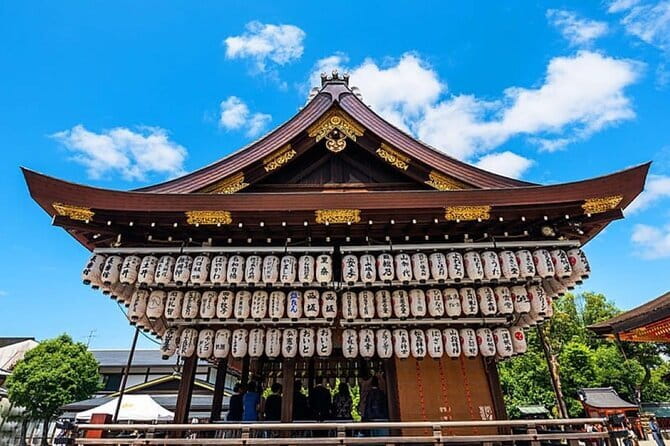
You begin at Osaka Tenmangu Shrine, a shrine associated with Sugawara no Michizane, a scholar and politician from the Heian period who is deified as Tenjin. The connection to learning and literature may sound like a detour if you came only for street food, but it sets a good tone for the day.
Why it works: it gives you a reset before the sensory overload. You get about 1 hour here, and admission is free. It also fits the tour’s theme, because the guide can frame food as something cultural, not just something to consume fast.
The main drawback here is simple timing. If you were hoping to jump straight into eating, 1 hour can feel like a slow start. The best approach is to treat it like a warm-up. Look around, ask questions, and get ready for when the day turns into sampling mode.
Stop 2: Kuromon Market, Where You Learn to Order Like You Mean It

Next comes Kuromon Market, one of Osaka’s most famous food corridors and often called Osaka’s Kitchen. You get about 30 minutes, and admission is free during your visit.
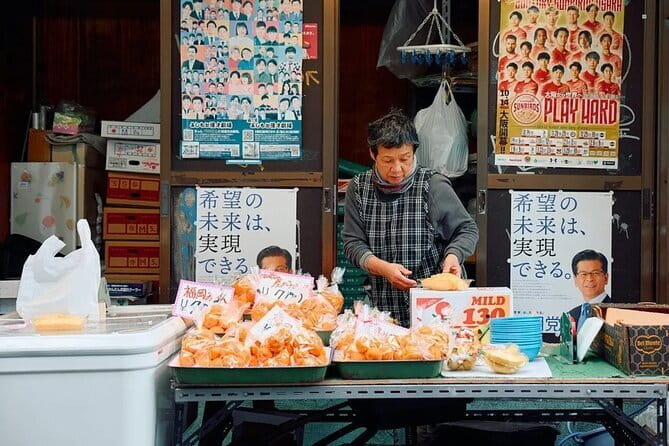
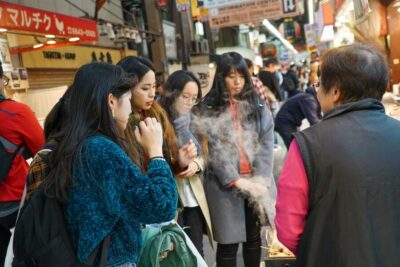
Kuromon is exactly the kind of place where a guide earns their keep. You will see seafood, meats, and lots of street-ready foods like takoyaki and sushi-style bites. With limited time, it helps to have someone steer you toward options that are both popular and worth your bite.
What you should do: listen for the guide’s explanations. A big part of this tour is learning ingredients and technique, not just collecting photos. If you understand why something tastes the way it does, you can make better choices on your own later.
The tradeoff is the short time block. Thirty minutes means you cannot shop like a market regular. Think of it as sampling and learning, not window-shopping your way through everything.
More plates than one stomach can hold
- Osaka: Shinsekai Food Tour with 13-15 Dishes at 5 Eateries
★ 4.8 · 2,204 reviews - Osaka Food Tour: 13 Dishes at 5 Local Eateries
★ 5.0 · 2,149 reviews - Kuromon Market Food Walking Tour in Osaka (6 stops, 6 tastes)
★ 5.0 · 550 reviews
Stop 3: Dotonbori Tsuribori, Neon Osaka and Heavier Street-Food Energy
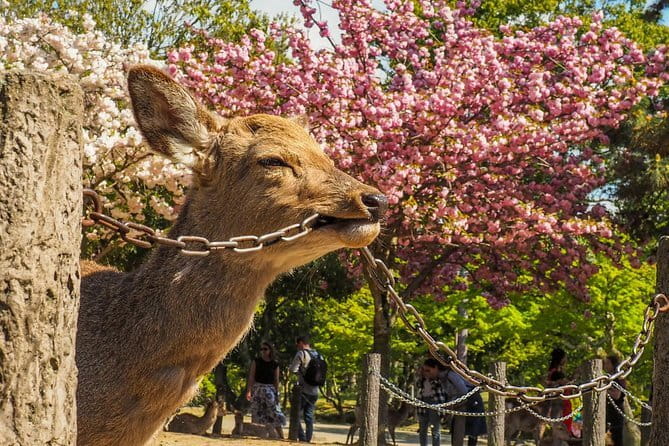
Dotonbori Tsuribori is where Osaka’s attention-grabbing side goes to work. This stop gets about 1 hour, and admission is free.
This is also the area most people picture when they think about Osaka street food: big signs, neon glow, and classic cravings like takoyaki and okonomiyaki. The guide’s job becomes part detective, part translator. You are dealing with menus and vendor habits that are easy to misunderstand if you are moving solo.
One plus: this stop usually benefits from the tour’s umami teaching. Okonomiyaki especially makes more sense when you understand how flavors build, not just where the toppings land. You get to compare textures and seasonings in a way that sticks.
If you are sensitive to crowds and noise, you might feel it here. This district is lively, and the “entertainment” vibe can be loud.
What You Actually Eat: Umami as the Through-Line
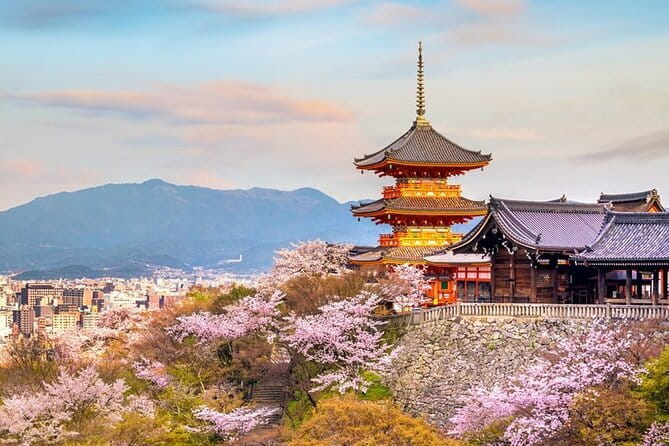
The tour is built around the idea of umami as a key to Japanese taste. That theme shows up when you learn what goes into dishes you likely already know.
For example, takoyaki is more than a cute ball snack. It is about savory depth and balance, and your guide can explain ingredient choices and why that flavor profile works. Okonomiyaki has its own logic too, and you can taste how toppings and batter create layers of savory satisfaction.
You should also expect more variety than a single “street food loop.” The tour includes dinner plus snacks, which makes it closer to a guided food route than a few small samples.
Based on guide feedback, the best part is how guides connect food to what you are seeing. Miyo’s tour was praised for explaining the essence and importance of umami in Japanese cooking, and for making it an eye-opener that still ended up filling your stomach. Yuka also got high marks for delivering a range of foods across the 5 to 6-hour experience, including items like fugu and okonomiyaki in reported tastings.
You should keep expectations realistic, though. The specific final bites can depend on the day and the guide’s choices, since the tour is designed to be flexible.
Alcohol Included: Good Value, Smart Pacing
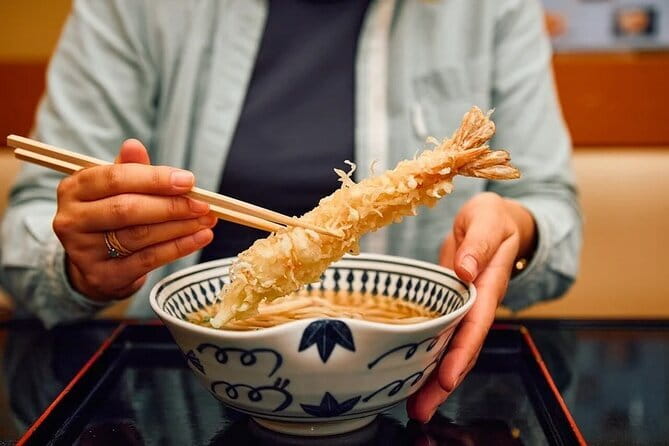
Alcoholic beverages are included, along with bottled water. That is a big value marker because many food tours charge extra once you add drinks.
Still, it affects pacing. You may want to treat alcohol as part of the “experience,” not a separate goal. If you plan to keep drinking, pace yourself early. If you do not drink, you still get the water and food, so you are not stuck paying extra just to stay hydrated.
Also, if you have food sensitivity concerns, ask questions. The guides are praised for being thoughtful with different comfort levels and even allergies in at least one family group report. That suggests the team pays attention when you speak up early.
Small-Group Energy: The Real Magic is the Guide
The tour caps at 7 travelers, and it shows in how people describe their days. Guides like Miyo and Yuka were repeatedly praised for being friendly, knowledgeable in practical ways, and genuinely engaged.
One detailed service example from reviews: Miyo was praised for standing in line ahead of time to secure a popular cheesecake for the group. That is not something you should assume every day, but it hints at how some guides protect your time and help you get good food without wasting the group’s energy.
Another repeated theme: communication before and after the tour, plus extra recommendations. That matters because Osaka is too big to “wing it” successfully for food alone. A good guide can point you to what to do next after the tour ends, so you do not just enjoy the tastings and then lose the thread.
If you are the type who likes asking “why does this taste like that,” you will likely have a great time here. The small group format makes those questions actually workable.
Practical Tips So You Get the Most From 5 Hours
This is a street-food tour with structure, so you will benefit from a few basics.
- Wear comfortable shoes. The route moves between zones, and you will not be sitting much.
- Eat a normal breakfast or light snack before you go. The tour includes dinner and snacks, so you can easily overdo it if you arrive overly hungry.
- Keep your phone charged. You have a mobile ticket, and being able to pull it up fast is helpful.
- Come ready to ask for recommendations. The tour is designed so you can ask your guide for local ideas beyond the scheduled stops.
If you are picky, do not assume you will be out of luck. The tour’s quality and guide effort are praised, and at least one review describes the guide working well with different food adventure levels in a group that included kids.
Who Should Book This Tour (and Who Might Skip It)
This tour is a great fit if you want:
- One focused outing that hits big Osaka food neighborhoods without decision fatigue
- An explanation of umami so you can taste with more confidence
- A small group day where your guide can respond to your questions
It is less ideal if you:
- Want to roam completely solo with zero structure
- Prefer very light snacking or minimal walking
- Are hoping for a bargain price with only a couple tastings
If you are in Osaka for a short visit and you care about food more than museums, this is a strong way to spend a morning and early afternoon.
Should You Book the Umami Town Street Food Tour?
I would book it if you want your Osaka food day to feel guided, intentional, and efficient. The combination of small group size, the umami-based teaching, and the included dinner plus snacks and drinks makes the cost feel more “paying for access” than just buying food.
You should think twice if you are not comfortable with steady eating and walking, or if you know you prefer DIY food hunting with no guide to steer you. Also, because it is $175, you want to show up ready to eat and learn, not just sample one or two bites and disappear.
If you book, treat it like a food class you can eat. Bring curiosity, ask questions, and you will leave knowing what you tasted and why it worked.
FAQ
How long is the Umami Town Street Food Tour in Osaka?
The tour runs for about 5 hours.
Where does the tour start and what time does it begin?
It starts at Minami-Morimachi Station, and the start time is 10:00 am.
How many people are in the group?
The tour has a maximum of 7 travelers.
Is this tour ticketed digitally?
Yes, it uses a mobile ticket.
What stops are included during the tour?
You visit Osaka Tenmangu Shrine, Kuromon Market, and Dotonbori Tsuribori.
What is included in the price?
The price includes dinner, snacks, bottled water, and alcoholic beverages.
What is not included?
Private transportation is not included.
What is the cancellation policy?
You can cancel for free up to 24 hours before the experience starts for a full refund. If you cancel less than 24 hours before, the amount you paid will not be refunded.
More Food & Drink in Osaka
- Osaka: Traditional Mochi Pounding Experience with Tasting★ 4.9 · 306 reviews
- Osaka After Dark: Small-Group Night Food Tour (Max 6)★ 4.5 · 245 reviews
- Osaka: 2-Hour Nightlife District Walking & Local Food Culture★ 5.0 · 199 reviews
- Osaka Sake Tasting with Takoyaki Cooking★ 5.0 · 156 reviews
More Food in Osaka
- Osaka Local Foodie Walking Tour in Dotonbori and Shinsekai★ 5.0 · 985 reviews
- Osaka: Guided Food Tour with 12 Dishes at 4 Local Eateries★ 5.0 · 533 reviews
- Absolute Osaka Food Tour★ 5.0 · 309 reviews
- Osaka: Kuromon Market Food Walking Tour (6 stops, 6 tastes)★ 4.6 · 272 reviews
Just added around Osaka


Local Food Tours, compared.

Shinsekai Food Tour with 13-15 Dishes at 5 Eateries
Read our review →
Osaka Food Tour: 13 Dishes at 5 Local Eateries
Read our review →
Hungry Osaka Street Food Tour:15 Tastings & 3 Drinks with a Local
Read our review →
Hungry Osaka Street Food Tour: 15 Dishes & 3 Drinks
Read our review →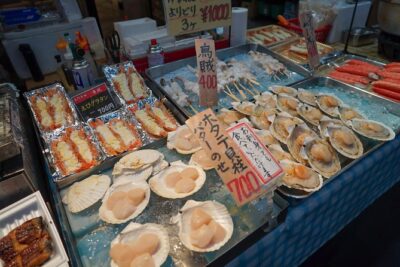
Kuromon Market Food Walking Tour in Osaka (6 stops, 6 tastes)
Read our review →
Guided Food Tour with 12 Dishes at 4 Local Eateries
Read our review →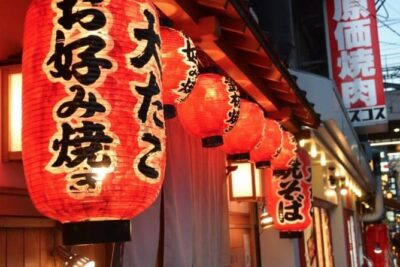
Kuromon Market Food Walking Tour (6 stops, 6 tastes)
Read our review →This tour also fits