
Reviewed · RAMEN MAKING CLASSES
Okonomiyaki or Ramen&Gyoza Class with Local Shop Tour
You can learn Japanese home cooking fast. This Osaka Cooking Base class mixes a short local shop tour with hands-on cooking, so you go from ingredients to finished okonomiyaki or takoyaki with a plan you can repeat later. You also get plenty of Q and A time, which makes it feel less like a scripted demo and more like a friendly exchange.
Two things I especially like: first, the way the guide helps you connect what you buy in local shops to why it matters for Osaka flavor. Second, the step-by-step structure for your chosen dishes, whether it is Okonomiyaki and Yakisoba or Takoyaki, which keeps things practical and not overwhelming.
One consideration: the class focuses on one cooking track for your group, so you will likely master one main set of dishes rather than sampling everything in the same session. If you want a bit more variety, plan on tasting extra food on your own after class.
In This Review
- Key points worth booking
- Meeting at Osaka Tenmangu Shrine, then heading straight to the food
- Local shop stops where ingredients get explained in plain terms
- Choosing your track: okonomiyaki and yakisoba OR takoyaki
- The kitchen lesson: step-by-step technique you can actually reuse
- Asking questions and getting Osaka answers along the way
- How to recreate Osaka style at home without stress
- Price and value: what $83 buys you in real terms
- Who this tour suits best, and who might want a different day
- The booking call: should you sign up for Osaka Cooking Base?
- FAQ
- Where do I meet for this cooking class?
- What dishes will I cook?
- How long is the experience?
- Who teaches the class and what language is used?
- How big is the group?
- What is included in the price?
- Can I reserve without paying right away, and is there a cancellation option?
Key points worth booking
- Starts at Osaka Tenmangu Shrine, with an easy-to-follow meeting point at the large main gate
- Local shop tour (a few shops), where you learn what ingredients are used and why
- Translation support plus English instruction, so you can understand the cooking and the cultural notes
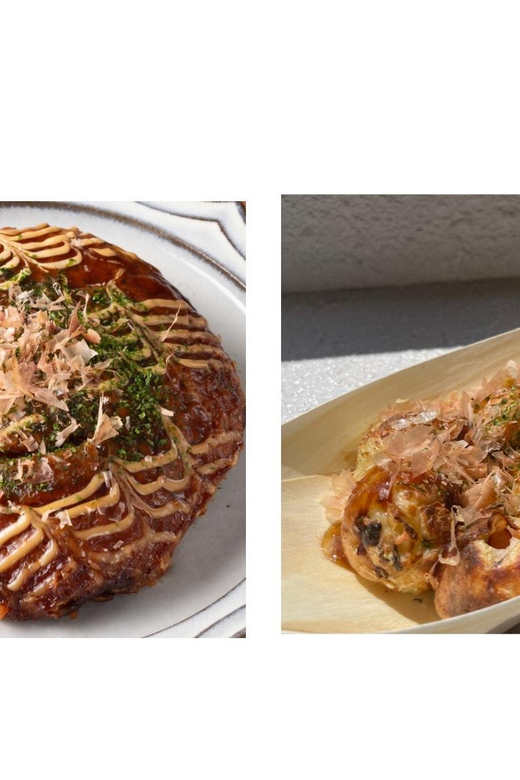
- Two cooking tracks: okonomiyaki and yakisoba OR takoyaki, taught step by step
- Small group up to 8 people, which makes it easier to ask questions about sauces, timing, and technique
- Culture exchange built into the day, with guides like Yuki, Yumi, and also hosts named Rie and Tomo appearing in recent experiences
Meeting at Osaka Tenmangu Shrine, then heading straight to the food
The day starts at Osaka Tenmangu Shrine, and the meeting point matters. Look for the large main gate, not the small back gate. It is a simple setup, but it saves you from that slightly stressful Osaka moment of trying to find the right entrance while everyone else is already gathering.
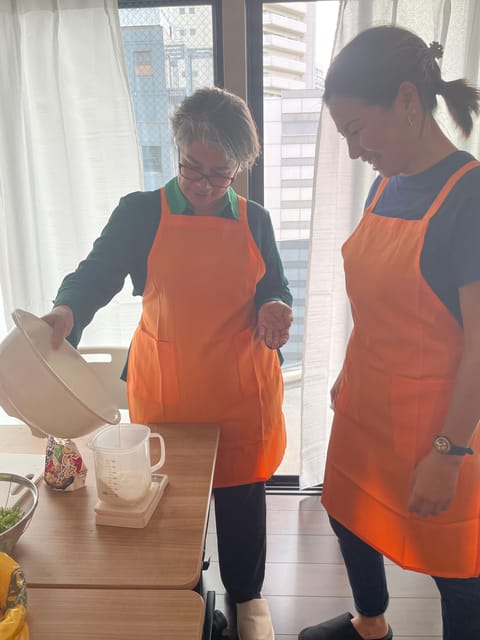
Once you meet up, the vibe is casual and welcoming. The class is designed for a mixed set of ages, from younger kids to seniors, so the guide keeps things moving while still making room for questions. If you like tours that do not feel like a lecture, this one fits. You are not just watching, you are learning how to do the cooking part.
Build a bowl from the broth up
- Osaka: Five Must-See Highlights Walking Tour & Ramen Lunch★ 4.7 · 411 reviews
- Osaka: Ramen and Gyoza Cooking Class in Dotonbori★ 5.0 · 378 reviews
- Ramen and Gyoza Cooking Class in Osaka★ 5.0 · 202 reviews
- Walking Tour of Osaka’s 5 Must-See Sights, with Ramen for Lunch★ 5.0 · 158 reviews
- Cooking Ramen&Gyoza/KatsuCurry/Bento/Okonomiyaki+Store Tour@Osaka★ 5.0 · 138 reviews
Local shop stops where ingredients get explained in plain terms
Before you step into the kitchen, you get a few local shop stops. This is not “look at this store” sightseeing. It is ingredient shopping with context, and that makes a difference when you try to recreate the recipes at home later.
In the experiences I reviewed, guides shared details about Osaka region products and often showed you where those items are sold. Some shopping stops included the chance to try products, so you could connect the taste to what you are about to cook. Even if you do not do formal tastings, the guide’s explanations help you understand what to look for back home, like the difference between ingredients that are similar but not interchangeable.
A practical perk here is translation support. Cooking terms can get fuzzy fast, especially if you are standing in a busy shop. Having help with understanding what each item is used for makes the whole process easier to follow.
Choosing your track: okonomiyaki and yakisoba OR takoyaki
This class is built around one main cooking option for you:
- Option A: Okonomiyaki and Yakisoba
- Option B: Takoyaki
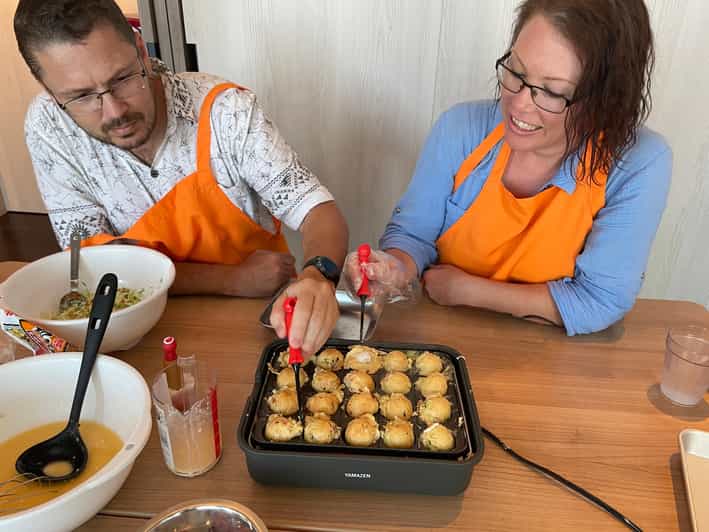
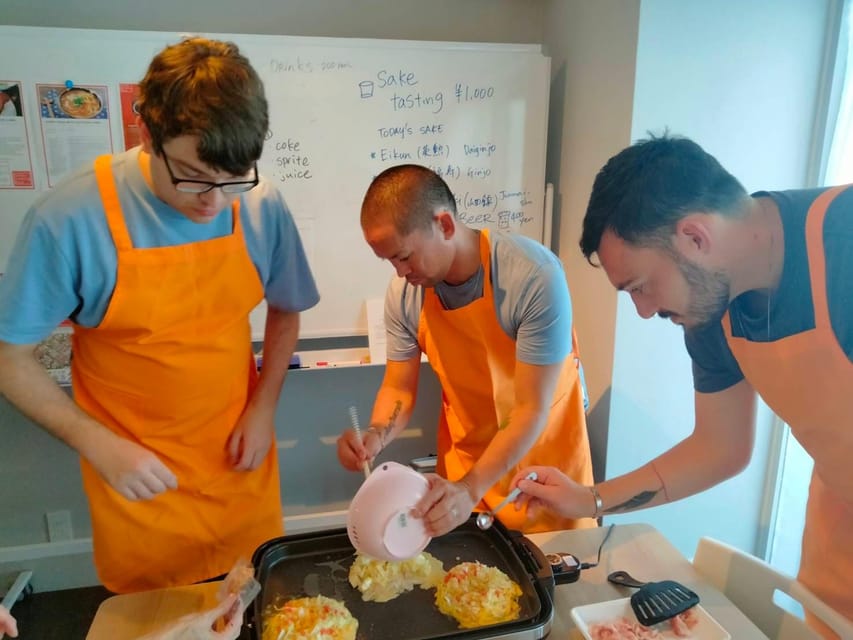
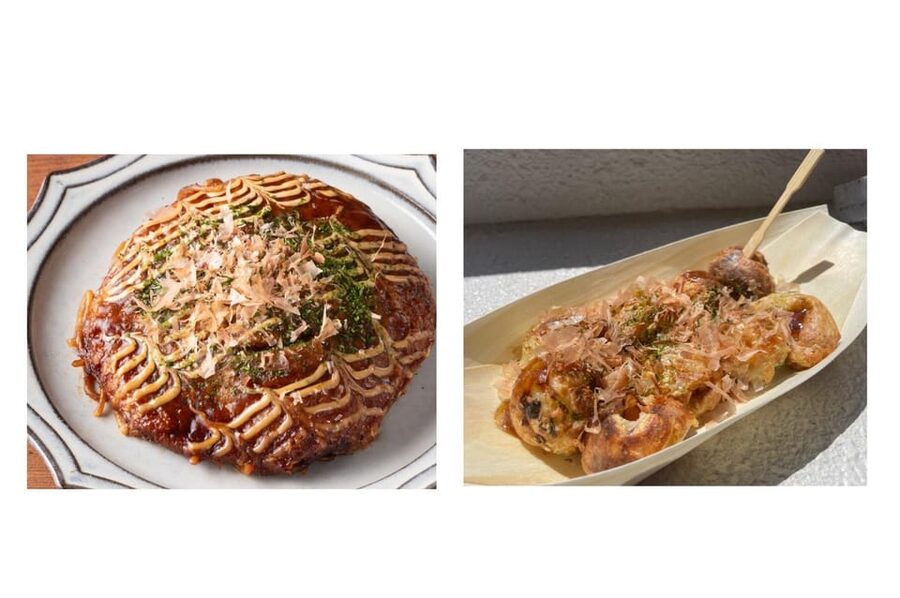
Either way, the cooking portion is hands-on with step-by-step guidance. That matters, because both dishes reward technique. Okonomiyaki often comes down to getting the batter and layering right, while yakisoba-style noodles need the right heat and timing so they coat properly instead of turning into a clump. Takoyaki is more about consistency and managing the pan so you can form those classic round bites evenly.
I like that the guide walks you through each stage carefully. That reduces the risk of doing it wrong once and then trying to “fix it” without understanding what went off. In recent experiences, people specifically said the okonomiyaki tasted excellent and was easier to make than they expected, which usually means the instruction was clear and the steps were well organized.
Also, because the class is small, you can ask questions while you cook. If you are curious about sauces or how to adjust the look and texture, you get a real chance to talk it through. One of the best parts of these classes is not only learning what to do, but learning why the guide recommends that approach.
The kitchen lesson: step-by-step technique you can actually reuse
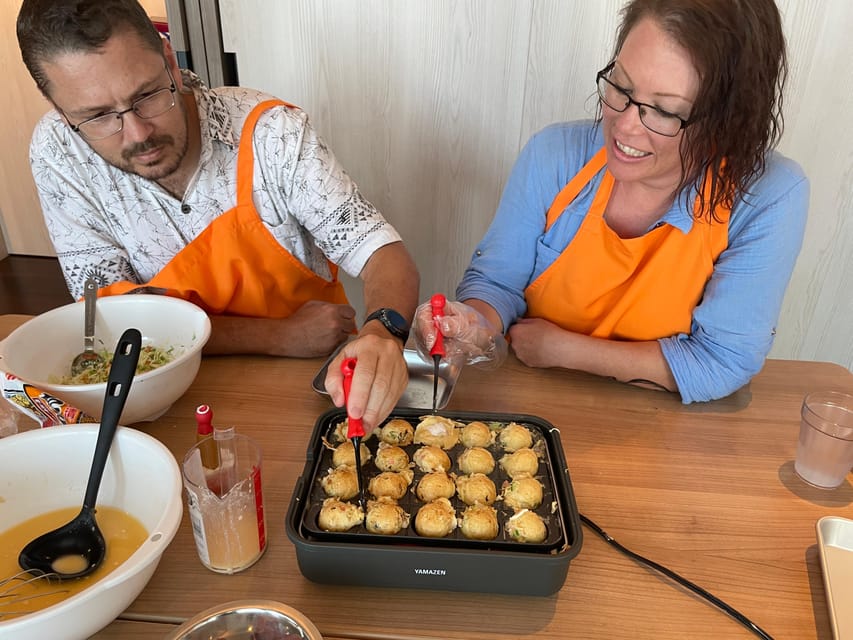
In a lot of cooking classes, you end with a meal and a memory. Here, the goal is to leave with something you can reproduce. The guide’s main teaching aim is helping you build confidence, not just finishing a single batch.
For the okonomiyaki track, you generally work with the idea of building a savory pancake-style base and then finishing it. Your yakisoba component then becomes the side that pulls everything together. You are learning a workflow: prep, mix, cook, then layer and finish in a way that looks and tastes like the Osaka style you came for.
For takoyaki, you learn the rhythm of the pan method. That includes how to handle batter, how to work the balls as they set, and how to get the right outcome without panicking once the first ones are cooking. Takoyaki is the kind of dish that can feel chaotic in theory, but when instruction is broken into clear stages, it becomes manageable.
People also pointed out communication and hospitality, saying the hosts were professional and welcoming. That shows up in practical ways, like the guide answering questions while teaching and explaining product choices from the shops you visited earlier. It is a full circle, and that is what helps this class feel like more than just cooking.
Asking questions and getting Osaka answers along the way
What makes this class more fun than a typical class is the cultural exchange. During the shopping and cooking, the guide encourages conversation. If you ask about Japan, life in Osaka, or even where to eat after the class, you are likely to get a thoughtful answer, not a one-line redirect.
In the feedback I saw, hosts like Yuki and Yumi shared culture nuances and also recommended places to eat around Osaka, Kyoto, and Nara. That is useful because it saves you from guessing. When someone who knows the local food scene helps you find spots, your next meal becomes easier to plan.
I also like that the group setting supports back-and-forth. With a maximum of 8 participants, the day does not get crowded. If you end up in a smaller group, you are more likely to get extra time to talk through details like sauces and preferences. One experience noted that being a very small group meant plenty of time to ask and chat, which is exactly what you want if you are the type who likes to understand the method.
Other ways to spend a day in Osaka
- Sushi Making Osaka Roll and Authentic Japanese Sushi Class
★ 5.0 · 1,220 reviews - Matcha Making Class in Osaka with Authentic Japanese Sweets Set
★ 5.0 · 509 reviews - Osaka Cooking Class: Okonomiyaki &Japanese cuisines experience
★ 5.0 · 261 reviews
How to recreate Osaka style at home without stress
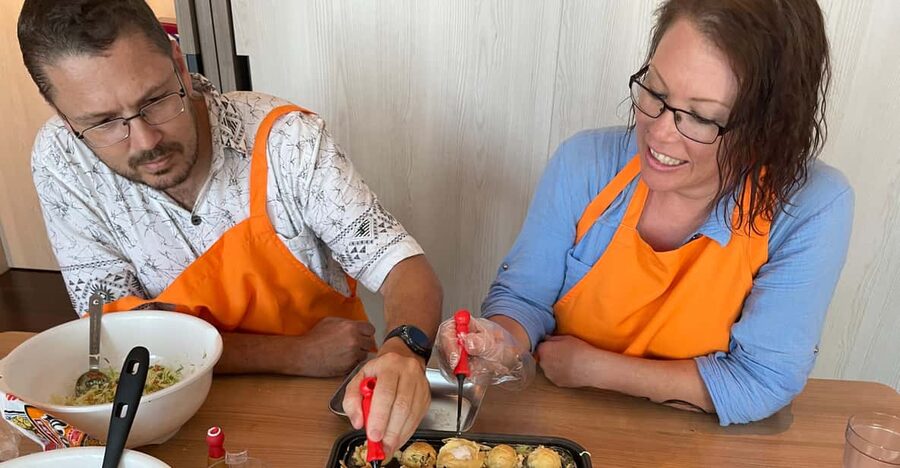
You will leave with more than a dish. You will leave with a process. That is the real value if you cook at home already, or if you want to start without feeling clumsy.
Here are the steps I think make this kind of class pay off at home:
- Shop like the class taught you. If you know which ingredients the guide pointed out during the shop tour, you can plan your grocery run with intention.
- Repeat the dish once before experimenting. The guide’s step-by-step method is your baseline. Cook it as-is once, then adjust your preferences.
- Pay attention to texture and timing. These dishes can turn out differently depending on heat and how you handle the cook stages. The instruction helps you build a sense for what the dish should look like as it cooks.
- Use the sauce and finishing ideas. Even if you cannot match every product brand at home, you can recreate the style by focusing on balance. This is where asking questions during class helps, because you can learn what the guide considers the key flavor checkpoints.
If you are worried you will forget everything, do not. The class is designed around understanding techniques you can reuse. And if you take a moment to note the big steps during cooking, you will have an easier time turning that into a home recipe.
Price and value: what $83 buys you in real terms
At $83 per person for about a 1 day experience, the price is not “cheap,” but it is also not inflated for what you get. Here is what that number covers based on what is included:
- A local tour of a few shops, with ingredient explanations and translation help
- The food you cook, centered on your selected dish option
- A small group experience, capped at 8 participants
- English instruction with step-by-step coaching during the cooking portion
The main reason I see value here is the combination. You do not only get a recipe. You get the chain: where ingredients come from, why they are used, then how to cook with them. That is what helps you recreate the results later, which is harder to do when you only get a kitchen session with no shopping context.
If you are the kind of traveler who loves street food but also wants a practical skill, this price makes sense. You are paying for clarity, guidance, and the chance to ask questions in real time while you cook.
Who this tour suits best, and who might want a different day
This is best for you if:
- You want hands-on Japanese home cooking you can repeat at home
- You like small groups and direct conversation
- You enjoy food learning that includes ingredient shopping, not just chopping and mixing
- You are traveling with mixed ages or want a class that can work for a wide range of people
It might be less ideal if:
- You want a long, multi-dish sampler day with lots of different foods cooked at once
- You already feel fully comfortable with Japanese cooking and are looking for a more advanced, less guided technique focus
Because the class centers on one track, your best strategy is to treat it like a focused skill session. After class, you can still enjoy the rest of Osaka on your own, now with better context for what you are ordering.
The booking call: should you sign up for Osaka Cooking Base?
I would book this class if you want a clean mix of Osaka food culture and real instruction. The strongest reason is the structure: shop stops for ingredients, then step-by-step cooking for okonomiyaki and yakisoba or takoyaki, with conversation encouraged throughout. People also highlight that guides are welcoming and communicative, and that the food comes out delicious and manageable to recreate.
If you are on the fence, choose the track that matches what you want to cook most. Commit to mastering one set of dishes, then use what you learn to guide the rest of your meals in Kansai.
FAQ
Where do I meet for this cooking class?
You meet in front of the large main gate of Osaka Tenmangu Shrine. Please be careful not to go to the small back gate.
What dishes will I cook?
You will cook either okonomiyaki and yakisoba (Option A) or takoyaki (Option B).
How long is the experience?
The cooking session is listed as 2.5 hours, and the activity is valid for 1 day.
Who teaches the class and what language is used?
The instructor is English, and translation assistance is provided.
How big is the group?
The group is small and limited to 8 participants.
What is included in the price?
The price includes a local tour of a few shops and the food you cook (okonomiyaki and yakisoba or takoyaki).
Can I reserve without paying right away, and is there a cancellation option?
Yes, you can reserve now and pay later. Free cancellation is available up to 24 hours in advance for a full refund.
Just added around Osaka


Ramen Making Classes, compared.

Five Must-See Highlights Walking Tour & Ramen Lunch
Read our review →

Walking Tour of Osaka’s 5 Must-See Sights, with Ramen for Lunch
Read our review →
Cooking Ramen&Gyoza/KatsuCurry/Bento/Okonomiyaki+Store Tour@Osaka
Read our review →
This tour also fits