
Reviewed · DOTONBORI EXPERIENCES
Osaka Dotonbori Daytime Food Tour
Osaka’s best bites start with a neon sign. This 3-hour daytime walk through Dotonbori and Namba layers in four local food stops plus a drink and dessert, with time to pause for photos along the way. I especially like how the guide keeps you out of the long restaurant queues and steers you toward places you would not find as easily on your own. The one catch, you are walking for a few hours, so bring comfortable shoes and don’t plan to treat this like a short stroll.
This is a small-group tour with a maximum of 10 people and an English-speaking guide. You start at a clear landmark, Starbucks Coffee – Tsutaya Ebisubashi, then you finish up in the Sennichimae area, which makes it handy for planning the rest of your day in Osaka. If you eat vegetarian, vegan, pescetarian, or you avoid shellfish or pork, the tour is listed as friendly to those needs.
In This Review
- Key things I’d plan around
- Why This Dotonbori Food Tour Works in a Short 3-Hour Window
- Meeting at Starbucks, Ending Near Sennichimae, and How to Plan the Rest of Your Day
- The Glico Sign Stop: More Than a Photo Moment in Dotonbori
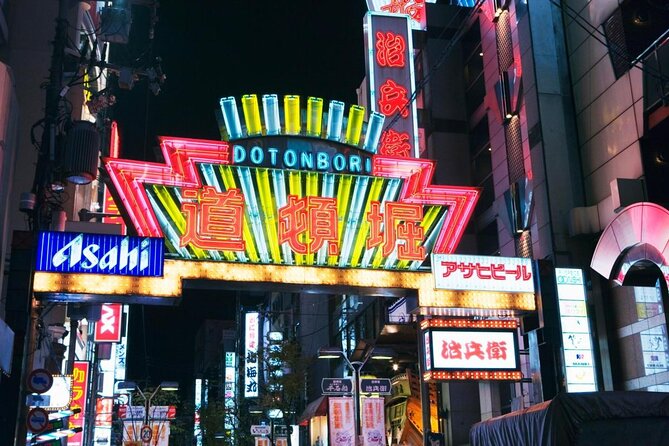
- Dotonbori and Minami (Namba): Seeing the Famous Streets Without Getting Tricked
- Hozenji Yokocho: Narrow Alleys, Old-School Feel, and a Slower Pace
- Sennichimae Doguyasuji Shotengai and Kuromon Market: Market Energy and Real Eating Momentum
- Misono Building Stop: A Landmark Stop That Keeps the Walk Moving
- What You’ll Eat: 4 Food Stops, 1 Drink, and a Traditional Japanese Dessert
- Guide Style Makes the Difference: How Guides Like Ron, Russ, Chiyoe, Mickey, and Kevin Change Your Walk
- Price and Value: Is $209 Worth It for a 3-Hour Osaka Food Tour?
- Who This Tour Fits Best (and Who Might Want a Different Plan)
- Should You Book This Osaka Dotonbori Daytime Food Tour?
- FAQ
- How long is the Osaka Dotonbori Daytime Food Tour?
- How much does the tour cost?
- What’s included in the tour price?
- Where do I meet, and where does the tour end?
- Is the tour family-friendly, and are there any rules for kids?
- Is there a minimum age for alcohol on this tour?
- How many people are in a group?
- Does weather affect the tour?
Key things I’d plan around
- Small group, max 10 people: You get enough attention without feeling herded.
- 4 tastings plus drink and a traditional Japanese dessert: The food is the point, not just sightseeing.
- Dotonbori and Namba orientation: You get an efficient intro to where to walk and what to look for.
- Line avoidance and tourist-trap awareness: Your guide helps you choose calmer spots.
- Photo pauses in the bright areas: You’ll stop to capture the lights and street scenes.
- Good-weather dependency: It’s a street-focused, daytime experience.
Why This Dotonbori Food Tour Works in a Short 3-Hour Window
Osaka can overwhelm you fast. You step into Dotonbori and Namba and suddenly you’re surrounded by lights, menus, and temptation, and it becomes hard to sort out where locals actually go. This tour is built to compress the best of that into a controlled route, so you spend your time eating instead of wandering and second-guessing.
The best part is that it’s structured but still street-level. You’re not stuck on a bus with a script. You’re moving neighborhood to neighborhood, taking in the famous scenes while the guide handles the decisions that usually cost you time, like where to stop and what to try.
You also get practical guidance you can use after the tour. The experience encourages you to ask your guide for more dining recommendations in Osaka, which matters because your first day in a new food city can set the tone for the rest of your trip.
More plates than one stomach can hold
- Osaka: Shinsekai Food Tour with 13-15 Dishes at 5 Eateries★ 4.8 · 2,204 reviews
- Osaka Food Tour: 13 Dishes at 5 Local Eateries★ 5.0 · 2,149 reviews
- Hungry Osaka Street Food Tour:15 Tastings & 3 Drinks with a Local★ 5.0 · 1,727 reviews
- Hungry Osaka Street Food Tour: 15 Dishes & 3 Drinks★ 4.9 · 694 reviews
- Kuromon Market Food Walking Tour in Osaka (6 stops, 6 tastes)★ 5.0 · 550 reviews
Meeting at Starbucks, Ending Near Sennichimae, and How to Plan the Rest of Your Day
Logistics can make or break a food tour, so I like that this one uses an obvious start and a clear finish. You meet at Starbucks Coffee – Tsutaya Ebisubashi at Dotonbori, and you start at 11:00 am. The tour ends in the Sennichimae area (near Sennichimae, Chuo Ward).
That “different start and end” detail is worth planning for. You’ll want to line up your next activity or transport from the Sennichimae side, not Dotonbori. If your day is already booked around Dotonbori, you may need a little extra buffer for the move across town.
Also, hotel pickup isn’t included. You’ll be responsible for getting to the meeting point on your own, using public transportation. The good news is the tour is listed as near public transportation, so it should be straightforward.
The Glico Sign Stop: More Than a Photo Moment in Dotonbori
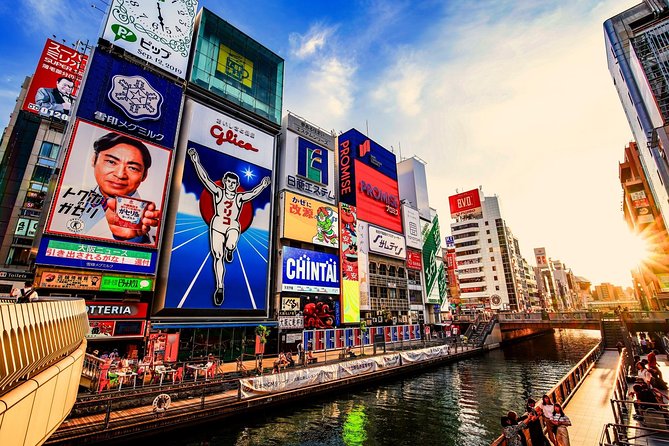
The first stop is at the Dotombori Glico Sign, in the brightest, busiest intersection-style area of Dotonbori. This isn’t just a quick look for a picture. You learn about the Glico man and a real-world connection: a Filipino sprinter named Fortunato Catalon who inspired a nation and a company.
That kind of story is exactly why I like starting early here. Dotonbori is loud and visual, and a bit of context helps you read the scene instead of just getting swept along by the biggest signs.
Time-wise, it’s short, about 5 minutes, and admission is free. So it works as a warm-up before the food portion ramps up.
Dotonbori and Minami (Namba): Seeing the Famous Streets Without Getting Tricked
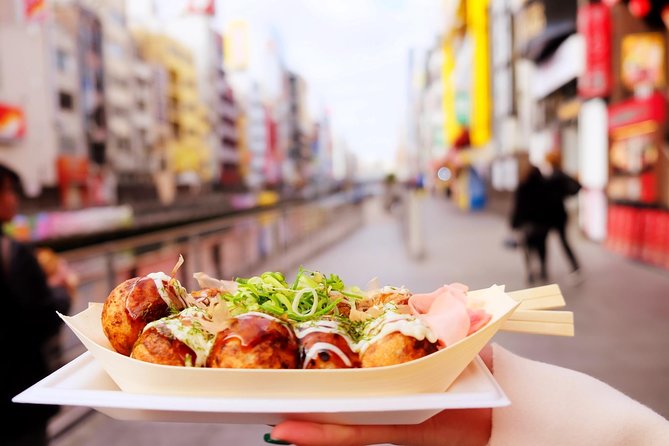
After the Glico sign, you move into Dotonbori proper. The tour frames this as a place where the lights and sounds can lure you toward overly commercialized restaurants with queues of tourists. That’s a real risk here, especially if you arrive hungry and tired from travel.
What I like about the approach is the built-in counterweight. You’re not told to avoid everything touristy. Instead, your guide is actively helping you choose better options for your time, so you’re not standing around while your appetite stays at the same level.
Next comes Minami (Namba), another core Osaka food-and-street-life zone. The experience notes this is where you enjoy Osaka’s famous street food as part of the 3-hour flow, so this is where the tour’s energy usually shifts into “eat mode.”
You also get the added benefit of orientation. Even if you already planned to visit Dotonbori, you’ll leave with a clearer sense of how the streets connect and where the calmer pockets might be tucked around the flashier corners.
Hozenji Yokocho: Narrow Alleys, Old-School Feel, and a Slower Pace
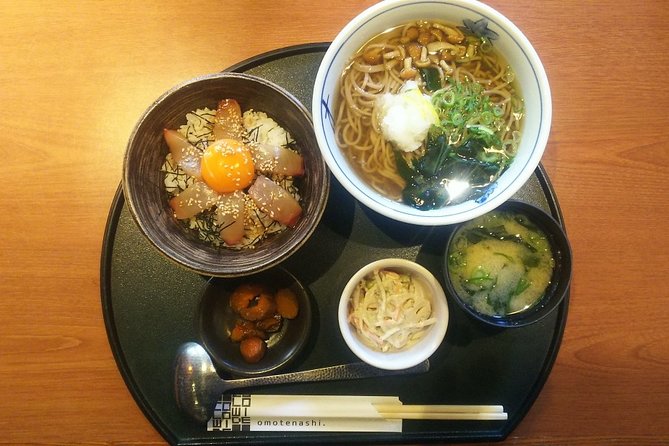
One of the listed stops is Hozenji Yokocho. This is the kind of place where the vibe can change fast, even within a short walk. One review experience described narrow alleyways and a special Buddha statue as part of the wandering feel, which fits what people tend to love about this area.
I’d use this moment as a reset. In Dotonbori, everything pulls at your attention. In an alley setting like Hozenji Yokocho, you usually get a chance to slow your pace, listen, and take photos without feeling like you’re constantly dodging crowds.
From a practical angle, this stop also helps the tour avoid feeling like a single repeating loop of the same neon blocks. It adds variety, which keeps the experience from feeling like just “more of the same street.”
The glowing strip everyone photographs
- Osaka Local Foodie Walking Tour in Dotonbori and Shinsekai
★ 5.0 · 985 reviews - Osaka: Dotonbori District River Cruise with Drink Discount
★ 4.2 · 876 reviews - Ultimate Osaka Walking Tour: Castle, Dotonbori & Hidden Gems
★ 5.0 · 862 reviews
Sennichimae Doguyasuji Shotengai and Kuromon Market: Market Energy and Real Eating Momentum
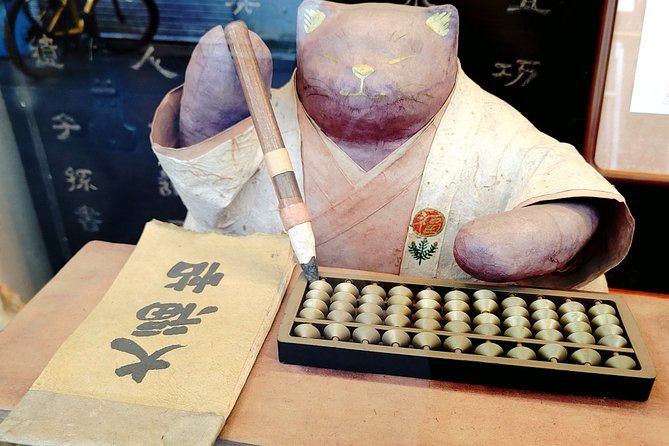
The route includes Sennichimae Doguyasuji Shotengai and Kuromon Market. The language around this part of the experience emphasizes street food and local stops, so this is where you get that true Osaka market-and-street rhythm.
In one example guide experience, the market part was described as an open-market feel, plus the tour included a variety of food experiences and cultural side stories. That matches what makes market segments valuable on a food tour: they’re where you see how locals shop and snack, not just how tourists pose.
A practical tip: markets and shopping streets can be intense for your senses. If you’re the type who gets overwhelmed by crowds, pay attention during the briefings. The guide’s role here is more than translating menus. They are helping you stay efficient, keep moving when it makes sense, and pick foods that fit the flow.
The tour also notes that food can change based on season and availability. So don’t anchor your expectations to a single item. Instead, think of these segments as “taste and learn” zones, where the guide chooses what’s best in that moment.
Misono Building Stop: A Landmark Stop That Keeps the Walk Moving
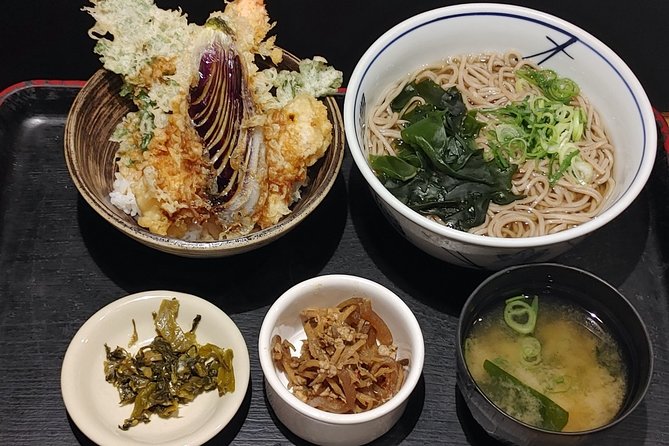
The tour also lists a stop at the Misono Building area. There aren’t extra details in the supplied information about what you’re meant to learn or how long you stay here, so I’d treat it as part of the route design that connects major food streets and walking lanes.
Even when a stop is more about orientation, it can still help. These Osaka neighborhoods can feel like overlapping circles unless you see how they connect. A landmark-style stop is often the easiest way to “map” what you’re doing while your stomach is busy getting fed.
What You’ll Eat: 4 Food Stops, 1 Drink, and a Traditional Japanese Dessert
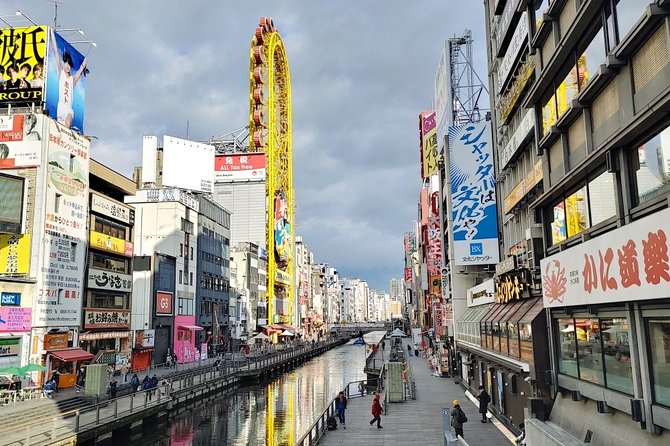
The tour includes tries at four food stops. It also includes one drink and a traditional Japanese dessert. That’s a key value point for me, because it means you’re not playing meal roulette during your tour.
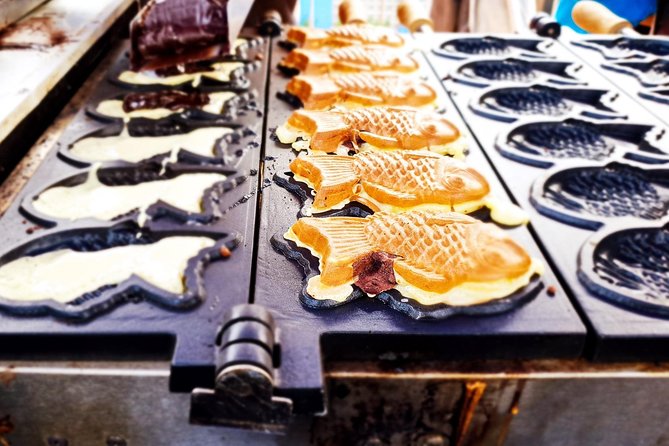
The exact items can shift with season and availability, and the experience explicitly notes food changes can happen. Still, Osaka’s reputation shows up in the types of foods people commonly associate with Dotonbori street life, including items like takoyaki. One example from a guide experience specifically called out takoyaki as a favorite, and another mentioned finishing with Japanese cakes.
So how should you think about this section?
- You’ll get a variety rather than one single heavy meal.
- You’ll get something sweet, so you can end the tour with a calmer, finished feeling.
- You can plan your dinner later, because you should leave with satisfied hunger, not stuffed to the point of regret.
If you’re avoiding pork or shellfish, or you’re vegetarian, vegan, or pescetarian, the tour is listed as friendly to those needs. That matters on food tours, because it can be the difference between a smooth experience and a stressful one.
Guide Style Makes the Difference: How Guides Like Ron, Russ, Chiyoe, Mickey, and Kevin Change Your Walk
This kind of tour lives or dies on the guide. The tour includes a local English-speaking guide, and the highest praise you see tied to the experience centers on exactly that, people feeling like they found spots they would not.
Guide names mentioned in example experiences include Ron, Russ, Chiyoe, Mickey, and Kevin. Across those stories, the common thread is a mix of history and practical food direction. Some guides were noted for side stories about Osaka culture, while others were highlighted for taking people to spots a tourist is unlikely to find.
You should expect a similar style from your guide:
- They explain what you’re eating and why it fits the neighborhood.
- They help you avoid tourist traps and long lines.
- They guide your timing so the walk stays fun, not frustrating.
There’s also a photo element in the experience. You explore and take photos around Dotonbori and Namba. That’s useful even if you’re not a “photo person,” because you get built-in pauses. You’re not rushing to take pictures between bites.
Price and Value: Is $209 Worth It for a 3-Hour Osaka Food Tour?
At $209 per person, this isn’t a cheap snack loop. But it’s also not just paying for food samples. You’re paying for a local English-speaking guide, a small group size (max 10), four food stops, one included drink, and a traditional Japanese dessert, plus time spent covering Dotonbori and Namba in an efficient route.
Here’s the value logic I use when I judge tours like this:
- If you were to eat four separate items on your own, you’d likely spend a similar amount anyway, especially in high-demand areas.
- You’d still need to solve the hardest problem, picking the right places without wasting time in queues.
- You’d miss the orientation, the route logic, and the extra recommendations the guide can provide.
A small extra detail that supports value is the booking pattern. The experience is typically booked about 42 days in advance on average, which suggests it’s popular enough that you should plan ahead if your Osaka schedule is tight. Same-day booking is also noted as available, but I wouldn’t assume that will always be possible on busy dates.
Who This Tour Fits Best (and Who Might Want a Different Plan)
This tour is designed for people who want a fast, guided start to Osaka’s street food world. It’s listed as family-friendly, and it accepts single travelers, so it’s not limited to couples or friend groups.
It also offers dietary friendliness, with vegetarian, vegan, pescetarian, shellfish free, and pork-meat free options noted as supported. If you travel with specific restrictions, this is a big plus because the guide can choose what fits.
It does require moderate physical fitness. That’s not “marathon” fitness, but you should assume enough walking to benefit from good shoes and an appetite for being on your feet.
If you already have a tight food plan with reservations in multiple restaurants, this might feel less essential, because you’ll be doing a lot of independent eating already. But if you want the kind of first-day orientation that helps you eat smarter for the rest of the trip, this tour is exactly the right tool.
Should You Book This Osaka Dotonbori Daytime Food Tour?
Book it if you want a guided way to tackle Osaka’s biggest food streets without wasting time. The strongest reasons to choose it are the four food stops, included drink and dessert, and the focus on avoiding long lines and overly commercialized choices.
I’d also book it if you like stories and context alongside food. Starting with the Glico sign and learning about Fortunato Catalon, then getting cultural side moments while you snack, is a good balance for a 3-hour outing.
Skip it, or at least think twice, if you don’t want to walk. This is a street walk that expects you to stay mobile. And since the tour is explicitly dependent on good weather, plan for the possibility that your date could shift if conditions are poor.
If your goal is to leave Osaka with more than just photos, a clearer food map, and a set of recommendations for what to eat next, this is a solid choice.
FAQ
How long is the Osaka Dotonbori Daytime Food Tour?
It runs for about 3 hours.
How much does the tour cost?
The price is $209.00 per person.
What’s included in the tour price?
You get tastings at 4 food stops, 1 drink, a traditional Japanese dessert, and a local English-speaking guide.
Where do I meet, and where does the tour end?
You meet at Starbucks Coffee – Tsutaya Ebisubashi in Dotonbori. The tour ends in the Sennichimae area.
Is the tour family-friendly, and are there any rules for kids?
Yes, it’s family-friendly. Children must be accompanied by an adult. For kids 10 and above, a passport information copy is required.
Is there a minimum age for alcohol on this tour?
Yes. The minimum drinking age is 21 years.
How many people are in a group?
This tour has a maximum of 10 travelers.
Does weather affect the tour?
Yes. The experience requires good weather. If it’s canceled due to poor weather, you’ll be offered a different date or a full refund.
More Food & Drink in Osaka
- Osaka: Traditional Mochi Pounding Experience with Tasting★ 4.9 · 306 reviews
- [1 Group Only] Osaka Street Food Tour for Family★ 5.0 · 208 reviews
- Osaka: 2-Hour Nightlife District Walking & Local Food Culture★ 5.0 · 199 reviews
- Osaka Sake Tasting with Takoyaki Cooking★ 5.0 · 156 reviews
More Food in Osaka
- Osaka: Guided Food Tour with 12 Dishes at 4 Local Eateries★ 5.0 · 533 reviews
- Absolute Osaka Food Tour★ 5.0 · 309 reviews
- Osaka: Kuromon Market Food Walking Tour (6 stops, 6 tastes)★ 4.6 · 272 reviews
- Osaka After Dark: Small-Group Night Food Tour (Max 6)★ 4.5 · 245 reviews
Just added around Osaka

Dotonbori Experiences, compared.
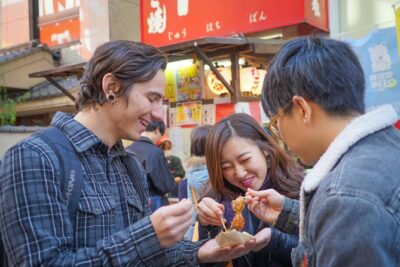
Osaka Local Foodie Walking Tour in Dotonbori and Shinsekai
Read our review →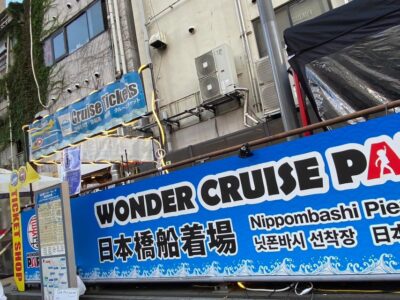
Dotonbori District River Cruise with Drink Discount
Read our review →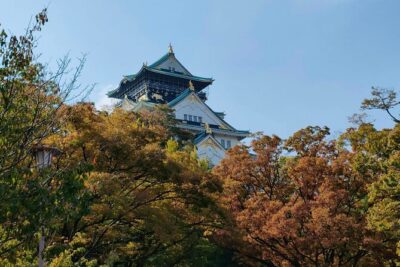
Ultimate Osaka Walking Tour: Castle, Dotonbori & Hidden Gems
Read our review →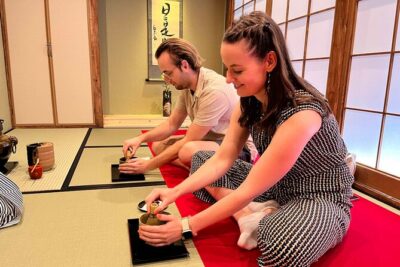
Dotonbori River Cruise with Glico Sign & Neon Views
Read our review →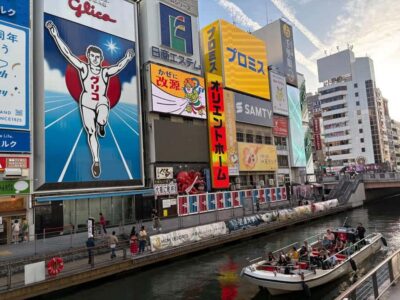
Roll and Authentic Sushi Making Class in Dotonbori
Read our review →This tour also fits