
Reviewed · DOTONBORI EXPERIENCES
Traditional Calligraphy Experience near Dotonbori
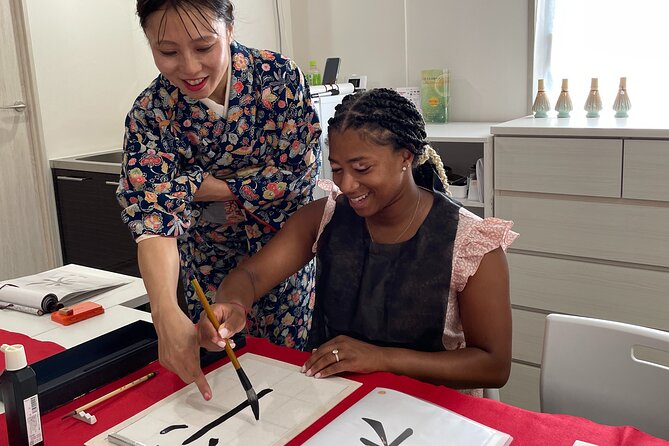
Kanji practice feels calming by Dotonbori. I loved Fumi‘s patient, English guidance and the hanging scroll souvenir that becomes a real, take-home memory of Japan. Even with the city energy outside, the session stays focused on slow, satisfying brushwork.
The only drawback is time: 1 hour goes quickly, so you will mostly work on a chosen kanji rather than many rounds of practice. Good news, you sit in a chair, so you are not battling an awkward posture just to participate.
In This Review
- Key things to know before you write kanji in Osaka
- Osaka Calligraphy Near Dotonbori, the Calm Part of the Trip
- Meeting at Nishishinsaibashi and How to Fit It into Your Day
- The Class Flow: From Calligraphy Background to Your Final Scroll
- English Instruction With Fumi: What Makes This Beginner-Friendly
- Tools, Posture, and Brush Control: The Real Skills You Take Home
- Choosing Your Kanji: Copying First, Then Feeling the Flow
- Your Hanging Scroll: The Moment It Becomes Real
- Price and Value: Is $45.52 Worth It?
- Who This Kanji Class Suits Best (and Who Might Skip)
- Should You Book This Traditional Calligraphy Experience Near Dotonbori?
- FAQ
- How long is the traditional calligraphy experience?
- Is the class taught in English?
- What do you do first after arriving?
- Can beginners participate, and do I need to know kanji already?
- Do you get a hanging scroll at the end?
- Do you have to sit on the floor?
- Where is the meeting point near Nishishinsaibashi?
- How many people are in the group?
- What is the cancellation policy?
Key things to know before you write kanji in Osaka
- English-first instruction from the instructor, with guidance step-by-step
- Choose your own kanji from samples, even if you are a complete beginner
- Chair seating so you can write comfortably without straining
- Traditional tools + proper technique for holding the brush and following stroke order
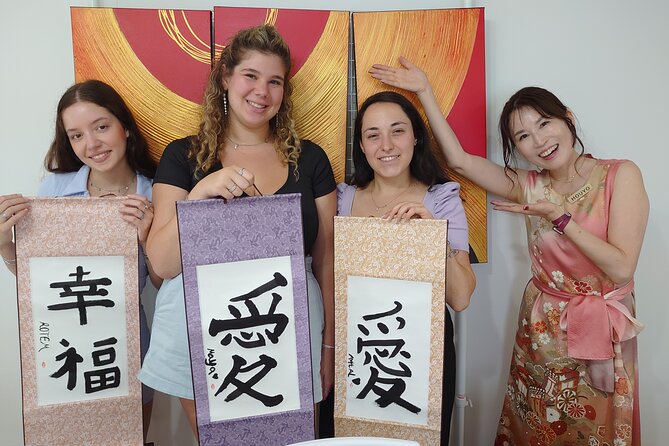
- Take-home hanging scroll including your name and a stamp
- Small group size (max 8) for a less crowded experience
Osaka Calligraphy Near Dotonbori, the Calm Part of the Trip
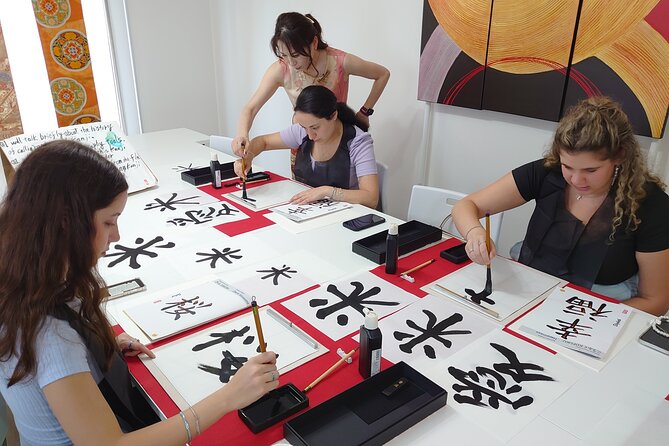
This class is a smart antidote to the loud, fast Osaka you see while walking around Dotonbori. Instead of just watching culture from a distance, you do the work yourself, with real tools and real technique. The session is built around the idea that writing kanji can clear your mind and help you slow down.
You get practical instruction in English, so you are not stuck guessing what to do. And the final result is not a quick worksheet you toss after class. You leave with a hanging scroll you can display, which turns the time into something you will actually remember.
One more plus: it is close to public transit, so you can plug it into a normal sightseeing day without a major detour. That matters in a city where your feet do most of the planning.
Brush strokes that take a lifetime to master
- Osaka: Private Japanese Calligraphy Experience★ 5.0 · 66 reviews
- Calligraphy Workshop in Namba, Dotonbori★ 5.0 · 57 reviews
- Learning Zen of Japanese Calligraphy in kimono near Osaka Castle★ 4.5 · 53 reviews
- Osaka: Private Tea Ceremony and Calligraphy Experience★ 5.0 · 50 reviews
- Samurai dress-up and shows, plus Tea Ceremony & Calligraphy★ 5.0 · 27 reviews
Meeting at Nishishinsaibashi and How to Fit It into Your Day
You meet at 1-chōme-5-12 Nishishinsaibashi, Chuo Ward, Osaka 542-0086, Japan. The class ends back at the same meeting point, which is great if you want an easy landing after your activity.
Because the duration is about 1 hour, this works well as a reset between food, shopping, and temple hopping. I like scheduling it earlier in the day if you can, since you will still feel fresh for the careful focus calligraphy requires. If you do it later, plan to keep the rest of your evening low key, so you can enjoy your scroll rather than rush out.
The tour uses a mobile ticket, so have your phone ready at check-in. It helps to keep the confirmation handy once you receive it, since confirmation is sent within 48 hours of booking, depending on availability.
The Class Flow: From Calligraphy Background to Your Final Scroll
The session moves in a clear sequence, and that structure is what makes it beginner-friendly. First, your instructor gives a short lecture on the background of calligraphy. This is not a lecture that drags on. It gives you the why behind the strokes, so the writing feels purposeful instead of random.
Next comes the tools lesson. You learn how to use traditional supplies correctly, which is important because calligraphy is more about control than speed. Once the basics click, you shift to hands-on practice.
Then you write. You choose a kanji from samples, copy it as guided, and focus on learning the stroke order and shape. Finally, you transfer your work onto a beautiful hanging scroll, add your name, and stamp it to finish. When you walk out holding that scroll, the whole experience feels complete.
English Instruction With Fumi: What Makes This Beginner-Friendly
The instruction style stands out because it is supportive. Fumi is described as patient, and that shows in how the lesson is paced. If you have never done anything like calligraphy before, you get enough coaching to keep you going, without the awkward feeling of falling behind.
The lesson is also designed for comfort. You sit on a chair, so you can keep your body relaxed while focusing on the brush. That matters because calligraphy can go wrong fast if you are tense, cramped, or trying to maintain a rigid posture.
Another thing I like: you do not just get told what looks nice. You are guided toward doing it the correct way, including the fundamentals of brush handling. That means you get a foundation you can recognize even after the class ends.
Tools, Posture, and Brush Control: The Real Skills You Take Home
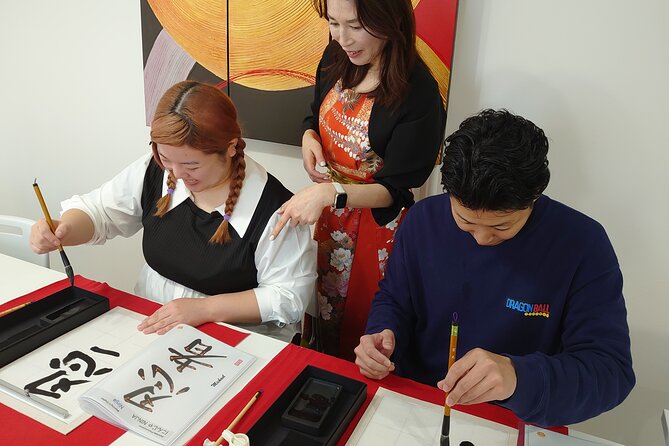
Most people think calligraphy is about artistic talent. This class quietly proves it is mostly about technique and repetition. You learn how to hold the brush properly, and you learn how posture affects the line quality.
Even though you are seated, posture still matters. The idea is not to contort yourself into a perfect pose, it is to keep your writing stable and your movements controlled. When the brush is held well, strokes look more consistent. When your body is steady, your lines come out calmer too.
The tools lesson is where value hides in plain sight. Traditional materials are different from what you might use in school. Brush type, ink behavior, and the feel of the paper all influence the final look. If you only see the finished scroll, you might think it is just handwriting. After the tools part, you understand why calligraphy looks like calligraphy.
The glowing strip everyone photographs
- Osaka Local Foodie Walking Tour in Dotonbori and Shinsekai
★ 5.0 · 985 reviews - Osaka: Dotonbori District River Cruise with Drink Discount
★ 4.2 · 876 reviews - Ultimate Osaka Walking Tour: Castle, Dotonbori & Hidden Gems
★ 5.0 · 862 reviews
Choosing Your Kanji: Copying First, Then Feeling the Flow
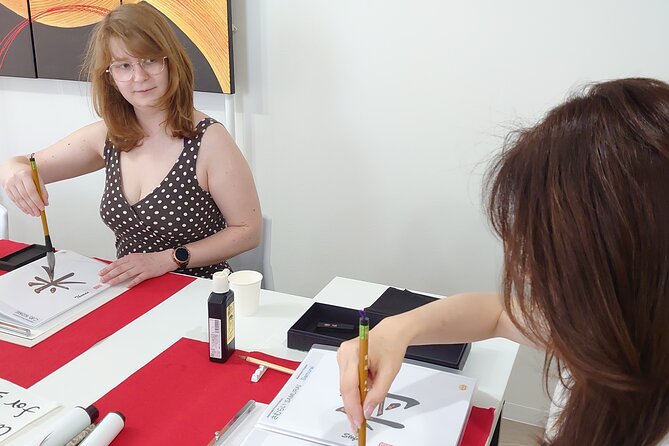
You are not forced into one specific character. You select your favorite kanji from samples prepared by the instructor. That choice is more than a nice touch. It keeps your attention locked in, and it makes the practice feel personal.
As a beginner, the hardest part is usually knowing what to copy. Here, the process is structured: you practice by imitating the model strokes and learning the correct sequence. You gradually start to notice a shift from clumsy marks to more unified writing.
This is also where you should slow down mentally. The class frames the writing as a way to clear the mind. I find that helpful because calligraphy can feel strange at first, almost like you are doing something too careful for a vacation. But as you settle into the stroke rhythm, it starts to feel relaxing instead of fussy.
If you want your character to look its best, pick one you actually care about. You will be staring at it close up, so choose something meaningful to you rather than something you picked at random.
Your Hanging Scroll: The Moment It Becomes Real
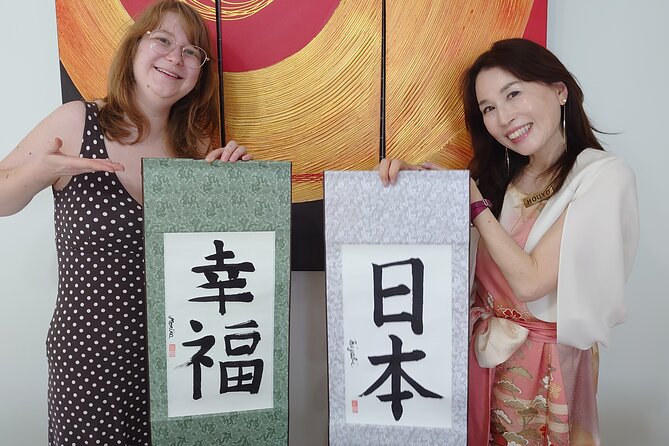
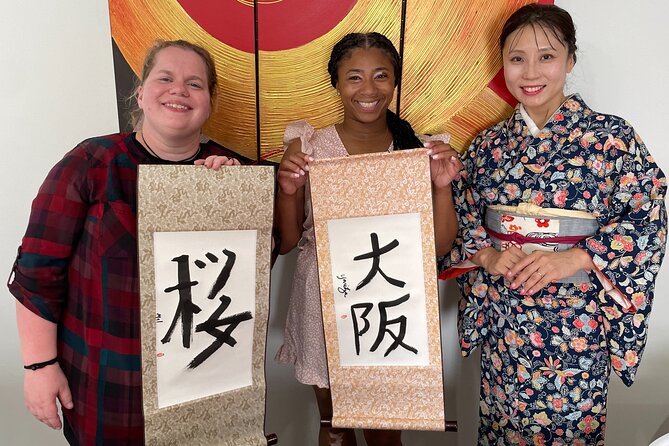
The last part is the payoff: you write your kanji on a hanging scroll. Then you add your name and stamp it to finish. That sequence turns the class from a learning exercise into a finished artwork that belongs to you.
This matters for two reasons. First, it gives you a clear end point. You are not guessing how good is good enough, because the scroll is the objective. Second, it makes the skill feel tangible. You can hang it up, show it to friends, and remember the exact day you learned how to write your chosen character.
Also, the scroll is not just a souvenir you bought. You made it. The stamp step makes it feel more official too, like you completed a real process rather than just tried a craft activity.
When you take it home, consider the practical reality. Handle the scroll gently and let the ink settle per whatever guidance the instructor gives. The class experience is short, so follow their finishing tips closely, even if you are tempted to rush.
Price and Value: Is $45.52 Worth It?
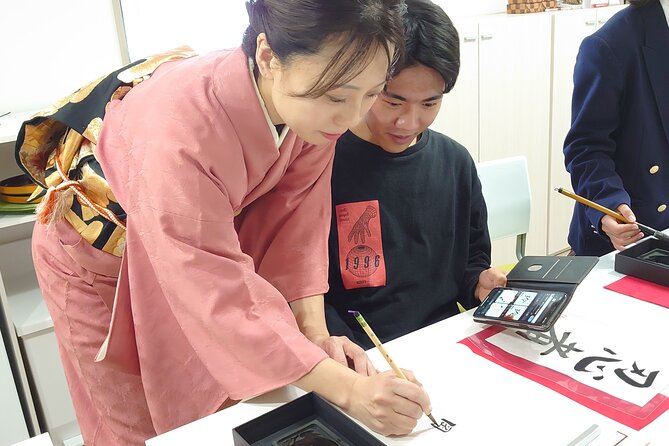
At $45.52 per person, this is not the cheapest thing you can do in Osaka. But it is also not just a casual workshop. You are paying for an English-guided lesson, proper instruction on technique, and the final hanging scroll outcome.
Here is the value breakdown that matters:
- You get instruction from a professional instructor, with teaching tailored for beginners
- You learn brush and posture fundamentals, not only how to trace one character
- You leave with a finished hanging scroll that includes your kanji, your name, and a stamp
- The group size is small, max 8, which makes the coaching feel more hands-on
If you usually spend on experiences, not crafts-for-travel-only, this kind of class is usually a strong pick. You are getting something you can display and something you can repeat later if you want to practice at home.
And because it lasts about 1 hour, you are not sacrificing half a day. For many people, that timing alone is a hidden value.
Who This Kanji Class Suits Best (and Who Might Skip)
This is a great fit if you want a calm, focused cultural activity near Dotonbori. It is also ideal if you like hands-on learning, and you want to do something that feels genuinely Japanese instead of just taking photos.
It is especially suitable for first-timers. You pick a kanji, you practice step by step, and you are seated in a chair. You do not need to already know Japanese writing to participate.
You might consider skipping if you are chasing lots of characters or a long practice session. The class is short, so it will not turn you into a calligraphy expert. But if your goal is to understand the basics and take home a meaningful souvenir, this is exactly the right format.
If you are traveling with family, it can work well too, since the pace and setup are beginner-friendly. Just note that the character you choose may be the biggest factor in how quickly you feel confident during the writing.
Should You Book This Traditional Calligraphy Experience Near Dotonbori?
I think you should book it if you want a real skill in a short time, and you want the kind of souvenir you can hang on a wall. The combination of English instruction, proper tool guidance, and the take-home hanging scroll is the sweet spot.
If you hate sitting still, or you want a long, multi-character workshop, then this may feel too brief. But for most visitors looking for calm, authentic Osaka culture that you can actually do with your hands, this class is a smart yes.
FAQ
How long is the traditional calligraphy experience?
It lasts about 1 hour.
Is the class taught in English?
Yes. Experienced Japanese instructors teach calligraphy techniques in English.
What do you do first after arriving?
You start with a lecture about the background of calligraphy, then you learn how to use the traditional tools.
Can beginners participate, and do I need to know kanji already?
Yes. Beginners can join, and there is nothing to worry about. You choose a kanji from samples and practice by imitating the instructor’s guidance.
Do you get a hanging scroll at the end?
Yes. You write your kanji on a beautiful hanging scroll, then add your name and stamp it. You can take the scroll home as a souvenir.
Do you have to sit on the floor?
No. You experience the class sitting on a chair, so you do not have to worry about sitting straight.
Where is the meeting point near Nishishinsaibashi?
The start is at 1-chōme-5-12 Nishishinsaibashi, Chuo Ward, Osaka, 542-0086, Japan, and the activity ends back at the meeting point.
How many people are in the group?
There is a maximum of 8 travelers.
What is the cancellation policy?
You can cancel for free up to 24 hours in advance for a full refund. If you cancel less than 24 hours before the start time, the amount paid is not refunded.
Just added around Osaka


Dotonbori Experiences, compared.
Osaka Local Foodie Walking Tour in Dotonbori and Shinsekai
Read our review →
Dotonbori District River Cruise with Drink Discount
Read our review →
Ultimate Osaka Walking Tour: Castle, Dotonbori & Hidden Gems
Read our review →

Dotonbori River Cruise with Glico Sign & Neon Views
Read our review →

Roll and Authentic Sushi Making Class in Dotonbori
Read our review →This tour also fits