
Reviewed · OSAKA CASTLE GUIDED TOURS
Learn Zen in a class of making Matcha tea near Osaka Castle
Matcha, manners, and kimono in one hour. What I love is the way the class treats you as equal the moment you enter, and how you learn the why behind tea through wagashi and the gestures. The only drawback to consider is that this is a fast one-hour format, so you will need to arrive on time and follow the instructions closely.
If you want an Osaka tea ceremony experience that feels personal, this one is built for that. The group is limited to 6, you get an English interpreter if you need one, and the program includes photo shooting where you can focus on the ceremony instead of juggling your phone.
A final note before you book: the activity is near Osaka Castle, but you are responsible for getting there. There is no pick up or drop off, so plan your route ahead.
In This Review
- Key things you will remember
- Osaka Castle area tea ceremony: what this one-hour class really feels like
- Arriving at Samurai Honor and getting dressed in time
- Samurai and Yamato Nadeshiko costumes: dress up, then learn the meaning
- Hair and costume details you should confirm
- Inside the tea room: etiquette lessons and the nijiriguchi equal feeling
- What the instructors emphasize
- Matcha in your hands: preparation, serving, and the “host and guest” rhythm
- The mental shift that makes it worth it
- Wagashi: wabi-sabi, the seasons, and why sweets belong in this lesson
- How the sweets teach culture fast
- Photo shooting: what’s included and how to get the best results
- Price and value: is $40 worth it in Osaka?
- Practical tips for your best tea ceremony session
- Should you book this matcha and kimono class near Osaka Castle?
- FAQ
- How long is the matcha and tea ceremony class?
- Where does the experience take place?
- What is the meeting point landmark?
- Do I need to speak Japanese?
- What is included in the price?
- Is pickup or drop-off included?
- What should I bring with me?
- Is wagami or an outdoor photo shoot included?
- Is this suitable for children?
Key things you will remember
- Nijiriguchi equality moment: you pass through a small entrance and everyone is treated the same.
- Wagashi lessons: you connect sweets to wabi-sabi and Japan’s seasonal sense of beauty.
- Kimono styling and photo focus: you dress up, practice gestures, and get photos sent to your email.
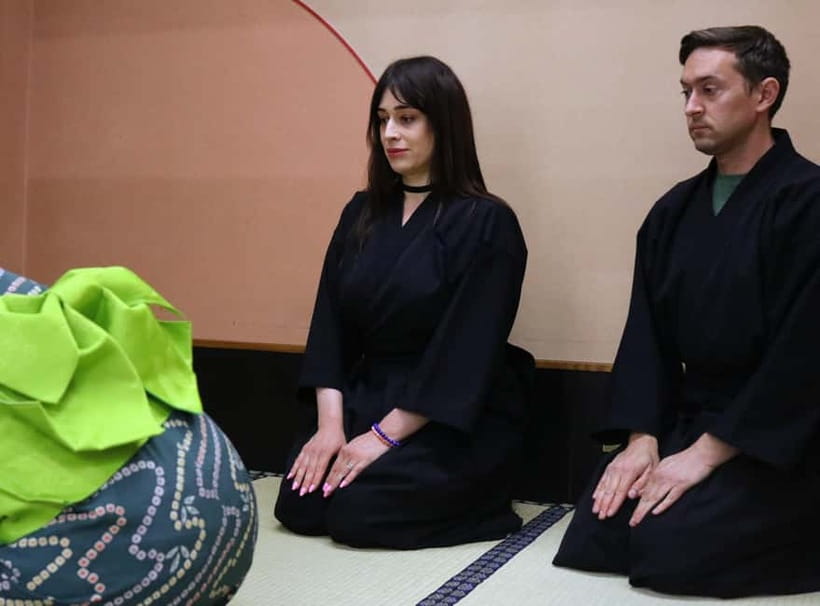
- Samurai and Yamato Nadeshiko costumes: men wear hakama and dogi, women wear kimono.
- Small group, big attention: limited to 6 participants, with step-by-step guidance.
Osaka Castle area tea ceremony: what this one-hour class really feels like
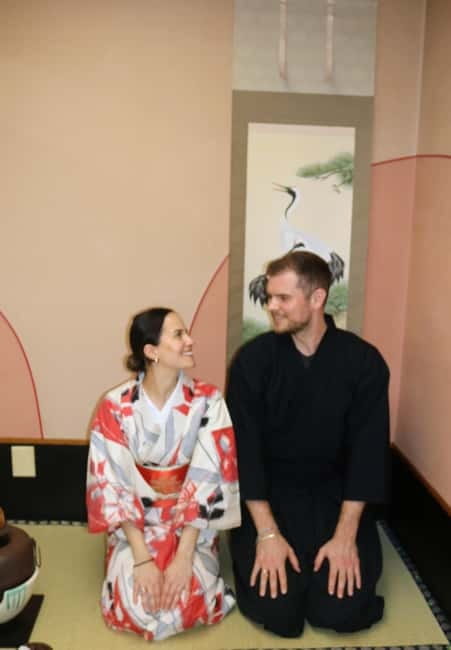
This is not a long, slow tea retreat. It is a compact Osaka tea ceremony class that gets you dressed, taught, and participating in a respectful way, all in about an hour.
The core vibe is “Zen through action.” You learn etiquette, manners, and beautiful gestures, but the lesson is more than choreography. The tea ceremony is built on the idea that the host entertains and the guests respond, creating the right atmosphere together. When that clicks, the room feels calmer, even if you are still learning what to do next.
You should also know this experience is explicitly “near the spirit of chanoyu.” You are guided through the way the host serves matcha, how you sit and bow, and how to handle the tea moments with care. It is equal parts cultural lesson and hands-on practice.
Slow down for a bowl of matcha
- Osaka: Tea Ceremony Experience★ 4.9 · 1,426 reviews
- Tea Ceremony Experience in Osaka Doutonbori★ 5.0 · 754 reviews
- Matcha Making Class in Osaka with Authentic Japanese Sweets Set★ 5.0 · 509 reviews
- Osaka: Matcha Making Experience with Japanese Sweets★ 5.0 · 146 reviews
- Osaka: Japanese Traditional Sweets Making and Tea Ceremony★ 4.7 · 118 reviews
Arriving at Samurai Honor and getting dressed in time
Your biggest practical win here is being early. The program asks you to arrive 30 minutes before your reserved time so you can get instructions and change clothes. In a kimono experience, that half hour matters, because getting dressed correctly takes time and you will want to feel comfortable before you step into the tea room.
To find the meeting point, look for a wooden sign that reads Honor of the Samurai. It is described as a rack with Samurai Honor activity pamphlets in front of the store, and you may also notice kimonos and hakama hanging out to dry.
No one is waiting for you at the last minute. If you show up late, you will feel rushed during the changing process, and that makes it harder to enjoy the etiquette part.
Samurai and Yamato Nadeshiko costumes: dress up, then learn the meaning
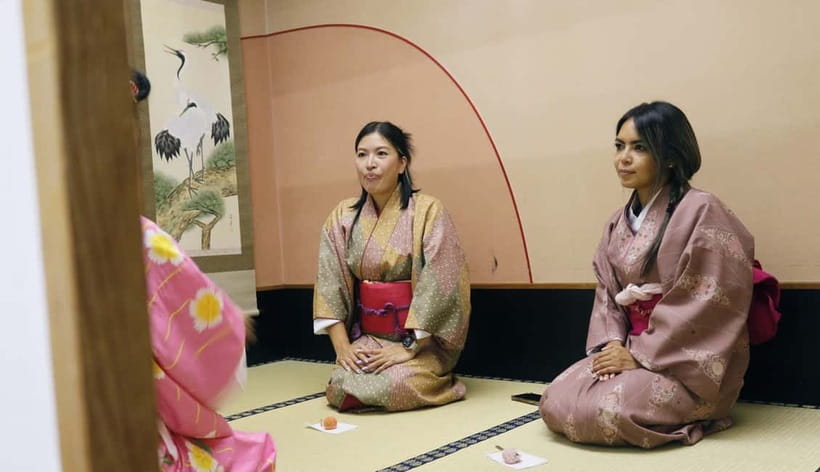
One of the most memorable parts of this class is that the costume is not random. Men are dressed in hakama and dogi and become a samurai for the ceremony. Women are dressed in kimono and become a Yamato Nadeshiko.
That theme matters because it shapes your posture and behavior. Tea ceremony etiquette often starts with small physical choices, like where you place your hands and how you bow. When you are in costume, those actions come more naturally, because you are physically reminded that this is a role with a purpose.
Hair and costume details you should confirm
The included item is “kimono clothing.” The extra items list includes wagami (collected hair plus kanzashi) as a paid option, and it also lists details like obi, tabi, zori, and get a as not included. That does not mean you will be left to figure it all out, but it does mean you should confirm what full set is provided at your session and what is add-on.
Also, photo styling can vary. One recent experience described an updo with flowers added. So it looks like some sessions may include more styling than the basic list suggests, but you should not assume it is guaranteed.
Inside the tea room: etiquette lessons and the nijiriguchi equal feeling
The star moment is walking through nijiriguchi, the entrance to the tea room. The program notes that once you pass through, everyone is treated equally, regardless of nationality, age, gender, or status.
This is not a marketing line. Physically, the nijiriguchi concept is tied to humility and focus, so the room immediately asks you to slow down. Even if you do not know the rules, your body starts to understand that you are in a different space now.
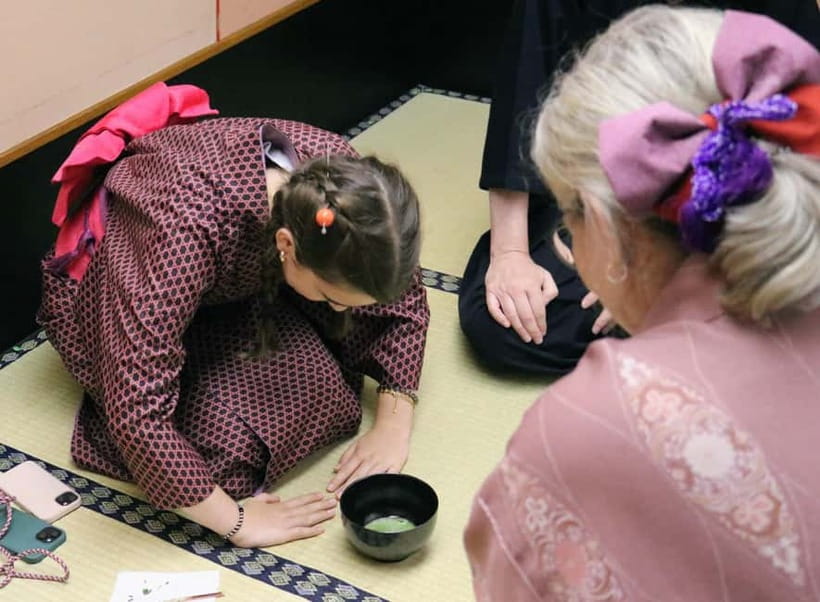
From there, you practice tea ceremony etiquette: how to serve tea, how to sit, how to bow, how to stand, how to walk. The instruction is step-by-step. And the teaching style is centered on hospitality flowing both ways, meaning you are not only being “shown,” you are participating in creating the atmosphere.
More history behind those stone walls
- Osaka Castle: Museum and Tower Entry Ticket
★ 4.5 · 2,380 reviews - Osaka Castle Walking Tour and Castle Tower Admission
★ 5.0 · 561 reviews - 5-Hour Osaka Bike Tour to the Neighborhood of Osaka Castle
★ 5.0 · 319 reviews
What the instructors emphasize
The ceremony includes:
- A hostess who entertains guests with traditional manners
- A tea master who serves matcha to the guests
- A focus on gestures and etiquette as a learning tool
In one English-speaking session, a host named Kaori is mentioned as explaining the historical and cultural context and walking through preparation step by step. Even if your host is different, the structure is consistent, and the point is the same: you understand what you are doing, not just what to copy.
Matcha in your hands: preparation, serving, and the “host and guest” rhythm
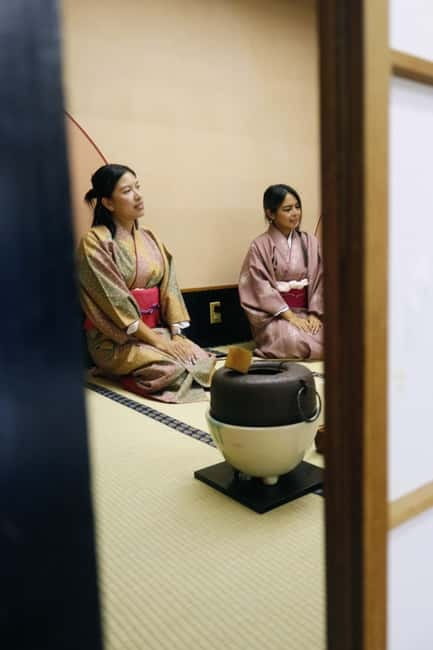
You will experience the tea ceremony as a guest, described as “as a samurai.” That framing helps, because you are not expected to be a tea expert on day one.
You start by watching the master serve matcha. Then you learn etiquette around how to receive it, and how to respond properly. The program is clear that you will learn the spirit of hospitality and the manners behind it.
Some sessions also include a practical element where you prepare tea for each other. One account specifically mentions making tea for one another, which suggests you may get more than just observing. Plan to participate. Even if you only do a small part, you will remember it more because your hands were involved.
The mental shift that makes it worth it
Tea ceremony learning often feels like rules. Here, the lesson is about relationship. The master not only entertains, but guests also respond to create a shared atmosphere. When you try the etiquette at the right moments, it stops being a performance and starts becoming a kind of guided attention.
Wagashi: wabi-sabi, the seasons, and why sweets belong in this lesson
You do not just taste matcha. You also encounter wagashi, the Japanese sweets linked directly to the tea ceremony.
Wagashi is described as developing along with tea ceremony traditions in the Kamakura period. The program connects wagashi to the Japanese sense of beauty, especially wabi and sabi, plus the four seasons.
You will likely notice that wagashi is treated like an art object. One described reaction is that wagashi looks too beautiful to eat, with delicate charm that clearly reads as handmade. The point is not to create a fancy photo prop. It is to train your eye and attention to detail, including seasons and texture.
How the sweets teach culture fast
Wagashi carries seasons through multiple elements. The program mentions spring, summer, fall, and winter as a constant theme, and it frames wagashi as a way to appreciate time and imperfection.
That is a big deal for visitors. In one hour, you do not learn “everything Japan.” But you do learn a working lens: how aesthetics, food, and philosophy can be connected in a single ritual.
If you like food culture that comes with meaning, this is one of the stronger parts of the class.
Photo shooting: what’s included and how to get the best results
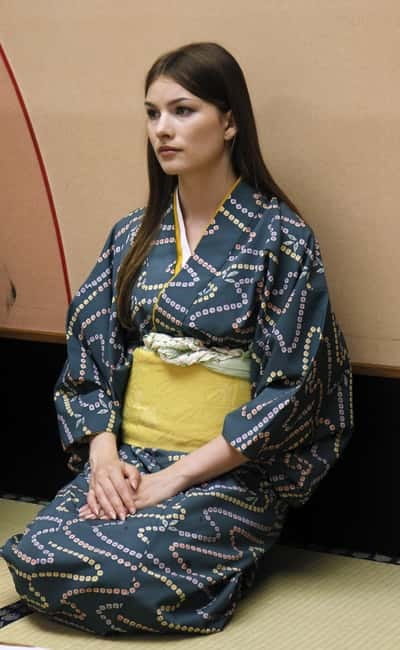
Photo shooting is included, and you get the data sent to a designated email address. In the experiences described, photos are taken throughout the ceremony and the files may arrive the same day.
Here is how to maximize the value of this:
- Commit to the gestures. Your best shots will look natural because you are actually doing the ceremony actions.
- Keep your posture calm. Costume is part of it, but the etiquette is what gives the photos the right feel.
- If you care about outdoor shots, note that outdoor photo options are listed under paid options, so ask about it when you confirm your session.
You will also likely notice kimono color selection and thoughtful styling. One account says color choices were available and that hair was done up with flowers without an extra charge. Again, confirm what is standard for your booking, but the overall impression is that the photo part is treated as part of the experience, not an afterthought.
Price and value: is $40 worth it in Osaka?
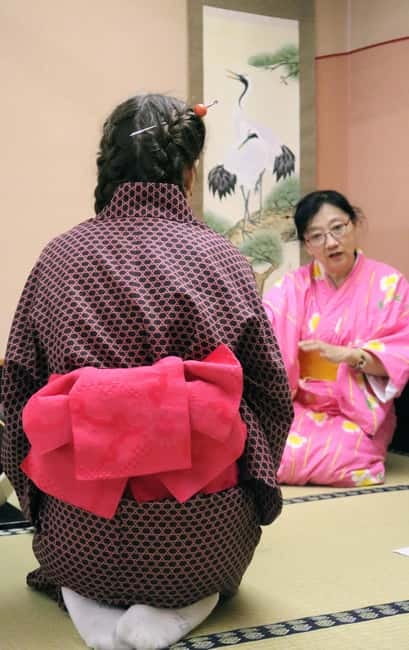
At $40 per person for a 1-hour experience, the value comes from what is bundled, not just the matcha.
Included items are:
- Kimono clothing
- English interpreter guide staff (default language is English)
- Matcha and wagashi
- Certified professional instructor
- Tax and tips
- Photo shooting, with files emailed
What you do not get is pickup or drop-off, plus transportation. You also may need to pay separately for some costume and photo add-ons, including wagami (collected hair plus kanzashi) and outdoor photo shooting. Movie shooting is also a paid option.
So who is this best for?
- First-timers who want a clean, guided Osaka tea ceremony class near a major landmark
- People who value etiquette lessons more than “DIY tourism”
- Families looking for shared memories, since the program highlights making experiences and memories together with children (with the note that children under 10 are not suitable)
- Anyone who wants photos but does not want to manage a camera during the ritual
Who should think twice?
- Anyone who struggles with the physical demands of formal sitting or careful movement. This is listed as not suitable for altitude sickness, and children under 10 and people over 95 are not suitable.
- If you want a long, deep philosophical workshop, this one-hour format may feel short.
Practical tips for your best tea ceremony session
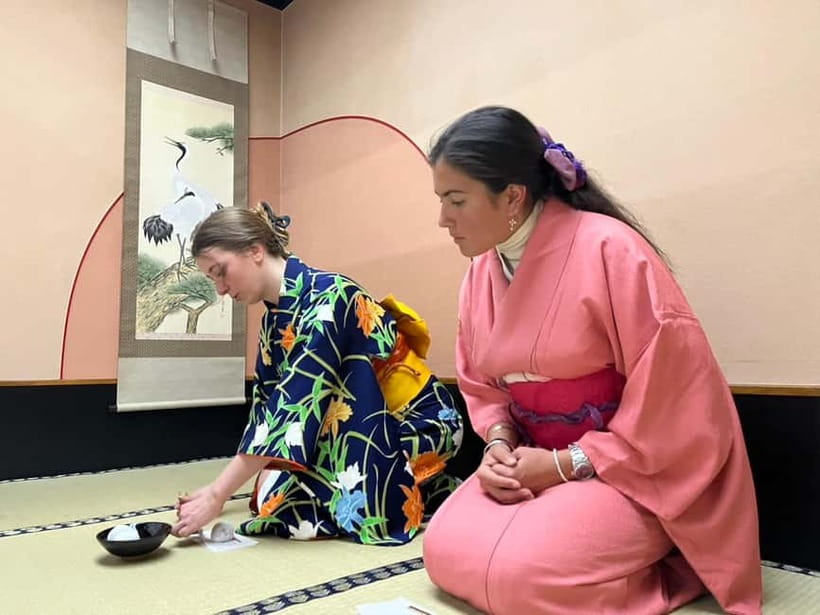
A few small choices can make this easier and more enjoyable:
- Bring a T-shirt as instructed, since it is the only specific item they ask you to have.
- Arrive 30 minutes early. That time is for changing and instructions, and it protects the quality of the ceremony.
- If you need a language other than English, the default is English. Other languages are only sometimes available, depending on staff schedules, so ask before you book.
- Avoid distractions. Pets, alcohol, drugs, and nudity are not allowed, which also hints that the space is meant to stay respectful and focused.
Should you book this matcha and kimono class near Osaka Castle?
I would book this if you want an Osaka tea ceremony experience that is structured, guided, and photo-ready, without turning into a chaotic “tour stop.” The combination of kimono dressing, matcha etiquette practice, and wagashi culture meaning makes it feel like more than a quick tasting.
If you prefer a lesson you can linger in for hours, this might feel brisk. But if you have limited time and you want a genuine ritual that teaches you how the gestures and hospitality work, this one is a strong choice.
My practical recommendation: book it if you can arrive early and follow directions, and if you are excited to participate rather than only watch.
FAQ
How long is the matcha and tea ceremony class?
The class lasts 1 hour.
Where does the experience take place?
It is at Bushi no Homare, Samurai Honor. The address provided is Excellence Takayama 1F, 2-3-19 Shiginonishi, Joto-ku, Osaka-shi, Osaka 536-0014. The guide notes the Apple Maps address may be incorrect and to use Google Maps.
What is the meeting point landmark?
Meet at a wooden sign that reads Honor of the Samurai. It is described as a rack with Samurai Honor activity pamphlets in front of the store.
Do I need to speak Japanese?
No. English interpreter guide staff are included as the default. The instructor languages are English and Japanese.
What is included in the price?
Included items are kimono clothing, English interpreter guide staff, matcha, wagashi, a certified professional instructor, tax, tips, and photo shooting with data sent to a designated email address.
Is pickup or drop-off included?
No. Pickup and drop-off at the train station or hotel is not included.
What should I bring with me?
Bring a T-shirt.
Is wagami or an outdoor photo shoot included?
Wagami (collected hair + kanzashi) and outdoor photo shoot are listed as paid options, not included.
Is this suitable for children?
Children under 10 are not suitable. The listing also notes people over 95 and people with altitude sickness are not suitable.
More Workshops in Osaka
- Sushi Making Osaka Roll and Authentic Japanese Sushi Class★ 5.0 · 1,220 reviews
- Osaka: Ramen and Gyoza Cooking Class in Dotonbori★ 5.0 · 378 reviews
- Osaka Cooking Class: Okonomiyaki &Japanese cuisines experience★ 5.0 · 261 reviews
- Osaka: Roll and Authentic Sushi Making Class in Dotonbori★ 4.9 · 239 reviews
Just added around Osaka


Osaka Castle Guided Tours, compared.
Osaka Castle Walking Tour and Castle Tower Admission
Read our review →
5-Hour Osaka Bike Tour to the Neighborhood of Osaka Castle
Read our review →

PRIVATE 6hr, Food tour from Osaka Castle, Kuromon, Dotonbori.
Read our review →
A Tour to Explore the Symbol of Osaka: Osaka Castle
Read our review →
Learning Zen of Japanese Calligraphy in kimono near Osaka Castle
Read our review →This tour also fits