
Reviewed · COOKING CLASSES
Osaka Cooking Class and Sake Tasting with Local Supermarket Visit
Food lessons that start in a local supermarket are special. This Osaka cooking class pairs hands-on cooking with a sake tasting so you learn what to buy, how to cook, and how to enjoy it right after. I especially like the tight, small-group setup (up to 7) and the live, step-by-step coaching in the studio, with guides such as Yuka and Mari guiding guests through each recipe. The only real consideration is that it is a 4-hour, active session, so plan on staying focused and hungry from start to finish.
You get the best of Osaka food culture in one smooth loop: shopping for ingredients, then making classic dishes like niku-sui, okonomiyaki, and gyoza, and finishing with sake (or beer or soft drinks). Yuka is praised for clear, welcoming instruction, and Mari is highlighted for explaining exactly what to look for when shopping. Still, if you prefer a lot of downtime or lots of sightseeing walking, this may feel more like a hands-on workshop than a wandering tour.
In This Review
- Key things to know before you go
- A half-day of Osaka comfort food and sake
- The supermarket shopping walk that actually teaches you to buy right
- Back at the studio: your Osaka menu takes shape
- Why those specific dishes are a smart choice
- Niku-sui teaches sauce logic and comfort cooking
- Okonomiyaki teaches heat control and assembly
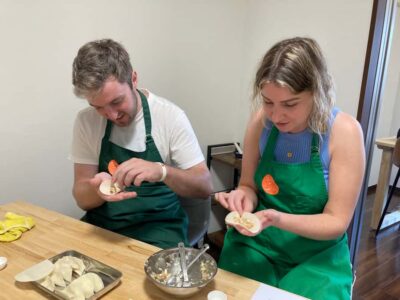
- Gyoza teaches folding plus pan-cooking rhythm
- The cooking techniques you can repeat at home
- Sake tasting, beer, or soft drinks, and how to use it
- The $92.50 value question: what you are really paying for
- Who should book this Osaka workshop
- Where to meet and how to plan your time
- Should you book this Osaka cooking class with sake tasting?
- FAQ
- How long is the Osaka Cooking Class and Sake Tasting?
- What time does the tour start?
- Where do I meet the group?
- Is there a supermarket visit as part of the experience?
- What dishes will I learn to cook?
- Do I need cooking experience?
- What drinks are included with the meal?
- How large is the group?
- What is the cancellation policy?
Key things to know before you go
- Supermarket ingredient shopping: You pick items with guidance, not just follow a recipe blindly.
- A classic Osaka menu: You cook niku-sui, okonomiyaki, and gyoza from start to finish.
- Small group size (max 7): Easier to get personal feedback while you cook.
- Sake tasting included: You learn the taste experience alongside the cooking.
- Beginner-friendly cooking: No prior experience is needed to follow along and produce good results.
A half-day of Osaka comfort food and sake
Osaka is famous for eating, not just looking. This class turns that idea into a plan you can actually use at home. You start by shopping like a local, then you cook an Osaka-style menu, and you end by tasting sake with what you made.
The format matters. A cooking class that includes a supermarket stop teaches you the two hardest parts of Japanese home cooking: choosing the right ingredients and understanding how small choices affect flavor. In a typical cooking workshop, you skip the buying step and you miss a huge chunk of the lesson.
You can also go in with confidence. The class is designed for all skill levels, and the instructors use step-by-step guidance while you fold gyoza, build okonomiyaki, and cook niku-sui.
Pour past the one brand you know
- Osaka Sake Tasting with Takoyaki Cooking★ 5.0 · 156 reviews
- Osaka Sake Tasting & Takoyaki Cooking Experience★ 5.0 · 149 reviews
- Osaka: Cooking Class & Sake Tasting with Local Market Visit★ 4.8 · 31 reviews
- 3.5h Osaka Night guided Local Bar Hopping, Sake & Karaoke★ 5.0 · 27 reviews
- Sake “Omakase” in Osaka : Guided Tasting by a Active Sake brewer★ 5.0 · 11 reviews
The supermarket shopping walk that actually teaches you to buy right
The experience begins with a visit to a local supermarket. Instead of being handed ingredients and hoping for the best, you get a walkthrough on what to look for and why it matters for each recipe. This is where the class earns its value.
I like supermarket learning because it is practical. Japanese grocery stores can feel overwhelming if you do not read the labels, and “the same word in English” does not always mean the same product. Having a guide explain what to select for each dish helps you avoid two common mistakes:
- Buying the wrong cut or texture and getting a soup that tastes flat
- Choosing toppings or wrappers that do not behave the way you expect in cooking
Mari, in particular, was praised for explaining what to shop for based on the recipe. That kind of guidance is exactly what makes this more than just cooking for fun. You are training your eyes and your judgment.
You should also expect the shopping portion to feel like everyday Osaka life. You are not just shopping in an air-conditioned bubble. You are learning how people actually put meals together.
Back at the studio: your Osaka menu takes shape
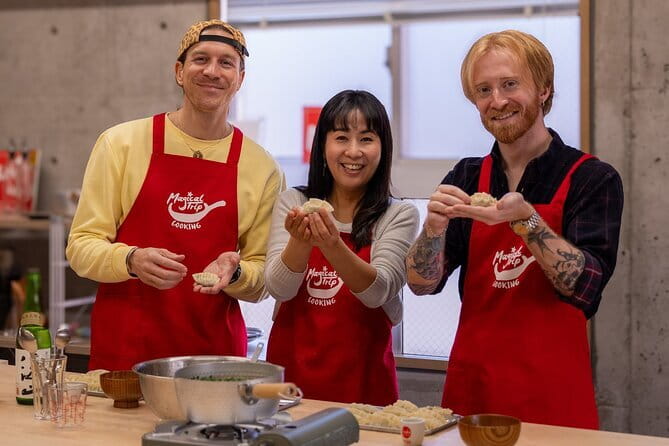
After the market, you head to MagicalTrip’s exclusive studio for the hands-on cooking part. This is where the pace picks up. The class runs about 4 hours total, and you will be actively cooking most of the time, not just watching.
The menu is a great mix of textures and techniques:
- Niku-sui (beef soup): a warm, savory bowl that teaches you balance and timing.
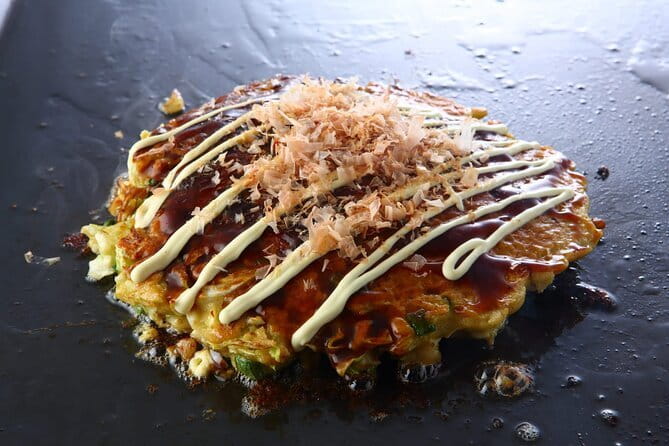
- Okonomiyaki (savory pancake): a cooking-and-assembly lesson, plus a good test of heat control.
- Gyoza (dumplings): folding technique and pan-cooking fundamentals.
You will learn how to fold gyoza and how to craft okonomiyaki, and then you cook everything with live guidance. Yuka was highlighted for her step-by-step coaching and friendly atmosphere, which is a big deal when you are learning techniques that feel tricky the first time.
Why those specific dishes are a smart choice
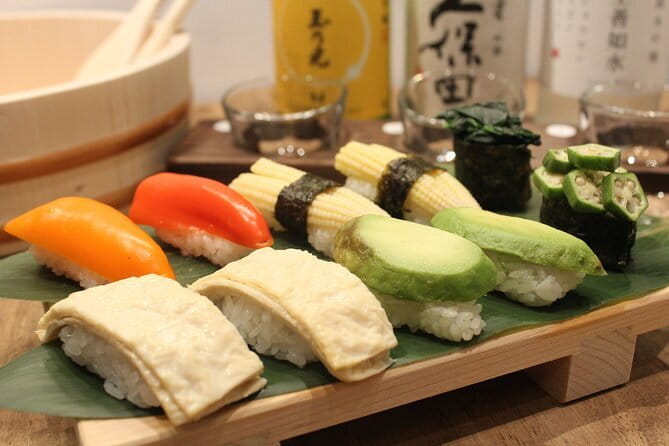
If you are wondering why this menu, it is because these dishes teach you different Japanese kitchen skills that translate well at home.
Niku-sui teaches sauce logic and comfort cooking
Beef soup sounds simple, but it is a great way to learn flavor structure. You learn the idea of building savory depth and keeping the soup balanced. Once you understand the backbone of a Japanese-style soup, it gets easier to adjust recipes later with what you can find where you live.
Other ways to spend a day in Osaka
- Osaka: Namba Pub Bar Crawl with a Local Guide
★ 4.9 · 424 reviews - Osaka: Izakaya Bars Guided Walking Tour
★ 4.9 · 385 reviews - Osaka Pub Crawl and Nightlife Tour
★ 5.0 · 293 reviews
Okonomiyaki teaches heat control and assembly
Okonomiyaki is part cooking, part styling, and part timing. You learn how batter and fillings behave on a hot surface, and how to adjust so it cooks without burning. It is also one of those dishes where people remember the technique, not just the ingredients.
Gyoza teaches folding plus pan-cooking rhythm
Gyoza is hands-on by nature. Folding teaches you portioning and shape, and pan-cooking teaches you the rhythm that makes dumplings crisp and not soggy. If you have ever had gyoza that tasted uneven, you already know why technique matters.
The cooking techniques you can repeat at home
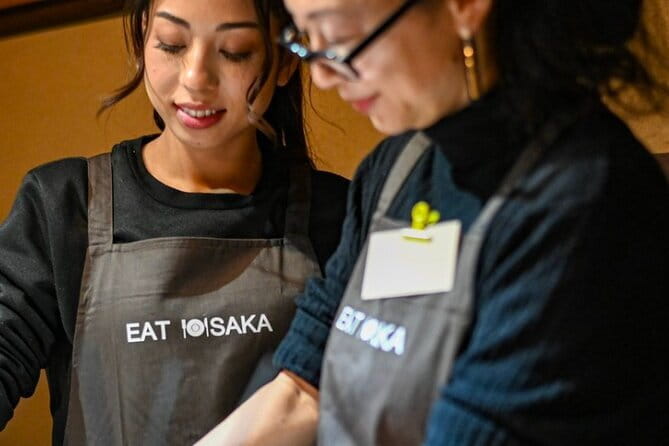
This is where I pay attention. A good class does not just produce dinner for one night. It gives you a repeatable process.
The structure here is designed to help you do that. You get live feedback while you cook, so you are not stuck guessing. When Yuka is described as giving guidance and step-by-step instructions, that is exactly what you need when you are learning new movement patterns like folding or assembling.
You also benefit from the format. Because you are cooking multiple dishes, you learn how to manage your time and heat across tasks. That matters when you try again later and realize cooking is not one isolated step.
Practical tip: when you cook at home after this, focus on the workflow, not just the ingredients. Get your prep organized first, then keep your heat settings steady, especially for okonomiyaki and gyoza.
Sake tasting, beer, or soft drinks, and how to use it
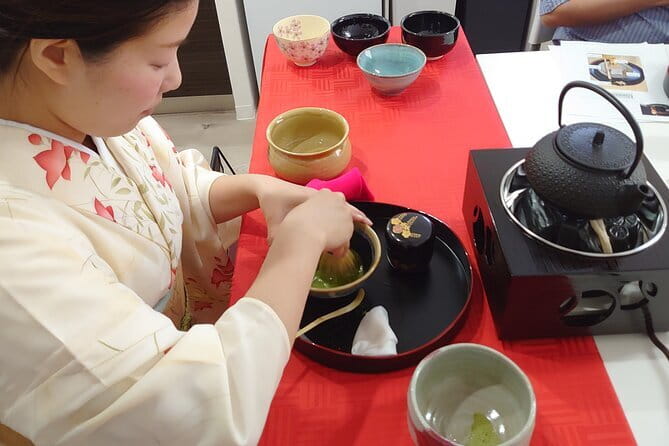
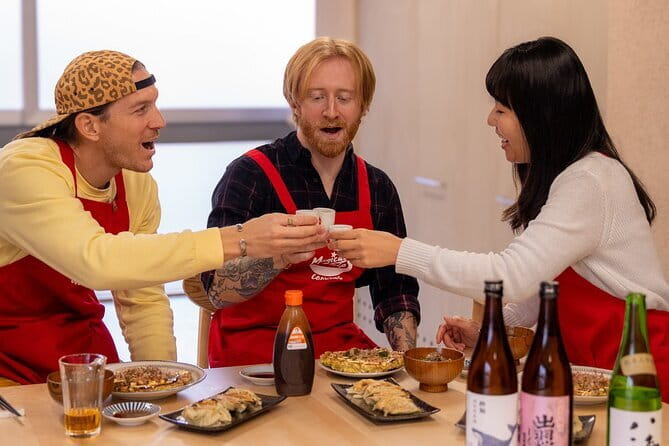
The class ends with your meal, and the tasting part is built in. After you cook, you enjoy what you made with local sake, beer, or soft drinks.
This matters more than it sounds. It links the cooking to the drinking experience, so you start learning what flavors match what foods. You are not just learning that sake exists, you are learning how it fits with the dishes you just made.
A small caution: alcohol is optional here, but the tasting is still part of the experience. If you want to keep full control of how the evening goes, pick beer or soft drinks. The goal is to enjoy the meal comfortably.
The $92.50 value question: what you are really paying for
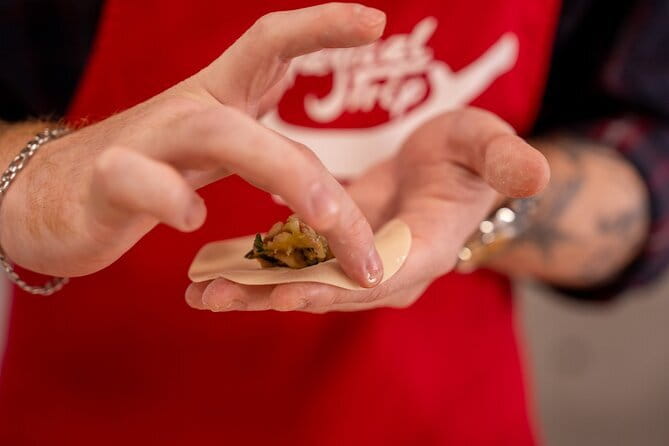
At $92.50 per person for about 4 hours, you are paying for a lot more than a meal. You are paying for:
- a guided supermarket visit (not just a studio lesson)
- hands-on coaching in the kitchen
- instruction that covers multiple classic dishes
- the included tasting and drinks with your food
- a small group setting (max 7), which increases how much attention you get
In other words, the price buys time with someone who can correct technique. That is often the difference between cooking something “kind of right” and cooking it right enough that you want to repeat it.
If you already cook often, you might feel like you know parts of it. Even then, the supermarket guidance can be worth it. Ingredient selection is where many home attempts fail.
If you rarely cook, this is still a good deal because the class is set up for beginners, and you are not on your own. A 4-hour workshop with live help tends to be one of the most efficient ways to pick up real skills on a short trip.
Who should book this Osaka workshop
This tour fits well if you want to take home more than photos.
You will likely enjoy it most if you:
- want to learn Osaka cooking techniques you can repeat
- like food-focused travel that includes real ingredient shopping
- prefer a small group where you can get answers fast
- are traveling solo, as a couple, with family, or with friends
It might be less ideal if you:
- want mostly sightseeing walking and photo stops (this is cooking-first)
- do not like active, hands-on sessions with multiple tasks
- have a very strict schedule that leaves no room for a 4-hour block
The good news is that the class format is relaxed and welcoming, so “active” does not mean stressful. It is structured.
Where to meet and how to plan your time
The meeting point is FamilyMart Minamimorimachi station South side, located at Osaka, Kita Ward, Tenjinbashi 2-chōme (530-0041), 310 1F. The activity ends back at the same meeting point, so you do not need to solve transportation at the finish.
It starts at 10:00 am and runs about 4 hours. A mobile ticket is provided, which makes the day easier if you are already juggling transit and reservations.
My practical planning advice:
- Eat a light breakfast so you can cook without feeling drained, then you will be ready for the meal at the end.
- Wear comfortable shoes. Even if you are not doing a long walk, you will move around during the cooking and shopping parts.
- Bring your curiosity. The best moments are usually when you ask simple questions about what to buy and how to cook it.
Should you book this Osaka cooking class with sake tasting?
If you like food travel that teaches you something you can actually do again later, I think you should book it. The best reason is the combination: shopping at a local supermarket plus hands-on cooking plus an included sake (or beer or soft drink) tasting with what you made.
The class is also a safe bet for different skill levels, and the small group size (up to 7) helps you get real guidance. With guides like Yuka and Mari highlighted for step-by-step support and clear shopping explanations, the experience is set up so you are not left floundering.
If you want a low-energy, sightseeing-heavy afternoon, choose something else. But if you want to leave Osaka with the feeling that you learned how people actually cook here, this is one of the more efficient ways to get that result.
FAQ
How long is the Osaka Cooking Class and Sake Tasting?
It is about 4 hours.
What time does the tour start?
The start time is 10:00 am.
Where do I meet the group?
Meet at FamilyMart Minamimorimachi station South side, Osaka (530-0041), Kita Ward, Tenjinbashi 2-chōme 310 1F.
Is there a supermarket visit as part of the experience?
Yes. The class includes a visit to a local supermarket where you select ingredients.
What dishes will I learn to cook?
You will make niku-sui (beef soup), okonomiyaki (savory pancake), and gyoza (dumplings).
Do I need cooking experience?
No cooking experience is needed. The class is suitable for beginners and more experienced cooks.
What drinks are included with the meal?
You can enjoy local sake, beer, or soft drinks with your dishes.
How large is the group?
The maximum group size is 7 travelers.
What is the cancellation policy?
You can cancel for a full refund up to 24 hours in advance of the experience’s start time. If you cancel less than 24 hours before, the amount paid is not refunded.
More Workshops in Osaka
- Sushi Making Osaka Roll and Authentic Japanese Sushi Class★ 5.0 · 1,220 reviews
- Matcha Making Class in Osaka with Authentic Japanese Sweets Set★ 5.0 · 509 reviews
- Osaka: Roll and Authentic Sushi Making Class in Dotonbori★ 4.9 · 239 reviews
- Osaka: Sushi Class in Dotonbori★ 4.9 · 160 reviews
More Cooking Classes in Osaka
- Osaka: Ramen and Gyoza Cooking Class in Dotonbori★ 5.0 · 378 reviews
- Osaka Cooking Class: Okonomiyaki &Japanese cuisines experience★ 5.0 · 261 reviews
- Ramen and Gyoza Cooking Class in Osaka★ 5.0 · 202 reviews
- Cooking Ramen&Gyoza/KatsuCurry/Bento/Okonomiyaki+Store Tour@Osaka★ 5.0 · 138 reviews
Just added around Osaka


Cooking Classes, compared.
Osaka Cooking Class: Okonomiyaki &Japanese cuisines experience
Read our review →
Osaka Sake Tasting & Takoyaki Cooking Experience
Read our review →
Cooking Ramen&Gyoza/KatsuCurry/Bento/Okonomiyaki+Store Tour@Osaka
Read our review →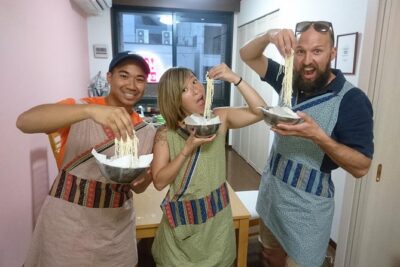
Eat Osaka: Street Food Cooking in an Authentic Kitchen!
Read our review →This tour also fits