
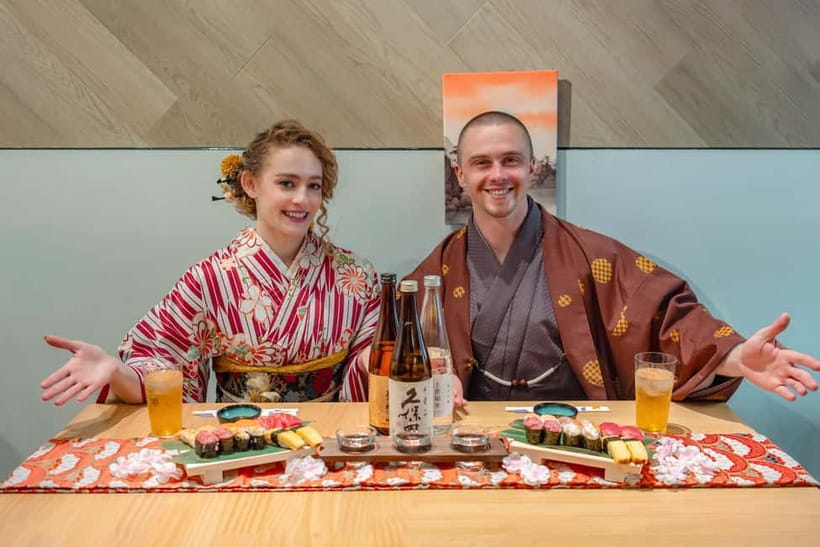
Reviewed · DOTONBORI EXPERIENCES
Osaka Dotonbori: Sushi Making Experience
Dotonbori sushi making turns sightseeing into a meal. In this 90-minute Osaka class, you learn by doing, from seasoned sushi rice to the final piece, and you finish with Japanese sake. It is a fun way to experience Japanese food culture without needing any prior skills.
I love the clear, step-by-step structure. You make sushi in the classic order, starting with shari (rice), then shaping, adding neta (topping), and forming the last piece with your fingers. I also like the extra layer of fun, including sushi cosplay, a photo moment, and a special gift, plus a sushi master certification.
One possible drawback to keep in mind: if you are very picky about raw seafood freshness, you might find the seafood is not to everyone’s ultra-high standard. It is still a solid class experience, just don’t expect fine-dining perfection every time.
In This Review
- Key things to know before you book
- Why Dotonbori sushi making is such a smart Osaka plan
- The 90-minute flow, shari to sushi master
- Step 1: Shari basics, vinegar, and the feel of good rice
- Step 2: Shaping shari into a base that holds up
- Step 3: Neta and wasabi, assembling without overthinking
- Step 4: Final shaping with your fingers
- Sake, cosplay, photos, and the stuff you do after the cooking
- Diet needs: vegan and halal sushi, plus allergy adjustments
- Price and value: is $45 a fair deal?
- Where this class fits in your Osaka itinerary
- Logistics you should understand before you show up
- Who should book, and who might hesitate
- Should you book this sushi making experience in Osaka?
- FAQ
- How long is the sushi making experience?
- How many pieces of sushi will I make?
- Is the class taught in English?
- Is Japanese sake included?
- Does the experience include sushi cosplay or photos?
- Are vegan and halal sushi options available?
- What is included in the price?
- Is wheelchair accessible?
- Is there an option to reserve now and pay later?
- How does cancellation work?
Key things to know before you book
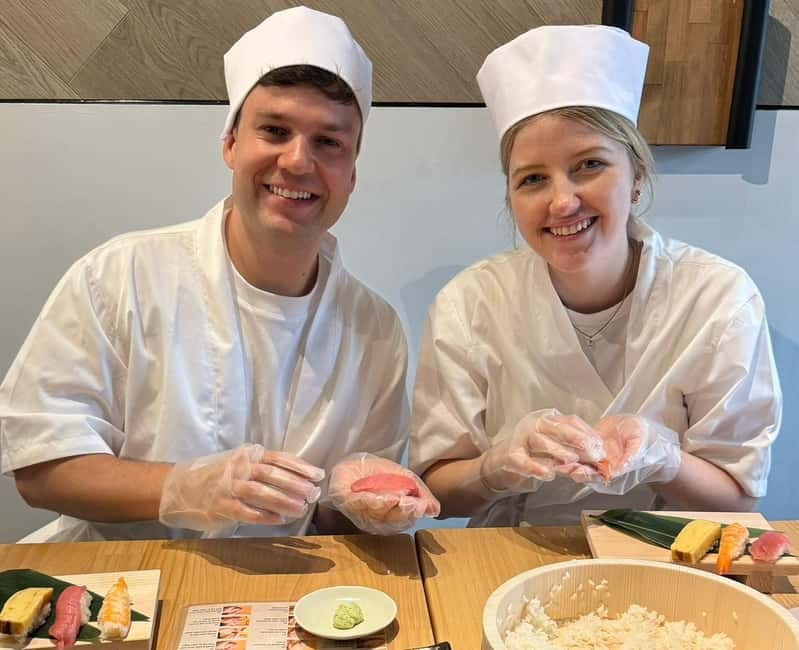
- 12 pieces of sushi you create yourself, so the payoff is immediate.
- English instructor with guided technique, including how to shape and assemble each piece.
- Sake included, which fits the whole Japanese food-culture angle of the lesson.
- Cosplay and photos, so you leave with more than just lunch.
- Vegan and halal sushi options are available, which makes it easier to plan with mixed groups.
- Sushi master certification adds a nice keepsake vibe.
Why Dotonbori sushi making is such a smart Osaka plan
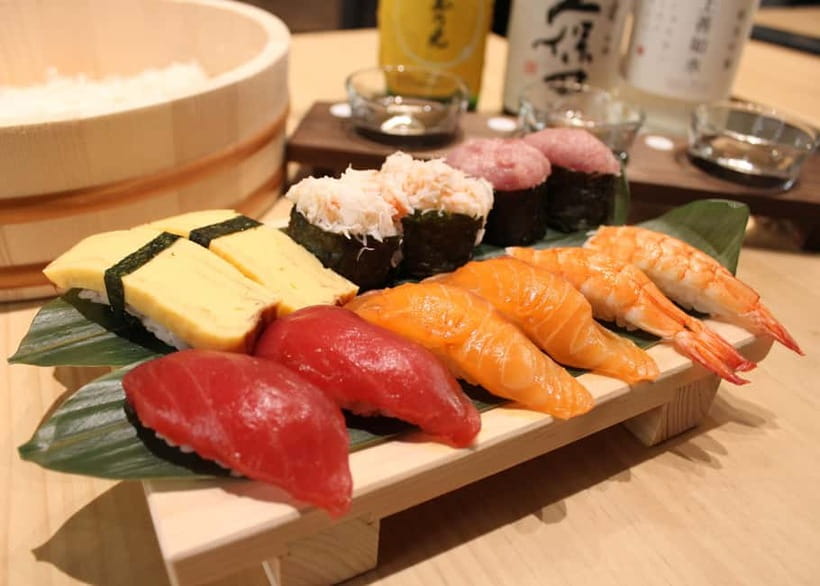
Osaka’s Dotonbori is famous for lights, smells, and that big-city energy. This class gives you a different kind of souvenir. Instead of only photos of the canal, you take home a hands-on skill, plus a meal you made yourself.
The big win is pacing. The session runs 90 minutes, and you do real work, not just watching. You start with shari, move to neta, and end up with a plate of sushi pieces you can eat right after learning.
I also like that the staff keeps things social. In the best moments, instructors are part teacher, part comedy timing. Names you might hear from the team include Mako, Saki, Mika, Yumiko, Yui, Kosei, Marko, and Anri. Even if your instructors differ, that variety tells you the experience is staffed and built for English-speaking groups.
Learn why the rice matters most
- Sushi Making Osaka Roll and Authentic Japanese Sushi Class★ 5.0 · 1,220 reviews
- Osaka Sushi Making Experience★ 5.0 · 400 reviews
- Osaka: Roll and Authentic Sushi Making Class in Dotonbori★ 4.9 · 239 reviews
- Osaka: Sushi Class in Dotonbori★ 4.9 · 160 reviews
- Osaka: Sushi Making in Spacious Studio (SAME-DAY OK!)★ 5.0 · 75 reviews
The 90-minute flow, shari to sushi master
Think of the lesson as a guided assembly line, but with hands-on details you can actually remember. Each stage has a purpose, and the sequence matters because sushi is about balance, not just ingredients.
Here’s the rhythm you’ll follow during the class:
- Make shari (sushi rice) by seasoning the rice with sushi vinegar.
- Shape the shari into the base you will build on.
- Add neta (topping) and combine it with wasabi where appropriate.
- Shape the final sushi using your fingers, so the piece looks right and holds together.
That order is a big deal for beginners. If you try to skip ahead, sushi stops making sense. But when you build step by step, you start to understand why Japanese cooks care about texture, temperature, and pressure.
Step 1: Shari basics, vinegar, and the feel of good rice
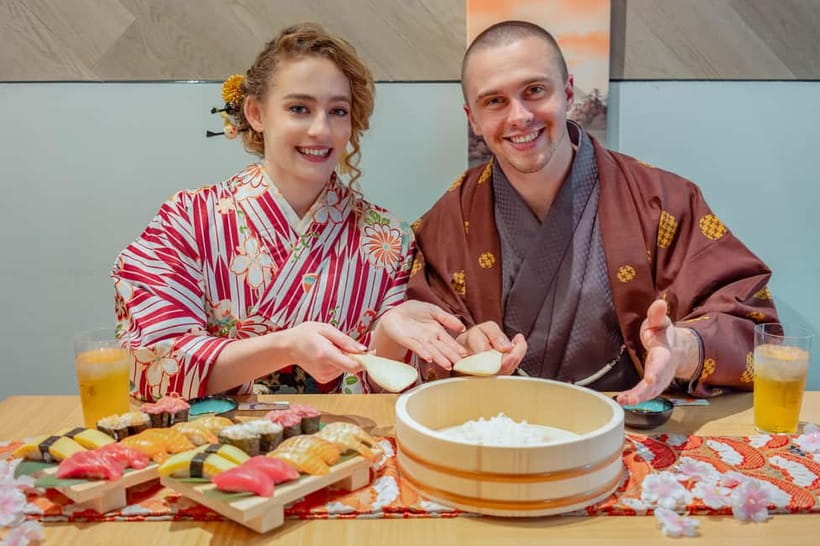
Shari is sushi rice, and the class puts it front and center. You pour sushi vinegar over the rice, and this is where the flavor comes from. It is also where you learn that sushi is not about heavy seasoning. It is about controlling taste with restraint.
You’ll handle the rice as you shape it, so you notice the texture shift. Too wet, and it sticks wrong. Too dry, and it crumbles. The instruction style is designed for people who have never made sushi before, and you get the chance to redo steps while the instructor corrects technique.
This is also where Japanese food culture shows up. Vinegar seasoning is a small change that creates a huge difference in how rice works with toppings. It is the kind of lesson you can repeat later at home with other rice-based dishes.
Step 2: Shaping shari into a base that holds up
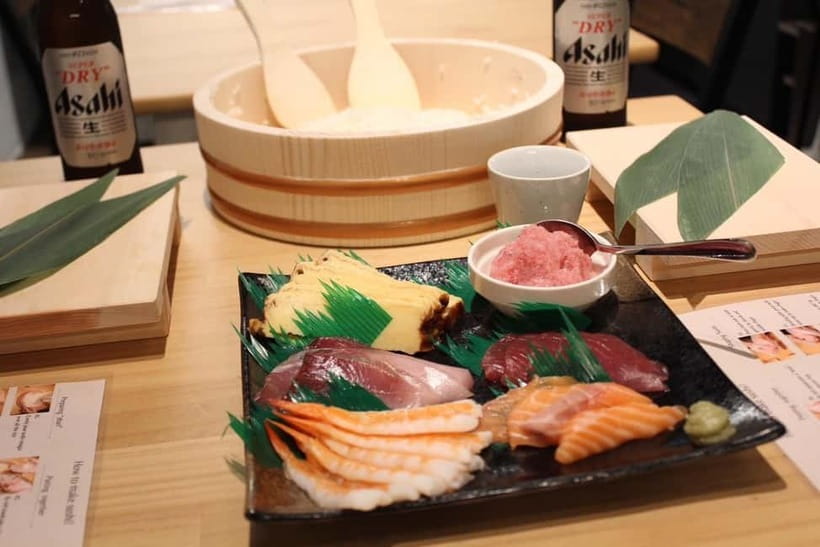
Once the rice is seasoned, you shape it into a workable base. This sounds simple, but it is not just rolling. Sushi shaping is about pressure and form. The goal is a piece that feels compact but not squished.
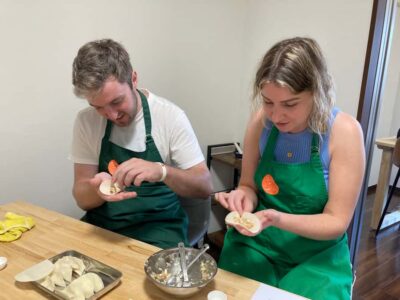
Your instructor will explain how to shape so the sushi stays together when you add neta. Several participants noted that the class makes the steps easy to follow, which matters because rice is the part most people mess up when they go solo.
If you want a quick tip for future you, it is this: pay attention to your hands. Sushi rice is a tactile skill. The more you notice how the rice behaves under your fingertips, the more your final pieces will look like sushi rather than rice balls with toppings.
Step 3: Neta and wasabi, assembling without overthinking
Next comes neta, the topping. You put the topping together with the shari, and wasabi plays a supporting role. The class keeps this part practical, so you are not standing there wondering what goes where.
This stage teaches an important concept: sushi is assembly, not mixing. You do not stir. You place. You combine. Then you shape the final piece so it reads correctly as sushi.
If you are learning for taste, this stage is your moment of truth. You find out whether your proportions work and whether your topping sits in a way that makes sense in each bite.
Also, the staff generally keeps the lesson lively. In one account, instructors simplified technique so it was easy to understand, and you could tell the team was used to teaching first-timers.
The glowing strip everyone photographs
- Osaka Local Foodie Walking Tour in Dotonbori and Shinsekai
★ 5.0 · 985 reviews - Osaka: Dotonbori District River Cruise with Drink Discount
★ 4.2 · 876 reviews - Ultimate Osaka Walking Tour: Castle, Dotonbori & Hidden Gems
★ 5.0 · 862 reviews
Step 4: Final shaping with your fingers
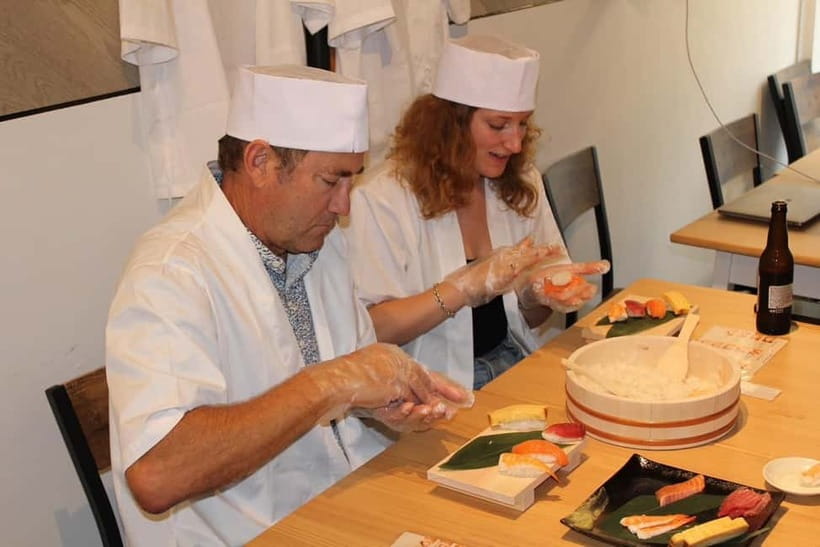
The last step is where sushi really becomes sushi. You use your fingers to shape the final piece so it has the right look and firmness.
For beginners, this is the part you might worry about most. Will it fall apart? Will it look weird? The point of a guided class is that you get correction while you are doing it, not after.
This final shaping stage is also why the 12-piece structure matters. You get enough repetition to improve within one session. Ten minutes into it, you feel clumsy. By the end, you are building pieces with more confidence.
Sake, cosplay, photos, and the stuff you do after the cooking
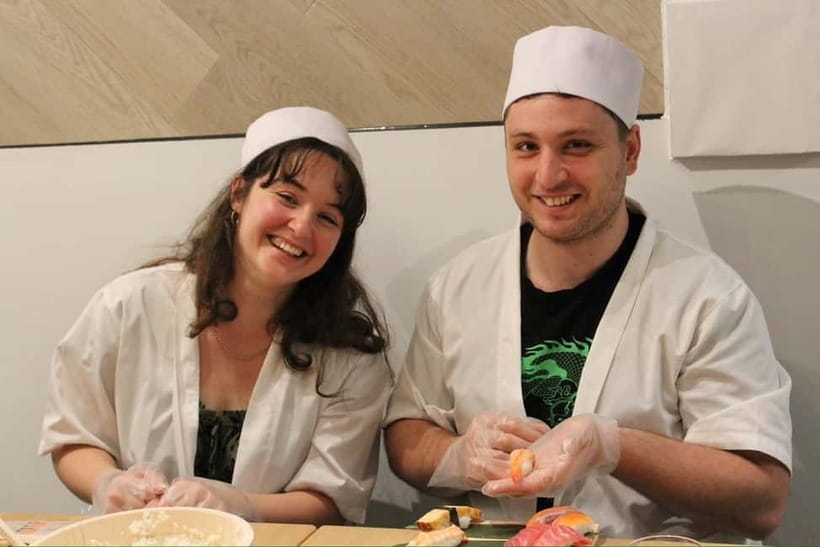
The class is not only cooking. You also enjoy Japanese sake as part of the experience. For many people, this is the bridge between food prep and Japanese food culture. It is not presented like a random add-on. It fits the theme of learning and tasting.
Then you get the playful extras:
- Sushi cosplay
- Photo session
- A special gift to take home
- A certification of sushi master
This is where the Dotonbori vibe clicks. You are in a place known for fun and spectacle, and the class leans into it without losing the hands-on food lesson.
If you are traveling with friends or family, the cosplay and photos give you something light to share right after you finish eating. And if you are traveling solo, it still works because the group portion of class time naturally creates interaction.
Diet needs: vegan and halal sushi, plus allergy adjustments
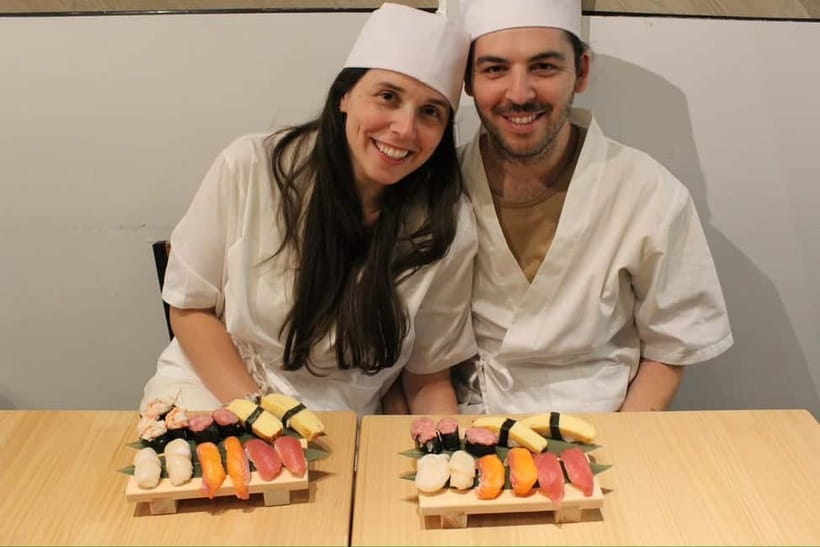
Good planning starts with diet options. This experience offers vegan and halal sushi. That is a big quality-of-life upgrade when you are eating in a country where menus often assume fish or pork.
One participant also mentioned gluten-free soy sauce for a gluten allergy. That does not guarantee every allergy will be handled the same way, but it is a strong sign the team can respond when informed.
Practical advice: if your group has specific needs, communicate them when you book. That way you are not stuck guessing once you arrive.
Price and value: is $45 a fair deal?
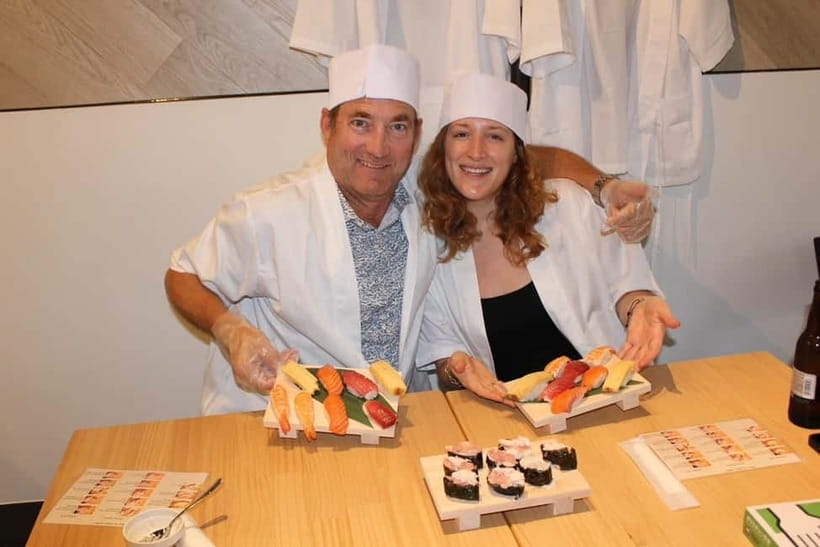
At $45 per person for 90 minutes, this class is not “cheap,” but it also is not just a demo. You get:
- Ingredients for 12 pieces of sushi
- English-led instruction
- Japanese sake
- Sushi cosplay, photo time, and a special gift
- A sushi master certification
Here is how I think about the value. Sushi classes that are only watch-and-eat can cost similar or more, but they do not give you repeat practice. This one lets you actively build the sushi. That means you leave with a plate of food you made, plus something you can try again later.
Also, it includes skip-the-ticket-line access, which helps if you are timing your Dotonbori day. In a city where you want to hop between sights, cutting friction matters.
If your budget allows one “experience meal” in Osaka, this is a solid candidate because it gives both learning and lunch.
Where this class fits in your Osaka itinerary
This is a great half-day anchor. It is short enough that you can still do Dotonbori sights before or after, and it gives you a break from wandering.
I’d place it in your plan when you want:
- a sit-down activity that still feels active
- food learning that does not require advanced skills
- something fun for groups, including teens
- a cultural experience centered on Japanese daily food habits
It is also a nice option on days when the weather is doing its unpredictable thing. You still get outside time around Dotonbori, but the cooking part keeps you comfortable.
Logistics you should understand before you show up
This class is in Osaka Dotonbori on Honshu, Japan. You are guided in English, and the session is wheelchair accessible. It also lists the ability to skip the ticket line and includes sushi-making materials.
Duration is fixed at 90 minutes, so you will want to choose a start time that matches your day. If you are trying to pack in lots of neighborhoods, the clean 1.5-hour block helps you avoid schedule stress.
One small practical consideration: one participant noted navigation could be tricky, and another mentioned the Google Maps location might need correction. If you are relying on your phone for directions, double-check the meeting spot name ahead of time so you are not hunting in Dotonbori traffic.
Who should book, and who might hesitate
This class is ideal if you:
- are curious about sushi technique, not just tasting
- want a do-it-yourself meal in Osaka
- like interactive activities like cosplay and photos
- need vegan or halal options
- want a beginner-friendly lesson with clear steps
You might hesitate if:
- you expect restaurant-level seafood freshness every single time, regardless of class style
- you dislike hands-on food prep (because you will shape, assemble, and build)
If you fall somewhere in the middle, I’d still try it. Sushi is one of those skills where the fun of learning often beats the fear of getting it imperfect.
Should you book this sushi making experience in Osaka?
If you want one memorable Osaka experience that ends with food you made, book it. The core value is the 12-piece sushi payoff plus the guidance that helps you actually get it right.
I’d especially recommend it if your group includes people who need vegan or halal choices, or if you want something more interactive than a standard meal. The sake + cosplay + sushi master certification combo makes it feel like a full experience, not a quick class.
Just go in with realistic expectations about freshness and focus. You are here to learn technique and have fun, not to judge raw seafood like a sommelier at a five-star counter.
If that sounds like your kind of day, this is one of the easiest ways to turn Dotonbori into dinner.
FAQ
How long is the sushi making experience?
The class lasts 90 minutes.
How many pieces of sushi will I make?
You will make 12 pieces of sushi.
Is the class taught in English?
Yes, the instructor teaches in English.
Is Japanese sake included?
Yes, you can enjoy Japanese sake with your sushi.
Does the experience include sushi cosplay or photos?
Yes, it includes sushi cosplay and a photo session.
Are vegan and halal sushi options available?
Yes, vegan and halal sushi are available.
What is included in the price?
The price includes all ingredients for 12 pieces of sushi, sushi cosplay, and sushi master certification.
Is wheelchair accessible?
Yes, the experience is wheelchair accessible.
Is there an option to reserve now and pay later?
Yes, you can reserve now and pay later, meaning you can book your spot and pay nothing today.
How does cancellation work?
You can cancel up to 24 hours in advance for a full refund.
Just added around Osaka


Dotonbori Experiences, compared.
Osaka Local Foodie Walking Tour in Dotonbori and Shinsekai
Read our review →
Dotonbori District River Cruise with Drink Discount
Read our review →
Ultimate Osaka Walking Tour: Castle, Dotonbori & Hidden Gems
Read our review →
Dotonbori River Cruise with Glico Sign & Neon Views
Read our review →
Roll and Authentic Sushi Making Class in Dotonbori
Read our review →This tour also fits