
Reviewed · TEA CEREMONY & MATCHA EXPERIENCES
Craft Sushi and Matcha Ice Cream in Central Osaka (3-Course Meal)
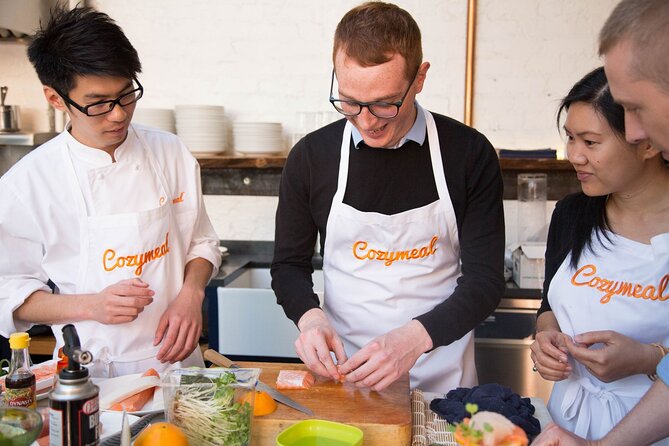
Sushi at your pace, not a show. This intimate cooking class in Osaka is built around a hands-on 3-course menu with a real chef teaching technique, not just serving you food. It is also sized like a small table lesson, so you get time to ask questions and actually practice.
What I like most is learning the details that make Japanese food taste right, starting with miso soup where you get to work with shaved katsuobushi. Then you move on to sushi that covers the main styles, so you are not only rolling one roll and calling it a day. One practical consideration: the sushi course includes raw fish, so if you avoid it for dietary or personal reasons, tell the organizers in advance so they can tailor what you make.
In This Review
- Key highlights you can plan around
- Meet in Yoshita, Higashiosaka, then cook in central Osaka
- Small group format: why max 6 people is worth paying for
- Course 1: Miso soup with tofu and bonito shaved for flavor
- Course 2: Craft sushi across futomaki, hosomaki, and nigiri
- What you will make and what you will use
- Futomaki: the thicker roll
- Hosomaki: the thin roll
- Nigiri: shaped sushi with a top
- One important practical note: raw fish
- The real payoff
- Course 3: Matcha ice cream with vibrant taste from matcha powder
- Timing and pacing: how 3 hours stays manageable
- BYOB in Osaka: what it means for your meal
- Price and value at about $104.72 per person
- What the venue and chef teaching style is like
- Who should book this Osaka sushi class
- Should you book: my practical verdict
- FAQ
- How long is the cooking class?
- What is included in the 3-course menu?
- Is alcohol included?
- Where do I meet for the class?
- What is the group size?
- Can dietary needs be accommodated?
Key highlights you can plan around
- You learn miso soup with shaved katsuobushi, not just a shortcut broth.
- You practice multiple sushi styles: futomaki, hosomaki, and nigiri.
- Matcha ice cream uses matcha powder, giving you a clear taste of traditional flavor.
- Small class size (max 6) keeps the pace realistic for hands-on work.
- BYOB is allowed, so you can bring a beer or wine to go with your meal.
Meet in Yoshita, Higashiosaka, then cook in central Osaka
The class starts at Yoshita in Higashiosaka (Osaka Prefecture), and the experience is described as being hosted in the heart of Osaka. For you, that matters because it is usually easier to build the rest of your day around a central cooking stop than a far-flung location.
Plan to arrive a bit early, even if you are familiar with Osaka transit. Cooking classes run on timing because sushi rice, rolling, and matcha dessert all have their own clocks. If you show up late, you can end up watching instead of doing.
Slow down for a bowl of matcha
- Tea ceremony experience in Osaka with a small group★ 5.0 · 8 reviews
- Live the Shōgun Story Samurai Knives and Tea Ceremony in Sakai★ 5.0 · 2 reviews
- Cultural Cooking Class Featuring Ramen Sushi and Tea Ceremony★ 5.0 · 2 reviews
- Osaka: Tea Ceremony Experience★ 4.9 · 1,426 reviews
- Tea Ceremony Experience in Osaka Doutonbori★ 5.0 · 754 reviews
Small group format: why max 6 people is worth paying for
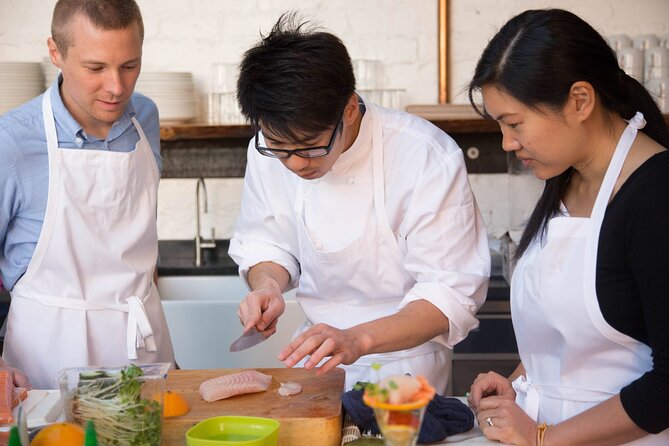
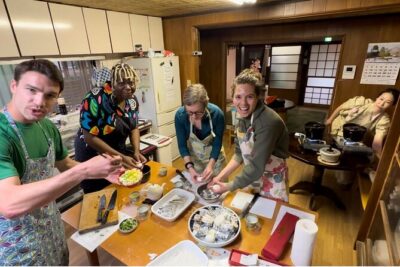
This is set up for a maximum of 6 people, which is a big deal in a sushi class. Sushi is hands-on, and the key steps are physical: spreading rice, handling nori, rolling tight, and shaping nigiri. In a larger group, someone tends to get rushed or watch more than they work.
Here, the structure supports a calmer rhythm for 3 hours. You get enough space to work comfortably and enough instructor attention to correct small mistakes before they turn into a wonky roll. That is the kind of practical benefit that improves the food and makes the lesson stick.
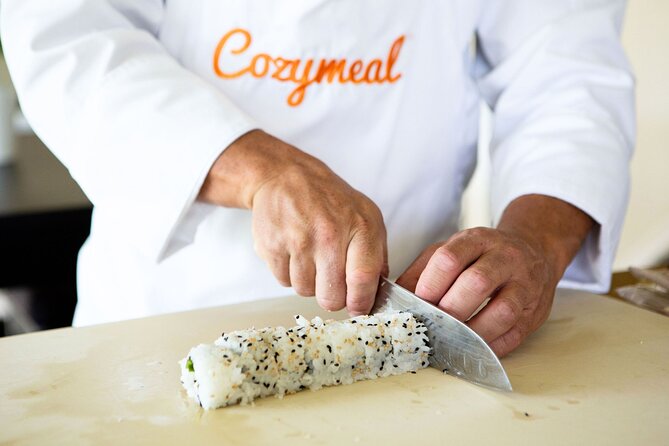
Also, it is listed as hosted through Cozymeal cooking classes, which typically means you should expect a straightforward start-to-finish format: welcome, instruction, cooking, then eating what you made. With a BYOB option, you are also not stuck with a dry, classroom-only vibe. Bring wine or beer if you want, since it is not included.
Course 1: Miso soup with tofu and bonito shaved for flavor
The first course is classic miso soup with tofu, using Japanese broth made from dried bonito that is shaved (katsuobushi). Even if you have had miso soup in restaurants, doing it step-by-step teaches you what the flavor is actually built from.
Why this matters for your cooking:
- Miso is not one-size-fits-all. The taste changes depending on how it is handled and when it is added.
- Bonito shaving affects aroma. Working with shaved katsuobushi helps you understand how subtle fragrance builds into the broth.
You also learn how the tofu fits into the bowl. In Japanese cooking, tofu is not just an ingredient, it is texture and balance. Getting it into the soup correctly helps it stay tender, not watery.
This course is a smart warm-up for the rest of the class. Your hands get used to the tempo of cooking, and your palate shifts from the outside world into Japanese flavors that feel lighter and more precise than many Western soups.
Course 2: Craft sushi across futomaki, hosomaki, and nigiri
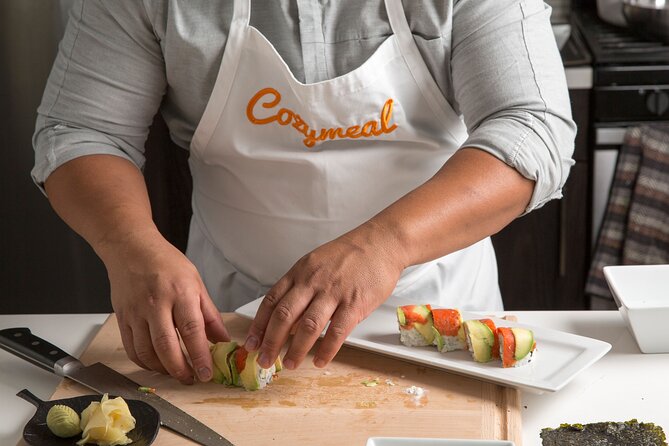
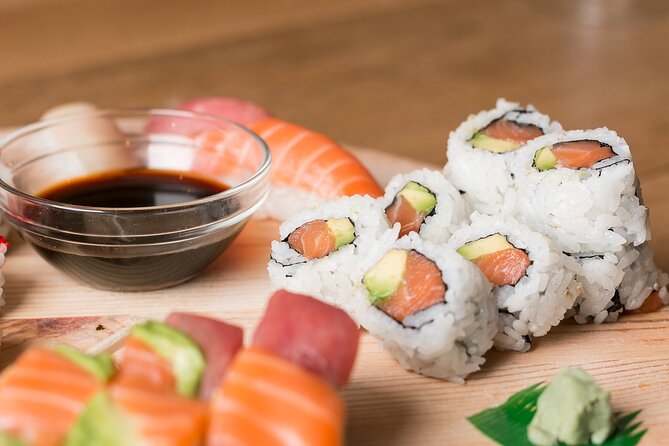
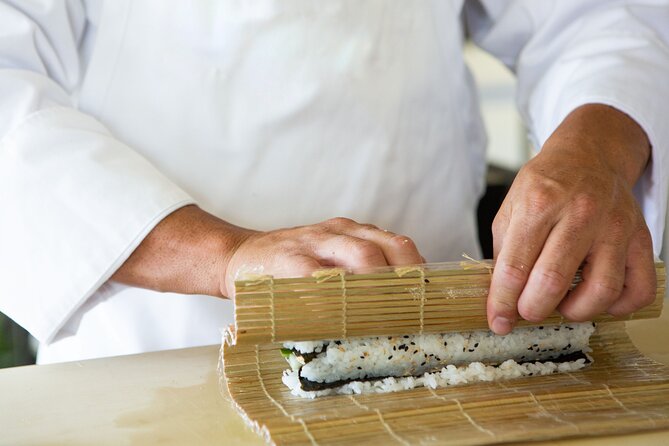
The main event is sushi, and the class covers a variety of styles: futomaki, hosomaki, and nigiri. Each one teaches you something different about technique, and that is why this class feels more complete than the “one roll and done” options.
What you will make and what you will use
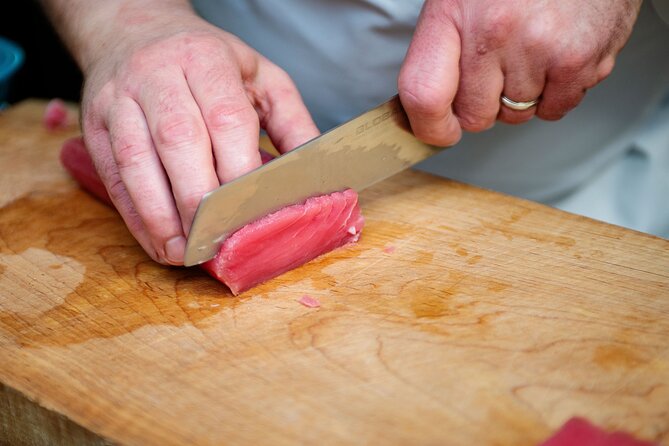
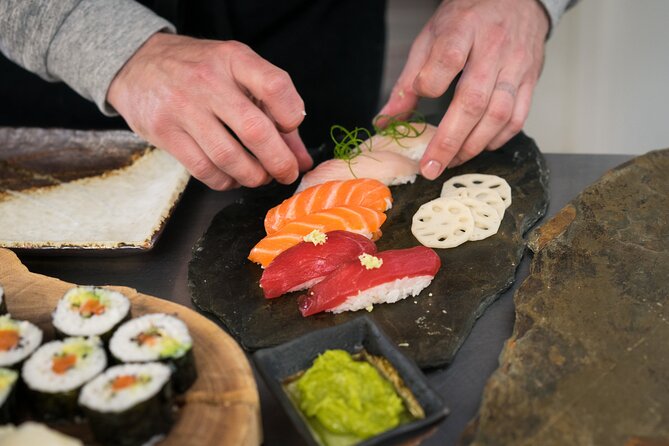
You work with Japanese rice, nori, avocado, cucumber, and fresh fish. That ingredient set is also useful for you at home later. It is classic and forgiving enough to practice, while still being real Japanese sushi structure.
Other ways to spend a day in Osaka
- Japanese Sweets Making Class in Osaka
★ 5.0 · 1 review - Matcha Making Class in Osaka with Authentic Japanese Sweets Set
★ 5.0 · 509 reviews - Osaka: Matcha Making Experience with Japanese Sweets
★ 5.0 · 146 reviews
Futomaki: the thicker roll
Futomaki is the larger, thicker roll style. It trains you to manage volume: rice distribution, filling layout, and how to roll without squeezing everything out. If you get one step wrong, futomaki shows it right away, so it is a great way to learn the feel of pressure and alignment.
Hosomaki: the thin roll
Hosomaki asks for a tighter, cleaner outcome. The roll is thinner, so you need control over how much rice you spread and how you keep the filling centered. It is also where you learn nori handling. Nori tears or fights you when it is treated like an afterthought. Here, you get to practice until it behaves.
Nigiri: shaped sushi with a top
Nigiri is the most hands-on in a different way. There is no rolling mat in the same sense. Instead, you shape the rice and top it with fish. That teaches you how sushi rice should feel, and how much pressure you should use so the rice holds together without becoming dense.
One important practical note: raw fish
Because the sushi course uses fresh fish and includes raw fish, make sure you are comfortable with that. If you are avoiding raw seafood, you should contact the organizers before the class. The experience is designed to accommodate a variety of dietary needs, but it is better to flag preferences early so your menu can be tailored.
The real payoff
By the end of this course, you should be able to explain what you did, not just replicate a finished roll. You will know why certain steps matter: rice temperature and texture, how rice clings, how nori wraps, and how filling placement changes the bite.
Course 3: Matcha ice cream with vibrant taste from matcha powder
Dessert is matcha ice cream made with matcha powder. This is a smart third course because it changes the sensory experience. Sushi can be salty and savory; matcha shifts you into a slightly bitter, creamy profile that feels very Japanese when done well.
You get hands-on experience making something that is simple on paper, but not trivial in real life. Ice cream is all about texture, and matcha powder affects both color and flavor intensity. Working with matcha powder helps you understand the ingredient’s punch. It also makes the flavor feel authentic rather than sweet and generic.
If you have never tasted matcha in dessert that comes from a real powder, this is a good lesson. You get to connect the dots between how matcha tastes in drinks and how it performs when turned into ice cream.
Timing and pacing: how 3 hours stays manageable
This experience runs about 3 hours. For you, that means the class is structured so you can learn multiple techniques without feeling like you are stuck in one long station.
A good cooking class pacing looks like this:
- First, learn the basics and settle into a rhythm (miso soup).
- Then, shift to a heavier craft task (sushi rolling and shaping).
- Finish with something that lets you taste the results quickly (matcha ice cream).
You should expect the lesson to move in phases, with instruction happening while you cook. That is why the small group matters again, because sushi and dessert tasks both need time and attention.
BYOB in Osaka: what it means for your meal
Alcohol is not included, but guests can bring wine and beer. That is a fun option if you like pairing. It also lets you control what you drink instead of feeling locked into whatever a class provides.
If you choose to bring something, keep it simple. You are there to cook and eat your own work, so you want to stay alert enough to follow steps and taste the food as it changes. A beer with sushi can work, but you do not want to overdo it while you are still shaping nigiri.
Price and value at about $104.72 per person
At $104.72 per person for a 3-course cooking class, you are paying for more than a meal. You are paying for:
- A chef who teaches multiple sushi techniques
- Ingredients for miso soup, sushi, and matcha ice cream
- A small group setup (max 6)
- Real practice time across futomaki, hosomaki, and nigiri
You are also getting structure. Instead of guessing how to balance rice, nori, and fillings, you learn the steps in a guided setting and then eat what you make. For many people, that is the value difference between a cooking class and a food tour.
If you enjoy skill-building vacations, the price feels easier to justify. If you just want to eat sushi without learning, you may find the class format less appealing than a restaurant meal. But if you want a take-home skill, this price sits in the “you actually used your hands” category.
What the venue and chef teaching style is like
The teaching style comes through clearly in the experience description and feedback patterns: the chef is patient, and the workflow is designed to feel manageable. People tend to highlight learning everything from shaving bonito for the soup to rolling futomaki, hosomaki, and nigiri, and even making the matcha ice cream.
That matters because sushi rolling can look intimidating from the outside. A good instructor breaks it down into small, repeatable actions, so it feels effortless by the end, even if it was tricky at first.
Also, the venue is described as beautiful. You should think of this as a real cooking space where you are set up to work comfortably, not a cramped counter that turns technique into a stress test.
Who should book this Osaka sushi class
This class is a great fit if:
- You want to learn multiple sushi styles, not just one roll
- You like cooking with clear technique and hands-on feedback
- You are excited by Japanese flavors beyond sushi, especially miso soup and matcha dessert
- You want a small class that gives you time to get details right
It may be less ideal if:
- You strongly prefer cooked seafood only, since the sushi course includes raw fish
- You want a food event with minimal effort, since this is about making and shaping
- You are short on time and cannot spare the full 3 hours
Should you book: my practical verdict
If you want an Osaka food experience that teaches you something you can repeat at home, I would book this. The combination of miso soup practice, multiple sushi techniques, and matcha ice cream gives you three distinct wins in one sitting. Add the small group limit, and you get the kind of instruction that usually makes the difference between a fun meal and real skill.
The one caution is the raw fish element. If that is a dealbreaker for you, confirm dietary tailoring before you commit. If you are comfortable with the food setup, this is a smart way to spend a few hours in Osaka and leave with a full set of practical sushi basics.
FAQ
How long is the cooking class?
The class lasts about 3 hours.
What is included in the 3-course menu?
You make miso soup with tofu, sushi that includes futomaki, hosomaki, and nigiri, and matcha ice cream made with matcha powder.
Is alcohol included?
No. This is a BYOB event, and you can bring wine and beer.
Where do I meet for the class?
The start point is Yoshita, Higashiosaka, Osaka 578-0924, Japan, and the activity ends back at the meeting point.
What is the group size?
The class has a maximum of 6 travelers.
Can dietary needs be accommodated?
Yes. The experience is designed to accommodate a variety of dietary needs, so you should let the organizers know in advance. Confirmation is received at booking.
Just added around Osaka



Tea Ceremony & Matcha Experiences, compared.
Matcha Making Class in Osaka with Authentic Japanese Sweets Set
Read our review →
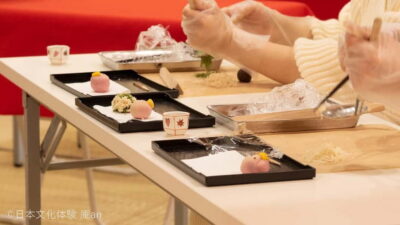
Japanese Traditional Sweets Making and Tea Ceremony
Read our review →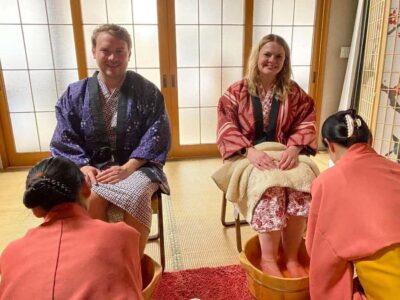
Osaka Temple Cool Foot Bath & Matcha Experience〈45min〉
Read our review →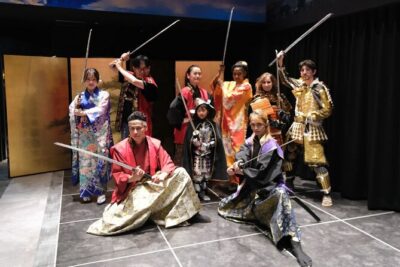
Samurai Show, Tea Ceremony, Japanese Traditional Activities
Read our review →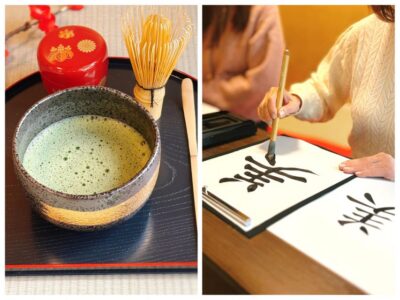
This tour also fits