
Reviewed · TEA CEREMONY & MATCHA EXPERIENCES
Live the Shōgun Story Samurai Knives and Tea Ceremony in Sakai
A trip to Sakai turns tradition into something you can hold. This private, 5-hour tour strings together samurai knives, tea ceremony, and seasonal Kaiseki in the historic city tied to blade craft and Sen no Rikyu. I like that it is not just looking, it is doing, and I also like how the day keeps moving so the history never feels heavy. One watch-out: the schedule runs as a full morning block, so if you prefer very slow pacing or minimal hands-on time, this may feel busy.
You will meet at 堺駅東口タクシー乗り場3 Chome Ebisujimacho, then head out to key Sakai spots before settling into lunch at Ume-no-Hana and a tea experience at Rishō-no-Mori. After that, the highlight shifts from stories to craft at Sakai Tōji, where you get hands-on with a knife handle fitting and take home your own engraved, personalized blade. If you are sensitive to traditional Japanese food, the tour is set up with vegan options, and in one standout experience a guide named Junya was flexible about what did and did not work for the group.
In This Review
- Key Highlights You Will Actually Feel in This Tour
- Why Sakai and the Shōgun Story Belong Together
- From 堺駅東口 to the Day’s First Lesson at Porto no Suke Bridge
- Porto no Suke Bridge: The Edo-Era Trade Angle That Makes Craft Make Sense
- Ume-no-Hana Kaiseki Lunch: Seasonal, Multi-Course, and Vegan Options
- Rishō-no-Mori Tea Ceremony: Where the Pace Drops for a Reason
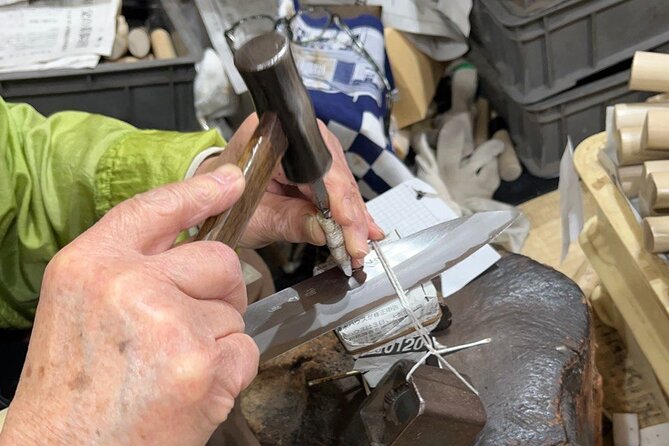
- Sakai Tōji Workshop: Hands-On Handle Fitting and Your Engraved Blade
- Xavier Park and the 16th-Century Missionary Thread
- Price and Value: What $379 Buys in a 5-Hour Private Day
- Who This Tour Is Best For (and Who Might Skip It)
- Should You Book This Samurai Knives and Tea Ceremony Tour in Sakai?
- FAQ
- What is the duration of the tour?
- Where does the tour take place?
- How much does the tour cost?
- Is this tour private?
- What time does the tour start?
- What ticket type is used?
- What food is included?
- Will there be a tea ceremony?
- Do I make or take anything home?
- What is the cancellation policy?
Key Highlights You Will Actually Feel in This Tour
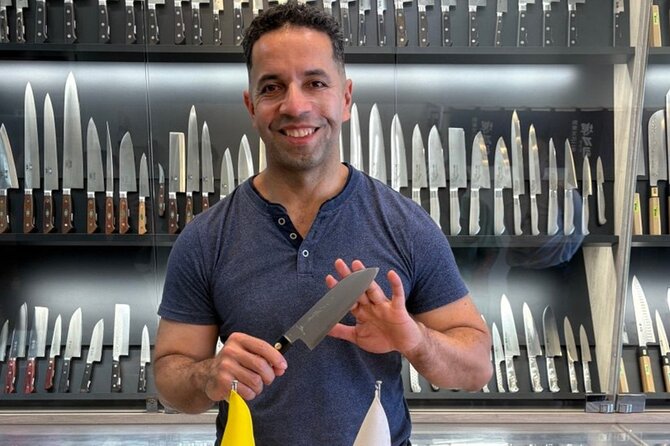
- Hands-on knife handle fitting at Sakai Tōji, not just watching
- Take-home engraved blade that turns craft into a real keepsake
- Seasonal Kaiseki lunch at Ume-no-Hana, with vegan options available
- Tea ceremony at Rishō-no-Mori as a quiet reset between workshop stops
- Edo-period trade context introduced around Porto no Suke Bridge
Why Sakai and the Shōgun Story Belong Together
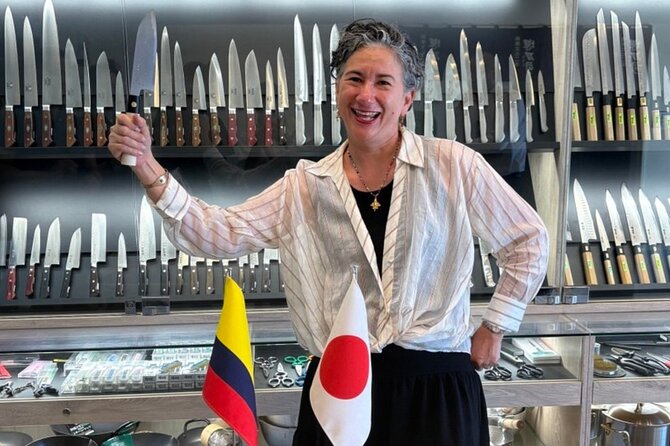
Sakai is one of those Japanese places where history is not stuck in a museum case. The city is closely connected to Japan’s knife culture and the kind of disciplined craftsmanship you associate with the samurai world. And the tour leans into that, tying each stop to how people built reputation through tools, trade, and ritual.
You also get a smart connection to tea culture through Sen no Rikyu, the tea master linked to the traditions of Japan. That matters because tea in Japan is not just a drink. It is etiquette, attention, and a slower way of being, which balances the sharper energy of blade making.
If you like travel days that mix food, craft, and context in a single arc, this one is designed for you. You are not hopping between random photo stops, you are walking through a story.
Slow down for a bowl of matcha
- Tea ceremony experience in Osaka with a small group★ 5.0 · 8 reviews
- Craft Sushi and Matcha Ice Cream in Central Osaka (3-Course Meal)★ 5.0 · 2 reviews
- Cultural Cooking Class Featuring Ramen Sushi and Tea Ceremony★ 5.0 · 2 reviews
- Osaka: Tea Ceremony Experience★ 4.9 · 1,426 reviews
- Tea Ceremony Experience in Osaka Doutonbori★ 5.0 · 754 reviews
From 堺駅東口 to the Day’s First Lesson at Porto no Suke Bridge
Your start point is very specific: 堺駅東口タクシー乗り場3 Chome Ebisujimacho, Sakai Ward, Sakai, Osaka 590-0985. Starting at 10:50 am, the tour keeps things tight and efficient, and you can relax knowing it is a private experience, so only your group participates.
From the meeting area, you head toward Porto no Suke Bridge. Even though you are not there long, it sets the frame for the entire morning. The bridge area connects to Sakai’s role as a trade hub during the Edo period, when goods, reputation, and skill traveled along routes and through ports.
Practical tip: if you are catching the tour by train, give yourself a little buffer to find the exact taxi stand number and nearby entrances. The tour runs for about 5 hours, so being late can compress your time at later stops.
Porto no Suke Bridge: The Edo-Era Trade Angle That Makes Craft Make Sense
Here is what I like about starting with trade instead of jumping straight into knives. Trade explains why Sakai’s reputation mattered, and why craftsmanship could become a kind of identity. When a city is known for quality goods, people notice, buy, and talk, which creates demand for better tools and better makers.
You learn this early, then you experience the results later when you are doing your own craft activity. That cause-and-effect structure is what makes the day feel cohesive.
One possible drawback is that if you only want hands-on crafting with no background, this historical setup may feel like a warm-up. But the history is brief, and it is there to help you understand what you are touching later.
Ume-no-Hana Kaiseki Lunch: Seasonal, Multi-Course, and Vegan Options
Lunch at Ume-no-Hana is a key part of why this tour feels full, not rushed. You get a multi-course kaiseki meal, and it is built around seasonal style. For most people, this is the moment where the experience shifts from “activities” to “Japanese taste and pace.”
The big practical advantage: vegan options are available. That is not just a checkbox. It helps you stay in the flow of the day without sacrificing the meal portion, which is often where group tours fall apart for people with dietary limits.
From a review highlight tied to this experience, a guide named Junya was flexible when someone in the group was not a fan of traditional Japanese food. That is a real strength, because it suggests the tour approach is not rigid. You are more likely to get a meal that works for your comfort level while still keeping the cultural core intact.
What to expect in terms of dining timing: kaiseki is a multi-course structure, so plan on a slower, paced lunch compared with a quick set meal. If you finish lunch with energy, the tea ceremony and workshop will feel calmer. If you rush it, you might feel behind for the rest of the day.
Rishō-no-Mori Tea Ceremony: Where the Pace Drops for a Reason
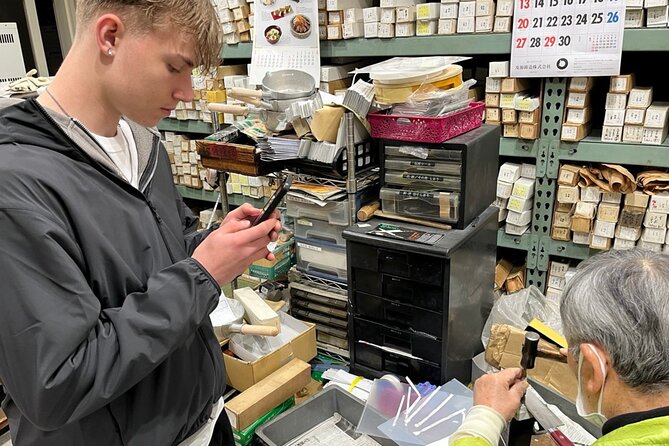
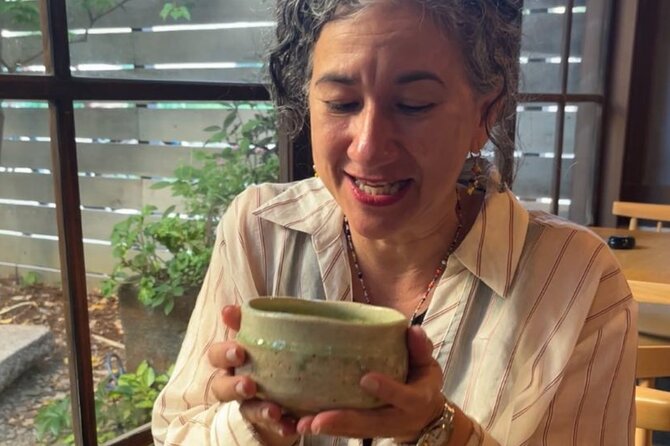
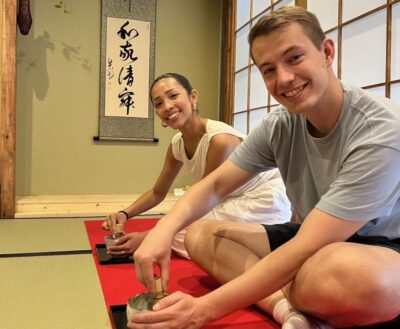
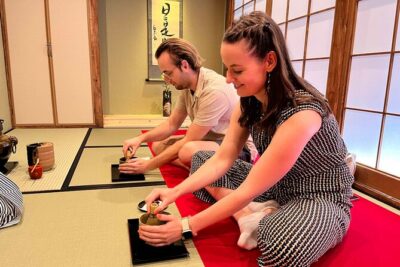
After lunch, you move into Rishō-no-Mori for a traditional Japanese tea ceremony. This is not a throwaway cultural stop. It functions like a palate cleanser for your brain, after the intensity of knives and before the hands-on workshop.
Tea ceremony practice is typically about attention, posture, and quiet focus. In other words, it is almost the opposite of fast sightseeing. You will likely feel your body slow down, which helps you appreciate what you do later when your hands get involved.
Practical etiquette pointers you can keep in mind, without overthinking: follow your guide’s cues, keep your phone away, and let the group flow through each step at the host’s pace. If you are unsure, watching first is your friend. Most of the value comes from staying present, not from performing perfectly.
Swing a sword like it's 1600
- Samurai Training Experience KENDO in Osaka
★ 5.0 · 515 reviews - OSAKA NIGHT FUSION Japanese Taiko Kabuki Samurai Dance Show
★ 4.8 · 155 reviews - Osaka: Samurai Training Experience KENDO in Osaka
★ 5.0 · 111 reviews
Sakai Tōji Workshop: Hands-On Handle Fitting and Your Engraved Blade
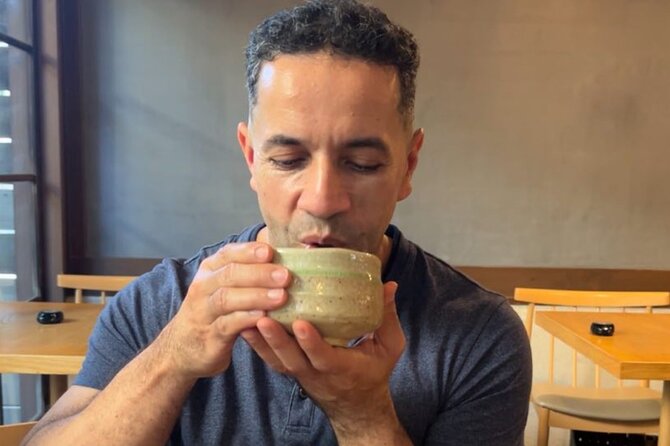
Now we get to the part that most people remember. At Sakai Tōji, the experience turns physical. You do a hands-on knife handle fitting, then you take home your own engraved, personalized blade.
This is exactly the kind of souvenir that feels worth the money. A mass-produced “knife-shaped” trinket is never the same as a made-to-keep piece linked to real craftsmanship. Your keepsake also becomes a conversation starter back home, because you can explain how it was created, not just where you bought it.
Since you are taking something you made, think ahead about transport. Bring a plan for how you will carry it safely from the workshop all the way back to your onward travel. If you are flying, keep it in your plans early, and follow Japanese export and airline rules if needed.
One more subtle value point: the handle fitting is a detail-driven activity. It forces you to understand that good tools are not only about the blade. The fit, feel, and finish matter, and that mindset connects back to the earlier trade and craftsmanship lesson.
Xavier Park and the 16th-Century Missionary Thread
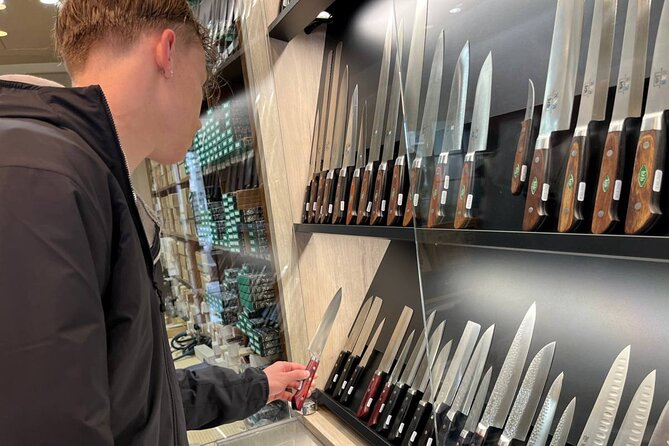
After the workshop, you take a short walk to Xavier Park. This stop shifts the tone again, from makers to visitors, from local craft to foreign contact in the 16th century. You learn the story of European missionaries, including Francis Xavier, who visited Japan during that era.
Why this belongs on the same tour: Sakai was a trade hub, and trade brings contact. It also brings influence, misunderstanding, and new ideas traveling alongside goods. By the time you reach Xavier Park, you have already seen how Sakai’s identity is shaped by what passes through it.
This part is shorter, so it is best for people who like a quick cultural “thread” at the end, rather than a long lecture. If you want only your hands-on craft time, you can treat this as a meaningful closing chapter.
Price and Value: What $379 Buys in a 5-Hour Private Day
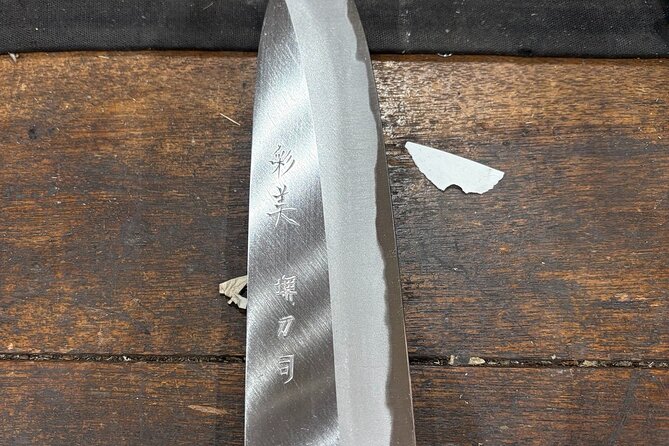
At $379 per person for about 5 hours, this is not a budget activity. But the value is easier to justify than it might look at first glance, because you are paying for a bundled day of experiences that includes:
- Lunch (multi-course Kaiseki) at Ume-no-Hana, with vegan options available
- A tea ceremony at Rishō-no-Mori
- A workshop experience at Sakai Tōji with hands-on handle fitting
- A take-home engraved, personalized blade
Most tours in this price range either focus on sightseeing or on a single workshop. Here, you get multiple cultural formats in one morning block, and it is private, meaning your group is not competing with strangers for attention or timing.
The tour also uses a mobile ticket, and it ends back at the meeting point. That last detail matters more than it sounds, because it reduces decision fatigue. You do not have to guess where to finish or how to get your day back into sync.
Who This Tour Is Best For (and Who Might Skip It)
I think this tour is especially good for you if you like:
- Japanese craft that you can take home and actually keep
- Food experiences that are more than just “eat somewhere near the station”
- Tea culture as a calm counterpoint to active making
- A guided flow that teaches history without turning into a lecture
It is also a great fit for people who want history explained clearly. In one highlighted experience, the guide named Junya made the city’s history fun and educational without dragging it out. That combination is rare, and it helps you stay interested through every stop.
You might consider skipping if you want a mostly outdoor, short-walk day with minimal instruction. This tour has structured activities, and you should expect to sit through lunch courses and the tea ceremony before you reach the workshop.
Also, if you are very sensitive to Japanese meal styles, double-check your preferences when booking. The tour does have vegan options, and flexibility is suggested in the experience highlights, but the best outcome comes from telling them what you need.
Should You Book This Samurai Knives and Tea Ceremony Tour in Sakai?
If you want one Sakai experience that feels genuinely cultural and keeps giving after you go home, this is a strong choice. The biggest reason is the take-home engraved blade, because it turns the day into something you own and remember, not just something you photographed.
I would book it if you like craftsmanship, are open to a multi-course lunch, and want a tea ceremony that slows the day down in a good way. And if you have dietary preferences, the vegan options plus the reported guide flexibility make it a safer bet than many culture-heavy tours.
If you only want light sightseeing and you do not care about making anything, you may find the workshop and tea ceremony length unnecessary. But if you want your travel day to feel like a real experience of Sakai, this one is built for exactly that.
FAQ
What is the duration of the tour?
The tour lasts about 5 hours.
Where does the tour take place?
It takes place in Sakai, Osaka Prefecture, Japan.
How much does the tour cost?
The price is $379.00 per person.
Is this tour private?
Yes. This is a private tour/activity, and only your group participates.
What time does the tour start?
The start time is 10:50 am.
What ticket type is used?
It uses a mobile ticket.
What food is included?
A delicious multi-course lunch at Ume-no-Hana is included, with vegan options available.
Will there be a tea ceremony?
Yes. You will experience a traditional Japanese tea ceremony at Rishō-no-Mori.
Do I make or take anything home?
Yes. At Sakai Tōji, you participate in a hands-on knife handle fitting experience and take home an engraved, personalized blade.
What is the cancellation policy?
The experience is non-refundable and cannot be changed for any reason.
Just added around Osaka



Tea Ceremony & Matcha Experiences, compared.
Matcha Making Class in Osaka with Authentic Japanese Sweets Set
Read our review →
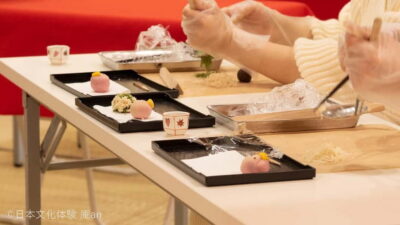
Japanese Traditional Sweets Making and Tea Ceremony
Read our review →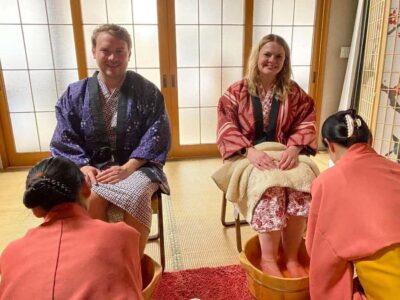
Osaka Temple Cool Foot Bath & Matcha Experience〈45min〉
Read our review →
Samurai Show, Tea Ceremony, Japanese Traditional Activities
Read our review →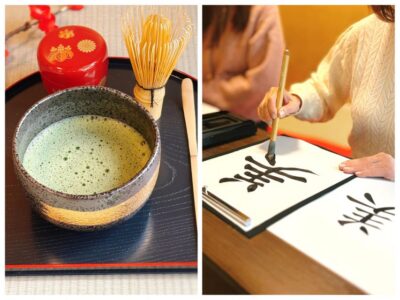
This tour also fits