
Reviewed · SUSHI MAKING EXPERIENCES
Enjoy a Basic Sushi Making Class
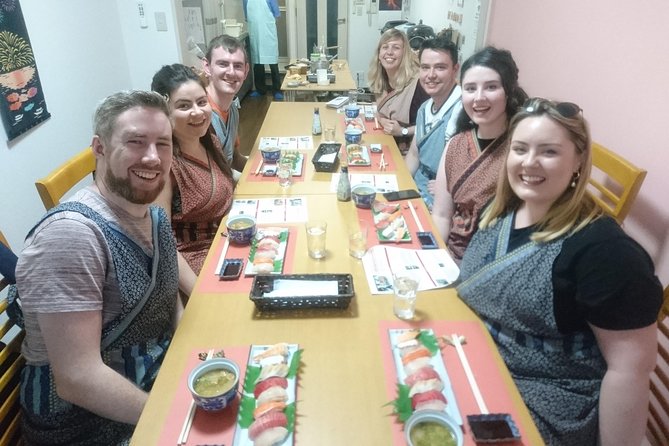
First time making sushi can feel like trying to tie a bowtie blindfolded. This Osaka class with chef Fumi turns that pressure into a clear, hands-on plan, so you can actually make 9 nigiri you’re proud of. I like that the group is tiny, eight people or fewer, which means you get real attention instead of watching over someone else’s shoulder. I also like the practical payoff: you finish by eating what you made, with green tea and sweets, plus a take-home recipe.
The main thing to consider is that this is a basic class. You are not signing up for advanced knife work or a long masterclass in seafood sourcing, so if you already cook sushi confidently, you might want a more specialized workshop.
In This Review
- Key points before you go
- Osaka at 5:30 pm, with a sushi plan you can follow
- Meet chef Fumi and your tiny cooking group
- Sushi rice in your own wooden tub, not a desk full of guesses
- Dashi and miso soup: the flavor backbone, built from scratch
- Nigiri sushi practice: making 9 pieces with step-by-step guidance
- The meal moment: Itadakimasu, seasonal dessert, and green tea
- The take-home recipe, plus a technique you can actually reuse
- Price and value: what you’re really paying for
- Logistics that matter: timing, meeting point, and what to tell them
- Who this Osaka sushi class suits best
- Should you book this basic sushi making class?
- FAQ
- What is the duration of the sushi making class?
- What time does the class start in Osaka?
- Where is the meeting point?
- How many people are in the group?
- What does the class include?
- Are ingredients provided?
- Can I bring a child to the class?
- Will I need to provide dietary information?
- Is the booking confirmed automatically?
- What is the cancellation policy?
Key points before you go
- Small group size (8 or fewer) for personal guidance while you build your sushi rice and nigiri
- Your own sushi rice setup with a wooden tub and paddle, so you practice step-by-step
- Whole flavor chain covered, from dashi to miso soup with shaped vegetables and tofu
- Hands-on nigiri practice, where the main section focuses on making 9 pieces
- You eat immediately, with chopsticks, Itadakimasu, green tea, Japanese sweets, and a seasonal dessert
Osaka at 5:30 pm, with a sushi plan you can follow
If your Osaka days are already packed with food stops, this class is a smart slot. It starts at 5:30 pm and runs about 2 hours, so you’re not giving up half a day. It also feels like a nice reset after touring, because the goal is simple: learn the steps, make the food, then sit down and enjoy it.
Location matters too. The meeting point is in Osaka’s Nishi Ward, at 1-chōme-17-20 Kitahorie, and it’s near public transportation. One extra perk I’d plan around is that the school is close enough to Dotonburi that you are not carving out a big detour just to reach class.
One practical note: you’ll be in cooking mode fast. You start by putting on an apron, then you begin the rice. If you show up hungry and with a calm mindset, you’ll learn faster and enjoy the pace more.
Learn why the rice matters most
- Sushi Making Osaka Roll and Authentic Japanese Sushi Class★ 5.0 · 1,220 reviews
- Osaka Sushi Making Experience★ 5.0 · 400 reviews
- Osaka: Roll and Authentic Sushi Making Class in Dotonbori★ 4.9 · 239 reviews
- Osaka: Sushi Class in Dotonbori★ 4.9 · 160 reviews
- Osaka Dotonbori: Sushi Making Experience★ 4.9 · 122 reviews
Meet chef Fumi and your tiny cooking group
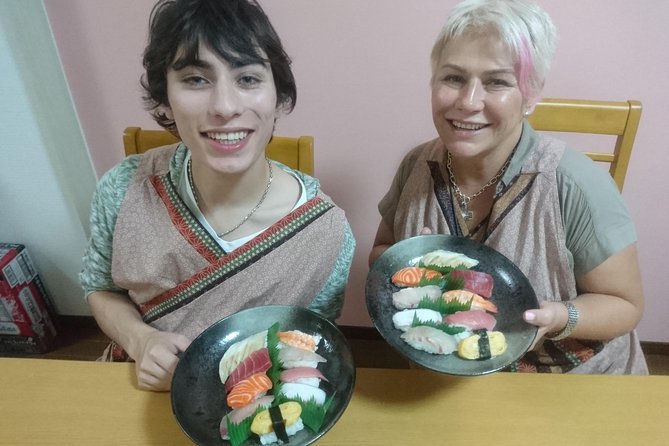
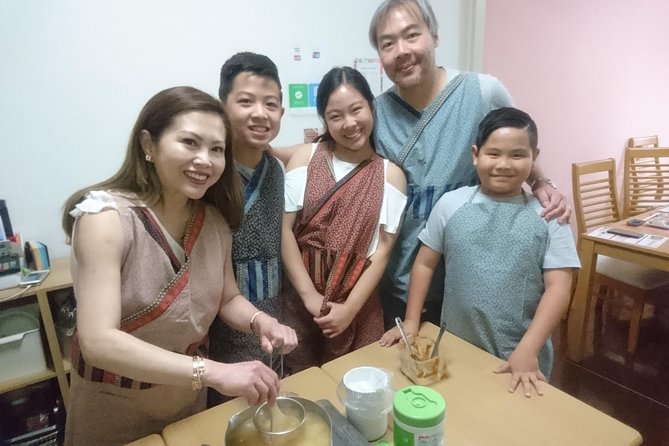
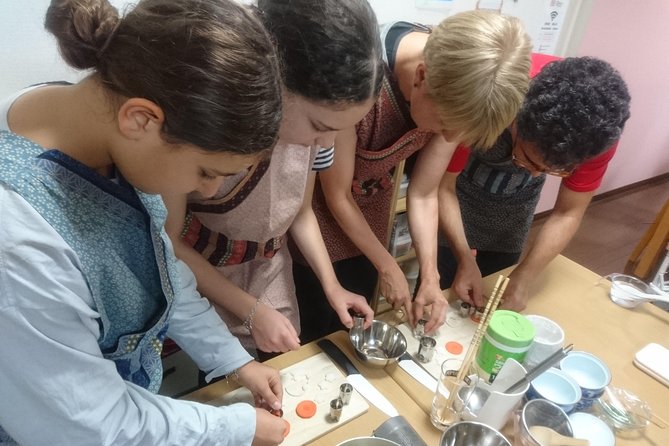
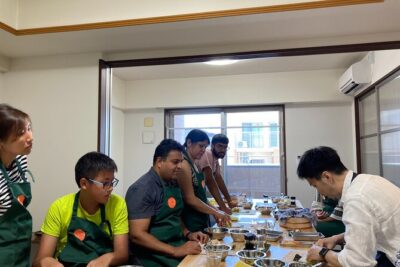
This is the kind of class where you can hear instructions without leaning in. With a maximum group size of 8, Fumi and the team can correct small issues early, like rice texture and how you handle the rice when shaping. That personal attention is the difference between a class that feels like a demo and one that actually teaches you.
In the reviews, Fumi is described as kind and good at explaining. That tracks with how this class is structured. The steps are broken into clear sections: sushi rice first, then the broth basics, then the nigiri building.
Also, you are not stuck with a big class vibe. You’ll be working at your own station, then moving together through key steps. It has that best-of-both-worlds feeling: shared cooking energy, plus enough space to make it yours.
Sushi rice in your own wooden tub, not a desk full of guesses
The class begins the way it should: with the rice. Before you shape anything, you wear your apron, then you start making sushi rice on your own.
Here’s what you’ll love if you’ve ever been intimidated by sushi at home. Each participant gets a wooden tub and paddle, so you can mix and handle the rice directly. That’s huge for beginners, because sushi rice is where most people get stuck. If the texture is off, everything after that feels harder.
You’ll work through the process yourself first, instead of copying someone else’s bowl and hoping it turns out right. Then you join the group for the next phase. This “solo practice inside a guided plan” format is a great way to learn without feeling lost.
Even if you think you know rice already, treat this as a technique lesson. What you are really practicing is how to handle warm rice so it stays workable. That’s the foundation for everything you’ll shape later.
Dashi and miso soup: the flavor backbone, built from scratch
After sushi rice, the class moves into traditional Japanese stock and soup. You’ll make dashi together, then everyone participates in making miso soup.
What makes this section worth your time is that it teaches you the logic behind Japanese flavor. Sushi rice is only half the meal. The broth and soup are the other half that makes everything taste like a real Japanese meal instead of just rice and seafood.
In particular, you’ll make miso soup with tofu and fancy shaped vegetables. That detail matters because it signals something about how Japanese meals are served. Even when ingredients are straightforward, presentation and balance are part of the experience.
If you’ve ever tasted miso soup and wondered why it tastes comforting but not heavy, this is where the answer starts. Dashi is the base that gives the soup its depth, and learning it hands-on makes it much easier to recreate later.
Nigiri sushi practice: making 9 pieces with step-by-step guidance
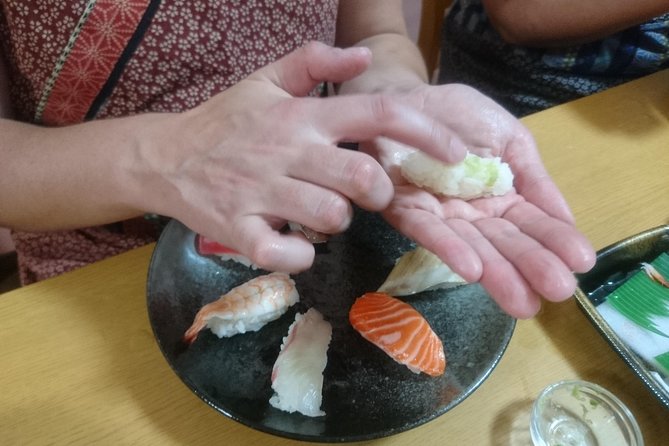
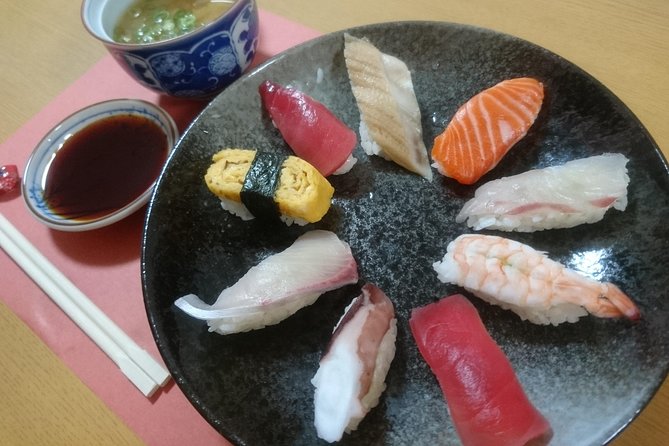
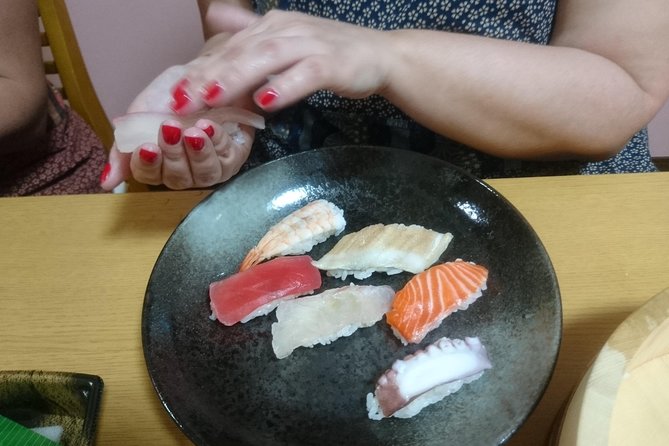
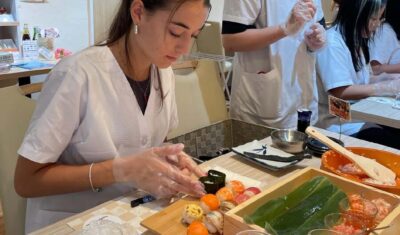
Now we get to the part most people sign up for: nigiri. This class’s main section teaches you to make 9 nigiri-sushi, step by step, so you finish with a full set rather than just one or two practice pieces.
For beginners, the real value isn’t only the final food. It’s the method: how you shape, how you handle the rice, and how you coordinate the pieces so they come out clean and even. With the small group size, you can get corrections while you’re still early in the process, not after you’ve already formed everything.
You’ll also get a sense of how nigiri works as a structure. Nigiri is not just a rice ball with fish on top. It’s rice texture, rice temperature, and gentle shaping that all need to work together. When you do it in class, you feel those cause-and-effect connections immediately.
And yes, the goal is that you can complete the pieces successfully. The class is designed so you leave with confidence, not just memories of tasting sushi.
Other ways to spend a day in Osaka
- Matcha Making Class in Osaka with Authentic Japanese Sweets Set
★ 5.0 · 509 reviews - Osaka: Ramen and Gyoza Cooking Class in Dotonbori
★ 5.0 · 378 reviews - Osaka Cooking Class: Okonomiyaki &Japanese cuisines experience
★ 5.0 · 261 reviews
The meal moment: Itadakimasu, seasonal dessert, and green tea
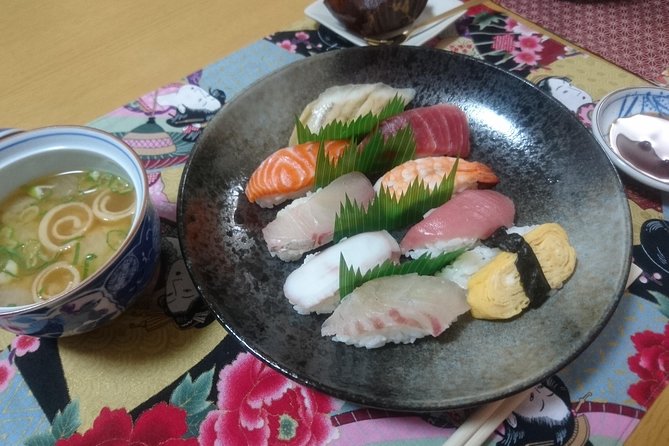
Once your nigiri is done, you place everything on dishes with chopsticks. Then you say Itadakimasu and eat your creation.
This is a small thing that makes a big difference. Doing the meal as part of the lesson keeps it from feeling like a school project. You learn the food, then you experience it as food, right away.
You’ll also have green tea and Japanese sweets during the class experience. At the end, there is complimentary seasonal dessert. That dessert detail is a nice touch because it reminds you that Japanese meals often end with something light and seasonal rather than another heavy sweet.
If you like food with context, you’ll appreciate the pacing here. You’re not rushed. You cook in sections, then you eat in one clear finish. It’s a comfortable way to learn cooking without getting tired.
The take-home recipe, plus a technique you can actually reuse
At the end, you receive a take-home recipe so you can recreate your sushi later. For me, that’s one of the best parts of cooking classes that actually teach. Ingredients can be bought in Japan, but technique is what you need after you go home.
In this class, the recipe is your bridge back to real life. You can review it the same day while your hands still remember the steps, especially if you took mental notes during shaping.
Also, because you made your sushi rice separately in your own wooden tub, you’ll have a clearer reference point for what to aim for. That makes the next attempt at home less random.
If you enjoy practical skills while traveling, this is the kind of class that pays off later. You won’t just think about Osaka food when you return home, you’ll be able to make part of it.
Price and value: what you’re really paying for
The price is $70.60 per person for about 2 hours. That’s not a casual coffee-and-treat cost. But for a beginner-friendly, hands-on class, it can be good value if you look at what’s included and what you avoid.
You are paying for:
- all ingredients for the sushi meal
- guided step-by-step cooking
- a small group setup (8 or fewer)
- your own tools for rice making (wooden tub and paddle)
- green tea, Japanese sweets, and a seasonal dessert
- a take-home recipe
A class like this also saves you time. If you tried to learn sushi on your own while sightseeing, you would spend that time hunting ingredients and guessing technique. Here, the work is organized and supported.
Finally, the class location helps value indirectly. It’s near Dotonburi, so you can plan it around a major sightseeing area without turning your evening into an exhausting transit puzzle.
Logistics that matter: timing, meeting point, and what to tell them
Start time is 5:30 pm, and the class ends back at the meeting point. That makes it easier to plan dinner afterward, especially if you are already in the Dotonburi area.
The meeting address is 1-chōme-17-20 Kitahorie, Nishi Ward, Osaka, 550-0014, Japan. It’s near public transportation, which you’ll appreciate if you’re riding trains between food stops.
If you have dietary requirements, you should advise them at booking. That’s especially important because the class includes broth, tofu, sweets, and meal components. Better to communicate early than to improvise later.
Children must be accompanied by an adult, so plan accordingly if you’re traveling with kids.
Who this Osaka sushi class suits best
This is ideal if you:
- are a beginner and want a structured, step-by-step sushi experience
- like learning by doing, especially when someone can correct your technique
- want a small-group food class with a real meal at the end
- are short on time but still want a hands-on cooking moment
It’s also a strong match if you enjoy Japanese meals beyond sushi. Dashi and miso soup are included, and you’ll taste how the meal connects.
If you’re already making sushi at home with confidence, you might still enjoy it, but you’ll likely come more for the fun of the experience and the meal than for major new technique.
Should you book this basic sushi making class?
Yes, if you want a beginner-friendly sushi class that feels practical and satisfying. The biggest reasons to book are the small group size, the hands-on rice practice in your own wooden tub, and the fact you leave with a full set of nigiri plus soup and sweets. It’s structured cooking, not vague instructions.
Skip it only if you want advanced sushi training or super deep technical focus on seafood cutting and specialty sourcing. This class is built for learning the essentials and getting results you can eat right away.
If your Osaka trip includes Dotonburi, I’d also consider it because it fits neatly into an evening schedule and keeps travel friction low.
FAQ
What is the duration of the sushi making class?
It lasts about 2 hours.
What time does the class start in Osaka?
The start time is 5:30 pm.
Where is the meeting point?
The meeting point is 1-chōme-17-20 Kitahorie, Nishi Ward, Osaka, 550-0014, Japan. The class ends back at the meeting point.
How many people are in the group?
The maximum group size is 8 travelers.
What does the class include?
You’ll learn to make sushi rice, make dashi and miso soup, and make 9 nigiri-sushi. The experience also includes green tea and Japanese sweets, plus a take-home recipe and complimentary seasonal dessert.
Are ingredients provided?
Yes, all ingredients for a sushi meal are provided.
Can I bring a child to the class?
Children must be accompanied by an adult.
Will I need to provide dietary information?
You should advise any specific dietary requirements at time of booking.
Is the booking confirmed automatically?
Confirmation is received within 48 hours of booking, subject to availability.
What is the cancellation policy?
Free cancellation is available. You can cancel up to 24 hours in advance for a full refund. If you cancel less than 24 hours before the start time, the amount paid is not refunded.
Just added around Osaka


Sushi Making Experiences, compared.

Sushi Making Osaka Roll and Authentic Japanese Sushi Class
Read our review →
Roll and Authentic Sushi Making Class in Dotonbori
Read our review →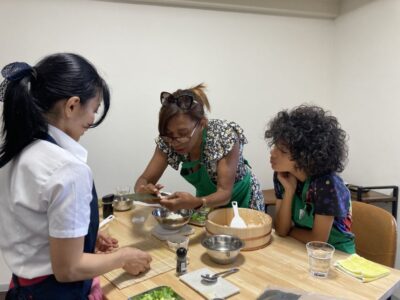
Make Sushi and Create Unforgettable Memories in Osaka
Read our review →This tour also fits