
Reviewed · DOTONBORI EXPERIENCES
Sushi Class in Osaka Dotonbori
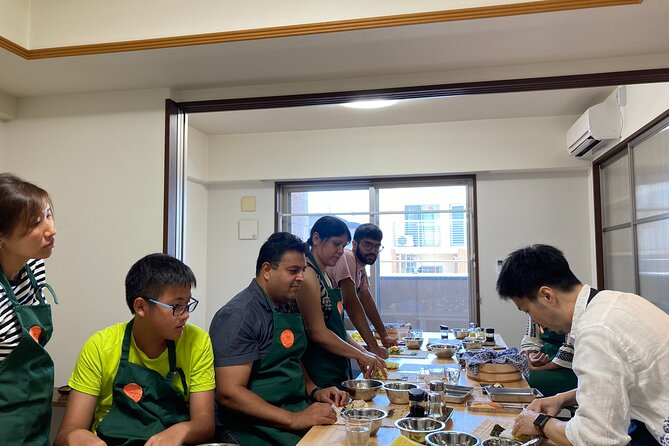
Learning sushi in Osaka beats eating alone. In this Dotonbori class with Cooking Sun, I like the small-group setup and the hands-on coaching that walks you through making three real sushi styles. One thing to plan for is the location, since it is inside a building and can be a tiny bit tricky to find.
What makes it especially worth your time is that ingredients are prepared for you, you get an apron, and you finish by eating what you made with miso soup. You can also request vegetarian options (with eggs or no eggs) and a gluten-free option when you book, so the class works for more diets than the typical sushi counter experience.
In This Review
- Key things you will love
- Finding Room 807, Cooking Sun, in Dotonbori
- Inside a 3-Hour Sushi Class That Actually Teaches
- Sushi #1: Salad Roll with Kamaboko, Nori, and a Tamagoyaki Core
- Sushi #2: Nigiri, Vinegared Rice and Toppings on Top
- Sushi #3: Oshi-Zushi (Pressed Sushi), Osaka Box Sushi
- Teachers You Can Actually Ask Questions To
- Your Meal: What You Eat at the End
- Price and Value: $71.16 for 3 Hours of Real Skill
- Who This Sushi Class Fits Best in Osaka
- Should You Book This Sushi Class in Dotonbori?
- FAQ
- What time does the sushi class start?
- How long is the experience?
- What is the group size?
- What kinds of sushi will I make?
- Do they offer vegetarian or gluten-free options?
- Where exactly do I meet the instructor?
- Is the ticket digital?
- Is there free cancellation?
Key things you will love
- Three sushi styles in one session: salad roll, nigiri, and Kansai-style pressed sushi (oshi-zushi)
- Small class size (max 8) for more hands-on help as you go
- Ingredients are prepped for you, plus an apron so you can focus on technique
- Vegetarian and gluten-free requests available if you plan ahead when booking
- Miso soup included so your meal is built from your own work
Finding Room 807, Cooking Sun, in Dotonbori
You start at Cooking Sun in Chuo Ward, Shimanouchi, near Dotonbori (meeting location is listed as Cooking Sun, Osaka 542-0082). The class meets inside a building called Masters Residence Dotonbori I, in Room 807. When you arrive, you need to press 807 and then the 呼出 (call) button to have the door opened.
This is the one part I would not rush. The main reason is simple: the place is not right on a street corner. A couple of practical tips help a lot:
- Arrive a few minutes early, so you have time to find the right entrance and room.
- If you use Google Maps, double-check you are at Masters Residence Dotonbori I and not the neighboring building that looks similar from street level.
Once you are inside, the vibe turns friendly fast. The class is set up for participation, and the group size stays small enough that you are not watching from a distance.
Learn why the rice matters most
- Sushi Making Osaka Roll and Authentic Japanese Sushi Class★ 5.0 · 1,220 reviews
- Osaka Sushi Making Experience★ 5.0 · 400 reviews
- Osaka: Roll and Authentic Sushi Making Class in Dotonbori★ 4.9 · 239 reviews
- Osaka: Sushi Class in Dotonbori★ 4.9 · 160 reviews
- Osaka Dotonbori: Sushi Making Experience★ 4.9 · 122 reviews
Inside a 3-Hour Sushi Class That Actually Teaches
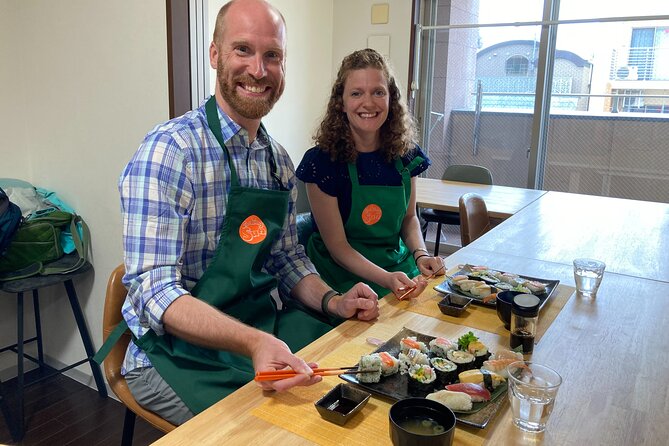
The session runs about 3 hours, starting at 9:30 am. It is built like a workshop, not a quick demonstration. You will be guided through each sushi type, with step-by-step help from the instructors, and you get chances to do the key tasks yourself.
You should expect three phases:
- A quick orientation and setup so you understand how sushi rice and toppings are handled.
- Hands-on making of three sushi styles, one by one.
- Eating your finished sushi, plus miso soup.
Since this is a maximum of 8 travelers, you usually get more direct attention when your hands get sticky (which they will, at least once). In multiple experiences, the teachers were patient with questions, spoke clearly, and kept things at a pace that works for beginners.
If you are traveling solo, this style of small-group class is also a good fit. You can participate fully without needing a group of friends to feel comfortable.
Sushi #1: Salad Roll with Kamaboko, Nori, and a Tamagoyaki Core
Your first build is a sushi roll that is more “assembly-forward” than you might expect. The salad roll includes:
- Crab-flavored kamaboko
- Lettuce and cucumber
- Avocado and tuna mixed with mayonnaise
- Nori
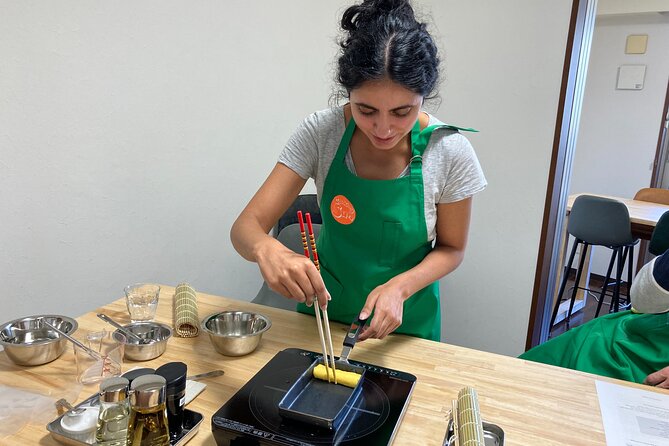
- A core of tamagoyaki, the Japanese rolled egg
The cool part here is how the ingredients work together. The tamagoyaki core gives you structure and a sweet-savory egg note. The rest brings crunch (lettuce, cucumber), creaminess (avocado, mayo), and that gentle seafood flavor.
This is also where you learn technique you can reuse later at home. Even if you never make sushi again, you’ll understand how to:
- Arrange fillings so every bite has the right mix.
- Use nori as the wrap that holds everything together.
- Keep the roll tight without turning it into a crushed mess.
The instructions you get matter. People consistently highlight how calm and slow the teaching is, and how it stays beginner-friendly even if you have never rolled sushi before.
Sushi #2: Nigiri, Vinegared Rice and Toppings on Top
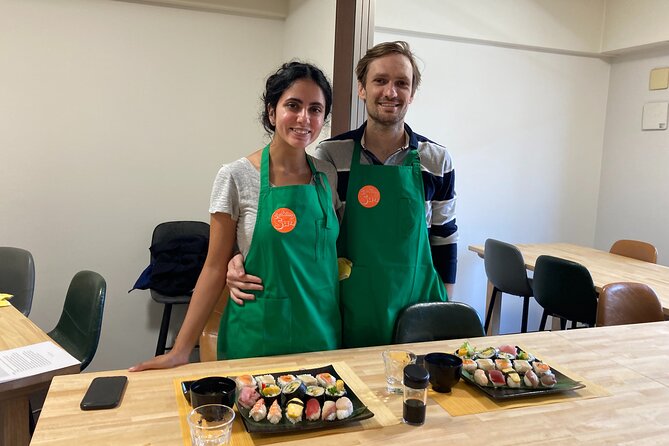
Next comes nigiri-zushi, one of Japan’s representative sushi styles. Nigiri is simply vinegared rice topped with sushi ingredients. In your class, you focus on the technique of placing topping on rice so it feels balanced and bite-sized, not random and lopsided.
The basic formula is:
- Vinegared sushi rice as the base
- Toppings placed on top, such as fish, shellfish, and omelet types (you will follow the class’s prepared set)
What you learn with nigiri is hand control. It is less about wrapping and more about shaping and pressing gently enough that the rice holds together with the topping. You also learn how nigiri is meant to be eaten fresh, not stored.
A nice detail here is how the teachers explain what is happening as you build. Some instructors even share fun regional notes and sushi background, including how sushi styles differ by area. In one experience, an instructor named Yoshi guided the class and helped people understand what they were making, not just how to assemble it.
Sushi #3: Oshi-Zushi (Pressed Sushi), Osaka Box Sushi
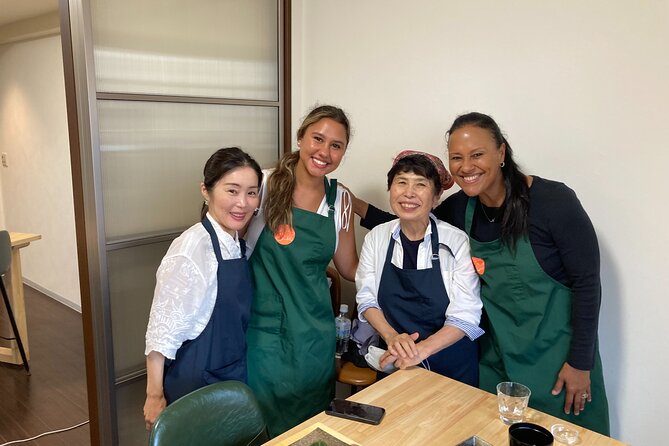
This third sushi is the “wait, I can do that?” moment for many people. In Kansai, pressed sushi is especially traditional, and in Osaka it is still popular as box sushi.
The method is different from rolling or shaping nigiri:
- Fill a square wooden frame with sushi rice and toppings.
- Press it so the rice sticks to the toppings.
- Lift out a finished square piece.
- Cut it into smaller pieces just before eating.
Because the final product is a square, you’ll see the contrast between this style and the other two. It is almost like sushi meets a craft project. You get a tangible result, and the pressing step is oddly satisfying once you get the hang of it.
This is also where you appreciate why the class includes hands-on coaching. The pressing technique and timing are not something you can guess correctly from watching one minute of video. With direct help, it becomes doable even if you are a total beginner.
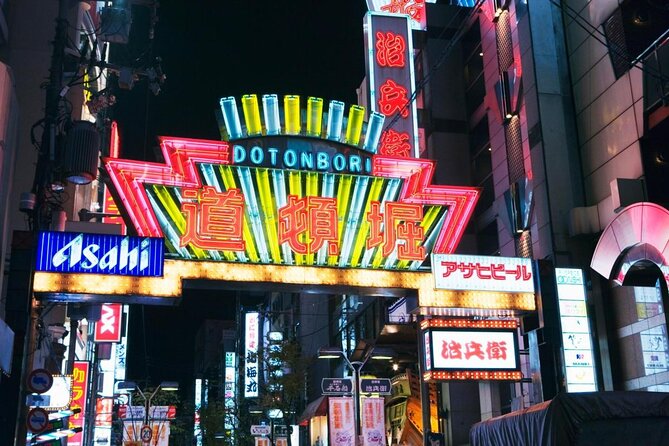
The glowing strip everyone photographs
- Osaka Local Foodie Walking Tour in Dotonbori and Shinsekai
★ 5.0 · 985 reviews - Osaka: Dotonbori District River Cruise with Drink Discount
★ 4.2 · 876 reviews - Ultimate Osaka Walking Tour: Castle, Dotonbori & Hidden Gems
★ 5.0 · 862 reviews
Teachers You Can Actually Ask Questions To
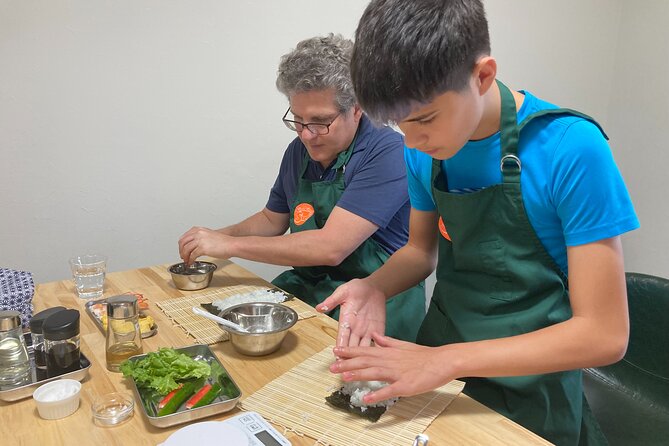
One reason people rate this class so highly is the teaching style. Multiple experiences point out instructors who:
- explain in clear, patient steps
- speak slowly enough for questions
- help people who struggle with basics, without rushing
In one highlighted experience, the class was run by Sakura cook, with a chef and assistant who communicated well in English. Other accounts mention Ami and Jaimi as instructors, and note how patient they were with both adults and a 12-year-old participant.
Even if you already know sushi exists, you may not know what makes a good sushi texture. These classes help you connect the dots: how vinegared rice behaves, how toppings sit, and why each sushi type is built the way it is.
This is the point where a class like this beats a restaurant meal. At the end, you are not just full. You understand the small choices that create the final bite.
Your Meal: What You Eat at the End
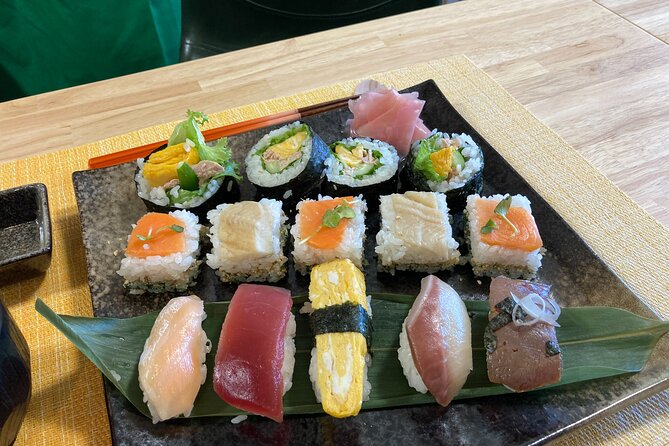
At the finish, you eat the sushi you made. That is not a “taste test,” it is your meal.
You also get miso soup alongside the sushi. This matters more than it sounds. Miso soup is warm, comforting, and it balances the flavors of seafood, mayo, egg, and rice. After a hands-on session, a hot bowl of something simple is exactly right.
You’ll likely feel full fast, because rice-based sushi plus soup is a real meal. In many write-ups, people call out how filling the end result is, which is a helpful expectation to set before you plan the rest of your day.
Price and Value: $71.16 for 3 Hours of Real Skill
The class costs $71.16 per person and runs about 3 hours. That sounds like a lot if you think only in terms of “how much sushi,” but it makes more sense when you remember what you are paying for:
- instructor time, for step-by-step guidance
- ingredients prepared for you, so you are not assembling everything from scratch
- practice making three different sushi styles
- miso soup included, turning the class into a full meal
- a small class size, which usually translates into more personalized attention
Also, the booking is typically made about 74 days in advance on average. That is a sign this is not the kind of class that you want to wing last minute, especially if you have dietary needs like vegetarian or gluten-free.
The value is strongest for you if:
- you want to leave with a usable skill, not just a photo
- you like hands-on activities
- you are in Osaka and want something that feels distinctly Japanese beyond a restaurant order
It is weaker if you prefer a super casual, no-steps experience. This class does guide you through multiple sushi builds, so it has a “workshop” feel.
Who This Sushi Class Fits Best in Osaka
This is a great fit for:
- beginners who want clear instruction and patient pacing
- people who like food culture and want to learn how sushi differs across regions
- couples, families, and solo travelers who want a small-group experience
- anyone who needs vegetarian options, since vegetarian variants are available with eggs or without eggs on request
- anyone who needs gluten-free, since gluten-free is available if requested during booking
It may not be the best fit if you are short on time. Three hours disappears quickly, and it is scheduled at 9:30 am, so it can shift your morning plans. If you want to spend the whole day wandering Dotonbori, you might prefer a later food activity, or plan this class as your anchor.
Should You Book This Sushi Class in Dotonbori?
I think you should book it if you want a morning in Osaka that turns into a skill you can use, not just a meal you consume. The combination of small group size, three distinct sushi types, and an end-of-class meal with miso soup is a strong value package.
Book it sooner rather than later, especially if you need vegetarian or gluten-free. And when you arrive, take the room instructions seriously, press 807, and use the call button. That tiny extra effort saves you stress.
If your ideal souvenir is something like craft practice, technique, and a belly full of what you made, this is a very safe bet. If you mainly want to sample sushi with zero instruction, you might get more from a restaurant. But if you want the learning, hands-on sushi in Osaka is exactly the kind of experience that pays you back for days.
FAQ
What time does the sushi class start?
The class starts at 9:30 am.
How long is the experience?
It runs for about 3 hours.
What is the group size?
The class has a maximum of 8 travelers.
What kinds of sushi will I make?
You will make three types: a salad roll, nigiri, and oshi-zushi (pressed sushi).
Do they offer vegetarian or gluten-free options?
Yes. Vegetarian options are available with eggs or with no eggs, and a gluten-free option is available. You should request these when booking.
Where exactly do I meet the instructor?
You meet at Cooking Sun, Chuo Ward, Shimanouchi, at Masters Residence Dotonbori I, Room 807. You should press 807 and the 呼出 (call) button.
Is the ticket digital?
Yes, the experience uses a mobile ticket.
Is there free cancellation?
Yes, free cancellation is available. You can cancel up to 24 hours in advance for a full refund.
More Workshops in Osaka
- Matcha Making Class in Osaka with Authentic Japanese Sweets Set★ 5.0 · 509 reviews
- Osaka: Ramen and Gyoza Cooking Class in Dotonbori★ 5.0 · 378 reviews
- Osaka Cooking Class: Okonomiyaki &Japanese cuisines experience★ 5.0 · 261 reviews
- Ramen and Gyoza Cooking Class in Osaka★ 5.0 · 202 reviews
Just added around Osaka


Dotonbori Experiences, compared.
Osaka Local Foodie Walking Tour in Dotonbori and Shinsekai
Read our review →
Dotonbori District River Cruise with Drink Discount
Read our review →
Ultimate Osaka Walking Tour: Castle, Dotonbori & Hidden Gems
Read our review →
Dotonbori River Cruise with Glico Sign & Neon Views
Read our review →

Roll and Authentic Sushi Making Class in Dotonbori
Read our review →This tour also fits