
Reviewed · COOKING CLASSES
Osaka : Exclusive Tea Ceremony & Wagashi Cooking
A calm room, then the first sip. That contrast is what makes this Izumisano tea ceremony and wagashi class worth your time. I like the three-generation hosting style, and I also love that you learn the tea and sweets using the actual rules, not just a quick demo. One thing to consider: it is not suitable for people with altitude sickness, and you will be focused on the ceremony timing for the full experience.
You start in a preserved machiya-style setting at 泉佐野ふるさと町屋館(旧新川家住宅)and shift into a hands-on sweets session. The payoff is you end up with green tea and the Japanese confectionery you made, then you get time to take photos and browse examples of kimono and woven textiles tied to Nishijin district traditions. If you are expecting alcohol-style nightlife energy, this is not that kind of experience.
In This Review
- Key Points You’ll Care About
- Tea Ceremony and Wagashi in Izumisano, Not Just a Show
- Where the Experience Starts and How the Walking Portion Fits
- Inside the Tea Ceremony: More Than How to Hold a Cup
- Making Wagashi: A Hands-On Craft You Actually Finish
- The Sweet Pairing Moment: Drinking Tea with Your Own Creation
- The Finish at くらふとや: Kimonos, Textiles, and Photo Time
- Price and Value: What $98 Buys You for 2 Hours
- Who This Osaka Area Tea and Wagashi Class Is Best For
- Practical Tips to Make Your 2 Hours Feel Effortless
- Should You Book This Tea Ceremony and Wagashi Experience?
- FAQ
- How long is the tea ceremony and wagashi cooking experience?
- How many people are in the group?
- Is the experience vegetarian or vegan friendly?
- What language is the guide?
- Where do I meet, and where does the tour end?
- What is included in the price, and what is not?
Key Points You’ll Care About
- Small group size (up to 6) keeps the pace calm and questions easy.
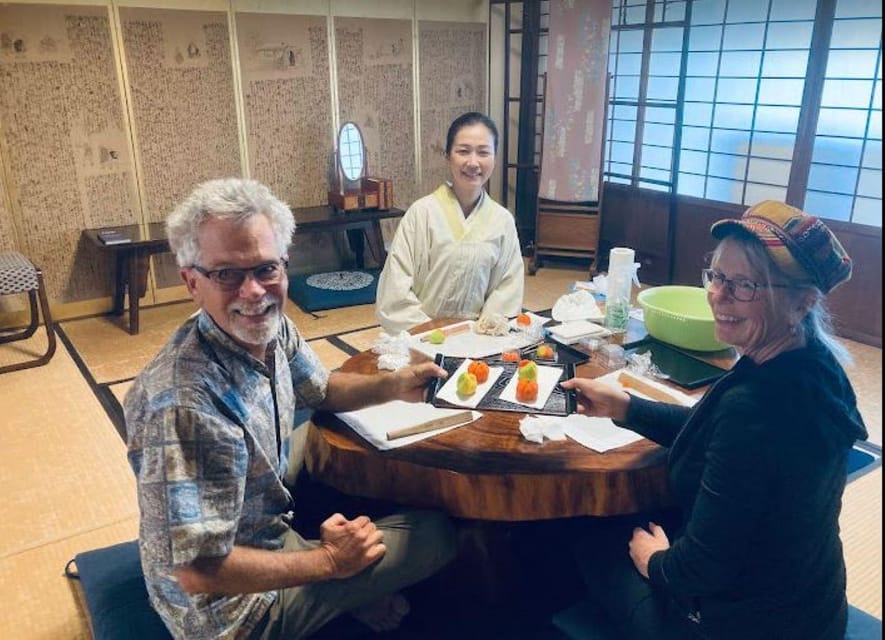
- Make your own wagashi then enjoy it during the tea ceremony.
- English live guide helps you understand the history and rules behind each step.
- Photo time with kimono and textile examples connects the ritual to Japanese craft culture.
- Vegetarian and vegan friendly if you tell them your needs ahead of time.
Tea Ceremony and Wagashi in Izumisano, Not Just a Show
If you have ever watched a tea ceremony video and thought, I get the look, but what is the point, this is the kind of class that fills in the gaps. The experience centers on a traditional Japanese tea ceremony and wagashi making, in a small setting where the guide explains the history and the spirit role of the tea ceremony. You also learn the practical technique, so the session feels like a craft class with cultural context, not a performance where you sit quietly and clap.
What I like is how the activity has a clean flow. You learn, you cook or shape, then you take part in the ceremony with the sweets you created. That link is the whole idea, and it makes your final tea feel personal. The second big plus is the hosting setup: the tour is run by a family business with long experience, and it shows in the care they take with timing and instructions.
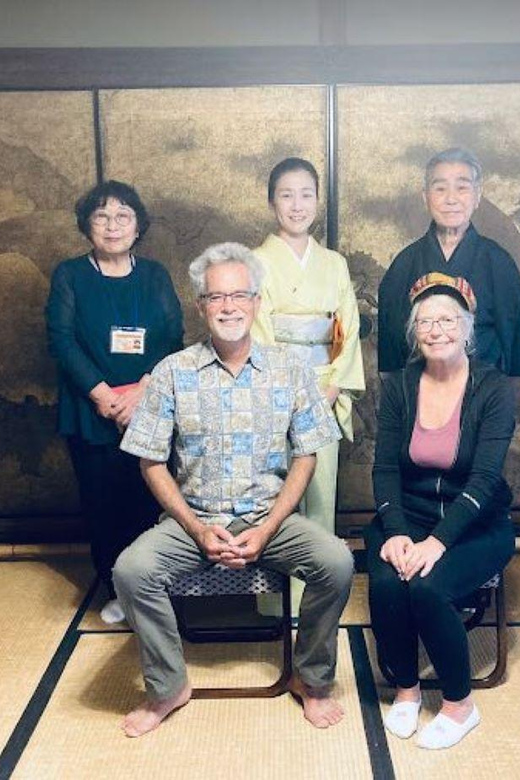
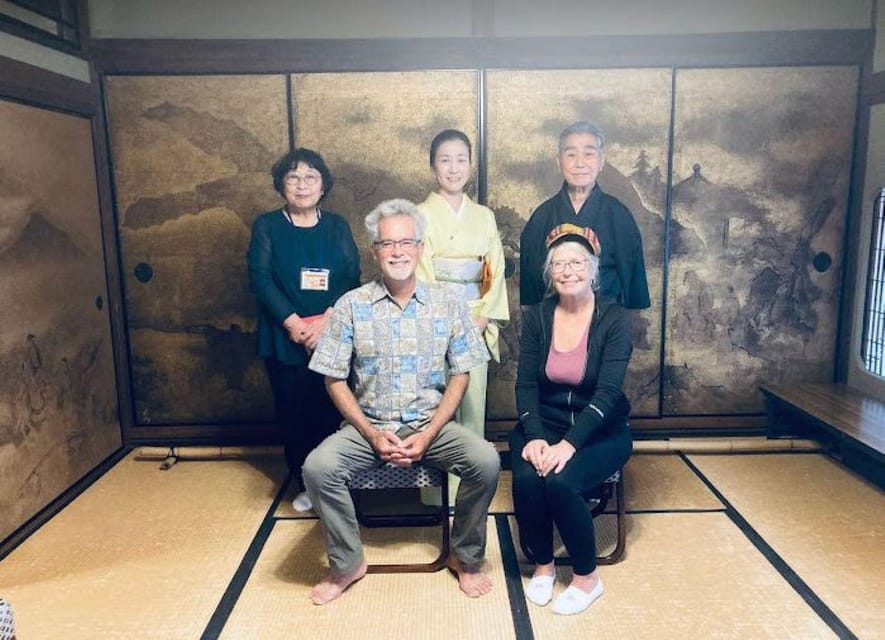
The group stays small, limited to 6 participants, so you are not squeezed into a line. You can ask the guide to slow down. You also get a more natural feel for the room, the tools, and the steps.
Slow down for a bowl of matcha
- Osaka: Tea Ceremony Experience★ 4.9 · 1,426 reviews
- Tea Ceremony Experience in Osaka Doutonbori★ 5.0 · 754 reviews
- Matcha Making Class in Osaka with Authentic Japanese Sweets Set★ 5.0 · 509 reviews
- Osaka: Matcha Making Experience with Japanese Sweets★ 5.0 · 146 reviews
- Osaka: Japanese Traditional Sweets Making and Tea Ceremony★ 4.7 · 118 reviews
Where the Experience Starts and How the Walking Portion Fits
The tour begins at 泉佐野ふるさと町屋館(旧新川家住宅). You meet at a specific spot using a simple set of directions from Nankai Izumisano Station. Exit the station, go right, then turn right at the Tsubasadouri shopping district. Next, turn left at Uniform Noguchi, then turn right at the next corner. You will be picked up at Furusato Machiya-Kan.
Why this matters: if you show up late or confused, the whole ceremony rhythm can get thrown off, since the class is built around careful steps. So I suggest giving yourself a little buffer and arriving with time to orient yourself. If you book an English interpreter option, the interpreter accompanies you, which is useful if you want extra help with nuance.
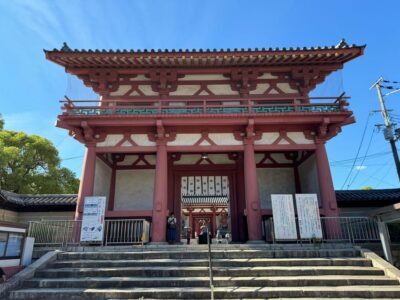
The schedule is listed as a 2 hour experience. Practically, that means you should plan to keep that window free and treat it as the main event. The itinerary is structured as three parts: start at the machiya-style venue, the class and cooking portion, then finishing back at the meeting point area at くらふとや.
Inside the Tea Ceremony: More Than How to Hold a Cup
The tea ceremony here is not taught as a random set of moves. You learn how it works according to the rules, and you also hear about the history and spirit role of the tea ceremony. That combination matters because the actions make more sense when you understand what they are supposed to communicate.
In a lot of classes, the ceremony becomes a photo moment. Here, the focus is on technique and meaning. You learn the right approach and the sequence, so when you sit down to drink your green tea, it feels like you participated in a ritual with structure. You will be paying attention to small details, like how the steps connect, and that is where you get the calm.
From the way the host family has been doing this for generations, you can tell they are not just teaching words. The guidance comes with tradition that has been refined over time. The reviews highlight a three-generation family hosting style and a host who went beyond basic instruction to make the experience special. That kind of attention is exactly what you want when you sign up for something called traditional.
Making Wagashi: A Hands-On Craft You Actually Finish
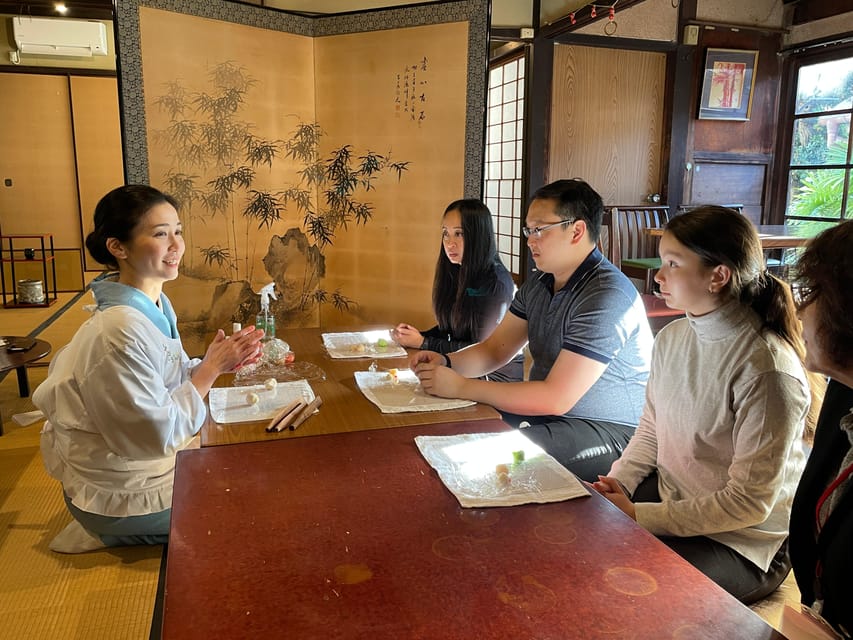
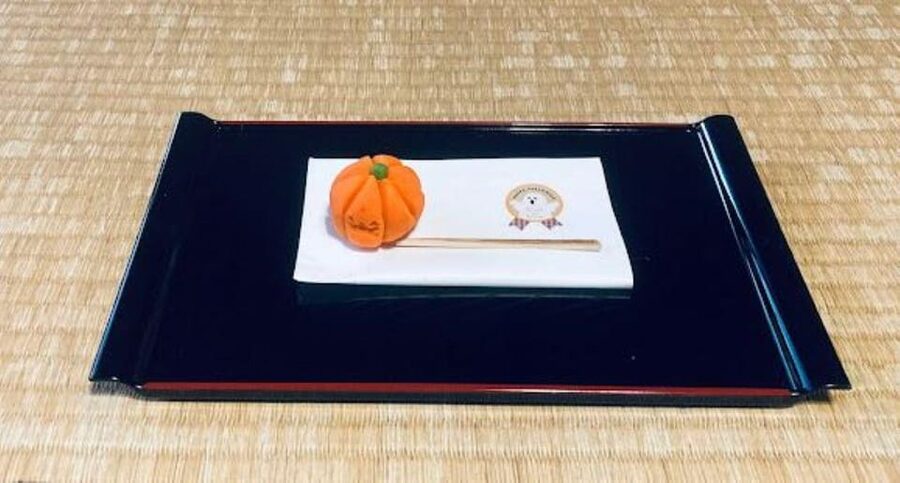
Wagashi is the Japanese confectionery you make during the class. The experience is designed so you learn to create it as part of the overall tea flow, not as a separate cooking workshop. You will make a sweet that pairs with the green tea you will also prepare and serve within the ceremony framework.
Even if you have cooked before, wagashi feels different. It is about shape, texture, and presentation as much as taste. The class includes all seasonings and ingredients, so you are not hunting for tools or specialty products. You also are not standing there thinking, what if I mess this up. The pace and instructions are part of the learning, and the ceremony context gives you a reason to take your time.
Diet is handled thoughtfully. The experience is vegetarian welcome and vegan friendly, and they ask you to let them know in advance about dietary restrictions. If you have a specific requirement, tell them early rather than assuming it will be handled on the spot. For many Japanese sweets classes, ingredients can vary, and the tour data makes clear they can adjust, but you need to communicate first.
One more practical note: alcohol and drugs are not allowed. That is not surprising, but it does affect the vibe. The session is meant to stay clear-headed and respectful of the ceremony.
The Sweet Pairing Moment: Drinking Tea with Your Own Creation
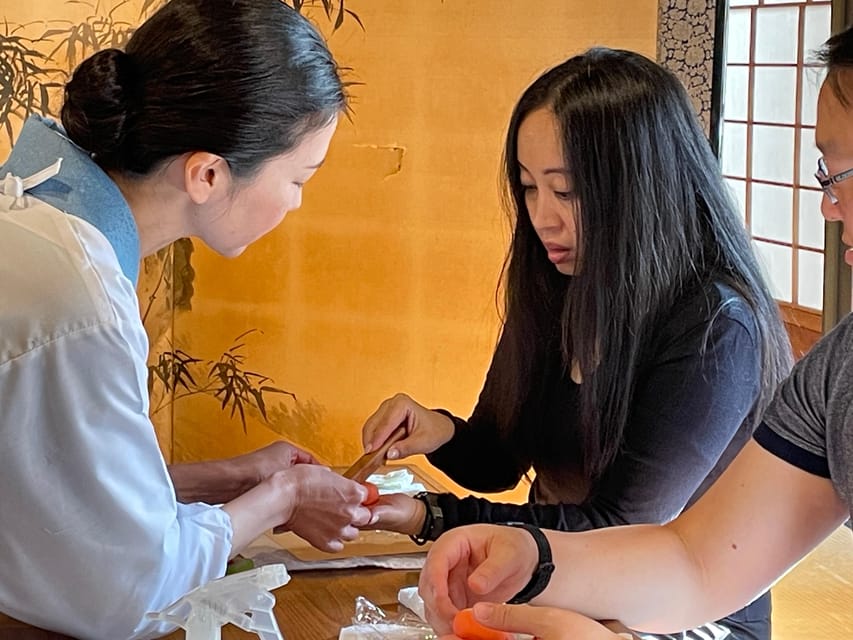
This is one of the strongest parts of the experience, and it is also the simplest to understand. You make the wagashi, then you experience the tea ceremony with the confectionery you made. That pairing changes how you taste it. The sweet no longer feels like an item on a plate, it feels like an outcome of your hands and attention.
From the reviews, the desserts are described as delicious, and that matches what you should expect when the class is built around the main pairing. You are not just learning technique for the sake of technique. You make something meant to be eaten, and the green tea is part of the design.
I also like that the class does not rush past the tasting. You end your time with something you can remember beyond photos, and it is a satisfying way to connect the craft to the ritual.
Other ways to spend a day in Osaka
- Osaka: Ramen and Gyoza Cooking Class in Dotonbori
★ 5.0 · 378 reviews - Osaka Cooking Class: Okonomiyaki &Japanese cuisines experience
★ 5.0 · 261 reviews - Ramen and Gyoza Cooking Class in Osaka
★ 5.0 · 202 reviews
The Finish at くらふとや: Kimonos, Textiles, and Photo Time
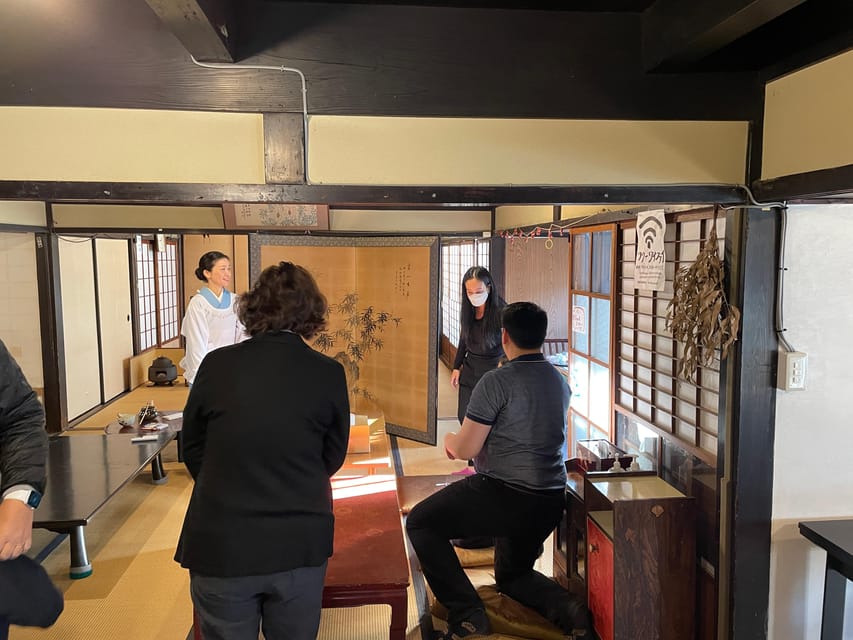
Once the tea ceremony is done, you get a chance to take photos and see examples of kimonos and beautiful woven textiles associated with the Nishijin district of Kyoto. That is a nice bridge. You start with tea and sweets in Izumisano, then you get a glimpse of broader Japanese craft culture tied to Kyoto’s textile heritage.
If you want to wear a kimono during the experience, there is an add-on you can select during booking, and you can take photos to keep the memory. This part is especially good for first-time visitors who want something more than a class certificate. You walk away with images that make the experience easy to share.
Practical tip: treat the photo time as real time, not a bonus you can squeeze in later. If you want the kimono option, plan your booking choices early and arrive with your head in the right place so you can enjoy the dressing and pictures without stress.
Price and Value: What $98 Buys You for 2 Hours
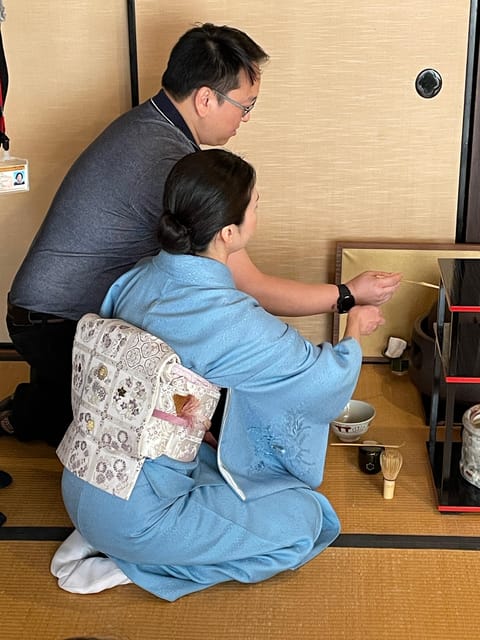
At $98 per person for about 2 hours, the value comes from the combination, not any single piece. You are paying for a small guided group, the guided tea ceremony instruction, the wagashi making, and the included ingredients and fees. The tour also bundles guide time, which is often the hidden variable in classes like this.
Here is what that means for you:
- If you only wanted a short tea demo, you could find cheaper options in Japan.
- If you want a hands-on wagashi session tied into an actual tea ceremony sequence, you are paying for instruction and structure.
- If you want English support, the guide fee becomes even more relevant, because you are not just observing what you cannot fully understand.
Also, the experience includes all seasonings and ingredients, plus all fees and taxes. You are not likely to get surprised by extra charges for basic workshop materials, which is a common pain point in cooking experiences abroad.
If you love Japanese food culture, this is a strong value because you get a craft outcome plus a meaningful cultural context. And you get it in a small group, which makes a difference in a ceremony setting.
Who This Osaka Area Tea and Wagashi Class Is Best For
This experience fits best if you want culture with hands-on participation. You will likely enjoy it if you like:
- Japanese tea culture and want the rules explained
- cooking or shaping food, not just eating it
- small group attention in English
- a calm, respectful activity with photo time at the end
It also works well for plant-based diets because the tour is vegetarian welcome and vegan friendly with advance notice.
You might want to skip it if you need high energy entertainment or if you are sensitive to a structured, quiet ritual. Also, it is not suitable for altitude sickness, based on the tour info. If that could be a concern, check before booking.
Practical Tips to Make Your 2 Hours Feel Effortless
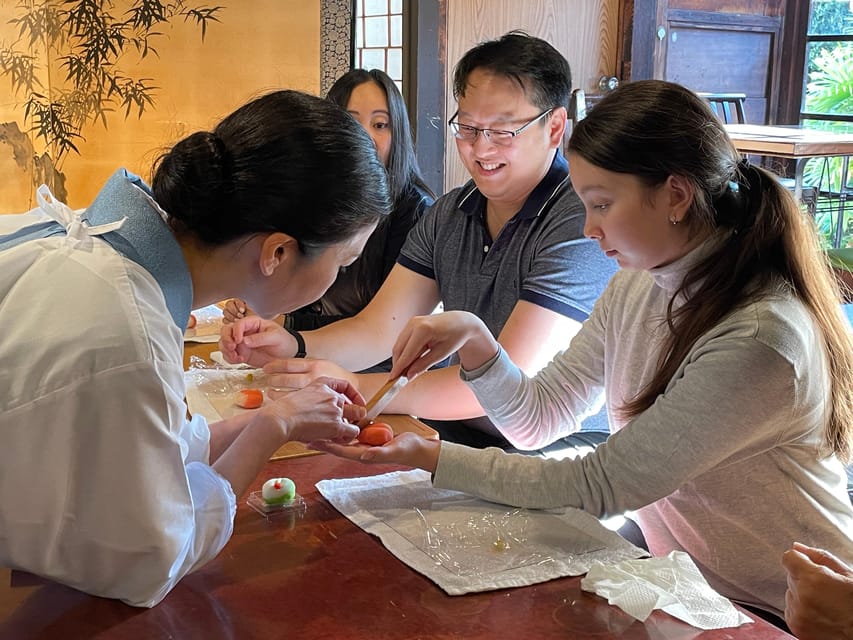
A few small choices help you get more joy out of the session:
- Eat beforehand only if you are sure you will not be too full. The wagashi and tea are part of the plan, and you will want to taste.
- Let them know dietary restrictions early so they can prepare the right sweet for you.
- Plan to ask questions during the class, not after. With only up to 6 participants, it is easier to get real-time help.
- If you want the kimono photo option, decide when you book and expect you might need a bit of patience while it is prepared.
Also, keep in mind this is a ceremony-focused experience. The rules are part of the lesson, so go in with curiosity rather than trying to do everything your way.
Should You Book This Tea Ceremony and Wagashi Experience?
I would book this if you want an authentic-feeling tea and sweets experience where you actually participate. The biggest reason is the structure: you make wagashi, then you experience the tea ceremony with what you made. That is a rare combination that turns knowledge into an edible memory.
It is also a smart choice if you care about instruction quality. The class is guided in English, and the hosting family connection, described as a three-generation business with over a century in the craft, suggests a steady, careful approach. On top of that, the included ingredients and fees make the $98 price easier to justify.
The only real reason to hesitate is if the quiet, ritual pace does not match your travel style, or if altitude sickness is a concern for you. If neither applies, this is the kind of cultural class that makes your Osaka area trip feel more grounded and human.
FAQ
How long is the tea ceremony and wagashi cooking experience?
The experience lasts about 2 hours.
How many people are in the group?
It is a small group limited to 6 participants.
Is the experience vegetarian or vegan friendly?
Yes. Vegetarian guests are welcome, and the experience is vegan friendly. Let them know your dietary restrictions in advance.
What language is the guide?
The tour uses an English live tour guide.
Where do I meet, and where does the tour end?
You start at 泉佐野ふるさと町屋館(旧新川家住宅) after meeting at Exit the Nankai Izumisano Station and following the provided directions. The activity ends back at the meeting point.
What is included in the price, and what is not?
Included are all seasonings and ingredients for cooking, all fees and taxes, and the guide fee. Insurance is not included.
Just added around Osaka


Cooking Classes, compared.
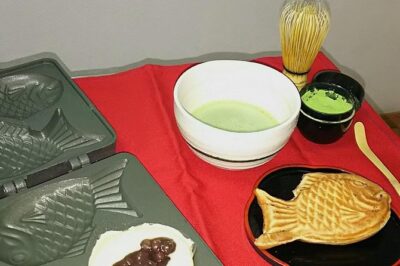
Osaka Cooking Class: Okonomiyaki &Japanese cuisines experience
Read our review →


Osaka Sake Tasting & Takoyaki Cooking Experience
Read our review →
Cooking Ramen&Gyoza/KatsuCurry/Bento/Okonomiyaki+Store Tour@Osaka
Read our review →
Eat Osaka: Street Food Cooking in an Authentic Kitchen!
Read our review →This tour also fits