
Reviewed · NINJA & SAMURAI EXPERIENCES
Samurai Calligraphy:Final brushstrokes of a lifetime before a War
One character can carry a whole life. This Osaka experience turns Japanese calligraphy into a focused ritual, starting with a simple meaning exercise and ending with a dramatic single stroke on huge paper. You get the craft (Shodo brushwork and stroke order) plus the story behind it, framed as samurai resignation, last words before going to war in the Warring States Period.
I especially like how you decide the meaning yourself, then learn how to build that one kanji with real discipline, not just copying. The oversized brush moment is also a standout, because it forces big-body control, not tiny hand motion, and the result looks powerful even if you are brand new to calligraphy. Kaori, the teacher, shows patience and brings history and culture into the lesson in a way that makes the practice click.
The one possible drawback is that the concept is intense and symbolic, so if you want a casual souvenir workshop, this may feel more serious than you expect. Also, the finished work is a single character, so if you were hoping for a full page of multiple phrases, plan your expectations around that one bold piece.
In This Review
- Key points before you go
- Osaka Shodo, with a samurai story behind the ink
- The 90-minute flow, Japanese Shodo to one final character
- Choosing your last-character kanji, and why it changes everything
- Shodo basics in practice, not theory homework
- The oversized brush performance on 150cm x 150cm paper
- Outfit, tools, and the professional photo you can actually use
- Price and value in Osaka, what $64.38 buys you
- Where it happens, and how to fit it into your day
- Who should book this Samurai Calligraphy class
- Optional upgrades if you want more than ink
- Should you book Samurai Calligraphy in Osaka?
- FAQ
- How long is the Samurai Calligraphy experience in Osaka?
- What is the price per person?
- How many people are in the group?
- Where is the meeting point?
- Is a mobile ticket used?
- What language support is available?
- What equipment and clothing are included?
- Are there any paid add-ons?
- Do I need calligraphy experience to join?
- Can I cancel and get a refund?
- Does the experience include professional photos?
Key points before you go
- Choose your own resignation kanji and reflect on what you want the character to express
- Learn practical Shodo basics first, including brush strokes and stroke order
- Big brush, huge paper (150cm x 150cm) makes this more dramatic than typical classes
- The taiko beat and bold writing style shape the final performance feeling
- Small group size (max 8) helps you get real attention
- Kaori teaches with English or Chinese support and includes a professional photo
Osaka Shodo, with a samurai story behind the ink
Japanese calligraphy, or Shodo, is often described as art you do with your whole body. This experience leans into that idea, because it starts with meaning, then moves to technique, and finally ends with a performance-style brush moment. In other words, you are not just learning how to hold a brush. You are learning how to plan one character so it feels intentional.
What makes the framing so compelling is the samurai theme of resignation. The class is built around the idea that, in samurai deathbed lore, resignation means last words said through writing. In this lesson you prepare for that moment through a single kanji, the one character that represents what you want to leave behind before going to war.
That context matters because it changes how you look at empty space. This class highlights the idea of beauty in margins and the blank spaces around the letter. In calligraphy, spacing is not wasted paper. It is part of the composition. You end up paying attention to balance in a way that is hard to get from a simple copy sheet.
Brush strokes that take a lifetime to master
- Osaka: Private Japanese Calligraphy Experience★ 5.0 · 66 reviews
- Calligraphy Workshop in Namba, Dotonbori★ 5.0 · 57 reviews
- Learning Zen of Japanese Calligraphy in kimono near Osaka Castle★ 4.5 · 53 reviews
- Osaka: Private Tea Ceremony and Calligraphy Experience★ 5.0 · 50 reviews
- Samurai dress-up and shows, plus Tea Ceremony & Calligraphy★ 5.0 · 27 reviews
The 90-minute flow, Japanese Shodo to one final character
The total class runs about 1 hour 30 minutes. It is structured in two parts: Japanese Shodo for about 60 minutes, then Samurai Calligraphy for about 30 minutes. The timing is tight enough that you stay focused, but long enough to learn the basic moves before you go big.
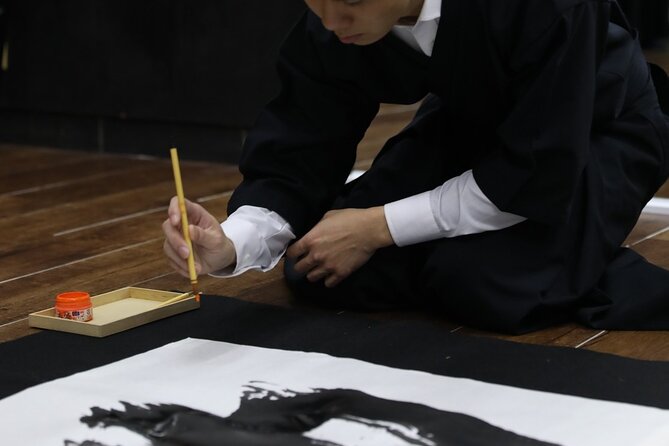
In the Shodo portion, you practice basic brush strokes and stroke order for your chosen kanji. The goal here is not speed. It is control. Stroke order is where calligraphy turns from drawing into writing. When you follow the right order, your character has a logic and rhythm that makes it look authentic.
Then you move into the “one character” stage. You decide the one kanji for your resignation message and think about the feelings you want it to carry. The instructor also helps you shape the character composition design, meaning how the strokes fit together as a single statement, not just separate lines.
This structure is a smart value for your time. You are not thrown straight into the oversized brush without fundamentals. You get a foundation first, then you apply it when the class becomes dramatic.
Choosing your last-character kanji, and why it changes everything
You start by deciding on your last character. Each kanji has its own meaning, so the teacher asks you to reflect on your life and choose carefully. The class is built around the emotional logic of that choice: which person, which feeling, which message you would want to leave behind.
For you, the best part of this step is that it turns calligraphy into a personal decision. A lot of souvenirs are pre-made. Here, your writing begins with thinking. Even if your kanji choice is simple, you are still practicing clarity of intention.
You also focus on the design of that character. That matters because calligraphy is not just correctness. It is expression within form. If you take a minute to think about what you want your character to look like as a whole, the final brushwork feels more like a single act of communication.
One detail that helps the process: the class frames the final work around resilience and departure, not just beauty. When you understand what the character is meant to represent, the blank space and the bold stroke style feel purposeful rather than decorative.
Shodo basics in practice, not theory homework
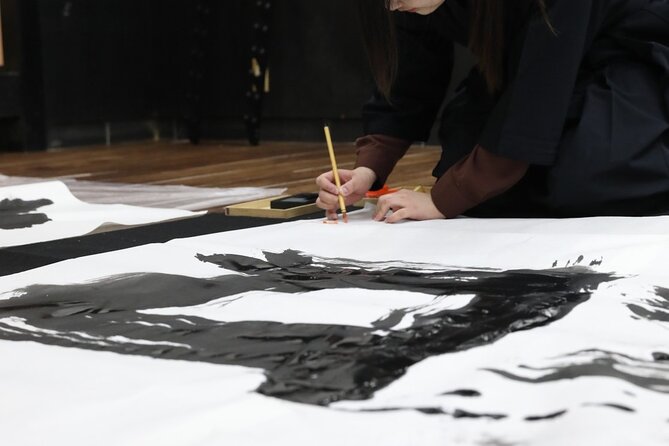
The Japanese Shodo part is where this class earns its keep. You practice basic brush strokes and the stroke order of your chosen kanji. That is the core craft skill. If you have never done brush calligraphy before, you will likely notice quickly that this is not like drawing with a pen. Pressure, direction, and the speed of your stroke all affect the look.
The teacher’s guidance is key. In the experience, Kaori is the calligraphy instructor, and multiple people report that she made the cultural background click and that the lesson stayed hands-on. There is also mention of surprises in the way she supported participants, including writing names and picking symbols to match what people were aiming for. Even when you are not sure what you want yet, the teacher can help you shape it.
If you go with even basic curiosity, you will probably leave with a better sense of what makes Japanese calligraphy feel calm and deliberate. One review even described the experience as meditation-like. That makes sense, because Shodo asks you to slow down and commit to each stroke rather than fix mistakes repeatedly.
The oversized brush performance on 150cm x 150cm paper
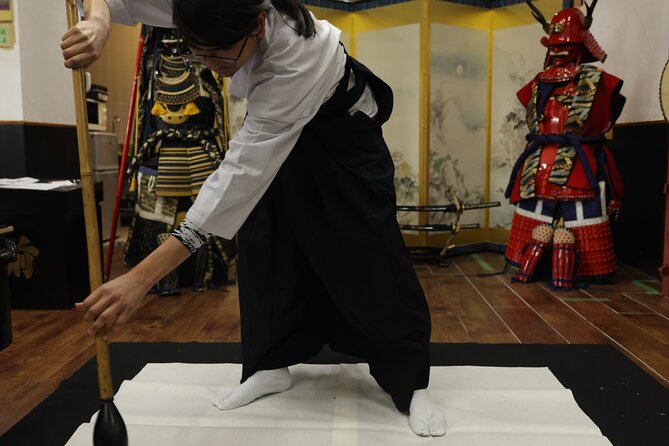
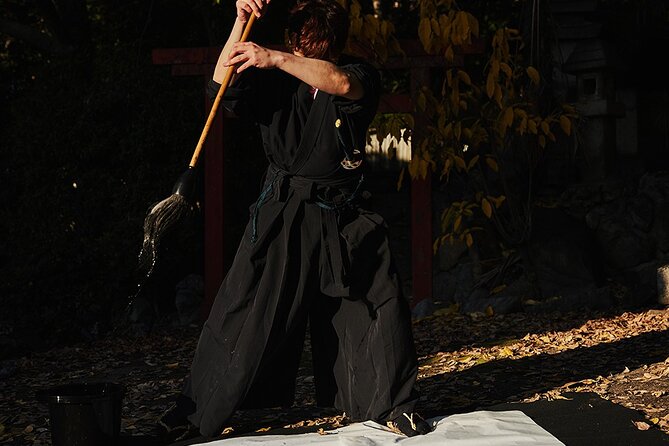
Then comes the dramatic moment, the Samurai Calligraphy part. The brush is oversized, more than five times larger than usual. The paper is huge, 150cm x 150cm. This is where the whole-body approach becomes obvious. You are not just writing with your hand, you are managing motion across a wide space.
The instructor creates a performance atmosphere. The lesson mentions that the circle character (the ◯) is written boldly to the beat of taiko drums. Even if your chosen kanji is different, the class style is clear: the rhythm is part of the technique. Taiko beats are loud cues for timing, and timing affects brush shape, ink flow, and the crispness of edges.
Here is what you should expect in practical terms. You will be guided through using the oversized brush dynamically so you can manipulate it freely with your body. That can feel intimidating for a minute, especially if you think you have to be delicate. But the whole point is to make bold marks confidently while still keeping control.
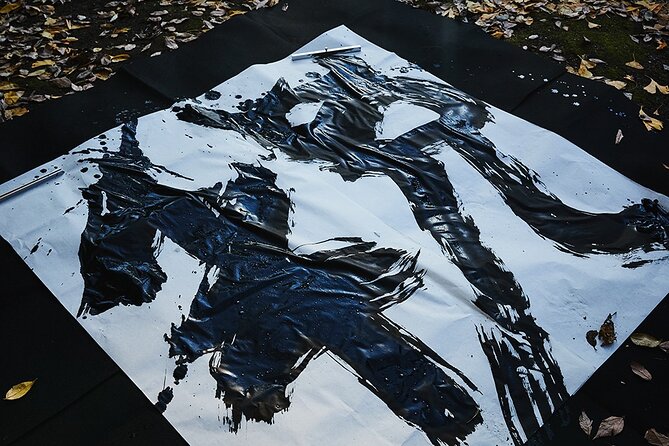
And that is where the beauty of margins shows up again. On large paper, spacing becomes even more visible. You learn how the empty areas frame the ink. That is why the class emphasizes that nothing is beautiful precisely because there is something. The margin is part of the design, not an afterthought.
By the end, your final product will be one character, created with intention and energy. It will look like a statement, not like a worksheet.
Swing a sword like it's 1600
- Samurai Training Experience KENDO in Osaka
★ 5.0 · 515 reviews - OSAKA NIGHT FUSION Japanese Taiko Kabuki Samurai Dance Show
★ 4.8 · 155 reviews - Osaka: Samurai Training Experience KENDO in Osaka
★ 5.0 · 111 reviews
Outfit, tools, and the professional photo you can actually use
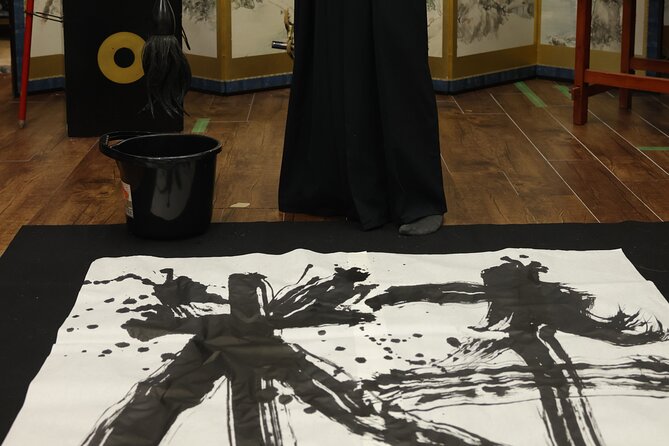
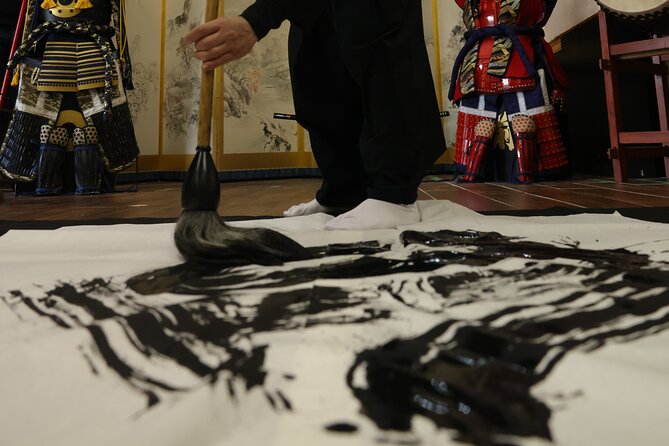
Included in the experience is a sampler of the full cultural package: samurai outfit, Shodo tools, and traditional clothing items like hakama and kimono pieces. The materials are not described as a full set of kimono, but you should expect to wear a traditional outfit style as part of the activity.
You also get a professional photographer included. That is a big deal for value, because Japanese calligraphy scenes can look great when someone knows how to frame brush action and the final ink on large paper. If you want usable photos without relying on your own camera skills, this inclusion helps.
Language support is also built in. There is an English or Chinese speaking assistant, which can matter if you are trying to understand kanji meaning decisions and brush instructions quickly.
One more practical note: the tour uses a mobile ticket, and it is near public transportation. That makes it easier to slot into an Osaka day without stress.
Price and value in Osaka, what $64.38 buys you
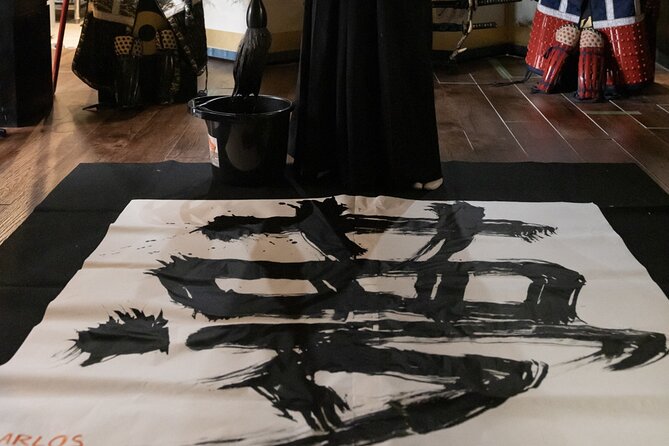
The price is $64.38 per person, booked on average 48 days in advance. For a 90-minute hands-on workshop in a small group of up to 8 people, that price is reasonable when you count the included items.
Here is what you are paying for beyond the brush ink:
- A structured Shodo lesson, not just time at a table
- Oversized brush and huge paper format
- Traditional outfit elements
- Shodo tools provided
- A professional photo
- Instructor time, with an assistant in English or Chinese
If you have done the cheaper “write a character” activities in other places, you may notice they often focus on the outcome, not the process. This format focuses on process, stroke order, and how to compose one strong character.
Could it be better for people who want a casual, low-meaning souvenir? Sure. But if you want a guided practice that ends with a piece that feels like art, this is a fair deal.
Where it happens, and how to fit it into your day
The class starts at an address in Joto Ward, Shiginonishi, Osaka, listed as 536-0014 Osaka, Joto Ward, Shiginonishi, 2-chōme 3-19, Excellence Takayama (エクセレンス高山). It ends back at the meeting point, so you do not need to plan a complicated return.
Because it is near public transportation, it is easiest to pair it with other nearby Osaka stops. Keep your schedule calm that day. Calligraphy takes focus and you may want time afterward to dry or handle your final piece according to the teacher’s instructions, even though the specifics are not given in the tour data.
Group size is max 8, which tends to make the experience feel more personal. You also likely will not be stuck watching others for most of the time.
Who should book this Samurai Calligraphy class
This is a strong fit if you want Japanese culture that is hands-on and meaningful, not just sightseeing photos. You will enjoy it most if you like activities where your choices matter, like selecting a kanji based on what you want your final message to express.
It also works well if you enjoy slow, focused activities. Reviews describe it as beautiful and meditation-like, which matches how Shodo practice naturally slows your brain down.
It may be less ideal if you want a large multi-character poster or a quick “try it once” souvenir. This class is built around one character and a specific ritual story.
Most people can participate, so you do not need previous brush experience. If you can follow simple instructions and stay attentive during a 90-minute block, you should be fine.
Optional upgrades if you want more than ink
The experience includes photos, but there are paid add-ons listed. Movie shooting is available as a paid option (¥11,000 per person). Wagami, described as collected hair plus Kanzashi, is also offered as a paid option (¥3,300 per person).
If you care about video memories or you want a more styled traditional look, these upgrades can be worth considering. If not, the included outfit and professional photography should already cover the “I did something special” part.
Should you book Samurai Calligraphy in Osaka?
I think this is worth booking if you want one guided afternoon where you learn real Shodo basics, make a personal decision, and then create a bold final character with oversized brushwork. The combination of technique, symbolism, and a small group teaching style makes it feel more like an experience than a quick demo.
Book it if:
- You like structured hands-on classes
- You want meaningful cultural context tied to the craft
- You want photos handled by a professional
- You are okay with the focus being one character
Skip it if:
- You want a casual, low-attention craft souvenir
- You need multiple characters or a full page of text
- You prefer a purely informational tour without the emotional resignation theme
If you come ready to slow down for 90 minutes, you will leave with a piece that feels deliberate, plus the kind of calm satisfaction that brushwork can create.
FAQ
How long is the Samurai Calligraphy experience in Osaka?
The total experience is approximately 1 hour 30 minutes, with Japanese Shodo for about 60 minutes and Samurai Calligraphy for about 30 minutes.
What is the price per person?
The price is $64.38 per person.
How many people are in the group?
The tour/activity has a maximum of 8 travelers.
Where is the meeting point?
It starts in Osaka, Joto Ward, Shiginonishi at 2-chōme 3-19, エクセレンス高山, and it ends back at the same meeting point.
Is a mobile ticket used?
Yes, the experience includes a mobile ticket.
What language support is available?
An English or Chinese speaking assistant is included.
What equipment and clothing are included?
Included items are Shodo tools and samurai attire components such as hakama and kimono (not a full set of kimono). A photographer is also included.
Are there any paid add-ons?
Yes. Paid options include movie shooting (¥11,000 per person) and wagami, collected hair plus Kanzashi (¥3,300 per person).
Do I need calligraphy experience to join?
Most people can participate, and the class includes instruction on basic brush strokes and stroke order.
Can I cancel and get a refund?
You can cancel for a full refund up to 24 hours in advance.
Does the experience include professional photos?
Yes, a professional photographer is included.
Just added around Osaka

Ninja & Samurai Experiences, compared.

OSAKA NIGHT FUSION Japanese Taiko Kabuki Samurai Dance Show
Read our review →

Osaka 2-Hour Genuine Kendo / Samurai Experience In Japan
Read our review →
Learn Bushido – Trial Slashing with Samurai Sword
Read our review →
Samurai Show, Tea Ceremony, Japanese Traditional Activities
Read our review →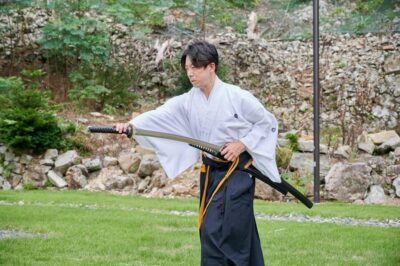
Private Samurai Experience – Train with Sword Master
Read our review →This tour also fits