
Reviewed · COOKING CLASSES
3-Hour Authentic Japanese Cooking Class (Includes 4-Course Meal)
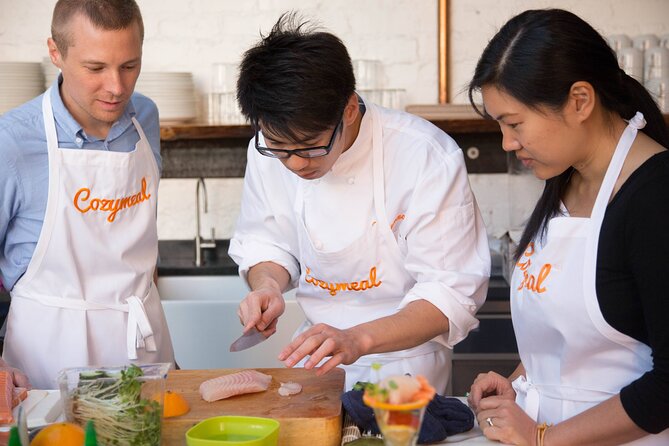
Osaka cooking can be personal and practical at once. This 3-hour Japanese cooking class (hosted through Cozymeal) teaches you real techniques while you make a full 4-course meal from scratch with a Michelin-experienced chef.
I especially like two things. First, you get hands-on training with skills that rarely show up on typical sightseeing plans, like shaving dried bonito and frying tempura. Second, the meal plan is built to teach flavors in a logical order, warm broth first, then fried comfort food, then something bright and sharp, ending with creamy matcha dessert.
One consideration: this is a BYOB format, so if you want wine or beer during the class, you’ll need to bring it yourself.
In This Review
- Quick hits before you cook
- Why this Osaka cooking class beats a standard food stop
- Chef Yuki and the small-group rhythm in 3 hours
- Course 1: Traditional miso soup with tofu and shaved bonito
- Course 2: Tempura donburi with shrimp, vegetables, and soft-boiled eggs
- Course 3: Napa cabbage coleslaw with lemon zest
- Dessert: Creamy matcha ice cream with matcha and soy milk
- BYOB, what to bring, and how to plan your meal day
- Price and value: what $104.95 really buys you
- Who should book this class in Osaka
- Should you book it?
- FAQ
- How long is the Japanese cooking class?
- How much does it cost per person?
- What will I eat in the 4-course meal?
- How big is the group?
- Where does the class start?
- Is alcohol included?
- Is there a mobile ticket?
- Can the chef accommodate dietary needs?
- Is free cancellation available?
Quick hits before you cook
- Chef Yuki leads the class with warmth and patience, and you’ll learn by doing
- Bonito shaving plus dashi-style miso soup are a standout skill step
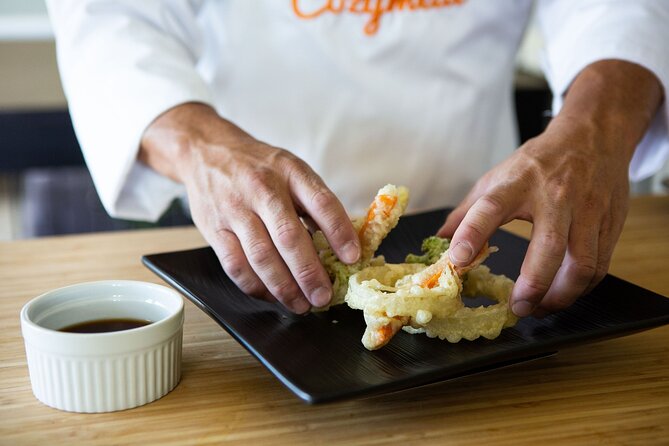
- Tempura donburi includes shrimp, vegetables, and soft-boiled eggs, not just a quick demo
- Small group size (max 6) means you can ask questions and get feedback
- 4-course menu in 3 hours keeps the pace lively but still hands-on
- Mobile ticket makes it easy to show up and start cooking
Why this Osaka cooking class beats a standard food stop
If you like food, you’ll enjoy this class. But if you like food skills, you’ll probably love it. The structure is simple: you learn a technique, you cook the part that uses it, then you eat what you made.
What makes it feel more authentic than many “taste and watch” experiences is that you’re not just sampling dishes you could order later. You’re learning how Japanese home and restaurant cooking gets its flavor and texture, especially around broth-making and tempura.
Also, it’s scheduled for a compact 3 hours. That matters in Osaka, where you may be juggling subway time, meal planning, and sightseeing. This class gives you a full meal plus real instruction without swallowing your entire day.
Other ways to spend a day in Osaka
- Osaka in a Nutshell: Three hour bike tour★ 5.0 · 121 reviews
- Osaka Castle Tour – With Optional City Highlights (3 hours)★ 4.5 · 14 reviews
- Osaka: Osaka Castle 3 hours Historical Walking Tour★ 4.6 · 14 reviews
- Osaka Like a Local: Private & Personalized Experience (3 hours)★ 5.0 · 7 reviews
- Osaka: Explore Every Bit of Osaka Castle in 3 Hours★ 5.0 · 5 reviews
Chef Yuki and the small-group rhythm in 3 hours
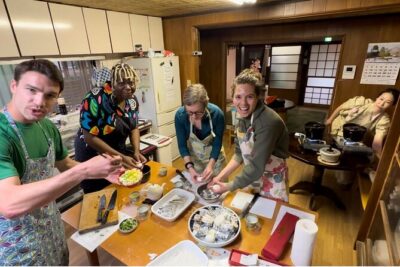
This class is designed for a small group, with a maximum of 6 travelers. In practice, that means you’re more likely to get direct coaching when your batter, timing, or knife work needs a quick fix.
Chef Yuki is the name you’ll want to remember. Based on past guest feedback, she’s warm and patient, and she guides you through the steps without rushing. That coaching style is useful because Japanese cooking is detail-driven. Even small changes, like how evenly you cut ingredients or when you adjust heat, can show up in the final bite.
You’ll start at the meeting point in Yoshita, Higashiosaka, Osaka 578-0924, Japan. The activity ends back there, which is helpful if you’re trying to keep your day simple and avoid a long commute right after eating.
Course 1: Traditional miso soup with tofu and shaved bonito
The first course sets the foundation. You’ll make miso soup using miso paste, Japanese broth, tofu, and shaved dried bonito.
This is more than comfort food. It teaches you how aroma and flavor concentrate when you work with dried ingredients. The bonito shaving step matters, because the texture changes fast: you go from hard, dry flakes to fragrant, delicate shavings that help build the soup’s character.
What you should pay attention to:
- How the broth smells as you combine elements, because the aroma is a big part of what you’re tasting later
- How the tofu fits in, since tofu can absorb flavor while still staying soft and clean-tasting
- The overall balance, since miso soup is all about the right mix of savory and depth without turning heavy
If you’re curious about why Japanese soups taste lighter than you expect, this course is the place to ask. The class format makes it easier to connect technique to taste, not just watch a finished bowl appear.
Course 2: Tempura donburi with shrimp, vegetables, and soft-boiled eggs
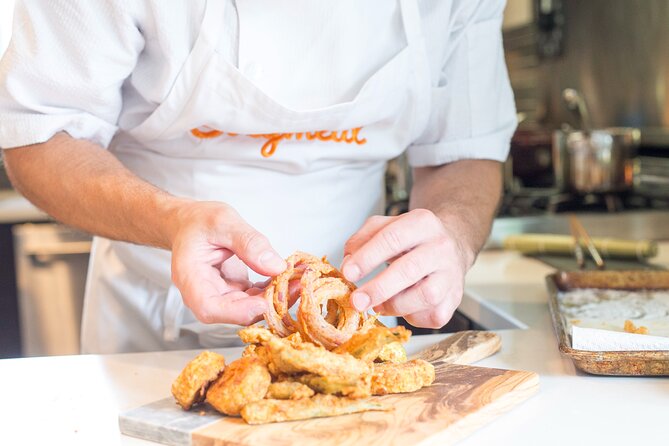
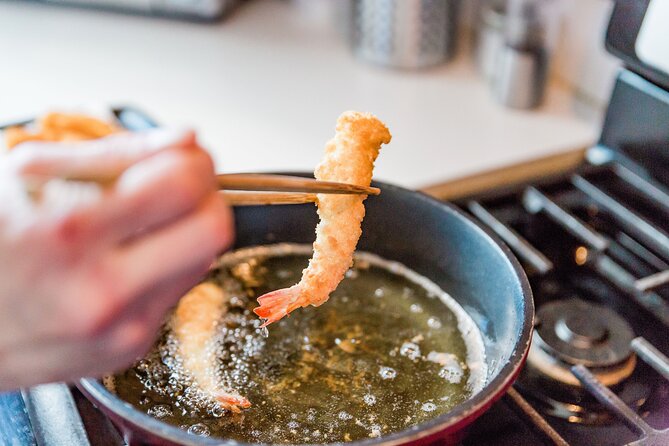
Then comes the part most people remember: tempura. You’ll work toward tempura donburi, topped over rice, with shrimp, vegetables, and soft-boiled eggs.
Tempura is all about contrast: crisp exterior, tender interior, and timing. In a classroom setting, that’s hard to get right without instruction, so the class focuses on technique rather than just serving food.
A few practical realities about this course:
- You’ll likely spend time frying, so you’ll want comfortable clothes and a mindset that you’re learning, not performing
- Even small differences in how pieces are handled can affect crispness
- Shrimp and vegetables cook differently, so you’ll need to understand how heat and timing change batch results
From a value perspective, this course earns its place. It’s not just a “one pan” dish. It’s multiple ingredients and multiple textures, including soft-boiled eggs, which are easy to get wrong if you’re guessing. Learning tempura donburi also gives you a template you can remember for future meals, even if you’re eating out later.
Course 3: Napa cabbage coleslaw with lemon zest
After fried food, you get something that resets your palate: napa cabbage coleslaw with lemon zest.
This course is a smart teaching move. Coleslaw can be bland when it’s only about mayonnaise and crunch. But adding lemon zest shifts it into brighter, cleaner territory. It helps balance the richness from soup and tempura, so you can taste the meal as a sequence instead of a collection of separate dishes.
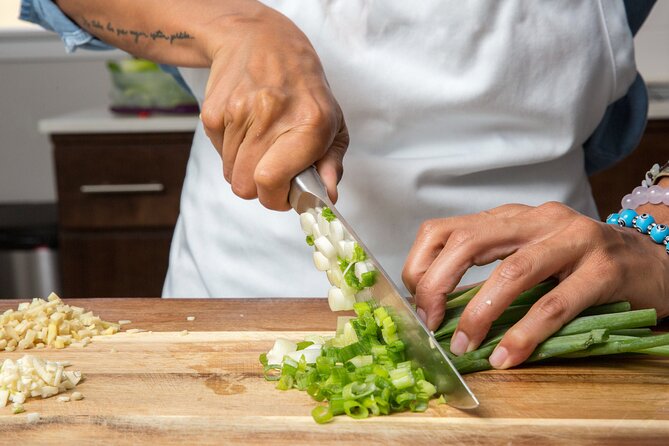
In your hands-on moment, focus on how the cabbage feels before it’s mixed. Cabbage takes dressing and lemon differently depending on cut size and mixing time. This is the kind of small detail that makes a salad taste intentional rather than accidental.
If you’re the type who thinks you don’t like “salad-y” meals, give this one a fair try. Lemon and cabbage together are a classic flavor pattern because it cuts through fats without making the plate feel like a diet.
Not ready to leave Osaka yet? A few more ways to fill the day.
- Full Day Tour of Kyoto with Private Transportation
★ 5.0 · 130 reviews - Sakai – Knife Factory and Craft Walking Tour
★ 5.0 · 44 reviews - Kyoto private tour (Shore excursion available from Osaka or Kobe port)
★ 5.0 · 39 reviews
Dessert: Creamy matcha ice cream with matcha and soy milk
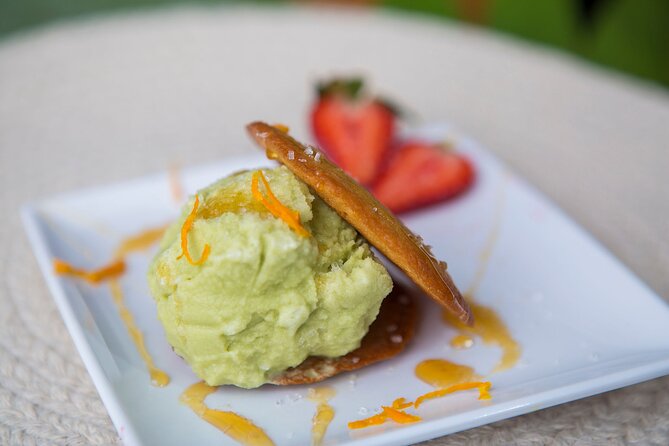
Then you finish strong with dessert: matcha ice cream made with matcha and soy milk.
Matcha can be intimidating if your last experience was overly bitter or overly sweet. This class dessert is designed around balance. Using soy milk also matters, because it creates a creamy texture without needing a heavy dairy focus.
In a cooking class, dessert is sometimes an afterthought. Here, it feels like the last step in a flavor arc: umami and warmth in the soup, crisp and savory in tempura donburi, bright in coleslaw, then cool and mellow in ice cream.
Taste notes to look for:
- How the matcha flavor reads when it’s cold
- Whether the bitterness is softened by the creamy base
- How the soy milk texture holds the ice cream together
And yes, matcha is green, so you’ll probably notice the color right away, but the real lesson is how matcha changes character in frozen form.
BYOB, what to bring, and how to plan your meal day
This event is BYOB. Guests are welcome to bring wine and beer to enjoy during the class. If you like having a drink with dinner, consider bringing what you enjoy. If you’d rather keep it non-alcohol, that’s fine too since you still get a full meal.
What to bring beyond that:
- Comfortable clothing for active cooking time
- An appetite for multiple courses, since you are eating the results you help make
- Any dietary needs you want addressed
Dietary support is specifically mentioned. The class is designed to accommodate a variety of needs, and they ask you to let them know in advance so they can tailor the experience to your preferences and restrictions.
One more planning note: you’re starting in Yoshita, Higashiosaka, and ending back there. If your hotel is far from that area, factor in transit time so you don’t feel rushed before the class.
Price and value: what $104.95 really buys you
At $104.95 per person for about 3 hours, this isn’t a “cheap snack workshop.” But it also isn’t overpriced for what you receive.
Here’s the value math that matters:
- You get a 4-course meal created from scratch, not just a tasting
- You get hands-on instruction for multiple techniques (including tempura frying and shaving dried bonito)
- The class is small, max 6 travelers, which helps you actually learn rather than observe from across a counter
- The chef has more than 10 years of experience, including time at a Michelin-rated restaurant
If you’re comparing this to eating your way through Osaka, this gives you skills you can reuse later. That’s the biggest difference. A great meal tells you what to crave. A cooking class shows you how to make the craving happen.
If budget is tight, you could still justify it by viewing it as a dinner replacement plus a workshop. You’d be paying for ingredients and instruction anyway when you dine out multiple times.
Who should book this class in Osaka
This is a great fit if you want:
- A hands-on meal experience, not just eating and watching
- Real technique practice, especially if you enjoy Japanese food beyond sushi and ramen
- A compact activity that covers a whole meal in a single block of time
It’s also a smart choice for couples or small groups, since the max size is 6 and the class feels tailored. If you’re traveling solo, you’ll still get attention because the group is intentionally small.
If you’re strict about allergies or specific diets, this class may work well, but you’ll need to communicate your needs in advance so they can tailor. Also note that the menu includes shrimp and tofu, so sharing restrictions early is key.
Should you book it?
Yes, if you want a memorable Osaka food moment that teaches you something you can use later. This class is built around technique, not just presentation, and the 4-course meal gives you a clear arc from warm soup to crisp tempura to bright coleslaw to creamy matcha dessert.
Book it especially if you like the idea of learning bonito shaving and tempura frying with a patient chef like Yuki. The small-group format makes it easier to ask questions and fix mistakes while you’re still cooking, which is when learning actually sticks.
FAQ
How long is the Japanese cooking class?
It runs for about 3 hours.
How much does it cost per person?
The price is $104.95 per person.
What will I eat in the 4-course meal?
You’ll make and enjoy miso soup (with tofu and shaved bonito), tempura donburi (with shrimp, vegetables, and soft-boiled eggs), napa cabbage coleslaw with lemon zest, and matcha ice cream made with matcha and soy milk.
How big is the group?
The class has a maximum of 6 travelers.
Where does the class start?
The meeting point is Yoshita, Higashiosaka, Osaka 578-0924, Japan.
Is alcohol included?
No. It is BYOB, and guests are welcome to bring wine and beer.
Is there a mobile ticket?
Yes, the tour uses a mobile ticket.
Can the chef accommodate dietary needs?
The class is designed to accommodate a variety of dietary needs. You should let them know in advance.
Is free cancellation available?
Yes. Free cancellation is available if you cancel up to 24 hours in advance for a full refund.
More Workshops in Osaka Prefecture
- Japanese Sweets Making Class in Osaka★ 5.0 · 1 review
- Sushi Making Osaka Roll and Authentic Japanese Sushi Class★ 5.0 · 1,220 reviews
- Matcha Making Class in Osaka with Authentic Japanese Sweets Set★ 5.0 · 509 reviews
- Osaka: Roll and Authentic Sushi Making Class in Dotonbori★ 4.9 · 239 reviews
More Cooking Classes in Osaka Prefecture
- Osaka Sushi Cooking Class★ 5.0 · 3 reviews
- Cultural Cooking Class Featuring Ramen Sushi and Tea Ceremony★ 5.0 · 2 reviews
- Osaka: Ramen and Gyoza Cooking Class in Dotonbori★ 5.0 · 378 reviews
- Osaka Cooking Class: Okonomiyaki &Japanese cuisines experience★ 5.0 · 261 reviews
Just added around Osaka



Cooking Classes, compared.
Osaka Cooking Class: Okonomiyaki &Japanese cuisines experience
Read our review →
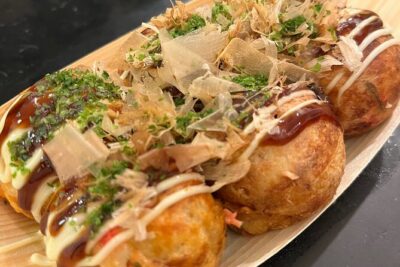
Osaka Sake Tasting & Takoyaki Cooking Experience
Read our review →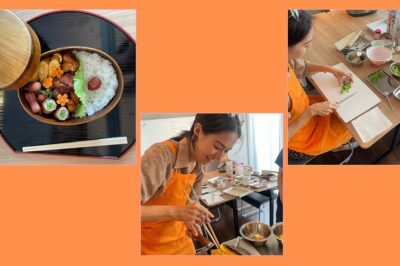
Cooking Ramen&Gyoza/KatsuCurry/Bento/Okonomiyaki+Store Tour@Osaka
Read our review →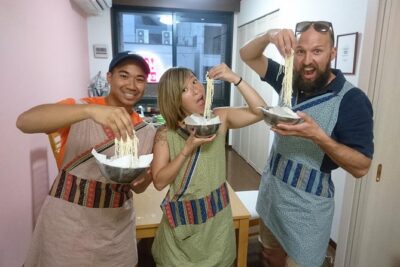
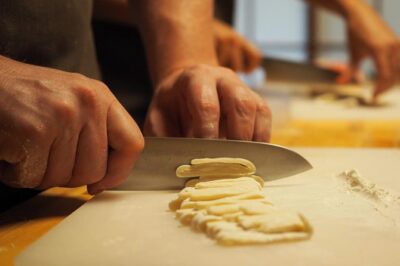
Eat Osaka: Street Food Cooking in an Authentic Kitchen!
Read our review →This tour also fits